
Claude skills GitHub usually refers to repositories, examples, or starter files people use to define reusable Claude workflows for coding and task automation, but there is no single official “Claude Skills GitHub” product page from Anthropic; this guide explains what people usually mean, how it works, where it helps, and where the limits are. For the broader Claude ecosystem, start with our independent Claude AI guide.
- What it does at a glance
- How it works
- When this feature actually helps
- What it can’t do
- Other questions readers ask
- The honest take
What it does at a glance
When people search for claude skills github, they are usually looking for a GitHub repository or file structure that stores reusable instructions, prompts, scripts, or task definitions that Claude can use repeatedly, especially inside coding workflows and Claude Code setups.
- Reusable task templates for repeated Claude workflows
- Git-backed versioning for prompts, rules, and helper files
- Useful with coding tasks, repo context, and team standards
- Not magic — quality still depends on setup, context, and model choice
In practice, a “skill” is usually a packaged instruction set: a folder, markdown file, JSON file, or script that tells Claude how to handle a specific job. That could mean “write release notes from Git history,” “refactor tests to match team style,” or “review this pull request against our security checklist.” GitHub matters because it gives you version control, collaboration, and a natural home next to the codebase the workflow is meant to support.
This idea overlaps with Claude’s broader tool and workflow ecosystem, but it is not the same thing as the core model itself. If you want the official model lineup, see our guide to Claude models. If you want the coding environment most people connect with this search, see Claude Code. For official product access, Anthropic points users to claude.ai and developers to the model overview.
How it works
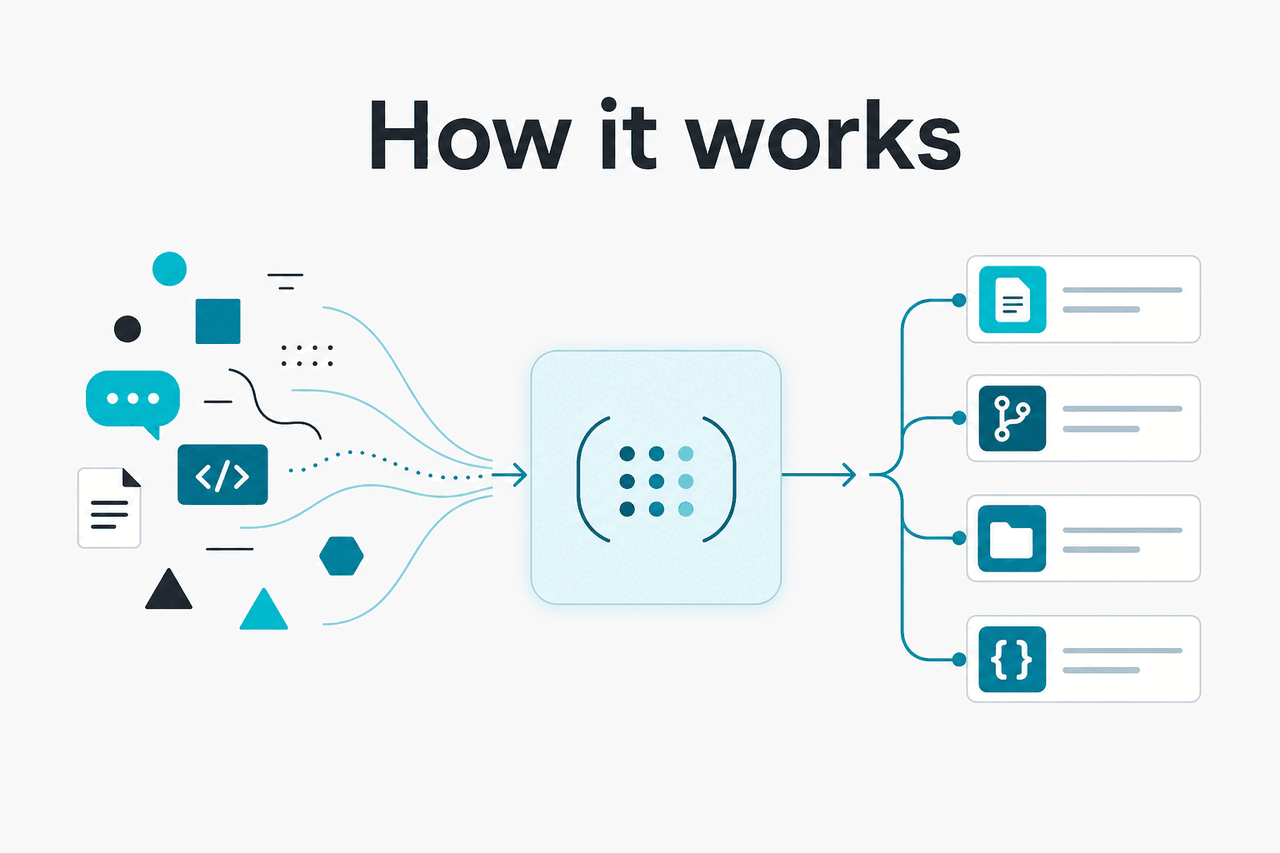
A GitHub-based Claude skill works by putting repeatable instructions into files that Claude or a Claude-powered workflow can read alongside your project files. Instead of rewriting the same prompt every time, you save the task definition in the repository. That definition can include the goal, inputs, constraints, output format, examples, and any shell commands or scripts that support the task. The benefit is consistency: the same repo can carry the same operating rules for every user and every session.
What is actually happening under the hood is simple. Claude reads the repository context you provide, combines it with the stored instructions, and generates an answer or code change based on that context window. If the workflow is wired into a coding tool, the skill may also call scripts, inspect files, or prepare structured output for another step in the pipeline. None of this means Claude “understands” a repository in a permanent way by default. It only works on the context and tools it is given in that moment. For developers building these flows via the API, Anthropic documents model behavior, pricing, and capabilities in the official pricing docs and models overview.
Worked example
A GitHub repo stores a pull request review skill
.claude/review-pr.mdThe value is not the file itself. The value is that the same review standard can be reused, edited, and tracked in Git.
This is one reason GitHub is such a common pairing. Skills are not just prompts; they are operational instructions that change over time. Teams want pull requests, changelogs, blame history, and rollback. Git gives them that. If your use case is less about coding and more about product or knowledge workflows, the same pattern can still work with markdown-based process files. Our Claude features guide covers adjacent capabilities at a higher level, while our Claude API guide explains when you need a proper programmatic setup instead of a chat-only workflow.
When this feature actually helps

Claude skills stored in GitHub help most when a task is repeated often enough that rewriting the instructions is wasteful, but still flexible enough that a model can do useful work from context.
- Code review checklists: Store review rules once, then apply them to many pull requests with the same structure and tone.
- Refactoring workflows: Define how to modernise a module, update tests, or enforce naming standards across a codebase.
- Documentation generation: Turn commit history, source comments, or API signatures into release notes, READMEs, or migration notes.
- Team-specific coding standards: Encode house rules for linting, architecture boundaries, error handling, and dependency choices.
- Support or ops runbooks: Keep incident-response instructions or customer-reply frameworks in versioned files that Claude can follow.
Pick when
- You repeat the same task every week
- Your team needs shared instructions, not personal prompts
- The workflow depends on repository context
- You want version control for prompt or task changes
- You need a standard output format every time
Skip when
- The task is one-off and easier to type directly
- The instructions are too vague to codify
- The model lacks the needed files or tool access
- You expect perfect autonomous execution
- The process changes faster than the team can maintain the skill files
The strongest use case is not “make Claude smarter.” It is “make repeat work more consistent.” That matters in software teams, content teams, and operations teams. But the pattern only pays off when someone owns the skill definitions and updates them as the underlying process changes.
What it can’t do
A GitHub-hosted Claude skill does not give Claude guaranteed accuracy, permanent memory, or broad autonomous access to your systems. It is still a structured input layer on top of a language model. If the repository context is incomplete, the instructions are sloppy, or the task requires deterministic execution, the results can still be wrong or inconsistent.
- It cannot replace source truth: stored instructions can drift away from the real process if nobody maintains them.
- It cannot see everything by default: Claude only works with the files, context, and tools the workflow actually provides.
- It cannot guarantee safe code changes: generated edits still need review, tests, and human approval.
- It cannot resolve ambiguous goals on its own: vague skill definitions produce vague output.
- It cannot bypass product limits: usage, access, and feature availability still depend on your plan or API setup.
- It cannot act as an official Anthropic feature name unless Anthropic documents it that way: community repositories often use their own naming conventions.
Other questions readers ask
Searchers looking for “claude skills github” usually mean one of a few nearby things.
For users deciding between chat access and a more structured coding setup, there is also a plan question. Claude’s official subscriptions and API pricing are separate. The consumer and team plans cover app access, while API usage is billed per token on the developer side.
| Option | Price | Best fit |
|---|---|---|
| Free | $0/month | Trying Claude in web, mobile, or desktop apps with daily usage limits |
| Pro | $20/month or $17/month annual | Individuals who want more usage plus Claude Code, Claude Cowork, Projects, Research, and Office integrations |
| Max | From $100/month | Power users who need 5x or 20x Pro usage, higher output limits, early feature access, and priority traffic |
| Team (Standard) | $25/seat/month or $20/seat/month annual | Small teams needing SSO, admin controls, and shared workspace |
| Team (Premium) | $125/seat/month or $100/seat/month annual | Higher-capacity team use with priority traffic and expanded admin controls |
| Enterprise | $20/seat base + usage at API rates | Large organisations needing SCIM, audit logs, role-based access, spend controls, and regional data residency |
| API: Haiku 4.5 | $1 input / $5 output per million tokens | Fast, cheaper automation |
| API: Sonnet 4.6 | $3 input / $15 output per million tokens | Best default for most build workflows |
| API: Opus 4.7 | $5 input / $25 output per million tokens | Highest-end reasoning and long-context tasks |
- Free tier · no card
- API priced per million tokens
- Batch API · 50% off input and output
- Prompt caching · 90% off cached input tokens
90% off
cached input tokens with prompt caching
Those pricing details matter if your GitHub-based skill reads large repository files or repeats the same long instructions across many runs. Anthropic also documents long context and cost controls on the official developer platform. Opus 4.7, Opus 4.6, and Sonnet 4.6 support 1,000,000-token context at standard rates according to the current official pricing and model pages.
The honest take
The search term claude skills github points to a real and useful pattern, but it is often described more clearly by practitioners than by a single official label. If your goal is to store reusable Claude workflows in GitHub, that approach makes sense. It gives you version control, team review, and repeatability. It is especially helpful for coding tasks, repo-aware documentation, and standardised reviews.
The catch is that a repository full of “skills” does not remove the usual model limits. You still need clean instructions, enough context, and human review for important outputs. Treat it as workflow infrastructure, not as a guarantee of correctness. If you want the official Claude experience first, start with Claude. If you want to understand the coding side before that, our guide to Claude Code is the next practical step.
Independent guide. Not affiliated with Anthropic. For the official Claude product, visit claude.ai.
Last updated: 2026-05-12