
Auto Claude usually means using Claude with automation tools, scripts, agents, or the API; it is not a separate official Claude product documented by Anthropic. This independent Claude AI guide explains what people mean by “auto claude”, when to use the official Claude app, and when to build with the Claude API.

The short answer
If you searched for “auto claude”, you are probably looking for a way to make Claude handle repeatable tasks automatically: drafting replies, analysing documents, generating code, processing support tickets, creating summaries, or running workflow steps. Anthropic’s official consumer product is claude.ai. For automation, the usual route is the Claude API through Anthropic’s developer platform, or a third-party integration that supports Claude.
Not official
“Auto Claude” is a search phrase, not a standalone Claude product listed by Anthropic.
- Use claude.ai for manual chat, writing, analysis, projects, and everyday work.
- Use the API when software needs to call Claude repeatedly.
- Check token costs before you scale automation.
The key distinction is control. The Claude app works best when a human stays in the loop. API automation works best when a system sends prompts to Claude, receives outputs, and passes those outputs to another step. That can be useful, but it needs error handling, permissions, rate-limit planning, and clear review rules.
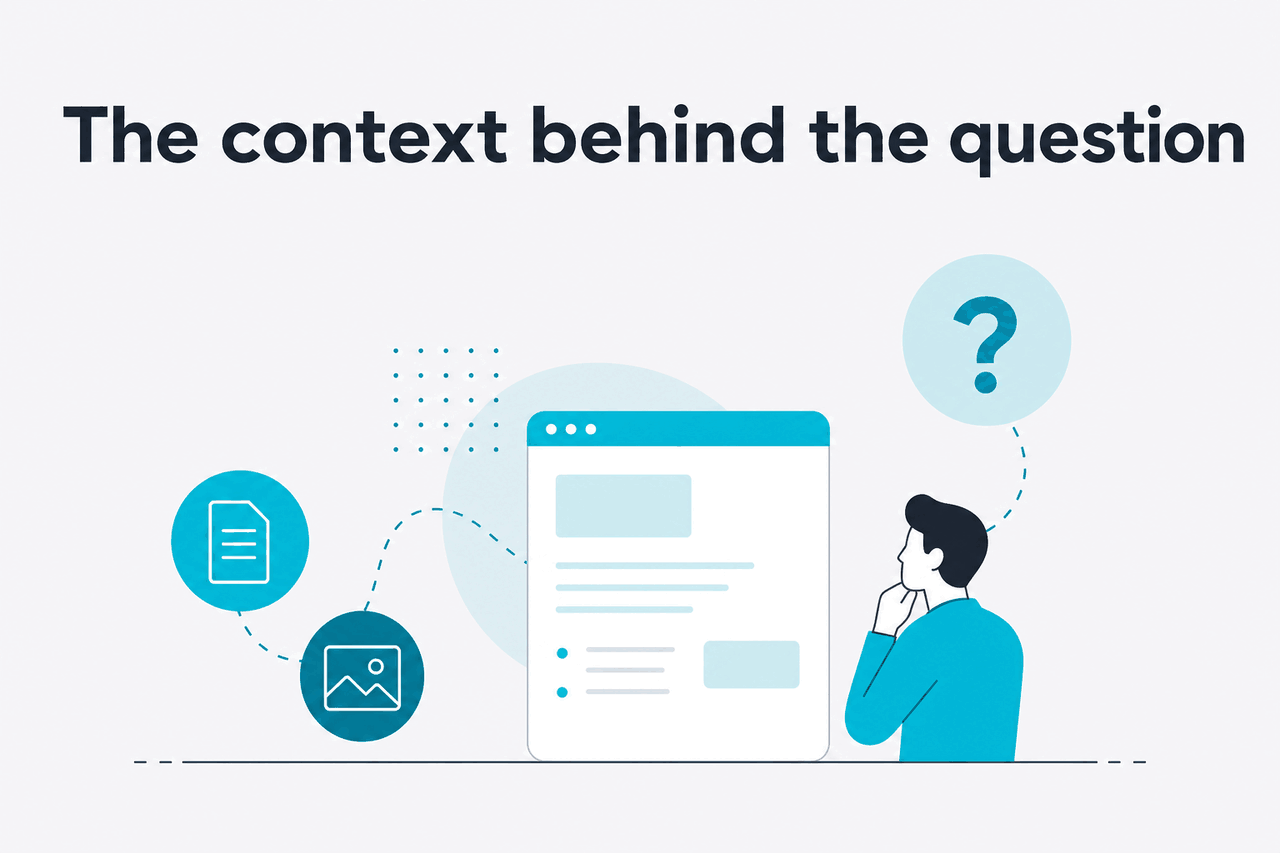
The context behind the question
People search for “auto claude” for several reasons. Some want Claude to act like an agent. Some want a browser or desktop workflow that triggers Claude automatically. Others are comparing Claude with automation tools that call AI models in the background. The right answer depends on whether you want a personal workflow, a developer integration, or a business process.
Anthropic’s public materials describe Claude, Claude plans, Claude models, and the API platform. They do not present “Auto Claude” as a standalone product category. If a third-party tool uses that wording, treat it as an integration, wrapper, template, or community label unless it clearly links to an official Anthropic page. For official model and API details, use Anthropic’s model overview and API pricing documentation.
Common meanings of “auto claude”
| What the searcher may mean | Plain meaning | Best starting point |
|---|---|---|
| Claude automation | Using Claude to run repeatable work without retyping prompts. | Claude API or a supported integration. |
| Claude agent | A workflow where Claude decides or helps decide the next step. | Start with a narrow task and human review. |
| Claude for auto-replies | Drafting email, support, sales, or internal responses. | Use templates, rules, and approval queues. |
| Claude coding automation | Using Claude to generate, edit, test, or explain code. | Review Claude features and developer options. |
| A tool named Auto Claude | A third-party wrapper or unofficial label. | Verify the vendor, permissions, data handling, and Anthropic connection. |
The safest mental model is simple: Claude can help automate language and reasoning tasks, but the automation system around Claude matters as much as the model. A good workflow defines inputs, expected outputs, data boundaries, fallback behaviour, and review points. A weak workflow sends broad instructions to a model and trusts every answer without checks.
Use Claude automation when
- The task is repeatable and text-heavy.
- You can define success criteria clearly.
- A human can review high-risk outputs.
- You can log prompts, outputs, and failures.
Avoid automation when
- The task needs guaranteed factual accuracy without verification.
- The workflow handles sensitive data without proper controls.
- The prompt changes every time and cannot be standardised.
- An incorrect output could cause material harm.
Claude app vs Claude API for automation
The official Claude app is designed for interactive work. It is useful when you want to ask questions, upload documents, draft content, analyse material, use projects, or work with Claude in a conversational interface. The app can be enough for a solo user who wants faster writing or research without building software.
The API is different. It lets software send requests to Claude and receive structured responses. Use it for product features, internal tools, scheduled jobs, document pipelines, support triage, data extraction, and backend workflows. If you are building anything that must run repeatedly without manual copy-paste, start with our Claude API guide and Anthropic’s developer platform.
| Route | Best for | Limits to plan around |
|---|---|---|
| claude.ai | Manual work, writing, analysis, brainstorming, research, coding help, projects. | Usage limits, human interaction, less control over programmatic workflows. |
| Claude API | Apps, internal automation, batch processing, agent workflows, integrations. | Token costs, rate limits, implementation work, monitoring, security. |
| Third-party automation tool | No-code or low-code workflows that call Claude through a connector. | Vendor trust, data access, hidden costs, feature lag, permissions. |
Cost is part of the decision. Claude Opus 4.7 is the flagship model, with a 1M context window and pricing at $5 per million input tokens and $25 per million output tokens. Claude Sonnet 4.6 is the practical default for many workloads, with a 1M context window, 128K maximum output, and pricing at $3 per million input tokens and $15 per million output tokens. Claude Haiku 4.5 is the faster, lower-cost option at $1 per million input tokens and $5 per million output tokens. For model trade-offs, see our Claude models guide.
90% off
cached input tokens with prompt caching
For high-volume automation, cost optimisation matters. Anthropic documents prompt caching for repeated context and Batch API pricing for asynchronous work. Prompt caching can reduce cached input token cost by 90%. Batch API can reduce costs by 50% in both directions. These options help when your workflow reuses long instructions, processes many documents, or does not need an immediate response.
What to do next
Start by deciding whether you need a chat workflow or a true automation workflow. If a person will read, steer, and approve each answer, use claude.ai first. If another system needs to trigger Claude, pass data in, and use the result automatically, plan an API workflow and test it with a small, low-risk task.
A practical setup path
Define one task
Pick a narrow task such as summarising support tickets, classifying inbound leads, extracting fields from invoices, or drafting internal updates. Do not start with a broad “run my business” prompt.
Choose the interface
Use
claude.aiif a human will guide the work. Use the API if software needs to send requests automatically.Select a model
Start with Claude Sonnet 4.6 for balanced capability and cost. Use Claude Haiku 4.5 for simpler, high-volume work. Use Claude Opus 4.7 when quality matters more than cost.
Write a test prompt
Give Claude the role, input format, output format, and refusal rules. Ask for structured output when another system will read the result.
Add review and logging
Log prompts and outputs, track failures, and require human approval for customer-facing, legal, financial, medical, or security-sensitive results.
A good first automation is boring. That is a strength. Ask Claude to turn messy notes into a clean status update, classify documents into a fixed set of categories, or extract a small number of fields from text. These tasks are easier to evaluate and less risky than open-ended decision-making.
Worked example
Support ticket triage with Claude
This keeps Claude useful without giving it unchecked authority over customer communication.
If you are comparing plans before you automate, separate subscription pricing from API pricing. Subscription plans cover use of Claude products. API usage is priced per million tokens. For details, see our Claude pricing guide and the official Claude pricing page.
Free
$0
Basic access with usage limits.
Pro
$20/mo
Also available at $17/mo when billed annually.
Max
From $100/mo
For heavier individual use.
Team Standard
$25/seat/mo
Also available at $20/seat/mo when billed annually.
Team Premium
$125/seat/mo
Also available at $100/seat/mo when billed annually.
Enterprise
$20/seat base
API rates apply under enterprise terms.
Before you connect Claude to internal systems, check data rules. Review Anthropic’s public trust information at trust.anthropic.com, monitor service availability through status.claude.com, and confirm whether your use case requires enterprise controls such as SSO, SCIM, audit logs, regional data residency, or HIPAA-ready options.

FAQ
For general product questions, our Claude FAQ covers common searches about access, accounts, limits, models, and official links. For capability questions, the features guide is a better starting point than automation templates because it explains what Claude can and cannot do before you wire it into a workflow.
The honest take
“Auto Claude” is best understood as a search phrase for Claude automation, not as a confirmed standalone product from Anthropic. If you want Claude to help you work faster, start with claude.ai. If you want software to call Claude repeatedly, use the Claude API and build a controlled workflow around it.
Do not automate first and ask governance questions later. Choose one repeatable task, test it with real examples, measure output quality, estimate token cost, and add review gates. Claude can be a strong part of an automation system, but it is not a replacement for system design, permissions, monitoring, or human accountability.
Independent guide. Not affiliated with Anthropic. For the official Claude product, visit claude.ai.
Last updated: 2026-05-12