
Claude AI use cases include writing, coding, research, document analysis, customer support, data work, tutoring, marketing, legal review, product planning, and workflow automation; c-ai.chat is an independent Claude AI guide, not Anthropic, and this page groups 25 practical examples by the jobs people need Claude to do.

- The short answer
- The context behind the question
- What to do next
- Other questions readers ask
- The honest take
- Sources
The short answer
The best Claude AI use cases are tasks that need careful language work, structured reasoning, long-context reading, code help, or repeatable business workflows. Use claude.ai for individual chat, documents, Projects, and everyday work. Use the Claude API for product features, internal tools, automation, and high-volume processing. Claude is not a replacement for human review in regulated, high-risk, or fact-critical work, but it can reduce drafting time, make large documents easier to work with, and turn messy inputs into usable outputs.
- Best fit · writing, coding, research, analysis
- Access · Claude app, desktop, mobile, API
- Strength · long documents and careful summaries
- Review needed · facts, legal, medical, financial work
Below are 25 real examples, grouped by function so you can match Claude to a job, not just a feature name.
Writing, editing, and content
Draft a first version of a business document
Give Claude the goal, audience, constraints, and source notes. Ask for a memo, proposal, policy, sales email, briefing, or report. Treat the output as a structured draft for human editing, not a final document to publish unseen.
Rewrite text for a specific reader
Claude can turn a technical explanation into plain English, tighten a long email, soften a sensitive message, or adapt a document for executives, customers, students, or developers. This is a safe everyday use because you can compare the output with the original.
Create content briefs and outlines
Marketers and editors can ask Claude to organise a topic into audience questions, search intent, article sections, examples, and risks. Use it for structure, then verify claims and add original experience before publishing.
Repurpose existing material
Claude can turn a webinar transcript into a blog outline, a report into social posts, or a support article into an internal training note. This works best when you provide the original source and tell Claude not to add unsupported facts.
Proofread for clarity and consistency
Claude can find unclear sentences, repeated points, tone mismatches, and formatting issues. For teams, this can support a house style without making every draft start from scratch.
Research and document analysis
Summarise long documents
Upload or paste contracts, reports, transcripts, policies, or research notes. Ask for key points, risks, open questions, and action items. For important work, ask Claude to point back to the relevant section of the material you supplied.
Compare several documents
Claude can compare policy versions, vendor proposals, product requirements, or meeting transcripts. Ask for a table showing what changed, what conflicts, and what needs a decision.
Extract structured information
Use Claude to pull names, dates, obligations, metrics, tasks, headings, or requirements from unstructured text. For production use, the API can return structured output that your systems can process.
Build a briefing from supplied sources
Give Claude a packet of source material and ask for a decision brief with assumptions, evidence, trade-offs, and unknowns. This helps founders, analysts, managers, and students create a strong starting point.
Turn meeting notes into decisions and tasks
Claude can clean up raw notes or transcripts, identify owners, list follow-ups, and separate decisions from discussion. Always check names, deadlines, and commitments before sending the result.
Coding, data, and technical work
Explain unfamiliar code
Paste a function, file, or error message and ask Claude what it does, what assumptions it makes, and where it might fail. This helps developers onboard to legacy code or review a pull request faster.
Generate small code snippets
Claude can write helper functions, tests, scripts, SQL queries, regular expressions, and API request examples. Treat generated code as a draft. Run tests and check security before using it.
Debug errors step by step
Provide the error, relevant code, runtime, recent changes, and what you already tried. Claude can suggest likely causes and a sequence of checks instead of guessing one fix.
Write tests and edge cases
Ask Claude to produce unit tests, integration test cases, boundary inputs, and failure scenarios. This is often more useful than asking it to write the main implementation because tests expose hidden assumptions.
Analyse CSVs and tables
Claude can inspect pasted tables or uploaded data, describe trends, flag anomalies, and suggest charts. For sensitive or large-scale data workflows, use approved company systems and confirm privacy controls first.
Business operations and customer work
Draft customer support replies
Support teams can give Claude the ticket, customer history, policy, and desired tone. Claude can draft a response that agents verify before sending. This keeps the human in control while reducing repetitive writing.
Create internal knowledge base articles
Claude can turn expert notes, chat discussions, or procedure recordings into clear internal documentation. Ask it to include prerequisites, steps, exceptions, and escalation rules.
Review sales calls and emails
Claude can identify objections, buying signals, next steps, and missing information from call transcripts or email threads. Sales teams can use this to prepare follow-ups without rereading every message manually.
Write product requirements
Product teams can use Claude to turn rough ideas into problem statements, user stories, acceptance criteria, risks, and launch questions. Claude should not decide product strategy, but it can improve the structure of a spec.
Prepare hiring and onboarding material
Claude can draft role scorecards, interview questions, onboarding checklists, and training guides. Humans should review for fairness, accuracy, and legal compliance.
Education, personal productivity, and automation
Act as a study tutor
Students can ask Claude to explain a concept, quiz them, grade a practice answer against a rubric, or create a revision plan. It should support learning, not replace original work where academic rules prohibit it.
Plan projects and weekly priorities
Claude can turn a messy task list into milestones, dependencies, risks, and a schedule. It works better when you provide real constraints such as deadlines, available hours, and decision owners.
Translate and localise draft text
Claude can translate or adapt text for a different market, reading level, or tone. Native review is still important for legal, cultural, or brand-sensitive material.
Build repeatable prompts for teams
Teams can create prompt templates for briefs, summaries, ticket triage, code review, and QA. See our guide to Claude features for the product capabilities that support reusable work.
Power internal tools through the API
Developers can use the API to classify messages, summarise documents, generate drafts, enrich records, or route work between systems. Check Anthropic’s developer documentation and API platform before designing a workflow.
Use case fit by team
| Team or role | Good Claude use cases | What to verify |
|---|---|---|
| Developers | Code explanation, tests, scripts, API prototypes, debugging help | Security, dependencies, performance, test results |
| Marketing | Briefs, outlines, campaign variants, repurposing, editing | Claims, brand voice, search intent, originality |
| Operations | SOPs, checklists, process maps, meeting summaries, vendor comparisons | Policy accuracy, owners, deadlines, compliance |
| Customer support | Reply drafts, ticket summaries, knowledge base drafts, escalation notes | Customer facts, refunds, policy exceptions, tone |
| Leadership | Decision memos, board prep, risk lists, strategy notes | Evidence quality, assumptions, financial and legal implications |
| Students | Explanations, quizzes, study plans, feedback on practice answers | Academic rules, citations, factual accuracy |
Pick when
- You can provide source material or clear context.
- The output will be reviewed by a person.
- The task benefits from structure, drafting, or comparison.
- You want to save time on repetitive language work.
Skip when
- You need a guaranteed factual answer without checking.
- The task involves high-stakes legal, medical, or financial decisions.
- You cannot share the data under your organisation’s rules.
- The job needs live system access that has not been connected safely.
The context behind the question
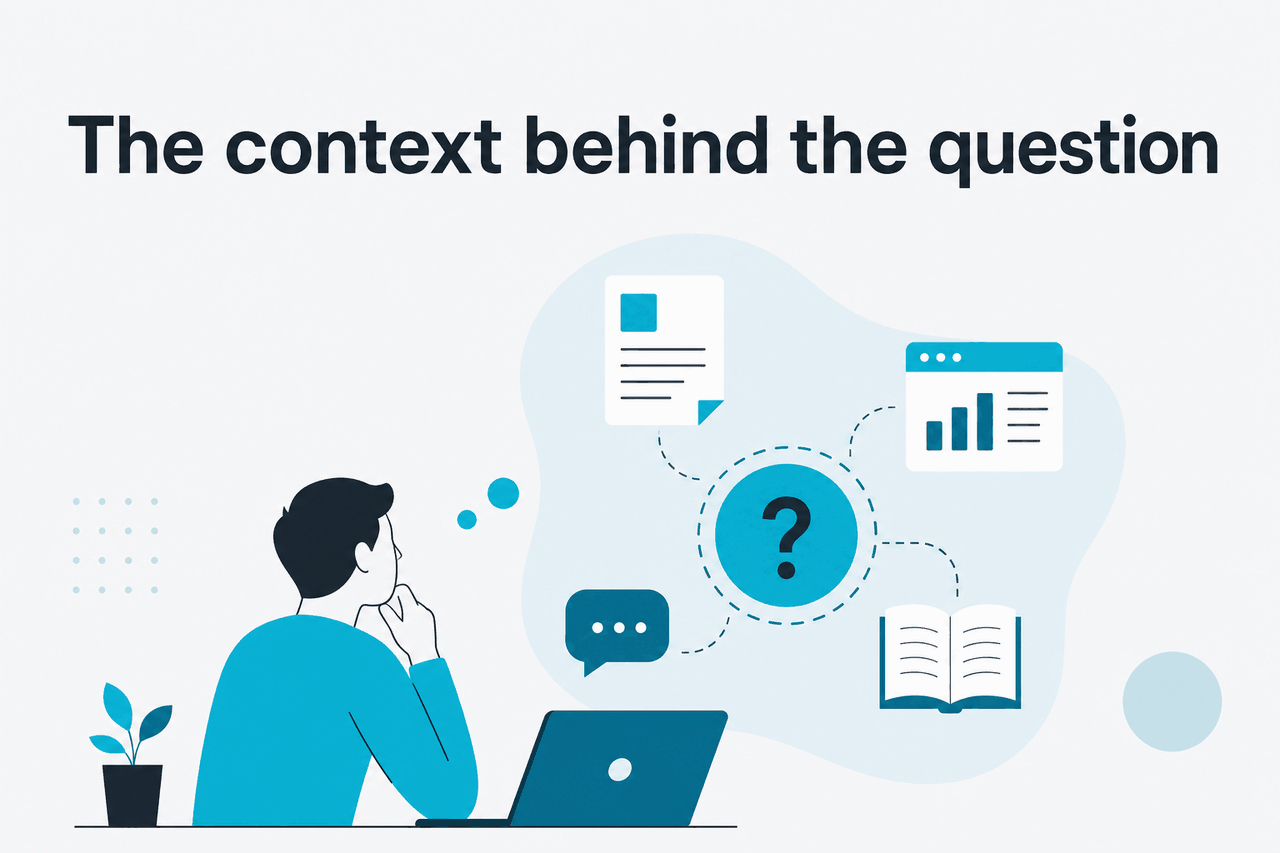
People search for Claude AI use cases because they know Claude is an AI assistant, but they are not always sure where it fits in real work. The official product is Claude, made by Anthropic. This site explains the Claude ecosystem independently, including plans, models, features, API options, and practical limits.
Claude is often compared with other AI chatbots, but the better question is narrower: what job are you trying to finish? A general chat prompt is enough for rewriting an email. A long report review may need file uploads, Projects, or a higher usage plan. A customer support workflow may need the API, logging, privacy review, and cost controls. If pricing matters, see our Claude pricing guide before choosing between app subscriptions and API usage.
The main distinction is between personal use and system use. Personal use means you open Claude, ask for help, and review the answer yourself. System use means Claude is built into a product, workflow, internal tool, or backend process. The second path needs more planning because you must handle prompts, data handling, errors, rate limits, monitoring, and cost.
Common Claude entry points
| Entry point | Best for | Example |
|---|---|---|
| Claude web or app | Individuals, ad hoc tasks, drafting, review | Upload a report and ask for risks and action items. |
| Projects and workspace features | Reusable context, team knowledge, ongoing work | Keep product notes, style rules, and past briefs together. |
| Claude Code and developer tools | Software work, code explanation, refactoring support | Ask for test cases for a service before editing it. |
| API | Automation, internal tools, product features | Classify incoming support messages and draft replies for agent approval. |
Use cases also depend on the model and plan available to you. For a fuller model comparison, see our Claude models guide.
Flagship
Claude Opus 4.7
$5 per million input tokens and $25 per million output tokens.
- 1M context window
- Best fit for the hardest reasoning and analysis tasks
Best balance
Claude Sonnet 4.6
$3 per million input tokens and $15 per million output tokens.
- 1M context window
- 128K maximum output
- Strong default for many production workflows
Fastest and cheapest
Claude Haiku 4.5
$1 per million input tokens and $5 per million output tokens.
- Good for high-volume classification, routing, and short drafting tasks
For app subscriptions, Free is $0/month, Pro is $20/month or $17/month annual, Max starts from $100/month, Team Standard is $25/seat/month or $20/seat/month annual, Team Premium is $125/seat/month or $100/seat/month annual, and Enterprise is $20/seat base plus API rates.
90% off
cached input tokens with prompt caching
Batch API workloads receive 50% off in both directions when the task fits asynchronous processing.
Cost matters most when a use case repeats the same instructions or source context many times. Prompt caching lowers cached input costs. The Batch API lowers both input and output costs for suitable asynchronous work. Check Anthropic’s official pricing before designing any high-volume workflow.
What to do next

Pick one use case, test it with real material, and score the output before you roll it out. Do not start with a vague goal such as “use AI in marketing” or “add Claude to support.” Start with one repeatable task, one owner, one review process, and one success metric.
Choose a narrow task
Examples: summarise sales calls, draft support replies, review contract clauses, create test cases, or turn meeting notes into action items.
Collect realistic inputs
Use real but approved examples. Remove private or sensitive information if your policy requires it. Include edge cases, not just clean examples.
Write the expected output format
Ask for a table, checklist, JSON structure, memo, rubric, or email. Claude performs better when the output shape is clear.
Add human review
Decide who checks the answer, what they check, and what Claude is not allowed to decide. This matters for customer, legal, HR, medical, financial, and security-related work.
Measure the result
Track time saved, error rate, edit distance, customer response quality, developer acceptance, or analyst confidence. Keep the use case only if it performs better than the old process.
If you are using Claude as an individual, start inside the official Claude product and try the task manually. If you are building a product or internal workflow, review the API guide, Anthropic’s pricing documentation, and your organisation’s privacy requirements before sending production data.
Worked example
Support ticket triage pilot
This is a good pilot because the inputs are repeatable, the output is easy to review, and the business value is measurable.
For team adoption, write a short policy before scaling. It should cover what data users may enter, which outputs need review, how prompts are stored, who owns approval, and what to do when Claude gives an uncertain answer. For broader product capabilities, see our guide to Claude features. For common setup and usage questions, see the Claude FAQ.
Other questions readers ask
These related questions usually come up when people compare Claude use cases, plans, and practical limits.
If your main question is plan choice rather than use cases, compare the Free, Pro, Max, Team, and Enterprise options in our pricing guide. If your question is technical integration, start with the Claude API guide and Anthropic’s official developer documentation.
The honest take
Claude AI use cases are strongest where the work is language-heavy, context-heavy, or structure-heavy. The clearest wins are summarising long documents, drafting and editing, code assistance, research support, customer support preparation, internal documentation, and API-based text workflows. Claude is less suitable when you need guaranteed facts, unsupervised decisions, or expert accountability without human review.
The practical way to use Claude is not to ask what it can do in theory. Pick one real task, give it real context, define the output, and measure whether the result saves time without increasing risk. If it passes that test, expand carefully. If it does not, narrow the task or keep the work human-led.
Independent guide. Not affiliated with Anthropic. For the official Claude product, visit claude.ai.
Last updated: 2026-05-12