
Yes — Claude can translate text well, especially when you give it clear instructions about tone, terminology, formatting, and target audience; this independent guide from c-ai.chat shows how to use claude translate workflows for quick one-off translations, higher-quality reviewed output, and repeatable multilingual prompts.

If you are new to Claude, start with our overview of Claude features. If you need developer workflows, see the Claude API guide. For hands-on practice, the sections below cover the exact steps, common translation mistakes, related questions, and what to do next.
- What you’ll learn
- Step by step
- Common mistakes to avoid
- Where to go next
- Other questions readers ask
- The honest take
- Free tier · no card
- API priced per million tokens
Claude is not a dedicated machine translation engine in the narrow sense, but it is often more useful for real work because it can translate, explain phrasing choices, preserve structure, adapt tone, and follow terminology rules in one prompt. That matters if you are translating product copy, support replies, marketing text, legal drafts, or developer documentation rather than isolated sentences.
Anthropic makes Claude, and the official product lives at claude.ai. We are independent, so the goal here is practical guidance: when Claude is a good fit, where it struggles, and how to reduce errors before you publish anything translated to customers or users.
What you’ll learn
By the end, you will know how to get more accurate, more consistent translations from Claude instead of relying on a vague “translate this” prompt.
- Write prompts that tell Claude exactly what to translate and what to preserve.
- Control tone, formality, terminology, and output format for different languages.
- Review translations for meaning drift, missing text, and awkward localisation.
- Use Claude for repeated translation workflows in the app or through the API.
- Decide when Claude is good enough for first-pass translation and when human review is still necessary.
Step by step
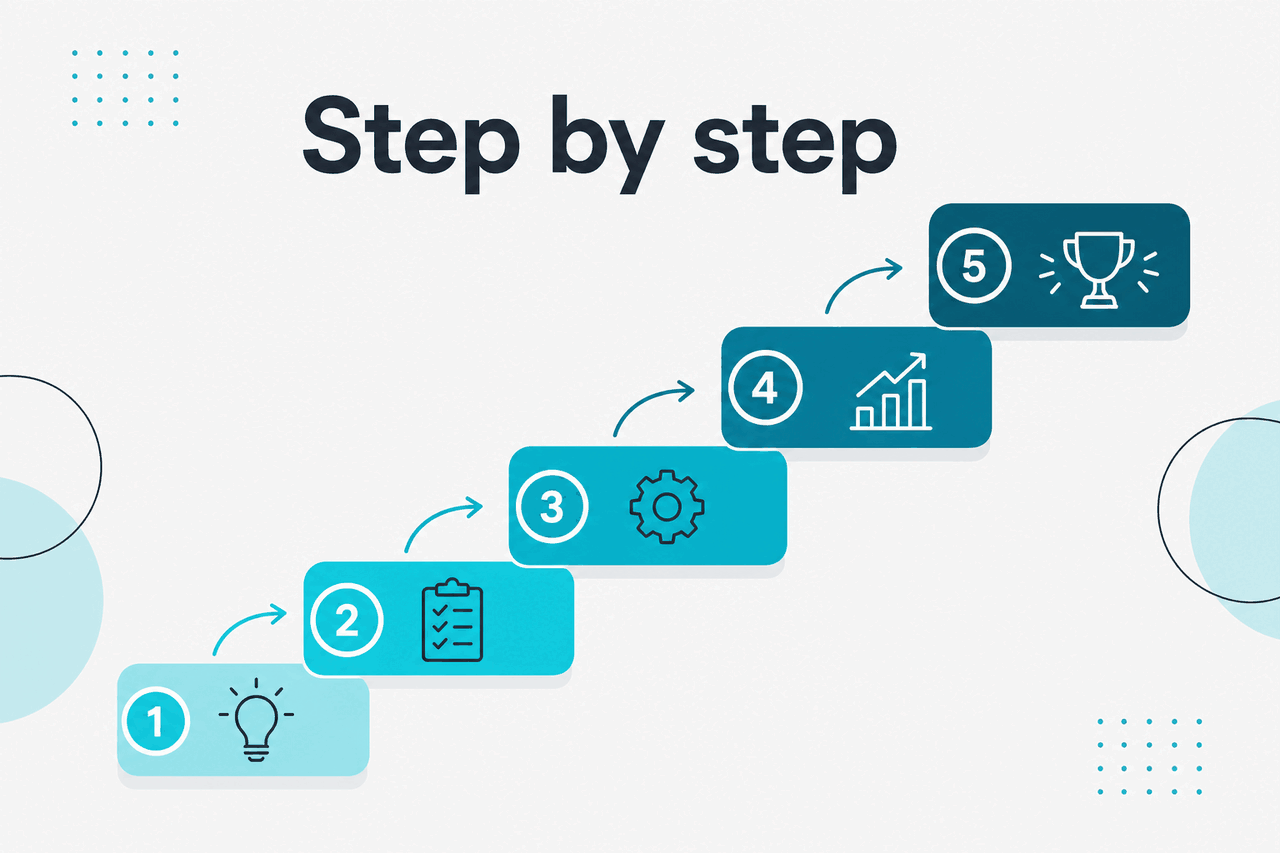
Here is a practical workflow you can use in Claude on the web, desktop, or mobile, then adapt later for projects, team workflows, or API calls.
-
Choose the right translation job
Start by deciding what kind of translation you need. A short email, product description, support response, subtitle line, or help-centre article all need different levels of control. Claude works best when the task is clear: translate from one language to another, preserve meaning, keep names unchanged, and match a tone such as formal, natural, or customer-friendly.
-
Paste the source text with explicit language instructions
Do not assume Claude will infer every detail. State the source language, target language, region if relevant, and whether you want literal or natural wording. Good prompt structure prevents the most common translation failures.
-
Tell Claude what must stay unchanged
List product names, code, URLs, legal names, placeholders, currencies, and formatting rules. If your source contains variables like
{first_name}or markdown headings, tell Claude to preserve them exactly. This single step saves a lot of cleanup work. -
Set tone, audience, and terminology rules
A translation for consumer marketing should not sound like internal documentation. Tell Claude whether the audience is technical, general, formal, or conversational. If you have preferred vocabulary, provide a mini glossary and ask Claude to use it consistently.
-
Ask for a structured output
If you need to compare source and translation, ask for a two-column table or labelled sections. If you are importing text into another tool, ask for plain text only. The cleaner the output format, the easier the review process.
-
Run a second pass for quality control
After Claude translates, ask it to review its own output for omissions, terminology mismatches, false friends, and unnatural phrasing. A separate revision prompt often catches errors that a one-step translation misses.
-
Check high-risk segments manually
Review anything involving numbers, dates, legal conditions, UI labels, or culture-specific phrasing. Claude can be strong on context, but it can still smooth over a detail that should have remained exact.
-
Reuse your best prompt as a template
Once you get a result you trust, save the prompt in a Project or your own workflow notes. Translation quality improves when you stop starting from scratch. If you code against Claude, move that proven instruction set into your app using the API documentation path.
For simple use cases, a prompt like the one below is usually enough to get a strong first draft.
Translate the following text from English to Spanish.

Requirements:
- Keep the meaning accurate.
- Use natural Latin American Spanish.
- Preserve product names, URLs, and anything inside {braces}.
- Keep markdown formatting unchanged.
- If a phrase is ambiguous, choose the most natural business context wording.

Text:
# Welcome to Acme Analytics

Hi {first_name},

Your weekly performance report is ready.
View it here: https://example.com/report

Please do not change your account ID.
Worked example
Prompt pattern for a reviewed translation
This usually produces a better business translation than a one-line “translate this” request.
When the text is customer-facing, ask Claude to show both the translation and a short note on terms that may need human approval. That is especially helpful for slogans, legal disclaimers, software UI copy, and support macros.
Translate this product page from English to French for customers in France.

Rules:
- Keep headings and bullet structure.
- Keep "Acme Cloud", "API", and "Single Sign-On" in English.
- Use formal "vous".
- Preserve all numbers, currencies, and dates exactly.
- After the translation, add a section called "Terms to review" with any phrases that could have multiple valid translations.
If you are translating many items at scale, API usage matters more than chat convenience. Anthropic’s current API model lineup includes Claude Opus 4.7 at $5/M input and $25/M output tokens, Claude Sonnet 4.6 at $3/M input and $15/M output tokens, and Claude Haiku 4.5 at $1/M input and $5/M output tokens. Sonnet 4.6 is usually the default pick for translation workflows that need a balance of cost and quality.
| Model | Best use for translation | Input price | Output price |
|---|---|---|---|
| Claude Opus 4.7 | Highest-stakes nuance, long multilingual documents, complex review prompts | $5/M tokens | $25/M tokens |
| Claude Sonnet 4.6 | Default choice for most business translation tasks | $3/M tokens | $15/M tokens |
| Claude Haiku 4.5 | Fast, cheaper first-pass translation or lightweight automation | $1/M tokens | $5/M tokens |
90% off
cached input tokens with prompt caching
That discount matters if your translation workflow reuses the same system prompt, glossary, style rules, or formatting instructions across many requests. Anthropic also offers Batch API pricing at 50% off both input and output directions, which can be useful for large backlogs of content where speed is less important than cost.
Worked example
API model choice for 10,000 short product descriptions
For repetitive translation jobs, workflow design often saves more money than model downgrades.
On the subscription side, many people start with the free Claude plan because it costs $0/month and does not require a card. For individual heavy use, Pro is $20/month or $17/month annual. Max starts at $100/month. Team plans start at $25/seat/month standard or $125/seat/month premium, with annual rates of $20/seat/month and $100/seat/month respectively. Enterprise starts at a $20/seat base plus usage at API rates.
Free
$0/month
For casual or occasional translation use
- Web, iOS, Android, desktop access
- Daily usage limits
Pro
$20/month
For individuals translating often
- Claude Code and Claude Cowork
- Unlimited Projects and Research access
Max
From $100/month
For power users with higher usage needs
- 5x or 20x Pro usage
- Priority traffic and early feature access
If your work includes software strings, docs, or technical references, Claude is especially useful because it can explain why a translation changed. That makes it different from plain one-shot tools. You can ask it to justify word choice, preserve code blocks, and produce a reviewer checklist. That is also where related workflows like Claude Code become useful for localisation pipelines tied to repos or deployment workflows.
Pick when
- You need context-aware translation, not just word substitution
- You want tone, glossary, and formatting control
- You need one tool to translate and review
Skip when
- You need certified translation
- The text is legally or medically sensitive without human review
- You want guaranteed terminology compliance with no checking
Common mistakes to avoid
Most weak Claude translations come from weak instructions, not from the model failing on a clear task.
- Using “translate this” with no context. Fix: name the source language, target language, audience, and desired tone.
- Forgetting to protect variables, URLs, and product names. Fix: explicitly list what must remain unchanged, including placeholders and markdown.
- Asking for natural language when exact wording matters. Fix: specify whether you want literal, faithful, or localised phrasing.
- Skipping a review pass. Fix: ask Claude to audit the translation for omissions, ambiguity, and terminology drift after the first output.
- Trusting specialised content without expert checking. Fix: route legal, medical, compliance, or safety content through a qualified human reviewer.
- Ignoring regional differences. Fix: say “Spanish for Mexico,” “French for France,” or another clear locale instead of just naming the language.
A strong translation prompt usually includes five things: source language, target language, audience, tone, and preservation rules.
Where to go next
Once you can translate reliably, the next step is building a repeatable workflow around prompts, projects, and automation.
- Browse more Claude tutorials for hands-on prompt patterns and workflows.
- Learn the Claude API if you want to automate bulk translation or connect Claude to your product.
- Review Claude features to understand Projects, integrations, and model options that affect translation work.

Other questions readers ask
These are closely related questions that often appear alongside searches for Claude translation.
The honest take
Claude is a good translation tool when you need more than raw sentence conversion. It handles context, tone, reviewer notes, and formatting rules better than a bare “translate this” workflow. For business content, product copy, support replies, and technical documentation, that makes it genuinely useful.
It is not magic, and it is not a substitute for expert review in high-stakes cases. If you use clear prompts, preserve key terms, and add a second-pass check, Claude can save real time and produce strong first drafts. If accuracy has legal, medical, contractual, or safety consequences, treat Claude as an assistant, not the final authority.
Independent guide. Not affiliated with Anthropic. For the official Claude product, visit claude.ai.
Last updated: 2026-05-12