
To use Claude AI, create an account at claude.ai, open a chat, give Claude a clear task with enough context, review the answer, and refine your prompt; c-ai.chat is an independent guide, not Anthropic, and our broader Claude AI guide explains the wider ecosystem.

This guide covers the official Claude product and the habits that make it useful: writing prompts, attaching files, choosing the right plan, and knowing when the API is a better fit.
- What you’ll learn
- Step by step
- Common mistakes to avoid
- Where to go next
- Other questions readers ask
- Sources
- The honest take
- Official product: Claude runs at claude.ai and in Claude apps.
- Free plan: $0/month with daily usage limits.
- Paid plans: Pro is $20/month or $17/month annually. Max starts from $100/month.
- Teams: Team Standard is $25/seat/month or $20/seat/month annually. Team Premium is $125/seat/month or $100/seat/month annually.
- Developers: API pricing is token-based. Prompt caching gives 90% off cached input. Batch API gives 50% off both directions.
What you’ll learn
By the end, you should be able to use Claude for everyday work without treating it like a search engine or a magic answer box.
- Create or access Claude through the official product instead of a lookalike site.
- Write prompts that give Claude a role, task, context, and output format.
- Use file uploads, follow-up questions, and Projects for longer work.
- Know when to use the web app, a team plan, or the Anthropic API.
- Avoid beginner mistakes that lead to vague, inaccurate, or hard-to-use answers.
Step by step
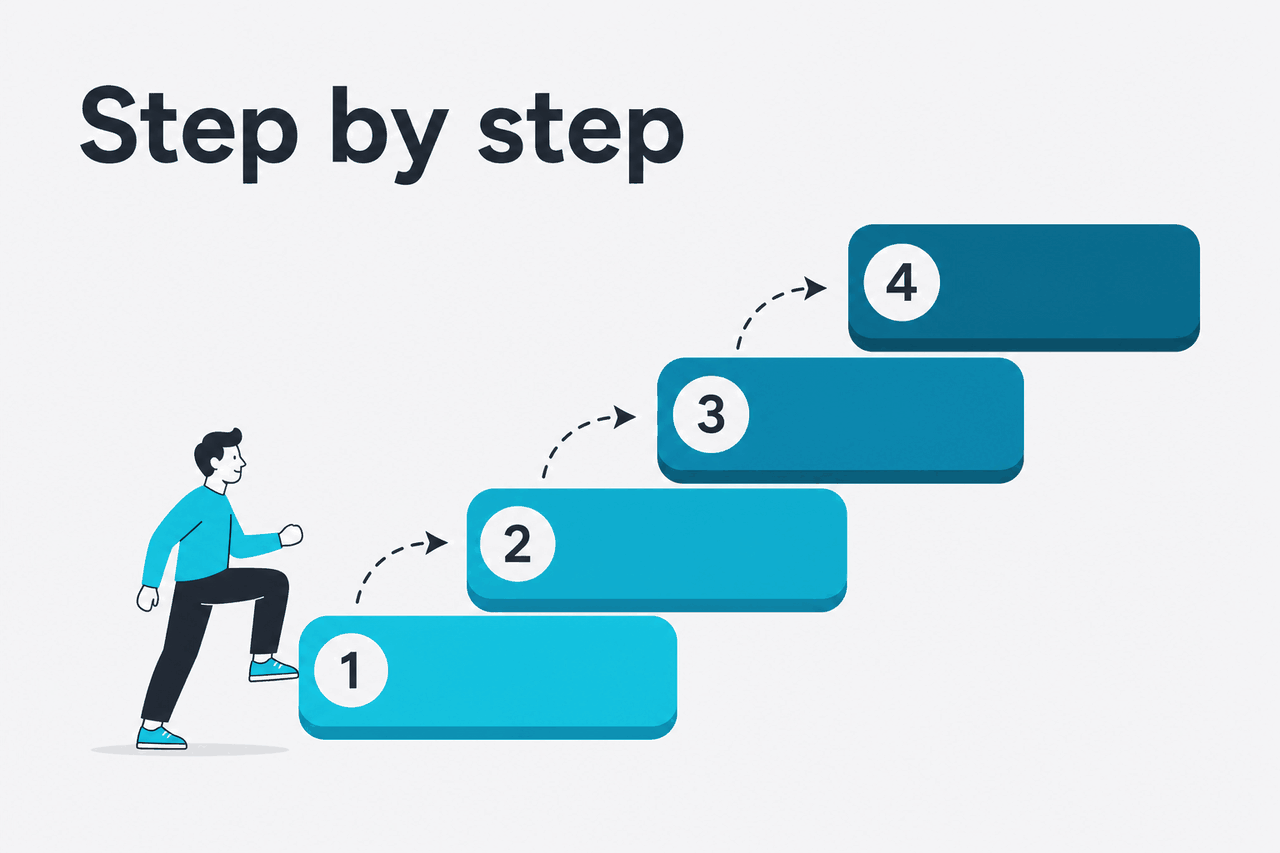
Use this workflow the first time you open Claude. Reuse the same pattern for writing, analysis, coding help, study, and planning.
-
Step 1: Go to the official Claude site
Start at claude.ai. Sign in or create an account. Avoid unofficial login pages, browser ads that imitate Claude, or tools that ask for your Claude password outside the official product.
-
Step 2: Choose the simplest place to work
Most beginners should start in the web app. Use a mobile or desktop app if you prefer a dedicated app. Use the Claude API guide only when you want Claude inside your own product, workflow, or script.
-
Step 3: Start with a specific task
Do not begin with “help me with marketing” or “write something about finance.” Give Claude one clear job. For example:
Draft a 400-word onboarding email for new trial users of a project management app. -
Step 4: Add context before asking for output
Claude works better when it knows the audience, constraints, source material, and goal. Paste notes, attach a document, or explain what you already tried. If the task has rules, include them before the request.
-
Step 5: Tell Claude the format you want
Ask for bullets, a table, a checklist, JSON, an email draft, a spreadsheet-style plan, or a short executive brief. Format instructions reduce cleanup work.
-
Step 6: Ask Claude to show assumptions
For decisions, research, and planning, ask Claude to separate facts, assumptions, and recommendations. This makes weak points easier to spot. Claude can still be wrong, so verify important claims against original sources.
-
Step 7: Iterate with follow-up prompts
Treat the first answer as a draft. Ask Claude to shorten it, change tone, add examples, compare options, or critique its own response. Good Claude use is usually a short conversation, not one perfect prompt.
-
Step 8: Save repeat work into Projects or a workflow
If you repeat the same task, use Projects and reusable instructions where available. Developers can move structured tasks into API calls.
The core habit is simple: give Claude enough information to do the work, then ask for the answer in the shape you need.
Worked example
Turn a vague request into a useful prompt
Claude does not need a long prompt every time. It needs the right details for the job.
How to write your first Claude prompt
A strong beginner prompt usually has four parts: role, task, context, and format. You do not have to use those labels, but they help when you are learning.
Act as a careful editor.

Task: Improve the clarity of the text below without changing the meaning.

Context: This is for a non-technical customer support article. Keep it simple.

Format: Return two sections:
1. Revised version
2. Brief notes explaining the main edits

Text:
[paste your text here]
This prompt works because it tells Claude what job to do, who the reader is, and how to return the answer. You can adapt the same structure for strategy memos, lesson plans, product specs, summaries, and data explanations.
How to use Claude with files
When file upload is available in your plan and workspace, attach the document before asking the question. Then tell Claude exactly what to inspect. Good file prompts ask for a defined output, not a general opinion.
Worked example
Ask Claude to review a document
This is safer than asking “what do you think of this file?” because Claude has a concrete task.
Do not upload sensitive, regulated, or confidential information unless your organisation has reviewed the relevant plan, controls, and Anthropic trust materials. Anthropic publishes product trust information at trust.anthropic.com.
How to choose a plan
Most beginners can start on Free and upgrade only when they hit usage limits or need paid-plan features. For a fuller breakdown, see our Claude pricing guide and Anthropic’s official pricing page at claude.com/pricing.
Free
$0/month
For trying Claude and handling light daily tasks.
- Web and app access
- Daily usage limits
Pro
$20/month
For individuals who use Claude regularly. Annual billing is $17/month.
- Higher usage than Free
- Access depends on current product limits and availability
Max
From $100/month
For power users who need more capacity.
- Higher usage than Pro
- Plan limits vary by tier
Team Standard
$25/seat/month
For teams that need shared workspace features. Annual billing is $20/seat/month.
- Team workspace
- Centralised administration
Team Premium
$125/seat/month
For teams that need higher-tier business features. Annual billing is $100/seat/month.
- Higher-tier team plan
- Business-focused controls
Enterprise
$20/seat base
For organisations that need enterprise deployment terms.
- $20/seat base
- API rates apply
How to choose a model
If you use Claude through the API, model choice affects speed, cost, context length, and output limits. Chat users usually choose a plan first. Developers should compare current model names and prices before building.
| Model | Typical fit | Input price | Output price | Context and output |
|---|---|---|---|---|
| Opus 4.7 | Most capable model for complex work | $5 per million tokens | $25 per million tokens | 1M context |
| Sonnet 4.6 | Balanced model for most production use | $3 per million tokens | $15 per million tokens | 1M context, 128K max output |
| Haiku 4.5 | Fast, lower-cost tasks | $1 per million tokens | $5 per million tokens | Check current limits in Anthropic docs |
For product capabilities, see our Claude features guide. For developer setup, see our Claude API documentation guide and Anthropic’s official model documentation at platform.claude.com.
How to check whether Claude is down
If Claude is slow, refuses to load, or shows errors, check the official status page before changing your setup. Anthropic publishes service status at status.claude.com. If the status page shows an incident, wait for service recovery rather than repeatedly retrying the same task.
Common mistakes to avoid
Most beginner problems come from vague prompts, missing context, or trusting the answer without review.
- Mistake: asking broad questions. Fix it by naming the exact output. “Create a 10-point checklist for…” is better than “help me with this.”
- Mistake: hiding the audience. Fix it by telling Claude who the work is for, such as a CFO, a new customer, a hiring manager, or a high-school student.
- Mistake: expecting perfect facts. Fix it by asking Claude to cite source material you provide and by checking important claims against original documents or official pages.
- Mistake: pasting private data without review. Fix it by removing unnecessary personal, client, legal, medical, or financial details unless your organisation has approved the workflow.
- Mistake: accepting the first draft. Fix it with follow-up prompts: shorten it, make it more direct, add a table, list risks, or show assumptions.
- Mistake: using chat for repeatable technical workflows. Fix it by moving structured tasks to the API when appropriate.
Claude is a good fit when
- You can provide context and examples.
- You need drafting, rewriting, analysis, planning, or coding help.
- You can review the output before using it.
Use caution when
- The answer affects legal, medical, financial, or safety decisions.
- You need guaranteed real-time facts.
- You cannot share the source material or verify the result.
Where to go next

Once you can use Claude for basic tasks, move to a focused guide based on what you want to do next.
- Claude features guide: learn what Claude can do across chat, files, Projects, research-style tasks, integrations, and related tools.
- Claude models guide: compare Opus, Sonnet, and Haiku for quality, speed, and cost.
- Claude pricing guide: compare Free, Pro, Max, Team, Enterprise, and API costs.
- Claude API guide: use Claude inside an app, workflow, or script.
- Claude FAQ: get quick answers to common account, billing, model, and usage questions.
Other questions readers ask
These are the related questions beginners usually have after learning how to use Claude AI for the first time.
The honest take
Claude is easiest to use when you treat it like a skilled assistant that needs a clear brief. It can draft, analyse, rewrite, compare, plan, and help with code, but it still needs your context and judgment. The best beginner workflow is simple: give the task, provide the source material, specify the format, then revise through follow-up prompts.
Start with the official Claude app, learn the prompt pattern, and upgrade only when limits or features justify it. For sensitive work, check your organisation’s rules and Anthropic’s official support, trust, and documentation pages before uploading data.
Independent guide. Not affiliated with Anthropic. For the official Claude product, visit claude.ai.
Last updated: 2026-05-12
This article is part of the Claude tutorials hub on c-ai.chat.