
Claude Code Slack usually means using Slack to request, discuss, and report engineering work while Claude Code runs against your repository in a terminal, IDE, cloud workflow, or approved agent setup. c-ai.chat is an independent guide, not Anthropic; start with our Claude features guide if you need the broader Claude ecosystem before designing team workflows.

- The short answer
- How it works
- What teams actually do with it
- Claude Code Slack vs. alternatives
- When it makes sense
- FAQ
- Sources
The short answer
A Claude Code Slack workflow is for teams that want coding requests to start in Slack, then move into a controlled development environment where Claude can inspect files, propose changes, run commands, and help prepare a pull request. Slack is the coordination layer. Claude Code is the coding agent. Your repository permissions, review process, and CI system still matter.
The key distinction is simple: Slack can capture intent, logs, screenshots, and decisions, but Claude Code needs code access through a proper development workflow. That may be a local terminal, a remote dev environment, a GitHub workflow, or an internal bot that calls Anthropic’s API. If you only want Claude to answer questions in Slack, that is a different use case from asking Claude Code to edit a repository.
For official product access, use claude.ai. For developer details, see Anthropic’s Claude Code documentation, model documentation, and API pricing documentation. For independent context, see our guides to Claude models, Claude API docs, and Claude pricing.
Individual plans
Free is $0. Pro is $20/month or $17/month annual. Max starts from $100/month.
Team plans
Team Standard is $25/seat or $20/seat annual. Team Premium is $125/seat or $100/seat annual.
Enterprise
Enterprise is $20/seat base plus API rates.
API usage
Opus 4.7 is $5/$25 per million tokens. Sonnet 4.6 is $3/$15. Haiku 4.5 is $1/$5.
API workflows can also use cost controls. Prompt caching gives 90% off cached input. Batch API gives 50% off both input and output.
How it works
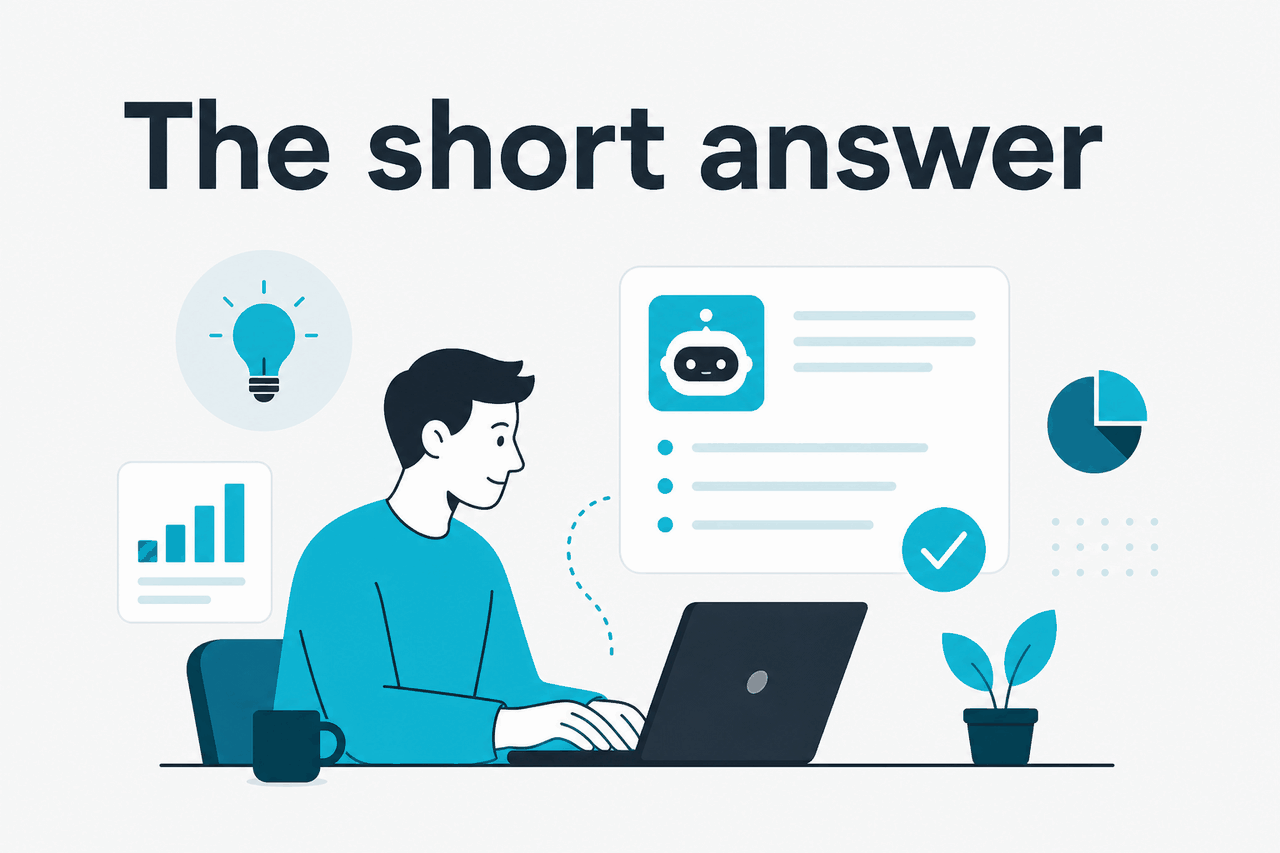
The clean pattern is: Slack collects the request, Claude Code handles the code work, and Git handles review. A teammate posts a bug, feature request, refactor brief, or build failure in Slack. An engineer copies the useful context into Claude Code, or an internal integration turns the Slack thread into a structured task. Claude then works inside a repository where it can inspect files, make edits, run tests, and explain the diff.
Teams usually choose one of three setups. The first is manual: Slack is only where the task is discussed, and an engineer runs Claude Code locally. The second is semi-automated: a bot creates an issue, ticket, or pull request draft from the Slack thread, and Claude Code helps implement it. The third is custom: a Slack bot calls the Anthropic API and connects to internal tooling, with strict controls around repositories, commands, secrets, and production systems.
Treat Slack context as untrusted input. A Slack message can be incomplete, wrong, or too broad. Before Claude edits code, provide a repository path, acceptance criteria, files to inspect, tests to run, and limits on what it should not touch. If the task involves customer data, credentials, or regulated systems, check your organisation’s security rules and Anthropic’s trust documentation at trust.anthropic.com.
Start with a clear Slack request
Ask for the bug, expected behaviour, actual behaviour, logs, screenshots, affected environment, and priority. A good Slack thread reads more like a small ticket than a casual message.
Move the task into Claude Code
Open the relevant repository and run
claude. Paste the Slack context with clear instructions, such as: “Inspect the checkout flow and identify the likely cause before editing files.”Constrain the work
Tell Claude which files it may change, which commands it may run, and what output you expect. Example:
Do not change database migrations. Run the existing unit tests for payments.Review the diff
Do not ship code just because Claude produced it. Review the patch, run tests, check edge cases, and ask Claude to explain risky changes.
Report back in Slack
Post the final status to the original thread: root cause, files changed, test results, pull request link, and remaining risks.
What teams actually do with it
The useful cases are not vague “AI in Slack” demos. They are specific engineering loops where Slack has the context and Claude Code can operate on a real codebase.
Turn a bug report into a first-pass fix
A support engineer posts a Slack thread: “Customers using Safari cannot complete checkout after applying a discount code.” The thread includes a browser version, console error, customer impact, and a link to an internal ticket. An engineer can then run Claude Code in the repository and give it the exact task:
claude

Slack context:
- Safari checkout fails after applying a discount code
- Console error: TypeError in discount-summary.ts
- Chrome and Firefox appear unaffected
- Do not change payment provider logic

Task:
Inspect the checkout UI, identify the likely Safari-specific issue, propose a minimal fix, and run the existing checkout tests.
This works because the scope is narrow, the symptoms are concrete, and Claude can validate its work against tests. It is a poor fit if the Slack thread only says “checkout is broken” with no reproduction steps.
Worked example
Slack bug thread to pull request checklist
The workflow works because Slack supplies operational context while Claude Code handles repository-level investigation.
Convert a product request into implementation options
Product managers often describe a feature in Slack before a ticket exists. Claude Code can help turn that early discussion into an engineering plan. Ask for options before asking for code.
claude

Use this Slack discussion as context. Do not edit files yet.

Goal:
Add an account-level setting that lets admins require two-step approval for invoice exports.

Please inspect the settings and billing areas, then return:
1. likely files involved
2. data model changes, if any
3. API changes, if any
4. frontend changes
5. risks and open questions
This prevents premature implementation. Claude can map the codebase and expose hidden work, such as permissions, audit logging, or backwards compatibility. The team can then decide whether to create an issue, split the work, or reject the idea.
Explain a failing build to the team
When CI fails after a merge, Slack often gets the first question: “Why is main broken?” Claude Code can inspect the failing logs, compare recent changes, and produce a concise explanation for the channel.
claude

The build is failing after the latest merge.

Context from Slack:
- Failure started after PR #1842
- CI job: api-tests
- Error: expected status 200, received 403 in org-permissions.spec.ts

Task:
Inspect the test and the changed permission code. Explain the likely cause and suggest the smallest safe fix. Do not edit files until I approve the plan.
The final Slack update should not be a raw model transcript. It should be a clear status note: what failed, why it failed, what changed, whether a fix is open, and who is reviewing it.
Prepare a focused code review
Claude Code can help review a PR requested in Slack. Ask it to focus on specific risks instead of producing a generic review.
claude

Review the current branch against main.

Focus only on:
- authentication regressions
- missing tests
- unexpected database queries
- user-facing error messages

Return findings grouped by severity. Do not rewrite code unless I ask.
This is stronger than asking “review this PR” because it gives Claude a review frame. You can paste the strongest findings back into Slack or the pull request after checking them yourself.
Draft internal documentation after a fix
After an incident or complex change, a Slack thread may contain the best explanation of what happened. Claude Code can combine that context with the actual diff and draft internal documentation.
claude

Using the current branch and this Slack incident summary, draft an internal note.

Include:
- customer impact
- root cause
- files changed
- tests added
- rollback plan
- follow-up tasks

Keep it factual. Do not include private customer names.
This saves time, but it still needs human review. Claude may overstate certainty or miss organisational details that are not in the repository.
Claude Code Slack vs. alternatives
Claude Code plus Slack is not the same product category as an IDE autocomplete tool. It is closer to an agentic coding workflow connected to team communication. That makes it strong for tasks that start in discussion and need repository-level reasoning. It is weaker for instant inline completions while you type.
| Option | Best fit | Strengths | Trade-offs |
|---|---|---|---|
| Claude Code with Slack workflow | Team tasks that start in Slack and need repository changes | Good for investigation, edits across files, test runs, and status updates | Needs workflow design, permissions, review, and clear scope |
| Cursor | Developers who want AI directly inside the editor | Fast iteration in an IDE-style environment; useful for active coding sessions | Less natural as Slack-first intake unless paired with other tooling |
| GitHub Copilot | Inline suggestions, editor chat, and GitHub-native workflows | Convenient for autocomplete, small edits, and common coding tasks | May need extra process for Slack-thread-to-PR workflows |
| Sourcegraph Cody | Code search and codebase-aware assistance | Useful when understanding a large codebase is the main problem | Slack coordination still needs a separate workflow |
| Custom Slack bot using Anthropic API | Teams with internal platform engineering support | Can enforce custom permissions, ticket creation, audit logs, and routing | Requires engineering effort, security review, monitoring, and API cost controls |
The choice depends on where work begins. If engineers spend most of the day inside an editor, an IDE-first assistant may feel faster. If work starts as Slack threads from support, product, sales engineering, or incident response, a Slack-to-Claude-Code workflow can reduce handoff loss. Many teams will use both: an editor assistant for typing and Claude Code for scoped tasks that need broader repository changes.
Use it when
- Slack is where bugs, incidents, and feature requests already start.
- You want Claude to inspect a repository, not just answer a chat question.
- Your team can review diffs and enforce pull request rules.
- You need clear status updates back to non-engineers.
Skip it when
- You only need autocomplete inside an editor.
- Your Slack threads lack reproduction steps or acceptance criteria.
- You cannot safely grant tool or repository access.
- Your team expects AI-generated code to bypass review.
When it makes sense
Decision rule
Use a Claude Code Slack workflow when Slack is your intake channel and Claude can work inside a controlled repository environment. Do not use Slack as a shortcut around tickets, tests, permissions, or code review.
Claude Code Slack integration is valuable when you treat Slack as intake and coordination, not as the place where unreviewed code gets shipped. The strongest workflow is boring in a useful way: clear Slack request, scoped Claude Code session, tests, human review, pull request, and a short status update back to the thread.
If your team already loses context between Slack discussions and engineering tickets, this workflow can help. If the real problem is weak specifications, missing tests, or unclear ownership, adding Claude will not fix that by itself. Start with one low-risk repository, one channel, and one repeatable task type before building automation.
FAQ
Is there an official Claude app for Slack?
Check Anthropic’s official product pages for current availability. A Slack chatbot is not the same thing as Claude Code operating on a repository. For the official product surface, start at claude.ai or Anthropic’s site at anthropic.com.
Can I run Claude Code entirely inside Slack?
Not in the same way you run an IDE, terminal, or repository workspace. Slack can trigger, describe, and report on work. Code edits should happen in an environment with source control, tests, permissions, and auditability.
Can Claude Code create pull requests from Slack requests?
Yes, if your workflow connects Slack context to a development environment that can create branches and pull requests. The safer pattern is to have Claude propose or prepare the change, then require a human to review the diff before merging.
Which Claude model should I use for coding tasks?
Use the model that matches the task. Claude Sonnet 4.6 is the default choice for balanced coding work, with $3/$15 per million tokens, a 1M context window, and 128K max output. Claude Opus 4.7 is the flagship option for harder reasoning and large-context work, with $5/$25 per million tokens and a 1M context window. Claude Haiku 4.5 is faster and cheaper for lightweight tasks at $1/$5 per million tokens.
How much does a Claude Code Slack workflow cost?
For individual access, Claude offers Free at $0, Pro at $20/month or $17/month annual, and Max from $100/month. Team Standard is $25/seat or $20/seat annual. Team Premium is $125/seat or $100/seat annual. Enterprise is $20/seat base plus API rates. For custom workflows, see Anthropic’s official API pricing and our Claude pricing guide.
Does prompt caching help with Slack-based workflows?
Yes, if the same repository instructions, policies, or system context repeat across tasks. Prompt caching gives 90% off cached input. Batch API gives 50% off both input and output, which can help for non-urgent background tasks.
What should I avoid putting in Slack before using Claude Code?
Do not paste secrets, private keys, production credentials, or unnecessary customer personal data into a Slack thread. Give Claude the minimum context needed to solve the task and follow your organisation’s data rules.
Where can I compare Claude Code with the rest of Claude?
Use our Claude models guide for model selection, Claude API docs guide for developer workflows, and Claude FAQ for common product questions.
Independent guide. Not affiliated with Anthropic. For the official Claude product, visit claude.ai.
Last updated: 2026-05-12
This article is part of the Claude Code hub on c-ai.chat.