
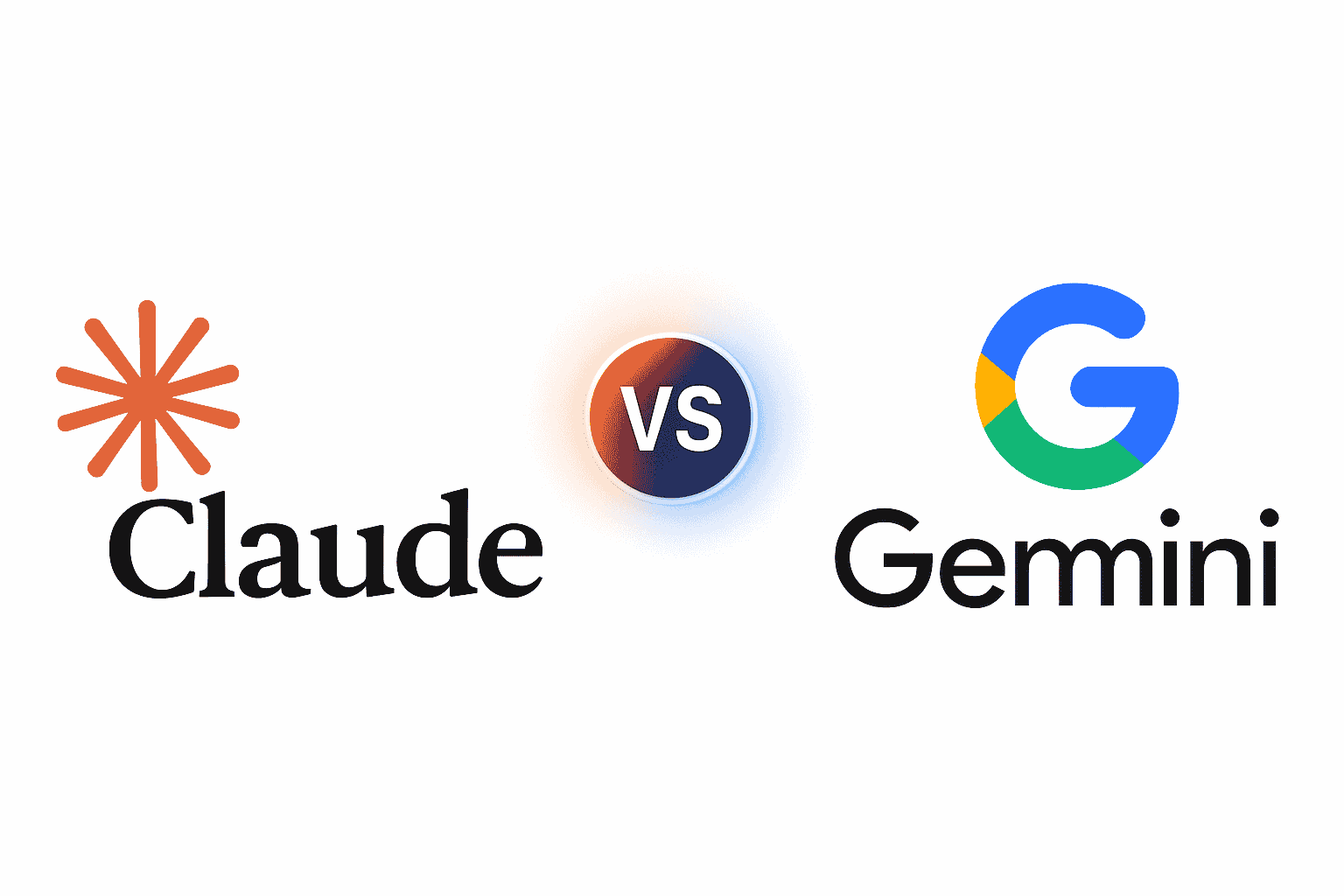
Claude and Google Gemini are two advanced AI assistants with very different origins – Claude is developed by the AI safety startup Anthropic, while Gemini comes from tech giant Google (via its DeepMind team). Both serve as powerful conversational AI chatbots, but they were created with distinct philosophies and use cases in mind. In this practical comparison (not a deep technical dive), we’ll explain what each assistant is, how they differ in capabilities and style, and which might suit certain needs. Importantly, this is an unofficial, independent guide – we’re not affiliated with Anthropic or Google, and our goal is simply to provide a clear, neutral overview.
- What Is Claude?
- What Is Google Gemini?
- Core Differences Between Claude and Gemini
- Which One Fits Different User Needs?
- Claude vs Google Gemini: Summary Table
- Final Thoughts
What Is Claude?
Claude is an AI assistant developed by Anthropic, designed to engage in natural language conversations and help with tasks like writing, coding, summarizing, and reasoning. Launched in 2023, it was built with a strong focus on being helpful, honest, and harmless in its responses. One of Claude’s standout features is its ability to handle extremely long context – it can read and analyze very large documents or long conversations without losing track. For example, later versions of Claude expanded the input length from around 9,000 words to upwards of 75,000+ words, enabling it to digest entire reports or books in one go. This makes Claude excellent at document understanding – you can feed it lengthy PDFs or text and get thorough summaries or analyses in return.
Claude also excels at creative writing and complex reasoning. It can produce detailed essays or stories and walk through logical problems step-by-step. The assistant is known for its thoughtful, safety-conscious style (Anthropic trained it using “Constitutional AI” methods to follow ethical guidelines). In terms of modality support, Claude primarily works with text but has gained multimodal abilities in advanced versions.
Claude Vision allows it to interpret images and PDFs – you can attach an image or document and Claude will attempt to describe or analyze it. Likewise, Claude has an optional voice mode on certain platforms: in the official Claude mobile app, you can actually talk to Claude and hear it talk back, enabling hands-free conversations. (This voice feature is currently available on supported mobile apps, but not in all interfaces.) Overall, Claude is like a reliable AI partner for in-depth writing, analysis, and problem-solving tasks. (For a deeper introduction to Claude’s features, see our Claude AI guide or the articles on Claude Voice Mode and Claude Vision for more details.)
What Is Google Gemini?
Google Gemini is the name of Google’s latest family of AI models and the AI assistant based on them. Essentially, Gemini is Google’s answer to advanced chatbots, and it succeeded the earlier Google Bard system (Google rebranded Bard to “Gemini” in early 2024 to reflect a broader model family). Gemini is a multimodal AI model, meaning it’s designed to handle not just text but also images, audio, and more.
In practice, Gemini powers Google’s generative AI chatbot (now often just called Google’s AI assistant), which can answer questions, help with writing, generate code, and so on – similar in spirit to Claude or ChatGPT. However, what makes Gemini unique is its tight integration into Google’s ecosystem. Rather than being just a standalone chat webpage, Gemini’s capabilities are being woven into many Google products that people use every day.
For example, Gemini is becoming the AI brain inside Google’s services: it’s now the default smart assistant on the latest Pixel phones, effectively replacing the old Google Assistant with a more conversational AI. This means you can talk to your Pixel phone’s AI (powered by Gemini) using voice, and it can respond with voice – handling tasks like answering questions, planning, or even summarizing what’s on your screen. In Google’s productivity apps, Gemini is also present – in Google Workspace you’ll find it in Google Docs helping to draft and edit documents, and in Gmail helping to compose emails or even find information in your inbox.
It’s the AI that can suggest replies in Gmail or help generate content in Docs and Sheets. Google has also integrated Gemini into Search (through features like Search Generative Experience) to provide AI-generated summaries of search results, and even into Maps to summarize reviews of places. In short, Gemini is an AI assistant deeply embedded in Google’s ecosystem, aimed at enhancing productivity and information access. It supports text and coding tasks, can work with images (e.g. describing an image or generating images via connected tools), and handles voice input/output in contexts like the phone assistant. Rather than being a separate tool you go to, Gemini is built into the tools you already use with your Google account.
Core Differences Between Claude and Gemini
Both Claude and Google Gemini are capable AI assistants, but they differ in their design philosophy, style, and usage context. Here’s a high-level look at their core differences:
Origin & Philosophy
Claude was created by Anthropic with a mission to prioritize AI safety and alignment – it tries hard to follow ethical guidelines and avoid harmful outputs. Its design philosophy is as a friendly, reliable AI partner that errs on the side of caution. In contrast, Google’s Gemini comes from the union of Google’s AI research and DeepMind’s cutting-edge techniques, aiming to be a state-of-the-art general AI.
Google has leveraged its vast resources to train Gemini on diverse data (text, code, images, etc.), and the focus is on broad capability and integration. While Gemini is certainly built with safety in mind as well, its core identity is tied to being deeply integrated into everyday Google services and providing helpful functionality within those products.
Writing & Response Style
Users often note subtle differences in how Claude and Gemini respond. Claude’s style tends to be very polite, thorough, and verbose. It often gives detailed answers with explanations, and it’s willing to engage in longer, nuanced discussions or storytelling. This makes Claude great for when you want a comprehensive, well-reasoned response. Gemini’s style can vary depending on context (since it works in many Google apps), but generally it is concise and task-oriented by default. For instance, if you’re using Gemini in Google Search or Gmail, it will try to give you the info or draft you need as straightforwardly as possible.
It’s tuned for productivity – often brief and to the point – though it can elaborate when prompted. Claude might sprinkle in a bit more personality or creative flourishes in writing, whereas Gemini, carrying on from the Bard lineage, often sticks to a helpful but somewhat more factual tone. Neither is overly casual unless you ask; they both adjust tone to the user, but Claude’s voice often feels more like a conversational assistant or colleague, while Gemini often feels like a built-in feature of a tool (focused on the immediate task).
Reasoning Approach
Both AI systems can perform reasoning and complex problem-solving, but their approaches reflect their training. Claude, thanks to Anthropic’s methods, sometimes uses a step-by-step reasoning style (it might internally follow a “chain-of-thought” approach and carefully consider context, which is why it can handle tricky questions well). It has a strong track record on many academic or coding benchmarks, and users find it excels at analyzing long inputs logically. Gemini, on the other hand, benefits from Google DeepMind’s research into advanced reasoning (and even uses techniques like “Deep Think” modes in some model versions). It is very capable too, especially in scenarios that involve combining knowledge from different sources.
A practical difference is that Gemini can access real-time information when used in Google’s context – for example, it can effectively look up current data from the web (since it’s integrated with Google Search) or your own Google data if you permit, which can aid its reasoning with up-to-date facts. Claude does not have built-in web access or live data retrieval, so it relies on its trained knowledge (which is periodically updated, but not live) and whatever the user provides. This means for strictly logical reasoning on a self-contained problem (like solving a puzzle or writing code), both are strong; but for reasoning that involves current events or your personal calendar/email info, Gemini has an advantage by virtue of integration. Claude might require you to copy in the relevant info, whereas Gemini can pull it from connected sources as needed.
Ecosystem Integration
This is perhaps the biggest practical difference. Claude is a standalone AI assistant – you typically use it via Anthropic’s Claude web interface or API, or in apps that specifically integrated Claude. It’s not baked into operating systems or common consumer software by default (aside from partner apps like Quora Poe or Slack plugins, which you have to seek out). In contrast, Gemini is deeply embedded in Google’s ecosystem. If you’re in the Google world, you’ll encounter Gemini’s help in many places without even navigating to a separate site – whether it’s in your Gmail composing window, a Google Docs sidebar, or on your Android phone when you say “Hey Google” (on a supported device).
This integration means Gemini feels like part of your existing workflow, whereas using Claude might mean going outside those apps to ask Claude something, then bringing the answer back. Neither approach is inherently better – it’s a trade-off between an independent AI service (Claude) versus a built-in assistant (Gemini). For users who value having AI assistance within their everyday tools, Gemini offers that seamless presence. On the other hand, using Claude separately can be preferable for those who want an AI that’s not tied to a big tech ecosystem – you can use Claude with just an email or API key, without needing a Google account.
Privacy & Usage Context
Because of these integration differences, there are some general privacy/usage considerations. With Claude, your interactions are with Anthropic’s service – it’s a third-party company that handles your data under its own policies. Claude is often used in enterprise settings where companies choose it for its safety focus. With Gemini, your interactions may be tied into your Google account and the Google ecosystem. For example, if you use Gemini in Gmail or on your phone, it may access data from your emails or device (with your permission) to better assist you.
Google has its own privacy framework for how AI will use personal data, but some users might be cautious about an AI that’s plugged into their personal Google data. In contrast, Claude will only see what you explicitly share with it in the chat or via file uploads. Generally speaking, Claude is an AI you go to with your content, whereas Gemini is an AI that comes to your content (living within your apps). Depending on your comfort and needs, you might prefer one context over the other. (In any case, both Anthropic and Google advise users not to share highly sensitive personal data with the AI without caution.)
Which One Fits Different User Needs?
Choosing between Claude and Google Gemini really depends on what you plan to do. Both are versatile, but each shines a bit more in certain scenarios. Here are a few common use cases and how the two compare:
Writing & Analysis
If you need to draft long-form content (like an essay, story, or detailed report) or analyze a large document, Claude is a strong choice. Its ability to handle very lengthy texts means you can give it a whole draft or a huge data dump and get a coherent written output or summary. Many users appreciate Claude’s creative flair and depth for writing tasks – it can produce well-structured, often human-like prose and go in-depth in analysis. Gemini can absolutely assist with writing as well (for instance, generating a quick blog outline or helping rephrase a paragraph in Google Docs).
However, Gemini’s advantage is speed and context within apps: if you’re already in Google Docs or Gmail, Gemini is right there to help you crank out a paragraph or email. In short, choose Claude when you want comprehensive and detailed writing help on large content, and choose Gemini when you want on-the-spot writing assistance integrated into your workflow. Both can handle analysis, but Claude might delve deeper on a long text you provide, whereas Gemini might excel at analyzing web information or shorter texts within Google’s tools.
Research & Summarization
For research-oriented tasks, the two offer different benefits. Claude is excellent for digesting and summarizing material you give it – for example, you can paste an article or even upload a PDF and ask Claude to summarize or extract key points. It will reliably work through the entire content (given its long context window) and produce a thorough summary or analysis. Gemini, on the other hand, is fantastic for getting up-to-date information and summaries from the web.
Since it’s connected to Google Search, you can ask Gemini about a topic and it can incorporate the latest information available online. It can summarize search results or even your Google Drive documents (if integrated) on the fly. In essence, Claude is like a knowledgeable reader that you can hand a document to for summarization, whereas Gemini is like an ultra-smart search engine that can both find and summarize information. If your work is summarizing internal reports or books, Claude might be more fitting. If your work is gathering and summarizing current information or emails/news, Gemini’s real-time access is invaluable.
Productivity Tasks
If your daily routine involves a lot of Google services – such as emailing, scheduling, and document editing – Gemini is tailored for you. It can draft emails in Gmail with a click, help generate slide content in Google Slides, or act as a virtual assistant managing your appointments via Google Calendar (through conversational interface). It’s like having an AI assistant living inside your office suite and phone, ready to help with little things to save time. Claude, while not built into those tools, can still assist with productivity in a more manual way.
For instance, you might copy a chunk of text from an email and ask Claude to rewrite it more formally, or you might use Claude to brainstorm ideas for a presentation and then copy the results into Slides. Some power users integrate Claude via API into their own workflows or use it in team chat tools for assistance. But generally, Gemini will feel more natural for routine productivity because it’s designed as an in-app assistant. Meanwhile, Claude can be a powerful thinking partner for more complex or open-ended tasks – like analyzing a complex spreadsheet (if you export it as text) or generating a project plan outline – which you then refine and implement yourself.
Everyday Assistance
For everyday personal assistance (similar to how one might use Siri, Alexa, or Google Assistant historically), Gemini is positioned to take on that role. On mobile devices like the Pixel, you can ask Gemini (via voice) for weather updates, to set reminders, to control smart home devices, or to answer random questions – it’s part of the phone’s OS experience. Gemini’s integration with Google’s knowledge graph means it’s very handy for quick facts (“What’s the capital of X?”) and little tasks (“Remind me to call Mom tonight”). Claude isn’t an “assistant on your phone” in that sense; it doesn’t integrate with GPS, your calendar, or device controls out of the box.
You’d typically use Claude more deliberately – e.g. opening the Claude app or site to have a focused conversation. Thus, for always-available daily assistance triggered by voice or context, Gemini wins on convenience. But Claude can still aid in daily life if you bring your queries to it. People use Claude for things like personal brainstorming, journaling prompts, or learning – you might chat with Claude about ideas or ask it to explain something complex in simple terms. The difference is proactive embedded assistant (Gemini) vs on-demand consultant (Claude) for everyday needs.
In summary, neither Claude nor Google Gemini is “better” overall – they each fit different niches. In fact, some users employ both: Claude for heavy-duty thinking and writing tasks, and Gemini for quick assistance integrated into their daily tools. Your choice can depend on whether you value independent, long-form capability (Claude) or seamless, context-aware help in the apps you already use (Gemini).
Claude vs Google Gemini: Summary Table
To wrap up, here’s a side-by-side summary of Claude and Gemini highlighting their strengths, typical uses, and interaction style:
| Aspect | Claude (Anthropic) | Google Gemini (DeepMind/Google) |
|---|---|---|
| Key Strengths | Extremely long context (can handle very large texts); deep document analysis and summarization; thoughtful and detailed writing and reasoning; built with strong safety guidelines for reliable answers. | Integrated knowledge and real-time info (taps into Google Search and personal data for up-to-date answers); multimodal input/output (text, images, voice) in one system; seamlessly aids in productivity tasks within Google apps. |
| Typical Use Cases | In-depth research, writing, and analysis where you might provide large documents or complex prompts (e.g. analyzing reports, writing essays or code, summarizing books). Often used as a standalone AI assistant or via API for custom solutions. Also favored for creative tasks and brainstorming in a controlled environment (you decide what data to give it). | Everyday productivity and information support embedded in your workflow (e.g. drafting emails, finding info in your files, getting directions or answers on the fly). Ideal if you work in Google Workspace (Docs, Gmail, etc.) or on Android devices – Gemini acts as an on-hand assistant. Great for quick answers and task automation while you’re using other apps. |
| Interaction Style | Conversational and detailed – feels like chatting with a knowledgeable colleague. Tends to give longer, well-explained answers by default. You guide it by providing context in the conversation. Available through a chat interface (text input, with optional voice/image features on certain platforms). The user generally initiates queries and provides any reference info (since it’s not hooked into your tools automatically). | Context-aware and concise – acts more like a smart feature built into software. Often provides brief, direct answers or suggestions unless asked for detail. Can be invoked by voice or a click in many Google apps, sometimes proactively offering help (e.g. “Help me write” buttons). Leverages context from your current app (email draft, document, etc.) to understand what you need. The interaction can feel less like open-ended chat and more like getting intelligent assistance within a task. |
Final Thoughts
Claude and Google Gemini are both powerful AI assistants, each excelling in its own arena. Claude, with its roots in Anthropic’s safety-focused research, offers a reliable and richly conversational partner for tackling big writing or analysis tasks. Google’s Gemini, born from the marriage of Google’s and DeepMind’s AI efforts, serves as an ever-ready helper woven into the apps many people already use daily. In practice, they don’t directly compete so much as cater to different user preferences: one is an independent AI companion, the other is a ubiquitous AI utility.
Which one should you use? The answer may simply be whichever aligns with your needs and environment. If you’re frequently in Google’s ecosystem and want AI assistance with minimal friction, Gemini will likely feel like a natural extension of your tools. If you need an AI that you can feed huge amounts of text to and have a deep dialogue with – or if you prefer not to tie your AI usage to Google – Claude is a fantastic choice. Many users will find value in both for different tasks.
Finally, remember that both systems are continually improving. It’s worth experimenting with each to see how they handle your specific queries or workflows. Whichever you choose, always double-check important outputs (both can make mistakes) and use these assistants responsibly. For more about Claude’s latest features and tips on getting the most out of it, feel free to explore our Claude AI guide and other articles on this site. We hope this comparison gave you a clear understanding of Claude vs Google Gemini in a practical, beginner-friendly way. Happy chatting with your AI assistant of choice!
Last updated: 2026-05-12
This article is part of the Claude comparisons hub on c-ai.chat.