

ccusage is a third-party usage tracker for Claude Code that reads local activity data to estimate tokens, model mix, and costs; for the wider product context, start with our Claude features guide.

What it does at a glance
ccusage gives Claude Code users a clearer view of usage after a coding session. It is not made by Anthropic, and it is not official billing.
Usage estimate
ccusage can help explain token volume, model mix, and likely cost, but Anthropic account data remains the source of truth.
- Tracks usage from local Claude Code activity data where available.
- Estimates cost from token counts and model pricing.
- Breaks down sessions by day, project, or model when the source data supports it.
- Does not replace billing from Anthropic, invoices, workspace settings, or contract terms.
The core point is simple: ccusage is a visibility tool. Claude Code is Anthropic’s coding agent product. ccusage sits beside it and helps you inspect usage patterns after the fact. That matters if you use Claude Code often, switch between models, or need to understand why usage feels higher than expected.
For model context, see our Claude models guide. For account-level costs, see our Claude pricing guide. Anthropic’s official Claude product is claude.ai, and official pricing is listed at claude.com/pricing.
Decision rule
Use ccusage when you need directional usage insight. Use Anthropic billing, workspace admin tools, and official support when you need exact charges, limits, invoices, or compliance answers.
How it works
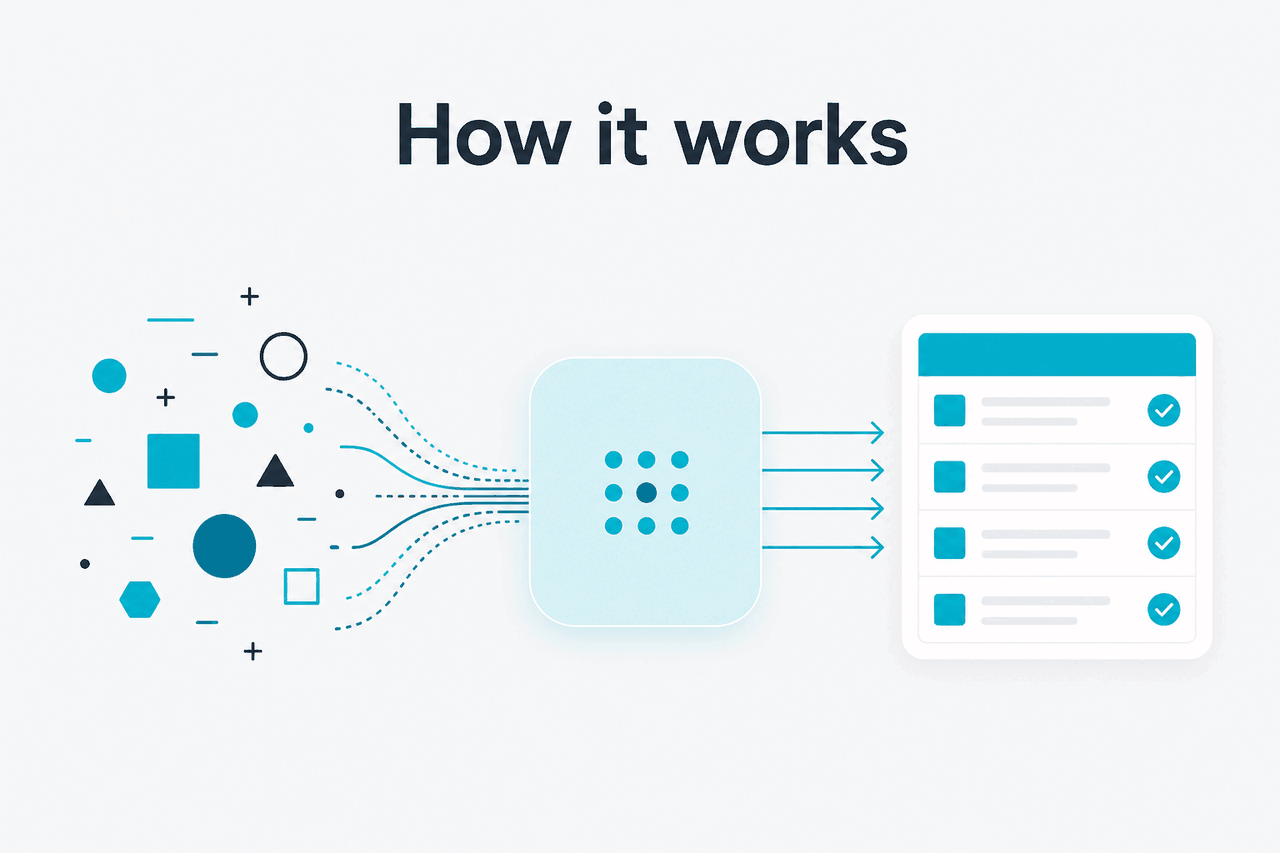
ccusage reads usage records produced during Claude Code activity and turns them into summaries. A typical Claude Code workflow may include prompts, tool calls, file context, terminal output, and model responses. Local records can contain enough metadata for a tracker to estimate input tokens, output tokens, model usage, and session totals.
The cost estimate depends on model pricing. Anthropic prices API usage per million input tokens and per million output tokens. Listed API prices include Claude Opus 4.7 at $5/M input tokens and $25/M output tokens, Claude Sonnet 4.6 at $3/M input tokens and $15/M output tokens, and Claude Haiku 4.5 at $1/M input tokens and $5/M output tokens.
| Model | Input price | Output price | Context and output notes |
|---|---|---|---|
| Claude Opus 4.7 | $5/M tokens | $25/M tokens | 1M context window |
| Claude Sonnet 4.6 | $3/M tokens | $15/M tokens | 1M context window; 128K max output |
| Claude Haiku 4.5 | $1/M tokens | $5/M tokens | Lowest listed token price in the current lineup |
Worked example
Estimating one Claude Code session
This is the arithmetic a usage tracker performs. Your billed amount can differ if caching, Batch API, credits, taxes, subscription rules, or account-specific terms apply.
Claude subscriptions and API billing are different. Free is $0. Pro is $20/month, or $17/month on an annual plan. Max starts from $100/month. Team Standard is $25/seat, or $20/seat on an annual plan. Team Premium is $125/seat, or $100/seat on an annual plan. Enterprise uses a $20/seat base plus API rates. These plan prices do not make a local tracker authoritative for billing.
Free
$0
Good for light Claude use. ccusage is only relevant if your workflow produces local Claude Code data.
Pro
$20/mo
$17/mo on an annual plan. Use ccusage for personal visibility, not official remaining-limit calculations.
Max
From $100/mo
More suitable for heavy individual use. Local estimates still differ from Anthropic account enforcement.
Team and Enterprise
From $25/seat
Use workspace billing and admin controls for official records. Enterprise adds a $20/seat base plus API rates.
| What you are checking | What ccusage can help with | What to verify elsewhere |
|---|---|---|
| Token volume | Shows estimated input and output token totals from recorded activity. | Official account or billing data if you need exact charges. |
| Model mix | Helps identify whether higher-cost models were used more than expected. | Anthropic’s current model names and prices. |
| Project patterns | Can reveal which projects or sessions consume the most context. | Whether local records include enough project metadata. |
| Cost planning | Provides a practical estimate for budgeting and behaviour changes. | Prompt caching, Batch API, plan rules, and contract terms. |
Anthropic’s API pricing reference is available in the Claude API pricing docs. Model capabilities are listed in the Claude models overview.
When ccusage helps

ccusage helps most when Claude Code usage is high enough that guessing no longer works. It gives you a feedback loop: which sessions were large, which models drove the estimate, and whether your workflow loaded more context than you expected.
1. Checking why a coding session felt expensive. Claude Code can process repository context, file edits, terminal output, test failures, and repeated prompts. A short visible chat can still have a large token footprint.
2. Comparing model choices. If one project mostly used Claude Sonnet 4.6 and another used Claude Opus 4.7, ccusage can show the likely cost difference. That helps you decide when a flagship model is justified and when a lower-cost model is enough.
3. Finding context-heavy workflows. Usage can spike when you ask Claude Code to inspect broad parts of a repository. If totals jump during broad codebase tasks, narrow the prompt, name specific files, or split the work into smaller steps.
4. Budgeting team experiments. A small team testing Claude Code can use ccusage-style reports to estimate usage before wider rollout. For team administration, compare those estimates with official workspace controls and billing surfaces.
5. Auditing personal habits. Developers often underestimate repeated “try again,” “run the tests,” and “fix the failing case” loops. A tracker can make those loops visible. That does not mean the usage was wasteful, but it helps you decide where to tighten prompts.
Use it when
- You use Claude Code regularly and want clearer cost estimates.
- You switch between Opus, Sonnet, and Haiku models.
- You need project-level or session-level usage patterns.
- You want to reduce unnecessary context loading.
Skip it when
- You only use Claude Code occasionally and do not need reporting.
- You need official invoices, taxes, or contract-level billing records.
- Your local activity data is unavailable, incomplete, or restricted by policy.
- You are trying to monitor other users without an approved admin process.
Cost optimisation is where usage visibility becomes practical. Anthropic documents prompt caching at 90% off cached input tokens and Batch API at 50% off both directions. Those discounts do not mean every Claude Code interaction automatically receives them. They do mean token reports are more useful when you understand which parts of your workflow repeat large prompts or can run asynchronously through the Claude API.
50% off
Batch API discounts apply in both directions when the workflow uses Batch API pricing.
If you are building custom developer tooling around Claude rather than using Claude Code directly, start with the official Claude developer docs and our API documentation guide.
What it cannot do
ccusage is only as accurate as the data it can read and the pricing assumptions it applies. Treat it as an analysis layer, not as the source of truth for billing, workspace policy, or account limits.
- It cannot guarantee exact billing. Official charges can depend on account type, plan, discounts, cached tokens, batch processing, credits, taxes, and contract terms.
- It may miss activity. If Claude Code records are deleted, moved, rotated, or stored differently, a tracker may report incomplete totals.
- It does not create higher limits. Tracking usage does not raise Claude plan limits or API rate limits.
- It does not replace admin controls. Team and Enterprise workspaces need official controls such as SSO, role-based access, spend controls, audit logs, or SCIM where available.
- It may use stale pricing. If model prices change and the tracker has not been updated, estimates can be wrong.
- It cannot explain every product limit. Claude web plans, Claude Code access, API rate limits, and traffic priority are governed by Anthropic’s systems, not by local reporting.
Privacy also matters. A usage tracker should not require you to upload source code, prompts, or local Claude Code logs to an unknown service. A local-only metadata tool has a different risk profile from a hosted dashboard. Review how any tracker handles file paths, prompts, project names, and generated output before using it on sensitive repositories.
FAQ
People searching for ccusage usually want to know whether it is official, whether it changes billing, and how it compares with Claude’s own account information.
If you are still evaluating Claude, start with our independent Claude guide, then compare product behaviour in Claude resources and common questions in the Claude FAQ. Usage tracking is helpful, but it is only one part of choosing a workflow.
The honest take
ccusage is useful if Claude Code is part of your regular development workflow and you want clearer visibility into token use. It is especially helpful for spotting large sessions, expensive model choices, and context-heavy habits. It is not a billing product.
Use it as a diagnostic tool. Check the estimates, change one workflow habit, then check again. If you need exact charges, limits, workspace controls, or compliance guarantees, use Anthropic’s official account, pricing, trust, and support resources.
Independent guide. Not affiliated with Anthropic. For the official Claude product, visit claude.ai.
Last updated: 2026-05-12