
Claude 3 is Anthropic’s earlier model generation that introduced the Opus, Sonnet, and Haiku family naming, but it is no longer the current lineup; if you mean which Claude model to use now, start with our Claude models guide, then use this page to place Claude 3 in context as an independent reference from c-ai.chat.

People still search for “claude 3” when they want to understand Anthropic’s model families, compare older naming with today’s versions, or work out whether Claude 3 is still available in the API or app. This page answers that directly, then covers strengths, limits, when an older Claude 3 reference still matters, and the closest current alternatives in Claude pricing, the API, and Claude features.
- Which model is this?
- What it’s best at
- Where it falls short
- When to pick this model
- Other questions readers ask
- The honest take
Which model is this?

Claude 3 is not one single model. It was a generation name covering three tiers: Opus, Sonnet, and Haiku. In Anthropic’s current lineup, those names still exist, but the active versions are newer: Claude Opus 4.7, Claude Sonnet 4.6, and Claude Haiku 4.5. So if you searched “claude 3,” the precise answer today is that you are usually referring to an older family label rather than the latest production recommendation.
- Input: Opus 4.7 at $5/M tokens
- Output: Opus 4.7 at $25/M tokens
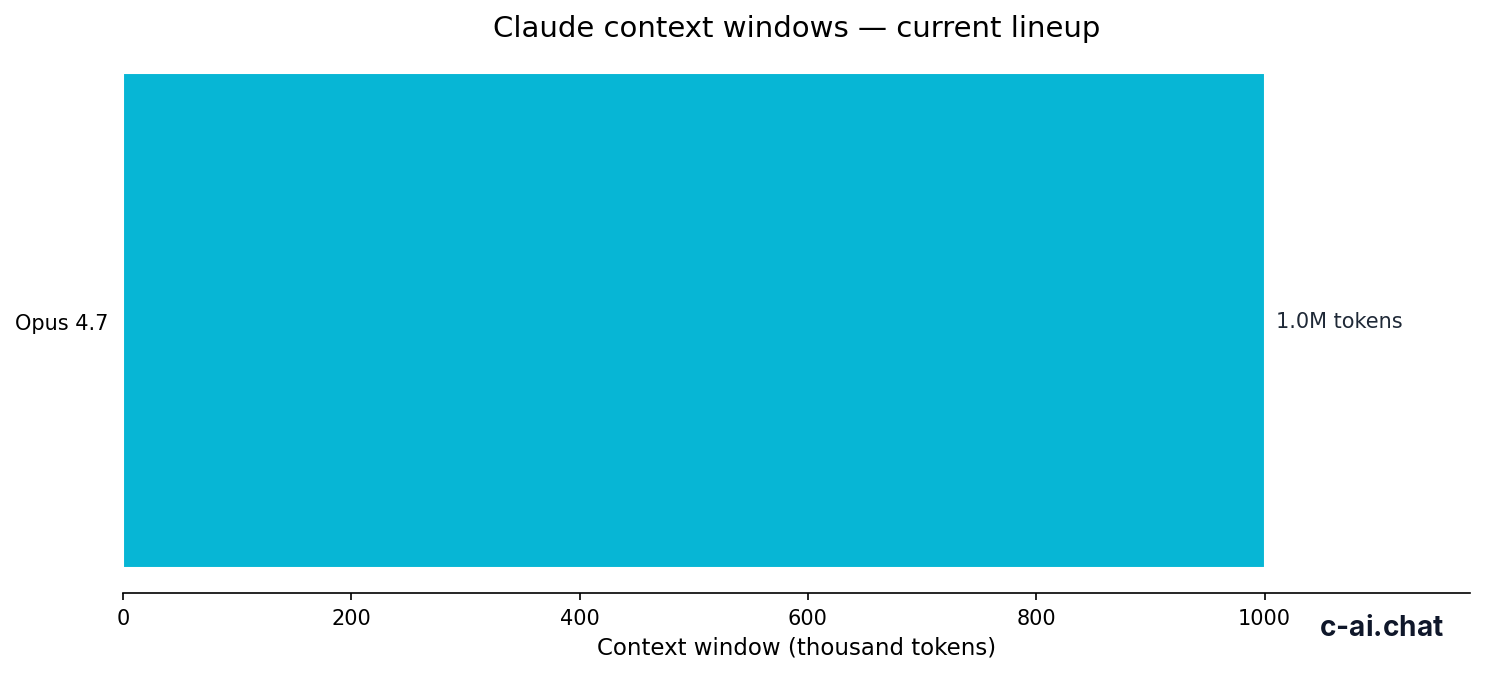
- Context: up to 1,000,000 tokens on supported current models
- Max output: Sonnet 4.6 supports up to 128K output tokens
That matters because a lot of older tutorials, benchmarks, and blog posts say “Claude 3” when they really mean “the Claude family introduced in that generation.” If you are choosing a model today, Anthropic’s live options and pricing are listed on the official Claude pricing page and in the model overview. If you want the short version from an independent guide: Sonnet 4.6 is the default choice for most people, Opus 4.7 is the premium reasoning tier, and Haiku 4.5 is the speed-and-cost option.
| Current model | Role in lineup | Input price | Output price | Context window | Best fit |
|---|---|---|---|---|---|
| Opus 4.7 | Flagship | $5/M | $25/M | 1,000,000 tokens | Hard reasoning, complex coding, premium quality |
| Sonnet 4.6 | Recommended default | $3/M | $15/M | 1,000,000 tokens | Most users, balanced quality and cost |
| Haiku 4.5 | Fast / cheap | $1/M | $5/M | See current platform limits | High-volume, lightweight, latency-sensitive work |
What it’s best at
As a search term, “claude 3” is best understood as a useful historical label. It helps you map older comparisons, prompts, and app screenshots to today’s Claude model families. If you are reading an older review that says Claude 3 Opus was the strongest reasoning model, the modern equivalent question is whether you should use Opus 4.7 now. If a guide recommends Claude 3 Haiku for low-cost speed, the same logic now points toward Haiku 4.5.
That makes Claude 3 references valuable for translation rather than direct model selection. The family split introduced a simple mental model that still holds: Opus for maximum capability, Sonnet for the practical middle ground, Haiku for throughput and price efficiency. Compared with current live models, though, “Claude 3” on its own is too vague for procurement, API budgeting, or serious workflow design. For that, you need the current model names in our model lineup page and the exact per-token costs in Claude pricing.
- Understanding old benchmarks: useful when a chart or article compares Claude 3 against other model generations.
- Mapping family roles: Opus still means premium capability, Sonnet still means balanced default, Haiku still means lower-cost speed.
- Interpreting legacy prompts: older prompt packs and tutorials may say “Claude 3” without a version-specific update.
- Comparing model tiers: helps explain why Sonnet is usually the safe default over Opus for cost, and over Haiku for quality.
- Planning migrations: teams moving from older API code need to know that “Claude 3” references may not match today’s preferred model IDs.
Where it falls short
The weakness of “claude 3” is precision. It does not tell you which exact model, which release, which pricing tier, or whether the guidance is still current. For a casual search, that is fine. For real work, it is not enough. If you are shipping product features, estimating API cost, or deciding between app plans, you should use the live Claude naming and official plan details instead of relying on a generation term that bundles several different model types together.
- Too broad for implementation: “Claude 3” could mean Opus, Sonnet, or Haiku, each with different speed and cost trade-offs.
- Can mislead on availability: older articles may describe models or interfaces that are no longer the main recommendation.
- Weak for budgeting: current API pricing is tied to active models, not old generation labels.
- Weak for app plan decisions: Free, Pro, Max, Team, and Enterprise choices depend on current access and limits.
- Weak for technical docs: developers need current references from platform pricing and model docs.
When to pick this model
You should not usually “pick Claude 3” as such. You should pick the current model that matches the old role you had in mind. The pricing trade-off is straightforward: Haiku 4.5 is cheapest at $1/M input and $5/M output, Sonnet 4.6 is the balanced middle at $3/M and $15/M, and Opus 4.7 costs more at $5/M and $25/M because it is the flagship tier.
Pick when
- You are reading older content and need to map “Claude 3” to the current family structure.
- You want to understand why Opus, Sonnet, and Haiku still describe capability tiers today.
- You are updating prompts, tutorials, or API references from an older Claude generation.
- You need a bridge between legacy comparisons and the current Claude API.
Skip when
- You are choosing a live production model right now. Use the current version names instead.
- You need exact cost estimates. Use current per-token pricing, not an old generation label.
- You need the cheapest option. Haiku 4.5 is the clearer answer.
- You need the strongest current model. Opus 4.7 is the clearer answer.
- You want the safest default for most tasks. Sonnet 4.6 is usually the better starting point for the price.
90% off
cached input tokens with prompt caching
That cost difference matters more than the old generation name. Anthropic also offers cost controls that can outweigh small model-choice debates in real deployments: prompt caching can cut cached input token cost by 90%, and the Batch API can reduce both input and output cost by 50% for asynchronous jobs. If your search for “claude 3” is really about operating cost, the better path is to compare live models and optimization tools rather than focus on the older label.
Other questions readers ask
| Question behind “Claude 3” search | Best current answer |
|---|---|
| Which model should I use for most tasks? | Sonnet 4.6 |
| Which model is strongest? | Opus 4.7 |
| Which model is cheapest? | Haiku 4.5 |
| Where do I check official status? | status.claude.com |
| Where do I see official plan pricing? | claude.com/pricing |
The honest take
“Claude 3” is still a useful search term, but mainly as a way to understand older Claude family naming. It is not the clearest way to choose a model today. If you just want the practical answer, use Sonnet 4.6 for most work, move up to Opus 4.7 when quality matters more than cost, and drop to Haiku 4.5 when speed and price matter most.
That is the key distinction: Claude 3 is historical context; the current Claude lineup is the real buying and implementation choice. If you want the official product, use claude.ai. If you want an independent explanation of which model or plan fits your case, start with our guides to Claude models, pricing, or the c-ai.chat homepage.
Independent guide. Not affiliated with Anthropic. For the official Claude product, visit claude.ai.
Last updated: 2026-05-12