
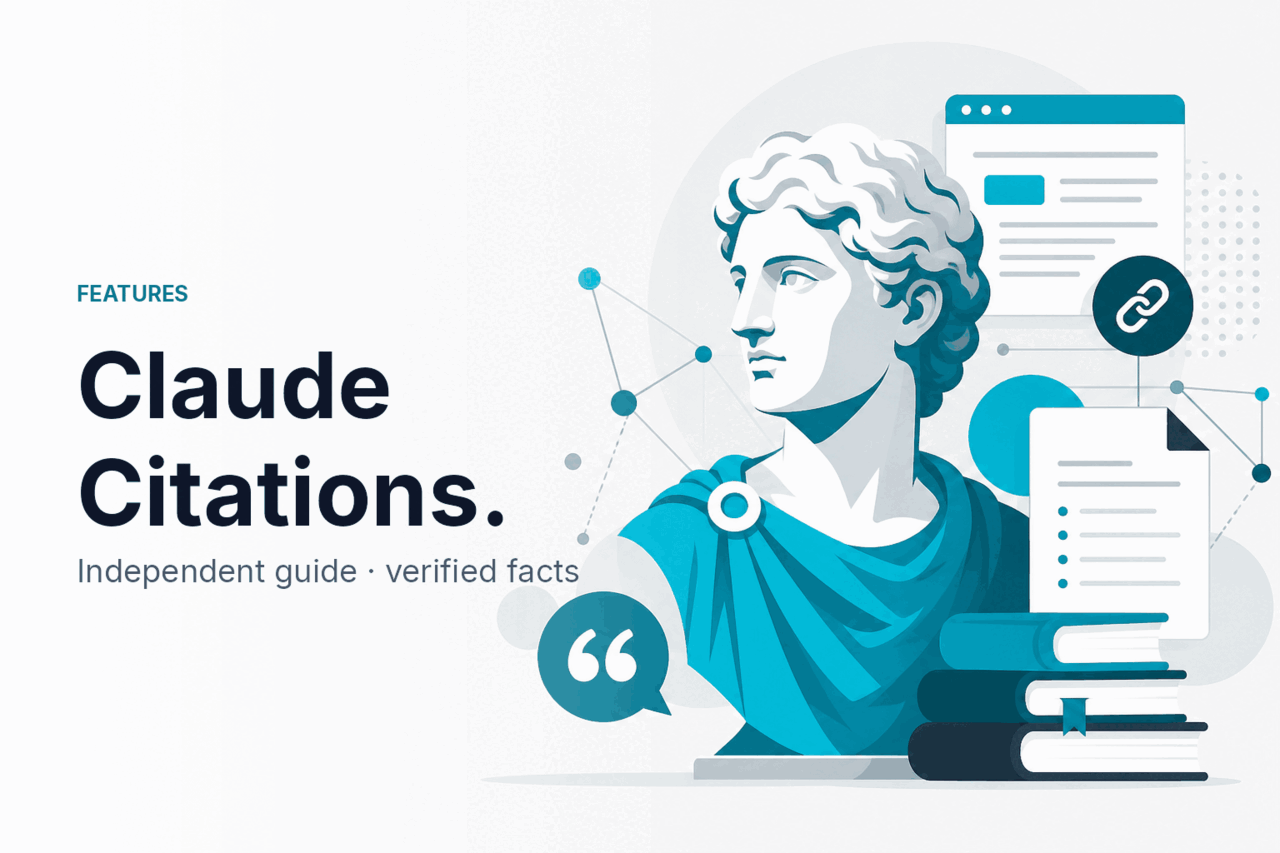
Claude citations are Claude responses that attach source references to specific claims, so you can trace an answer back to the underlying material instead of taking the model at its word. This guide is from c-ai.chat, an independent reference site, and it covers how citations work, when they help, where they fall short, and what to use alongside them in the wider Claude features guide.
- What it does at a glance
- How it works
- When this feature actually helps
- What it can’t do
- Other questions readers ask
- The honest take
What it does at a glance
Claude citations let Claude point to supporting passages in the source material it used for an answer, which makes it easier to verify claims, audit summaries, and spot where the model may have stretched beyond the evidence. They are most useful when you need traceability rather than just a fluent response.
- Claim tracing back to source passages
- Better verification for summaries and Q&A
- Works best with clear, well-structured documents
- Not a guarantee that every cited claim is fully correct
If you already use Claude for document work, citations are one of the more practical additions because they reduce the gap between “sounds right” and “can be checked.” That matters for research, internal policy questions, legal review support, and any workflow where people need to inspect the evidence. For adjacent capabilities, see our guides to Claude models, Claude Code, and the Claude API.
How it works
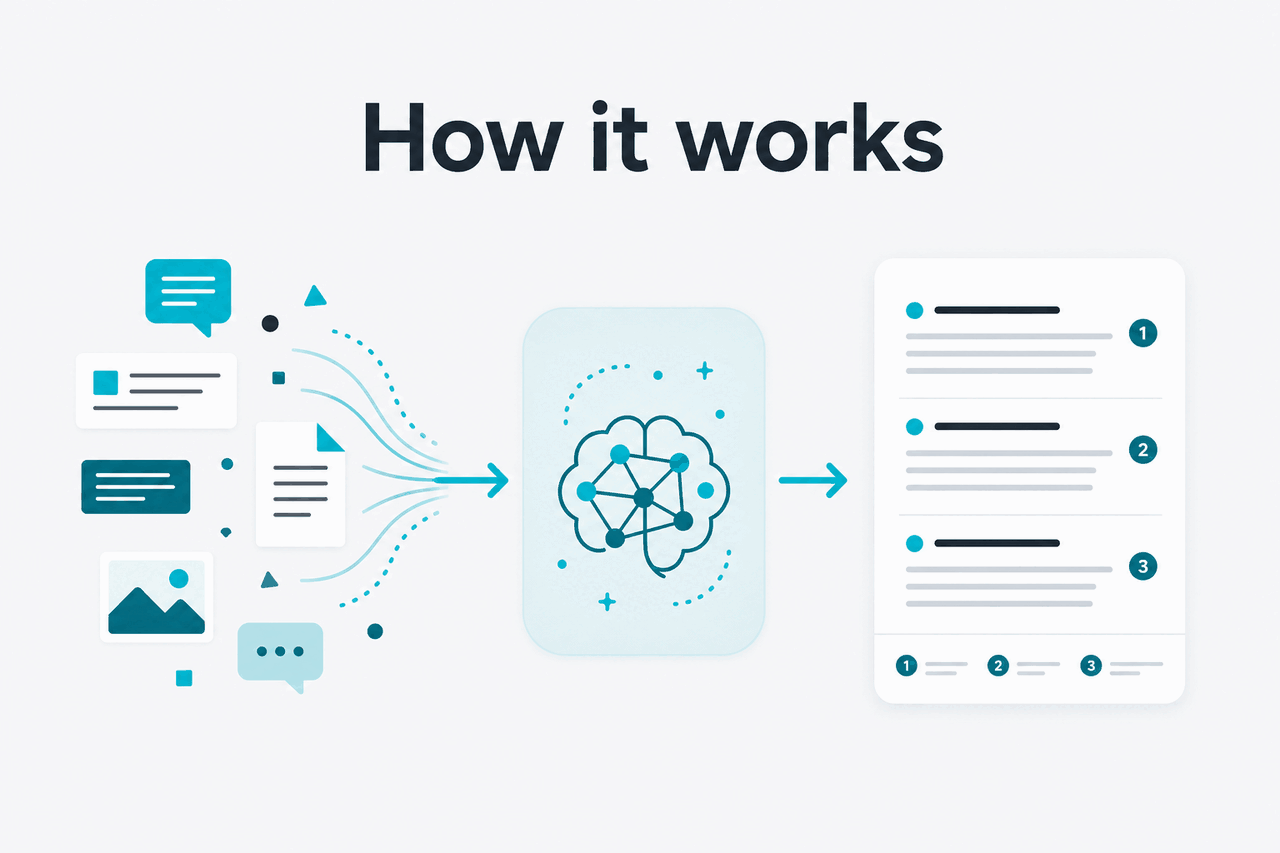
In plain English, Claude reads the material you provide or the content available in the product context, answers the question, and then attaches references to the parts of that material that appear to support each claim. Those references are not the same thing as a traditional academic bibliography. They are closer to evidence links: specific chunks, passages, or snippets that show where the answer came from.
That means the quality of citations depends on the quality of the underlying source set. If the document is messy, contradictory, outdated, or missing key facts, Claude can still produce a clean-looking answer with imperfect references. Citations improve inspectability. They do not turn the model into a fact engine that independently validates the world. You still need to check whether the cited passage actually supports the wording of the answer.
Worked example
Answering a policy question with evidence
The useful part is not just the answer. It is the ability to inspect the exact text Claude relied on.
This is also why citations pair well with structured prompting. If you ask Claude to distinguish between “directly supported,” “inferred,” and “not stated,” you usually get a more honest result than with a broad summary request. In developer workflows on the API, teams often use citations to make outputs easier to audit before they reach end users.
When this feature actually helps
Citations help most when the goal is not pure creativity but accountable retrieval and explanation. They are useful when someone downstream needs to review the evidence, challenge the interpretation, or reuse the answer in a setting where unsupported claims create risk.
- Summarising long reports: You can ask Claude for a summary with supporting references for each key point, then quickly inspect whether the summary reflects the document.
- Answering internal policy questions: HR, finance, security, and operations teams can map answers back to the underlying handbook, policy file, or guidance note.
- Research assistance: Citations help when you want a first-pass synthesis of source material without losing the ability to verify each claim.
- Compliance and legal support: They make it easier to separate “the document says this” from “the model inferred this,” which is a meaningful difference.
- Customer support knowledge retrieval: Teams can build answer workflows that show which help-center or internal knowledge passages support the response.
Pick when
- You need answers that can be checked quickly
- You work from a defined document set
- You want to reduce unsupported summarisation
- Human reviewers must inspect evidence before acting
Skip when
- You just need brainstorming or drafting
- The source material is incomplete or low quality
- You expect citations to replace human fact-checking
- Your task depends on live external facts not present in context
For most people, the practical question is not “Does Claude support citations?” but “Will citations reduce error for this task?” If you are working with source-bound questions, usually yes. If you are asking for original analysis beyond the source material, citations become less protective because the model may still blend evidence, inference, and unstated assumptions.
What it can’t do
Claude citations improve transparency, but they do not guarantee truth, completeness, or correct interpretation. A cited answer can still be wrong because the citation may be partial, the passage may be ambiguous, or the model may overstate what the source actually supports.
- They do not verify facts beyond the provided source: If the document is wrong, the cited answer can be wrong too.
- They can support the wrong level of certainty: Claude may cite a passage that is related but weaker than the wording in the answer.
- They do not remove hallucinations completely: Unsupported text can still appear alongside cited material.
- They are weaker with poor source formatting: Scans, broken layouts, duplicated text, and fragmented exports make extraction harder.
- They do not replace domain review: Legal, medical, financial, and compliance decisions still need qualified human judgement.
- They are only as current as the material in context: Citations to stale documentation can make an outdated answer look more credible than it is.
This is the credibility test: open the citation, read the source passage, and ask whether it supports the exact answer or only part of it. If you adopt that habit, citations are genuinely useful. If you treat them as automatic proof, they are not enough.
Other questions readers ask
People searching for claude citations usually also want to know how trustworthy the feature is, whether it works in the API, and how it compares with ordinary links or references. Here are the short answers.
If you want the bigger picture on where this sits in the product, our independent Claude guide maps the ecosystem, while the pages on features and model options help you decide which workflows benefit most from source-grounded outputs.
The honest take
Claude citations are useful because they make answers easier to challenge. That sounds modest, but it matters. In practice, the feature is less about making Claude sound smarter and more about giving you a way to inspect where the answer came from. For document-based tasks, that is one of the most practical trust improvements you can get from an AI assistant.
The limit is simple: citations are evidence pointers, not proof of correctness. If the source is weak, stale, or only partly relevant, the output can still mislead. Use citations when you need source-bound answers and human review. Do not treat them as a substitute for verification, especially in high-stakes work.
Independent guide. Not affiliated with Anthropic. For the official Claude product, visit claude.ai.
Last updated: 2026-05-12