
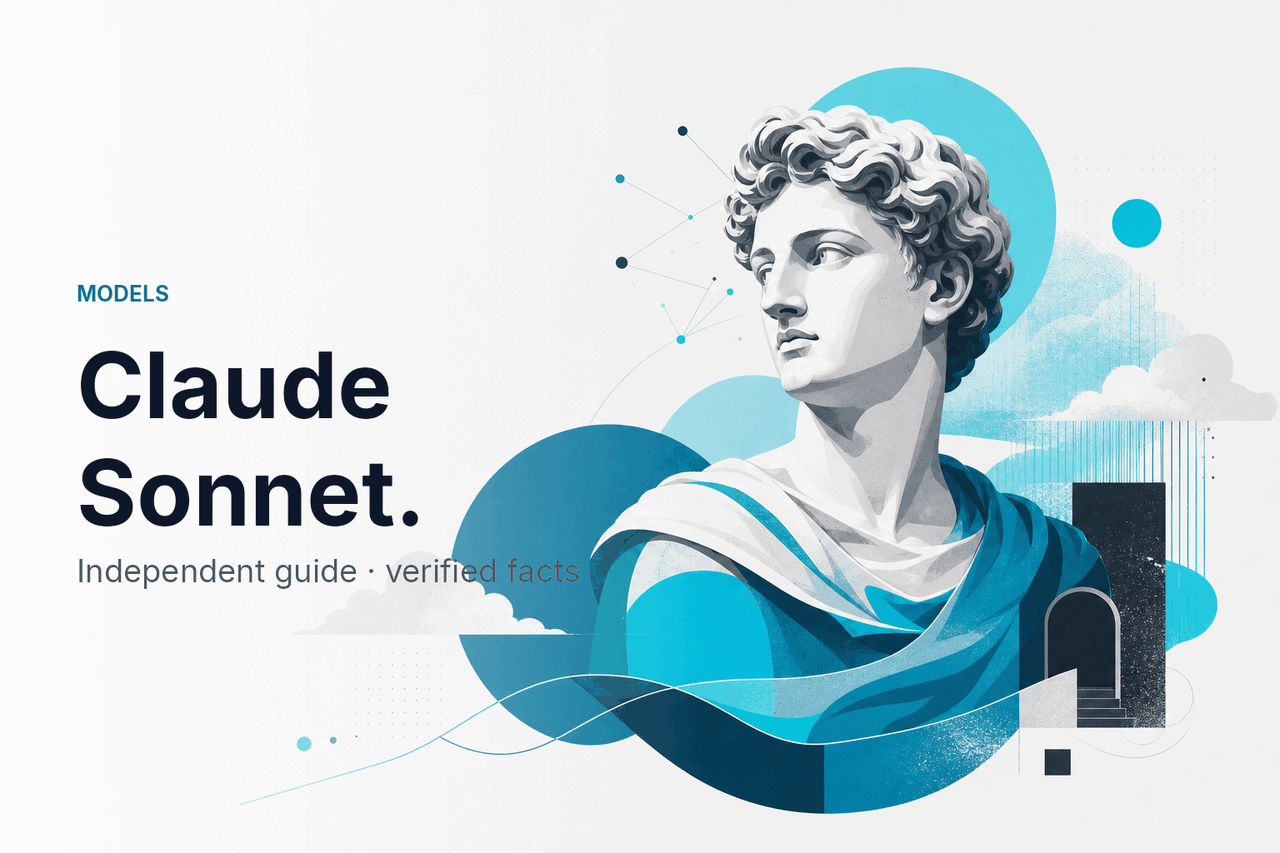
Claude Sonnet is Anthropic’s balanced mid-tier Claude family, and the current version is Claude Sonnet 4.6: the model most people should start with if they want stronger quality than Haiku without paying Opus pricing; this independent guide explains what Sonnet is, where it fits in the lineup, and when to choose it over the other Claude models.
- Which model is this?
- What it’s best at
- Where it falls short
- When to pick this model
- Other questions readers ask
- The honest take
Which model is this?

Claude Sonnet 4.6 is the Sonnet family model in Anthropic’s current lineup. It is the recommended default model for many users: stronger and more capable than Haiku for demanding work, but cheaper than Opus for day-to-day production use.
- Input: $3 per million tokens
- Output: $15 per million tokens
- Context: 1,000,000 tokens
- Max output: 128K tokens
Within Anthropic’s lineup, Sonnet sits in the middle. Pricing reflects that position: cheaper than Claude Opus 4.7 at $5 input and $25 output per million tokens, but more expensive than Claude Haiku 4.5 at $1 input and $5 output. If you use Claude through the API, Sonnet is often the practical choice for teams that need strong reasoning, long context, and predictable costs without stepping up to the flagship tier.
On the consumer side, Sonnet is also the model many people encounter inside Claude plans on web, mobile, and desktop. If you are comparing subscriptions versus API usage, see the main Claude API guide and our broader Claude features overview.
What it’s best at
Claude Sonnet is best at general-purpose work where you want a strong answer on the first try without paying Opus rates every time. That includes drafting, structured analysis, coding help, document work, and agent-style workflows that need a large context window. For many business and developer tasks, Sonnet is the model that makes the cost-quality trade-off work.
Compared with its siblings, Sonnet is the middle path. Opus is the stronger pick when quality matters more than spend, especially on the hardest reasoning or highest-stakes work. Haiku is the better pick when speed and low cost matter most, such as lightweight classification, simple extraction, or high-volume chat. Sonnet earns its place because it handles a broad range of serious tasks well enough that many users do not need to step up to Opus.
- Long-document analysis: reviewing large reports, contracts, research packs, or product specs with room for extensive context.
- Coding assistance: explaining code, generating functions, refactoring, debugging, and helping inside broader engineering workflows.
- Business writing: producing usable first drafts for memos, emails, strategy notes, briefs, and internal documentation.
- Structured extraction and synthesis: pulling fields from messy text, comparing sources, and returning organised outputs.
- Interactive knowledge work: back-and-forth tasks where you need stronger reasoning than Haiku but lower cost than Opus.
Sonnet also benefits from Anthropic’s cost controls. Prompt caching can reduce cached input cost by 90%, which matters when you repeatedly send the same long instructions or source material. For asynchronous workloads, Batch API pricing can reduce both input and output costs by 50%. Those levers make Sonnet especially attractive for apps that process large documents or repeated workflows at scale.
90% off
cached input tokens with prompt caching
Where it falls short

Claude Sonnet is balanced, but balanced means compromise. It will not always match Opus on the hardest reasoning, the most nuanced writing, or the most sensitive high-value outputs. And while it is cheaper than Opus, it is still meaningfully more expensive than Haiku for large-scale volume work, so using Sonnet everywhere can raise costs without improving outcomes on simpler tasks.
- Top-end reasoning: choose Opus when you want the strongest model quality Anthropic offers.
- Highest-stakes outputs: for critical analysis, premium writing, or difficult coding tasks, Opus is the safer upgrade.
- Ultra-cheap automation: choose Haiku for basic classification, routing, light extraction, or quick user interactions.
- Latency-sensitive bulk tasks: if speed and throughput matter more than depth, Haiku may be the better fit.
- Budget-constrained deployments: Sonnet can become expensive at scale if the workload does not actually need its stronger reasoning.
When to pick this model
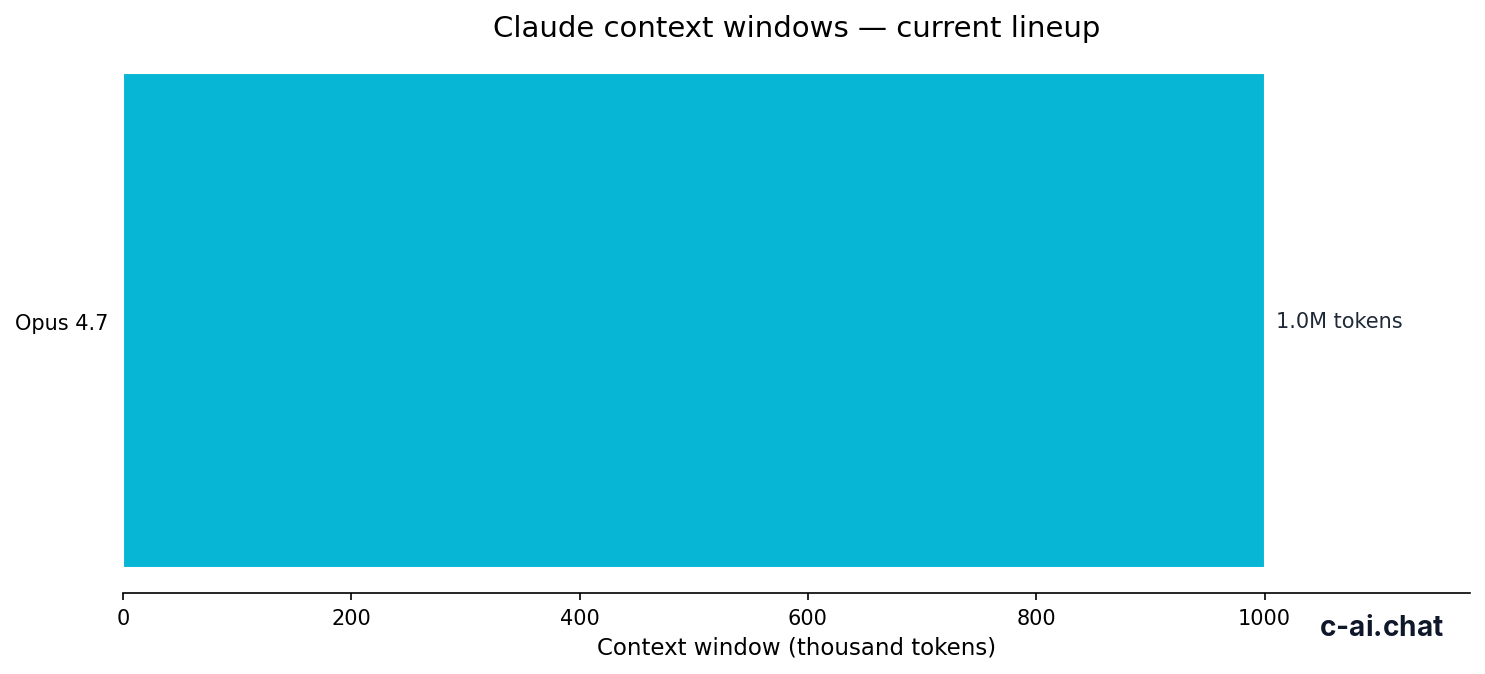
Pick Claude Sonnet when you need a clear middle ground: strong performance, long context, and lower cost than Opus. The pricing trade-off is the key point. At $3 per million input tokens and $15 per million output tokens, Sonnet is not the cheapest option, but it is often the most economical model once you factor in answer quality and reduced need for retries.
Pick when
- You want one strong default model for mixed workloads.
- You need better reasoning and writing than Haiku usually delivers.
- You process long documents and want a 1,000,000-token context window.
- You care about cost, but Opus pricing is hard to justify for routine tasks.
- You want a model that works well across chat, analysis, and coding.
Skip when
- You need Anthropic’s strongest model quality; pick Opus instead.
- You run very high-volume simple tasks where Haiku’s lower price matters more.
- You are heavily latency-sensitive and can accept lighter output quality.
- Your use case does not benefit enough from Sonnet to justify 3x Haiku input pricing.
- You want the absolute lowest cost per request above all else.
A good rule: if a task is valuable enough that a weak answer creates extra human editing, Sonnet is often worth the extra cost over Haiku. If a task is difficult enough that accuracy and nuance are the main concern, Opus may justify its higher rate. Sonnet wins when you need both discipline and budget control.
Worked example
Why Sonnet often beats “cheaper” in real workflows
If Sonnet avoids even a small amount of rework compared with Haiku, the higher token price can still be the cheaper operational choice.
If you are choosing across plans rather than model families, the answer changes slightly. Free, Pro, Max, Team, and Enterprise govern access, limits, collaboration, and administration; the model choice sits underneath that. For plan details, see our independent Claude pricing guide. For broader product capabilities, visit the c-ai.chat homepage or the main features page.
Other questions readers ask
The honest take
Claude Sonnet is the workhorse model in Anthropic’s lineup. It is not the cheapest and not the most powerful, but that is exactly why it fits so many real use cases. If you need one model that can handle serious writing, analysis, coding help, and large-context tasks without pushing every request into flagship pricing, Sonnet is usually the right answer.
The main caution is simple: do not use Sonnet out of habit when Haiku would do, and do not expect it to replace Opus on the hardest work. Used that way, Sonnet is not a compromise in the negative sense. It is the practical center of the Claude lineup.
Independent guide. Not affiliated with Anthropic. For the official Claude product, visit claude.ai.
Last updated: 2026-05-12