
Claude AI’s free tier costs $0/month and gives web, iOS, Android, and desktop access with daily usage limits; c-ai.chat is independent, and our full Claude pricing guide explains how Free compares with paid plans.

- The bottom line
- What’s actually included
- Is it worth it for you?
- Cheaper and better alternatives
- The honest take
- FAQ
- Sources
The bottom line
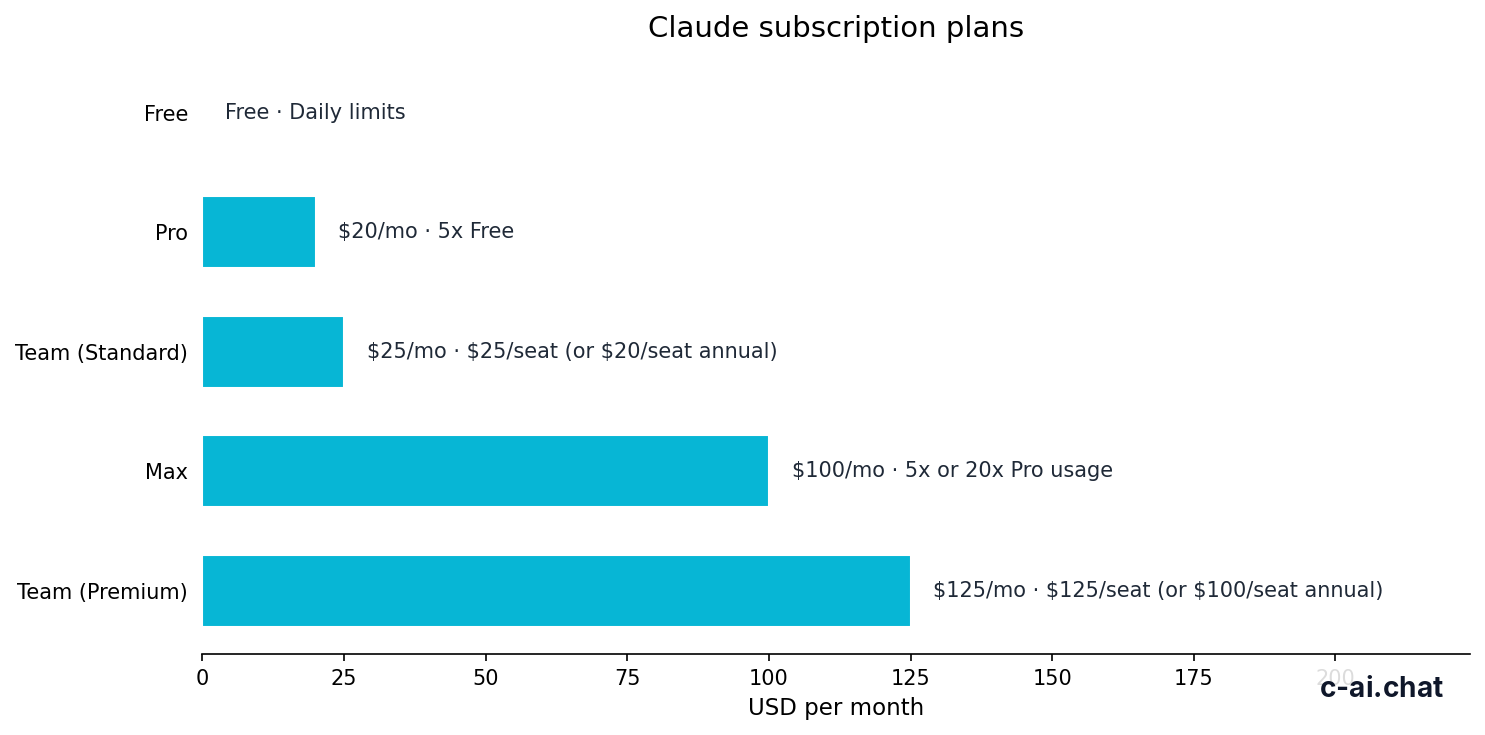
Claude Free is the $0/month way to use Claude through the official product at claude.ai. It works well for occasional prompts, light writing help, document checks, and testing Claude before you pay. Its main limit is capacity. Free has daily usage limits, so it is not a reliable plan for heavy workdays, long coding sessions, or team workflows.
- $0/month · no paid subscription required
- Access · web, iOS, Android, and desktop
- Main limit · daily usage capacity
- Not for · production API use or team administration
The free tier is not the same as the Claude API. Claude Free is a consumer product plan. API usage is billed separately by tokens through Anthropic’s developer platform. If you are building an app, automation, agent, or internal tool, start with our Claude API docs guide rather than the Free plan.
What’s actually included
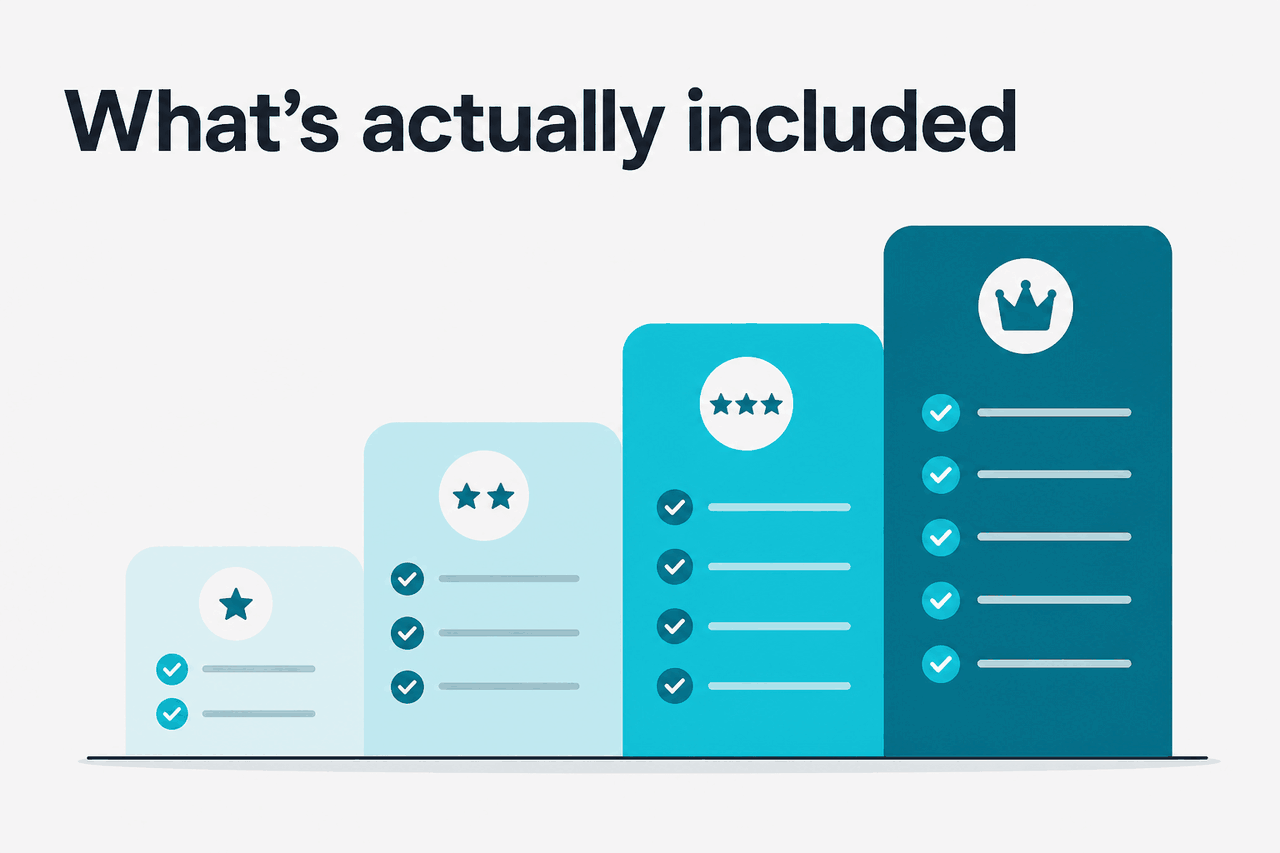
Claude Free includes access to Claude through the official web app, mobile apps, and desktop app. It is not unlimited. When you use your available allowance, you wait until usage becomes available again or move to a paid plan.
Free
$0/month
For trying Claude and occasional personal use
- Web access through claude.ai
- iOS, Android, and desktop access
- Daily usage limits
- No paid subscription
- No team administration controls
Pro
$20/month
For individuals who use Claude regularly
- $17/month when billed annually
- Higher usage than Free
- Individual account plan
- Better fit when Free limits interrupt work
Max
From $100/month
For heavy individual usage
- Higher individual capacity than Pro
- Designed for frequent, demanding use
- Not a team administration plan
- Costs much more than Pro
The most important free-tier limit is not a long feature checklist. It is capacity. A short chat may feel unrestricted. A long document session can consume the allowance faster. The exact experience can vary by model availability, demand, and Anthropic’s product rules.
Free is also not built for shared administration. If you need a shared workspace, user management, admin controls, or organization-level deployment, compare Team and Enterprise plans instead.
| Need | Is Free enough? | Why |
|---|---|---|
| Trying Claude for the first time | Usually yes | You can test the official product without a paid plan. |
| Occasional writing, rewriting, or brainstorming | Often yes | Daily limits may be acceptable if usage is light. |
| Long work sessions | Often no | Daily usage limits can interrupt the session. |
| Coding with paid Claude tools | No | Some coding and workflow features sit outside the Free plan. |
| Team management | No | Team plans are designed for shared workspaces and administration. |
| API development | No | The API is billed separately per million tokens. |
For model context, Anthropic’s API lineup includes Claude Opus 4.7 as the flagship model, Claude Sonnet 4.6 as the balanced option, and Claude Haiku 4.5 as the faster, lower-cost option. Opus 4.7 and Sonnet 4.6 support a 1M-token context window. Sonnet 4.6 also supports up to 128K output tokens. Consumer plan access and API access are separate surfaces, so the Free plan does not mean unlimited access to every API model. See our Claude models guide for the model-level comparison.
Is it worth it for you?

Claude Free is worth it if your goal is evaluation or light personal use. It is not worth forcing into professional workflows where interruptions, missing admin controls, or unclear API costs create real problems.
Pick Free when
- You want to test Claude before paying.
- You use AI a few times a day for writing, study, planning, or quick analysis.
- You can tolerate daily usage limits.
- You do not need team controls, API access, or high-volume capacity.
Skip Free when
- You rely on Claude for client work or a full workday.
- You need a paid Claude feature that is not available on Free.
- You manage a team and need administration controls.
- You are building with the API and need predictable token-based billing.
The Free plan fits three common users. The first is the evaluator: someone comparing Claude with other assistants before choosing a paid tool. The second is the occasional user: a student, founder, marketer, or analyst who needs help with small tasks but not all day. The third is the casual mobile user: someone who wants Claude available on a phone or desktop without committing to a subscription.
Free does not fit the heavy operator. If Claude is part of your daily writing, analysis, coding, research, or meeting workflow, the limit becomes the product experience. You spend less time on the work and more time checking whether you can keep going.
Free also does not fit most organizations. Team Standard is $25/seat/month, or $20/seat/month when billed annually. Team Premium is $125/seat/month, or $100/seat/month when billed annually. Enterprise uses a $20/seat base plus API rates.
If your question is less about limits and more about what Claude can do, see our overview of Claude features. The better plan choice depends on whether you need capacity, collaboration, coding tools, document workflows, or API access.
Cheaper and better alternatives
The cheaper alternative to Claude Free is not another Claude plan. Free is already $0/month. The real choice is whether to upgrade only when Free blocks the work you need to finish.
| Option | Price | Better when | Trade-off |
|---|---|---|---|
| Claude Free | $0/month | You want occasional access with no subscription. | Daily usage limits can interrupt work. |
| Claude Pro | $20/month, or $17/month annual | You are an individual who uses Claude regularly. | It is still an individual plan, not a team administration product. |
| Claude Max | From $100/month | You are a heavy individual user who needs more capacity. | It costs much more than Pro. |
| Team Standard | $25/seat/month, or $20/seat/month annual | You need a shared workspace and team administration. | It is priced per seat. |
| Team Premium | $125/seat/month, or $100/seat/month annual | You need a higher-tier team plan. | It is a large jump from Team Standard. |
| Enterprise | $20/seat base plus API rates | You need organization-level deployment. | Usage is tied to API rates. |
| Claude API | Per million tokens | You are building software, automations, or internal tools. | Costs depend on tokens, model choice, and usage pattern. |
For most people, Pro is the first meaningful upgrade. If you rarely hit limits, Free remains the better value. If daily limits stop useful work, Pro is the plan to test before considering Max.
Max is not the next step for most free users. It starts from $100/month and targets heavy individual usage. Choose it only when Pro-level capacity is too small and the cost is justified by your workload.
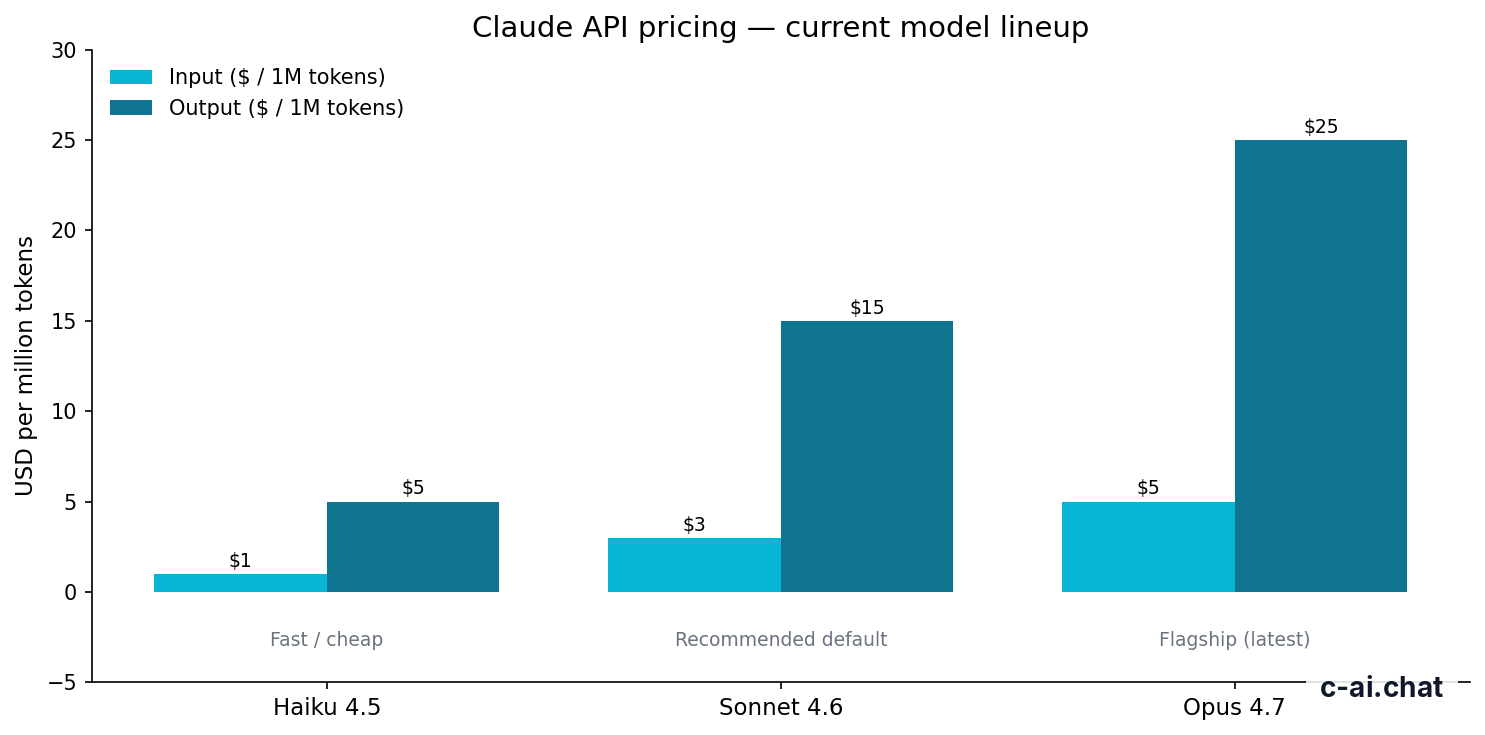
For developers, the better alternative is usually the API rather than a consumer subscription. API pricing is model-based. Claude Opus 4.7 costs $5 per million input tokens and $25 per million output tokens. Claude Sonnet 4.6 costs $3 per million input tokens and $15 per million output tokens. Claude Haiku 4.5 costs $1 per million input tokens and $5 per million output tokens.
90% off
cached input tokens with prompt caching
API users also have cost controls that consumer Free users do not need to manage. Prompt caching gives 90% off cached input tokens. Batch API gives 50% off both directions.
Worked example
When Free stops being the right plan
Free is still the right plan if those interruptions rarely happen.
If Claude is unavailable or behaves unexpectedly, check the official Claude status page before assuming you have hit a plan limit. Product incidents and plan limits can feel similar from the user side, but they are different problems.
The honest take
Claude Free is a good entry point. It costs $0/month, works across web, iOS, Android, and desktop, and lets you test whether Claude fits your work. The trade-off is capacity. Daily usage limits make it unsuitable for people who need Claude available throughout a serious workday.
Stay on Free if you use Claude occasionally. Move to Pro if limits repeatedly stop useful work. Consider Max only for heavy individual usage, Team for shared administration, and the API for software development. For official plan details, use Claude’s pricing page and Anthropic’s API pricing docs.
FAQ
Is Claude Free really free?
Yes. Claude Free costs $0/month. You do not need a paid subscription to use the free consumer plan, but usage is limited.
Does Claude Free include the API?
No. Claude Free and the Claude API are separate. The API is billed per million tokens through Anthropic’s developer platform.
What happens when I hit the Free usage limit?
You need to wait until usage becomes available again or upgrade to a paid plan. Anthropic does not present Free as an unlimited tier.
Is Claude Free enough for work?
It can be enough for occasional work. It is usually not enough if you need Claude throughout the day for writing, analysis, coding, research, or document-heavy tasks.
Should I upgrade from Free to Pro?
Upgrade when the daily limit repeatedly interrupts useful work. If you rarely hit the limit, staying on Free is reasonable.
Is Claude Free good for teams?
No. Free is a personal plan. Teams should compare Team Standard, Team Premium, and Enterprise depending on seat count, administration needs, and usage pattern.
Where can I check current plan details?
Use the official Claude pricing page for consumer and team plans, and Anthropic’s API pricing docs for developer pricing.
Common questions about Claude plans, access, and usage are covered in our Claude FAQ.
Independent guide. Not affiliated with Anthropic. For the official Claude product, visit claude.ai.
Last updated: 2026-05-12
This article is part of the Claude pricing & plans hub on c-ai.chat.