
If you are checking claude code status, the fastest answer is simple: verify the official live page at status.claude.com, then rule out a few common local issues before assuming Claude Code is fully down; for a broader view of Claude service health, see our Claude status guide, and remember that c-ai.chat is an independent guide, not Anthropic.

- Is Claude down right now?
- Common failure modes (not actually outages)
- Recent incident history
- What to do during an outage
- Other questions readers ask
- The honest take
- Official check · status.claude.com
- Claude Code issues are not always a platform-wide outage
Is Claude down right now?
Direct answer: check status.claude.com. That is Anthropic’s canonical status page for Claude services, including incidents that can affect the web app, API, and related tooling.
If the page shows an active incident, degraded performance, or elevated errors, the problem is likely service-side. If the page is green, Claude Code may still fail for reasons that are specific to your account, editor session, network, region, or model choice. If you need background on how Claude works across web and API products, our Claude AI guide and Claude API overview cover the main differences.
| What you see | What it usually means | Best next step |
|---|---|---|
| Status page shows incident | Confirmed service problem on Anthropic’s side | Wait for updates on status.claude.com |
| Status page is normal, but Claude Code fails only for you | Likely local, account, session, or network issue | Run through the fixes below |
| Web Claude works, but Claude Code does not | Tool-specific issue, auth issue, or integration problem | Re-authenticate and test another environment |
| API works, but chat app is slow | Product-specific degradation rather than full outage | Use the API temporarily if possible |
Common failure modes (not actually outages)
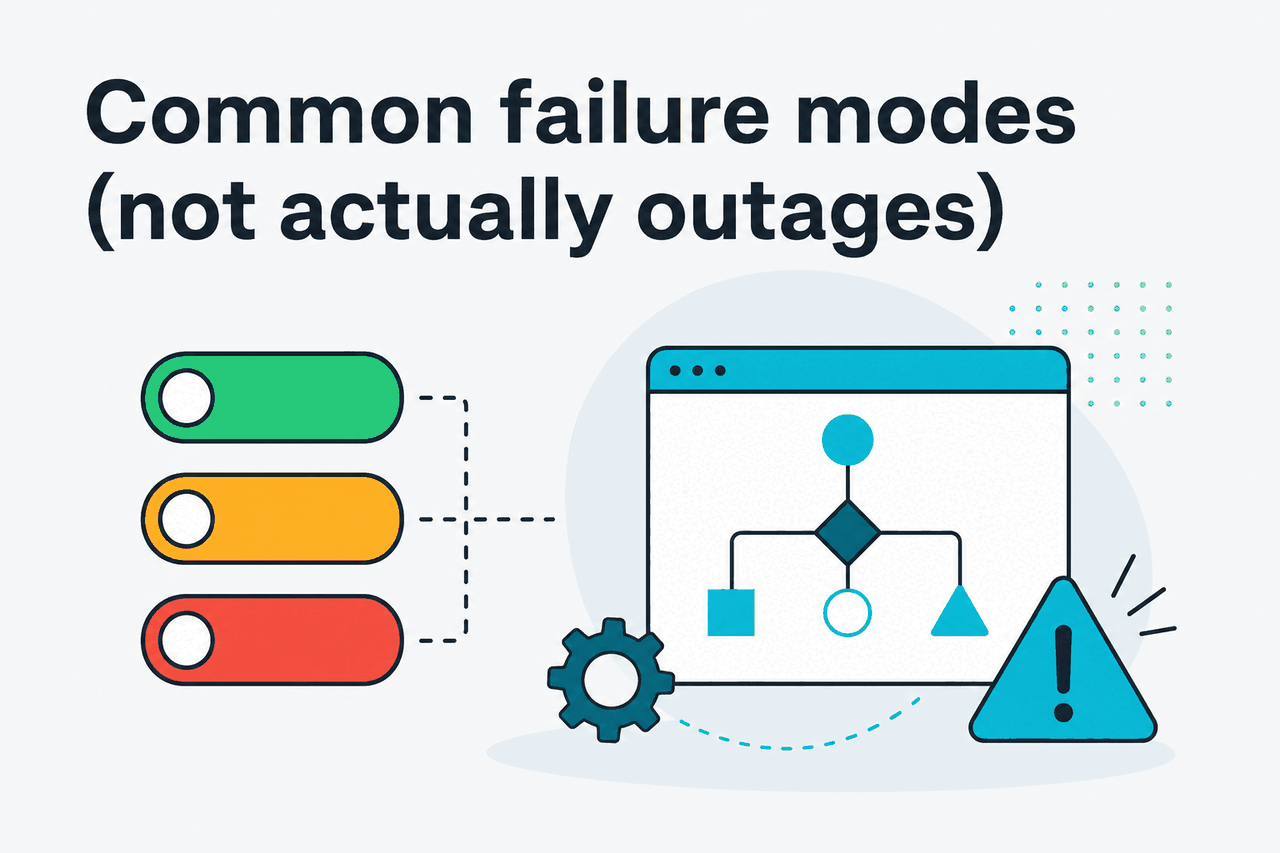
A lot of “Claude is down” reports turn out to be user-side or account-side problems. These are the common ones that look like outages but usually are not.
- Rate-limit hits: If Claude Code suddenly stops responding or returns errors after heavy use, you may have hit a plan or usage limit rather than a platform outage. The fix is to wait for the limit window to reset, reduce request size, switch to a lighter workflow, or move to a different access path such as the API if that fits your setup.
- Region issues: If colleagues in another location can use Claude while you cannot, the problem may be network routing, corporate filtering, or regional connectivity. The fix is to test from another connection, disable restrictive network rules where allowed, or retry from a different environment before assuming the whole service is down.
- Browser issues: Broken sessions, stale cached assets, blocked scripts, or extension conflicts can make Claude appear unavailable. The fix is to hard refresh, try a private window, disable extensions, or test another browser entirely.
- Expired sessions: Claude Code can fail if your login token has expired or your authentication state is out of sync. The fix is to sign out, sign back in at claude.ai, then reconnect your tool or editor session.
Looks like a real outage when
- status.claude.com shows an incident
- Multiple products fail at the same time
- Errors affect many users and locations
Usually local when
- Only one browser or editor breaks
- Signing in again fixes it
- API or web still works from another device
If you are troubleshooting a broader Claude problem rather than a Claude Code issue specifically, our Claude features guide explains which parts of the product stack are web-only, account-bound, or tied to a given access method.
Recent incident history
In recent weeks and recent quarters, the pattern has looked familiar: short-lived spikes in errors, slower responses during busy periods, and occasional product-specific disruptions rather than long full-platform outages. That matters because “Claude Code down” does not always mean the whole Claude service is unavailable. The official record for incidents, maintenance notices, and resolution updates is status.claude.com, and that is the source worth checking before changing tools or workflows.
What to do during an outage
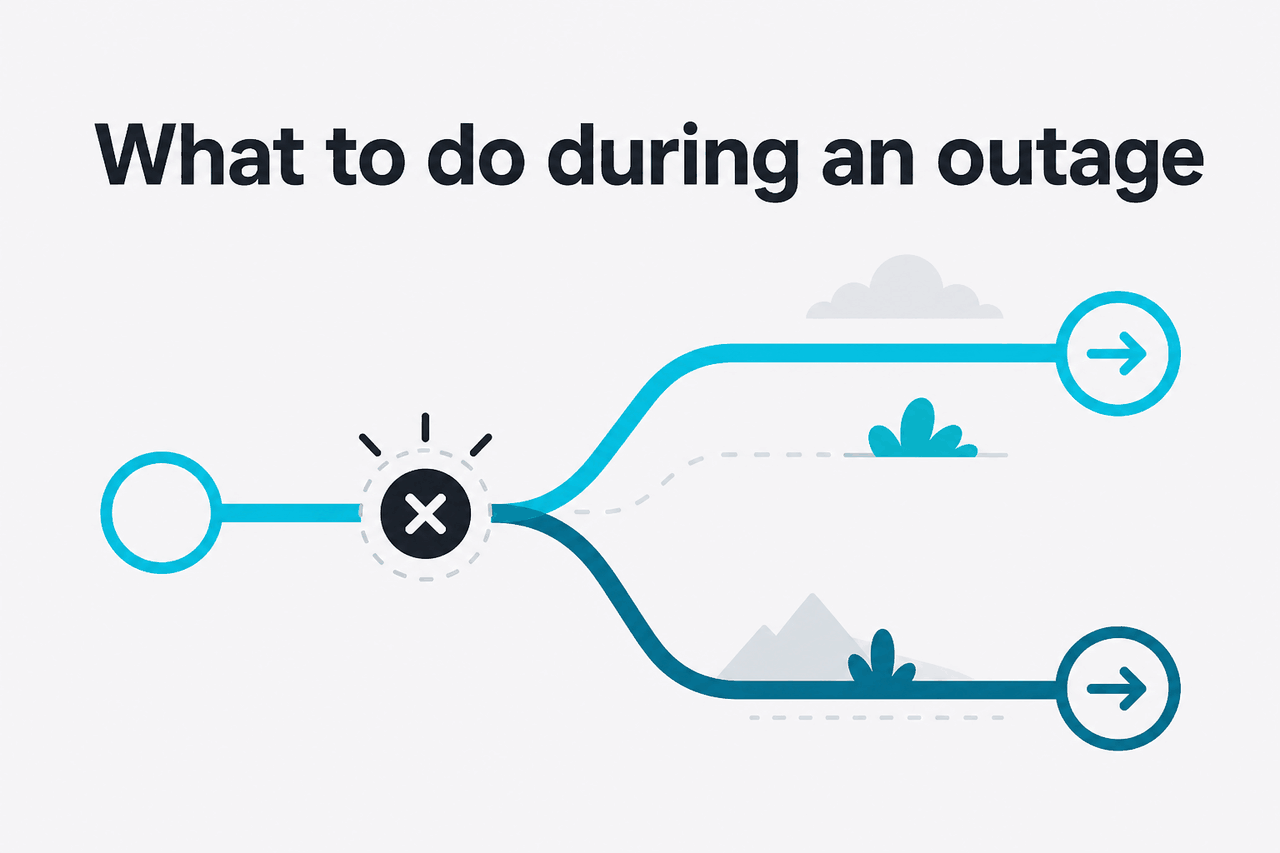
If Claude Code really is affected, the useful question is not just “is it down?” but “what is the least disruptive fallback right now?”
- Try the API instead of the web app: Sometimes one surface is degraded while another still works. If your workflow supports it, test through platform.claude.com or your existing API integration.
- Use a smaller model: If a heavier model or large output job is timing out, a lighter model can be more reliable under load. Claude Haiku 4.5 is the fastest and cheapest option at $1/M input tokens and $5/M output tokens, while Claude Sonnet 5 is the balanced default at $2/M input and $10/M output — an introductory rate that runs until 31 August 2026, after which standard $3/$15 pricing applies.
- Queue batch work for later: If the task is not urgent, postpone large runs until the incident clears. Anthropic’s pricing docs also note that Batch API can reduce cost by 50% off both directions when your workload does not need immediate responses.
- Reduce prompt size and output length: Smaller requests are often more likely to complete during partial degradation. Trim context, split large tasks into smaller steps, and ask for shorter outputs.
- Switch tools for the moment: If work is blocked, use ChatGPT or Gemini temporarily for non-sensitive tasks, then move back to Claude when service stabilises. That is not a statement about quality; it is just a practical outage response.
50% off
both input and output with Batch API for non-urgent jobs
-
Check the official incident page
Open status.claude.com first. If there is an active incident, stop debugging locally until you know the scope.
-
Test another access path
Try claude.ai if Claude Code fails, or try the API if the app is unstable.
-
Reduce the job size
Shorter prompts and smaller outputs fail less often during degraded service.
-
Retry later if the task is batchable
For work that can wait, schedule it after the incident rather than forcing repeated failed runs.
If you need a general troubleshooting checklist, our Claude FAQ covers the most common “not working” scenarios across chat, plans, and API use.
Other questions readers ask
These are the related questions that usually come up alongside searches for claude code status.
The honest take
If you searched for claude code status, the practical answer is: trust the official status page first, then assume local causes until proven otherwise. Claude does have incidents, like any large AI service, but many “down” reports are really session problems, browser breakage, model-specific slowdowns, or usage-limit confusion.
So the fast routine is simple: check status.claude.com, test another access path, reduce the job size, and only then start treating it as a serious outage. If you want a wider picture beyond Claude Code, use our Claude status page guide.
Independent guide. Not affiliated with Anthropic. For the official Claude product, visit claude.ai.
Last updated: July 16, 2026