
If you want Claude to write email, it can do that well: give it the recipient, goal, tone, and constraints, and it will draft, rewrite, shorten, or personalise emails for sales, support, recruiting, follow-ups, and internal work. This is an independent guide from c-ai.chat, not Anthropic, and below you’ll see the exact workflow, prompts, mistakes to avoid, and what to try next.

If you are still getting oriented, our Claude features guide explains what Claude is good at day to day, and our Claude tutorials hub collects practical walkthroughs like this one.
- What you’ll learn
- Step by step
- Common mistakes to avoid
- Where to go next
- Other questions readers ask
- The honest take
- Claude can draft, edit, and personalise email copy
- Free tier works for casual use; paid plans add more capacity
- For app builders, the API is priced per million tokens
What you’ll learn
By the end, you’ll be able to use Claude to produce cleaner email drafts with less back-and-forth.
- Write a strong first prompt so Claude understands the audience, purpose, and tone.
- Generate different kinds of emails, including cold outreach, follow-ups, customer support replies, and internal updates.
- Ask Claude to rewrite an email to be shorter, warmer, firmer, or more professional.
- Review AI-written emails for accuracy, risk, and brand fit before sending.
- Turn one rough idea into several subject line and body variants you can test.
Step by step
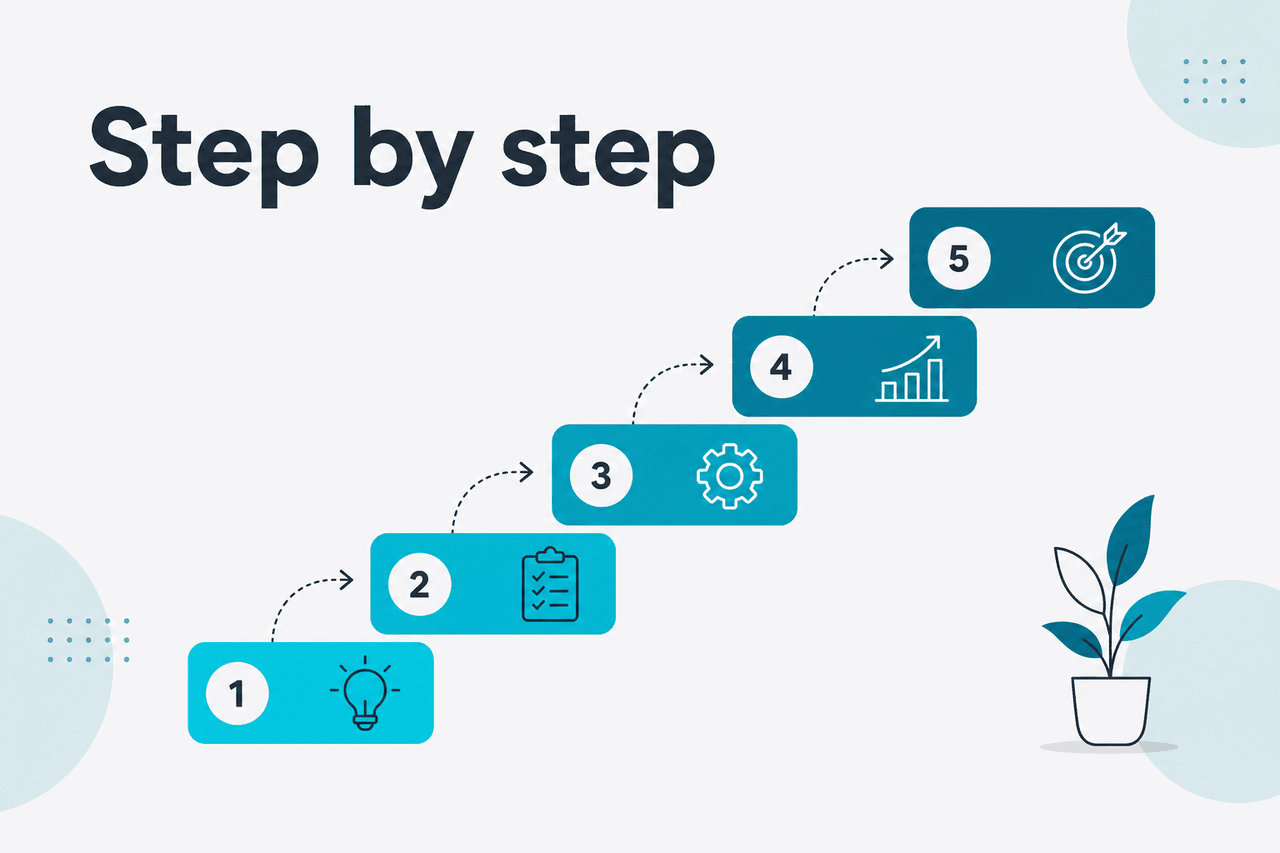
Here is a hands-on workflow you can reuse whether you write in the Claude app or build email drafting into a workflow through the Claude API.
-
Start with the email goal, not just “write me an email”
Claude writes better email when the task is specific. Tell it who the reader is, what action you want, how formal the tone should be, and any hard constraints such as word count, legal limits, or a required call to action.
-
Give Claude the audience context
Add the recipient type, relationship, and what they already know. “Prospect who downloaded our guide last week” produces a better result than “customer.” If you have a company voice guide, paste it in. If not, define the voice in one sentence, such as “plain English, warm, concise, no hype.”
-
Set format rules before the draft
Tell Claude the structure you want: subject line options, preview text, short opening, body, and CTA. You can also tell it what to avoid, such as em dashes, exclamation marks, filler openings, or generic compliments.
-
Ask for more than one version
Instead of a single draft, ask for three options with different tones or lengths. For example: one concise version, one warmer version, and one more direct version. This usually gives you a better editing starting point than one “perfect” answer.
-
Iterate with precise edits
Good follow-up prompts are specific. Ask Claude to shorten by 30%, remove jargon, sound less salesy, keep the CTA but soften the urgency, or rewrite for a busy executive. Short, direct revision instructions work better than asking it to “make it better.”
-
Check facts and risky claims
Claude can improve wording, but it should not be the final authority on facts. Verify dates, names, meeting times, prices, product commitments, discounts, and legal statements. This matters most in sales, customer support, hiring, and finance-related email.
-
Use Claude to personalise carefully
Claude can tailor copy for a role, industry, or use case if you provide reliable context. Keep the personalisation grounded in facts you actually know. Do not let it invent a shared connection, company milestone, or customer pain point.
-
Turn a draft into a reusable prompt template
Once you get a result you like, save the prompt with placeholders. That gives you a repeatable system for future campaigns, support macros, or internal updates. If you work in engineering workflows, you may also pair this with Claude Code or API automation later.
Worked example
Prompt for a polite client follow-up
Prompt: “Write three follow-up emails to a marketing director who received our proposal five days ago. Goal: get a clear yes, no, or feedback. Tone: professional and warm, not salesy. Keep each email under 120 words. Include five subject line options. Avoid fake urgency, filler openings, and exaggerated claims.”
That one prompt is already better than “claude write email for client.” It gives Claude the outcome, audience, tone, and length. That is usually enough to get a useful first draft.
Pick when
- You have the facts and need help with wording
- You want several tone or length options fast
- You need to rewrite a rough draft into cleaner English
- You want help with subject lines and CTAs
Skip when
- You have not checked the underlying facts yet
- The email includes legal, medical, or HR-sensitive claims without review
- You need guaranteed system actions, not just text generation
- You plan to send the output without editing
Here are prompt patterns that work well for common email jobs.
Write a cold outreach email to [role] at [company type].
Goal: book a 15-minute intro call.
Audience context: they likely care about [problem].
Tone: credible, concise, low-pressure.
Constraints: under 100 words, no hype, no fake familiarity.
Output: 3 variants and 8 subject lines.
Rewrite this customer support reply so it is clearer and more empathetic.
Keep all factual details unchanged.
Reduce length by 25%.
Add a short bullet list of next steps.
Original email:
[paste email]Draft an internal update email for my team.
Audience: cross-functional team with limited context.
Goal: explain what changed, why it matters, and what action is needed.
Tone: direct and calm.
Format: subject line, 1-sentence summary, 3 short sections, bullet list of actions.If you use Claude in the official app at claude.ai, this workflow is enough for most people. If you are integrating email drafting into software, the official model and pricing details live at platform.claude.com and the pricing docs.
If you write a lot of email, it also helps to keep a mini brief in each prompt:
- Who is this for?
- What do they care about?
- What do I want them to do?
- What must be included?
- What must be avoided?
That five-part structure works across prospecting, newsletters, support replies, and internal announcements.
Free
$0/month
For casual email drafting
- Web, iOS, Android, and desktop access
- Daily usage limits
Pro
$20/month
For individuals who write often
- More usage than Free
- Claude Code, Claude Cowork, unlimited Projects, Research access
- Additional models and Office integrations
Max
From $100/month
For power users
- 5x or 20x Pro usage
- Higher output limits
- Early feature access and priority traffic
For most email use, Free is enough to learn the workflow and Pro is the practical upgrade if you draft or edit messages every day. Teams that need admin controls, SSO, and shared workspaces should look at the official plans page at claude.com/pricing.
Common mistakes to avoid
Most bad AI email output comes from weak instructions or weak review, not from the model refusing to help.
- Being too vague. “Write an email to a client” is not enough. Fix it by including audience, goal, tone, and length.
- Letting Claude invent context. If you do not provide facts, it may fill gaps with plausible but wrong details. Fix it by pasting the exact facts and telling Claude not to add unsupported claims.
- Sending the first draft unchanged. First drafts are often fine, not final. Fix it by asking for two or three revisions and doing a human check before sending.
- Using generic tone requests. “Make it better” rarely helps. Fix it with concrete edits like “cut this to 90 words” or “sound firmer without sounding rude.”
- Forgetting the call to action. Many AI drafts sound polished but do not ask for the next step clearly. Fix it by specifying the exact CTA you want.
- Ignoring compliance or privacy risk. Sensitive email may need legal, HR, or company policy review. Fix it by treating Claude as a drafting tool, not an approval layer.
A useful editing pass is to ask Claude to inspect its own draft. Prompt it like this: “Review this email for vagueness, unsupported claims, weak CTA, and unnecessary words. Then produce a corrected version.” That catches a lot of common issues.
Where to go next

Once you can draft a good email, the next step is making the workflow repeatable.
- Browse more Claude tutorials if you want practical prompt patterns beyond email.
- See Claude features explained if you want to understand Projects, Research, integrations, and other product capabilities that can support your writing workflow.
- Learn the Claude API basics if you want to generate email drafts inside your own app, CRM, or internal automation.
If your use case is more technical than editorial, our guide to Claude Code is the better next stop.
Other questions readers ask
These are closely related questions that come up when people search for ways to have Claude help with email.
The honest take
If your question is “can Claude write email,” the practical answer is yes. It is good at drafting, rewriting, shortening, and changing tone, especially when you give it audience context, a clear goal, and hard constraints. For many people, that is enough to cut writing time sharply.
The limit is not whether Claude can produce fluent email. It can. The limit is whether you give it accurate context and review the result before sending. Use Claude as a fast drafting partner, not a source of truth, and the output is usually strong.
Independent guide. Not affiliated with Anthropic. For the official Claude product, visit claude.ai.
Last updated: 2026-05-12