
Claude language learning works well for conversation practice, grammar explanations, vocabulary drills, and feedback on your writing, but it is strongest when you use it as a coach rather than your only teacher. As c-ai.chat, we are an independent guide to Claude by Anthropic, not Anthropic itself, and this page shows what Claude does well, how to set up useful study prompts, and where its limits matter.

- What you’ll learn
- Step by step
- Common mistakes to avoid
- Where to go next
- Other questions readers ask
- The honest take
- Free tier · no card
- Claude is useful for practice, correction, and explanation
If you are still getting oriented, our overview of Claude features explains the tools that matter most for study workflows, and our Claude tutorials hub covers broader how-to guides.
What you’ll learn
By the end, you should be able to turn Claude into a structured language practice partner instead of using random one-off prompts.
- Build a repeatable Claude prompt for daily speaking, writing, and reading practice.
- Ask for corrections that match your level, from beginner to advanced.
- Create vocabulary review, grammar drills, and role-play scenarios that feel realistic.
- Check Claude’s feedback without treating every answer as perfect.
- Decide when Claude is enough and when you need human, audio, or formal coursework support.
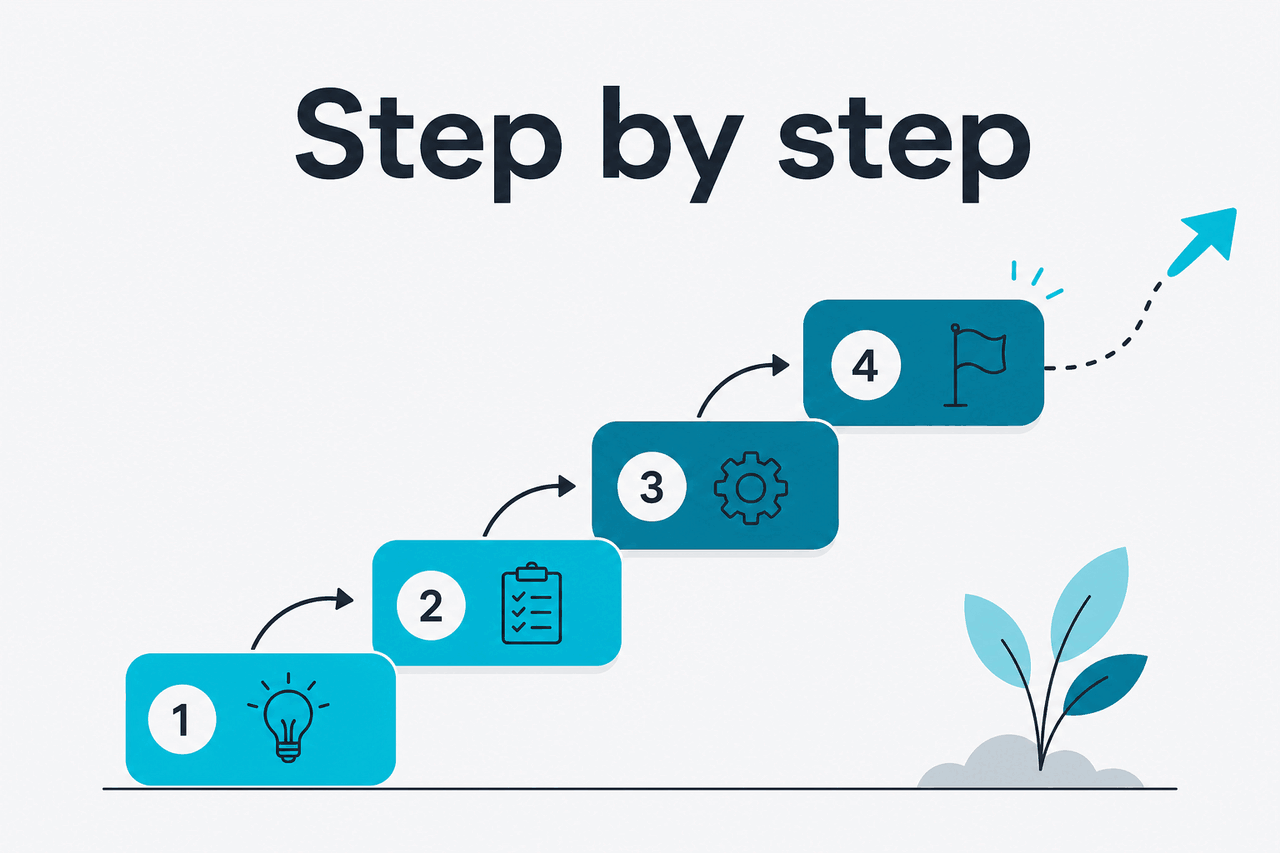
Step by step
Here is a hands-on workflow you can reuse for almost any target language, whether you are learning Spanish for work, Japanese for travel, or French for exams.
-
Pick one clear goal and one target level
Start by telling Claude exactly what language you are learning, your current level, and your goal. Avoid vague prompts like “teach me Italian.” Better: “I am A2 in Italian and want to improve restaurant conversations and present-tense accuracy.” Claude performs better when the task is constrained.
-
Set the teaching style before you start
Tell Claude how you want corrections handled. You might want line-by-line feedback, short explanations, only target-language replies, or English support when you get stuck. This prevents the common problem of getting long answers when you only wanted focused practice.
-
Create a reusable tutor prompt
Ask Claude to act as a patient language tutor with explicit rules: keep replies at your level, correct errors after you answer, explain grammar simply, and track recurring mistakes. Save that prompt in a Project if you use Claude regularly so the setup stays consistent across sessions.
-
Do short conversation rounds instead of long passive reading
Use 5 to 10 message exchanges on one scenario: ordering food, introducing yourself, asking for directions, or handling a work meeting. Short loops make it easier to notice patterns in your mistakes and improve them quickly.
-
Switch to correction mode after each round
Once you finish a mini conversation, ask Claude to show your original text, the corrected version, and a short reason for each change. This is where it becomes more than a chatbot. It starts acting like an editor and coach.
-
Turn mistakes into drills and flashcards
Ask Claude to extract weak vocabulary, verb forms, or grammar patterns from your conversation and turn them into short drills. You can also ask for example sentences, cloze exercises, or mini quizzes based only on errors you actually made.
-
Use translation carefully
Translation is useful for checking meaning, but overusing it slows output practice. A better pattern is: respond in the target language first, then ask Claude to explain what was wrong or suggest more natural phrasing. Keep English as a support language, not the default.
-
Verify tricky points with a second pass
Claude is strong at explanation, but it can still give an awkward phrase or overconfident rule. When something feels important, ask it to compare two versions, state which is more natural, and explain regional variation or formality. For developers building custom study tools, the same workflow can be extended through the Claude API.
Worked example
Starter prompt for daily Claude language learning
Use one prompt structure repeatedly so your practice becomes comparable from one session to the next.
I am learning Spanish at A2 level.

Act as my language tutor. Follow these rules:
- Speak mostly in Spanish, but use English for short explanations if needed.
- Keep your replies at A2-B1 difficulty.
- Ask me one question at a time.
- After each of my answers, first reply naturally, then give corrections in a short list.
- Explain grammar simply.
- Track my repeated mistakes and give me a 3-question review quiz every 5 turns.
- Focus today on travel situations and the past tense.

Start with a simple travel conversation.
That prompt is enough for most learners. If you want a more persistent setup, use Claude Projects and keep your rules, study goals, and correction style in the same workspace. Anthropic documents Projects and related product features through its official product and support materials at claude.ai and support.anthropic.com.
Pick when
- You want unlimited practice topics on demand
- You need grammar explanations in plain language
- You learn best by writing and getting corrections
- You want role-play without booking a tutor every time
Skip when
- You need guaranteed native-level phrasing in every answer
- You mainly need pronunciation and listening work
- You want accredited exam prep from a formal provider
- You tend to accept AI output without checking it
A practical routine is 15 to 20 minutes a day: 5 minutes of conversation, 5 minutes of correction, 5 minutes of drills, and a short recap. If you use Claude for broader productivity too, our guide to Claude Code shows how Anthropic’s ecosystem extends beyond chat, while the feature overview explains which product tools are available in the app.
If you are choosing a plan, the free tier is enough to test study prompts, while paid plans mainly matter if you want more usage, Projects, and heavier daily workflows. Anthropic lists current plan details on claude.com/pricing.
| Use case | Free | Pro | Max |
|---|---|---|---|
| Occasional conversation practice | $0/month | Not required | Not required |
| Daily study with Projects and more usage | May feel limited | $20/month or $17/month annual | Usually unnecessary |
| Heavy all-day use | Too limited | May still cap out | From $100/month |
For developers building their own tutor, worksheet, or correction workflow, Claude’s API pricing is separate from chat subscriptions. Current headline model pricing from Anthropic is Claude Opus 4.7 at $5/M input and $25/M output tokens, Claude Sonnet 4.6 at $3/M input and $15/M output tokens, and Claude Haiku 4.5 at $1/M input and $5/M output tokens. Official model and pricing references are on platform.claude.com and the API pricing docs.
90% off
cached input tokens with prompt caching
That discount matters if you build a structured language-learning app with repeated system prompts, level instructions, and correction rules. Anthropic also offers Batch API pricing at 50% off both input and output for workloads that do not need immediate responses.
Common mistakes to avoid
Most disappointing Claude language learning sessions fail because the prompt is too vague or the learner asks Claude to do everything at once.
- Using broad prompts. Fix: specify the language, your level, the topic, and the correction style you want.
- Letting Claude write too much. Fix: ask for one question at a time and keep exchanges short so you produce more of the language yourself.
- Relying on translation first. Fix: answer in the target language before asking for help in English.
- Treating every correction as final truth. Fix: ask for alternative phrasings, formality notes, or regional differences when nuance matters.
- Ignoring listening and pronunciation. Fix: pair Claude with audio, native content, or live speaking practice.
- Not reviewing repeated mistakes. Fix: ask Claude to keep a running list of recurring errors and turn them into weekly drills.
The best Claude language learning setup is narrow, repetitive, and measurable: one level, one scenario, one correction loop, then review.
Where to go next
Once you have the basic tutor prompt working, these related pages will help you extend the workflow.
- Claude features — understand Projects, integrations, and the product tools that support repeat study sessions.
- Claude API — build custom flashcard generators, quiz tools, or feedback pipelines if you want a more automated setup.
- Claude tutorials — browse more step-by-step guides for everyday Claude use.

Other questions readers ask
These are closely related questions that often come up alongside searches for Claude as a language learning tool.
The honest take
Claude language learning is a strong option if you want flexible text-based practice, clear explanations, and fast corrections. It is not a complete language course, and it should not be your only source of truth for fine-grained usage or native-level nuance. Used well, it can shorten the gap between “I studied” and “I actually practiced.”
The best way to use Claude is as a structured coach: give it your level, force short exchanges, ask for corrections after each answer, and recycle mistakes into drills. If you do that, the free plan is enough to test the method, and paid plans only matter once usage limits get in your way.
Independent guide. Not affiliated with Anthropic. For the official Claude product, visit claude.ai.
Last updated: 2026-05-12