
Claude AI helps you write, edit, summarize, analyze files, reason through decisions, and work with code; c-ai.chat is an independent guide, and our broader Claude AI overview explains how the product family fits together.

- The short answer
- The full story
- What this means in practice
- Other questions readers ask
- The honest take
- Sources
The short answer
Claude is a general-purpose AI assistant from Anthropic for writing, analysis, coding help, document work, and structured task support. You can use it through claude.ai, Claude apps, team plans, and Anthropic’s developer API.
- Made by Anthropic · covered independently by c-ai.chat
- Useful for text, code, files and structured analysis
- Available in Claude apps and through the API
- Needs verification · it can make mistakes
People use Claude when they need a careful assistant for language-heavy work. It can turn rough notes into briefs, drafts into polished copy, long documents into summaries, requirements into code, and broad questions into structured answers.
| What Claude does | Common use | Important limit |
|---|---|---|
| Answers questions | Explains concepts, compares options, and gives step-by-step guidance. | It can be wrong if the prompt is vague or the source material is missing. |
| Writes drafts | Emails, memos, outlines, reports, scripts, and briefs. | You still need to check tone, facts, and claims. |
| Edits text | Shortens, rewrites, proofreads, and changes style. | It can over-edit unless you set clear constraints. |
| Summarizes long material | Turns documents, transcripts, and notes into key points. | A summary is not a substitute for expert review. |
| Analyzes files | Finds patterns, extracts facts, and compares sections across documents. | File support depends on product, plan, and file type. |
| Helps with code | Explains code, writes functions, reviews bugs, and suggests tests. | Generated code needs testing before production use. |
| Creates structured outputs | Tables, checklists, JSON-style drafts, templates, and decision matrices. | Strict formats should be validated in your own system. |
| Supports research workflows | Extracts evidence, builds notes, and compares source material. | You should verify citations and primary sources. |
The full story
Claude is both a model family and a product. Anthropic makes Claude. The official consumer product is claude.ai. Developers can build with Claude through the Claude model documentation and API platform. For feature-level detail, see our Claude features guide.
In the app, Claude works like a conversation. You provide instructions, text, files, images, or context. Claude responds with text or a structured output. In the API, a developer sends a request and connects Claude’s response to an app, workflow, support tool, or internal system. Our Claude API guide explains the developer route in more detail.
The main Claude models differ by capability, speed, context length, and cost. The right choice depends on the task. Use stronger models for complex reasoning, long documents, and high-stakes drafting. Use cheaper models for simpler, high-volume work.
| Model | Best fit | Context and output | API price |
|---|---|---|---|
| Claude Opus 4.7 | Flagship work: complex reasoning, long analysis, careful drafting, and difficult coding tasks. | 1M context window | $5 per million input tokens; $25 per million output tokens |
| Claude Sonnet 4.6 | Balanced default for many users and teams. | 1M context window; 128K max output | $3 per million input tokens; $15 per million output tokens |
| Claude Haiku 4.5 | Fast, lower-cost tasks such as classification, extraction, and simpler drafting. | Designed for speed and lower cost | $1 per million input tokens; $5 per million output tokens |
Claude is also sold through plans, not only models. Plan choice affects usage limits, admin options, collaboration, feature access, and support. For a fuller plan comparison, see our Claude pricing guide.
Free
$0/month
For trying Claude with daily usage limits.
Pro
$20/month
Or $17/month annual. For individuals who want more usage.
Max
From $100/month
For power users who need much higher usage.
Team Standard
$25/seat/month
Or $20/seat/month annual. For teams that need shared workspace features.
Team Premium
$125/seat/month
Or $100/seat/month annual. For teams with higher capacity and admin needs.
Enterprise
$20/seat base + API rates
For organizations that need enterprise controls and usage-based pricing.
The most useful way to understand Claude is simple: it converts instructions and source material into useful language. That includes explanations, summaries, analysis, code, plans, checklists, and structured drafts. Quality depends on the model, the prompt, the available context, and your review process.
What this means in practice
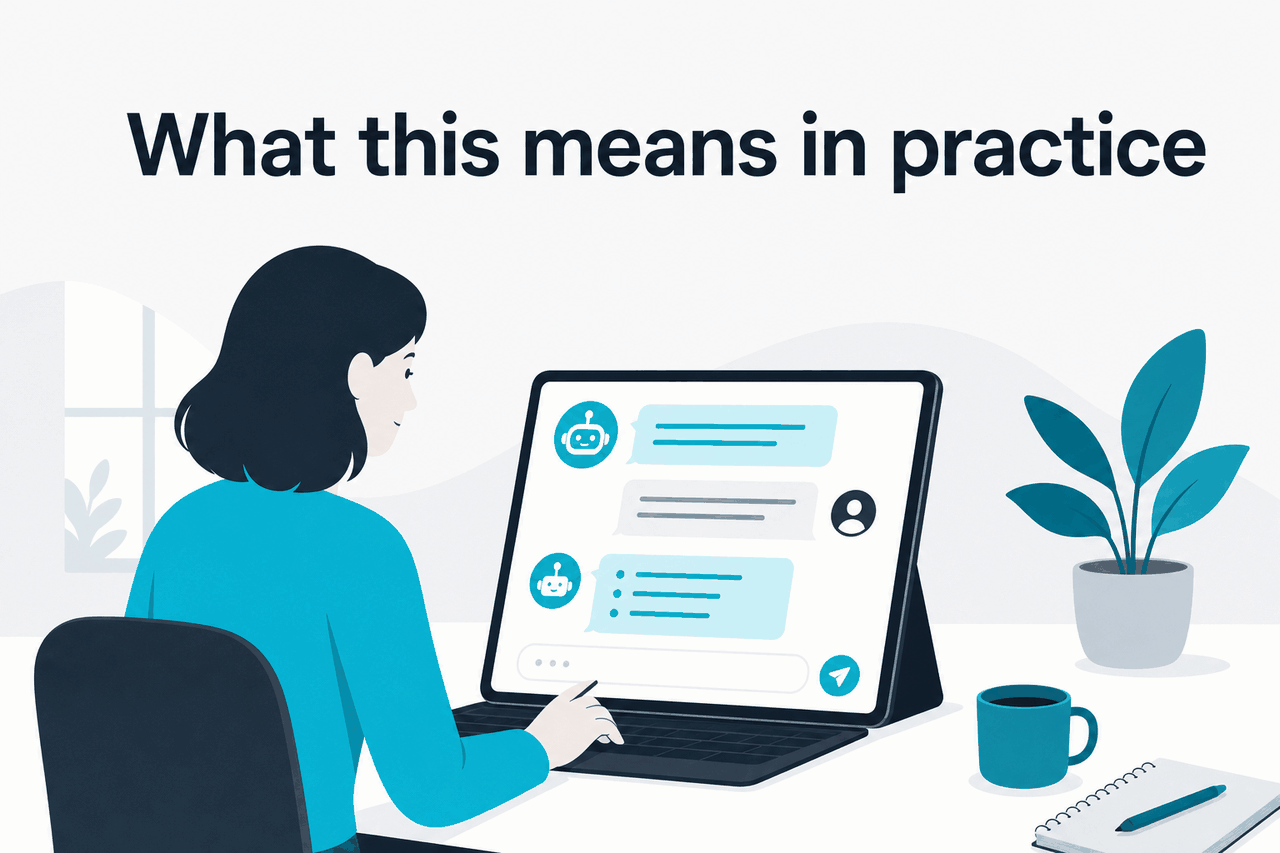
Start with the work you already do in text. Claude is a good fit when you spend time reading, writing, comparing, planning, or explaining. A founder might turn customer notes into a product brief. A developer might review a function and propose tests. A marketer might reshape a draft for different audiences. A student might test their understanding of a topic while still checking the source material.
Decision rule
Use Claude when the output is useful after human review.
- Good fit: drafts, summaries, comparisons, explanations, code review, extraction, and planning.
- Use caution: legal, medical, financial, security, customer-facing, or public claims.
- Poor fit: tasks that require guaranteed facts, deterministic output, or no human oversight.
Claude is less useful when you need certainty without verification, live facts without checking official sources, or decisions that require professional judgment. Treat it as a capable assistant, not an authority. For availability and outages, use the official Claude status page. For security and compliance information, use Anthropic’s trust center.
Pick Claude when
- You need help with long text, documents, reasoning, or code.
- You can provide clear context and examples.
- You are willing to verify important claims.
- Your team needs shared workspaces or API access.
Limit Claude when
- You need a guaranteed source of truth with no review.
- Your organization does not allow the data to be shared.
- You need the same output every time without validation.
- A template, search query, spreadsheet, or calculator would do the job.
For individual users, test Claude on a real task. Ask it to rewrite a messy email, compare two proposals, explain a policy, or review a small code snippet. If it saves time and you can verify the result, it is doing useful work. If you spend more time correcting it than using it, narrow the task.
Worked example
A practical Claude workflow
Claude is strongest when it compresses messy context into a useful draft that a person can review.
For API users, the same idea applies at scale. Claude can classify support tickets, draft replies, extract fields from documents, write internal summaries, or power a chat interface. Costs depend on tokens. Prompt caching gives 90% off cached input tokens. The Batch API gives 50% off both input and output when latency is less important.
90% off
cached input tokens with prompt caching
The main choice is whether you want Claude as a personal assistant, a team workspace, or a developer platform. Personal users should compare Free, Pro, and Max. Teams should compare Team Standard, Team Premium, and Enterprise. Developers should compare model quality, token costs, latency, context length, safety requirements, and integration effort. Our Claude models guide is the next step if you are choosing a model.
Other questions readers ask
For more short answers, see our Claude FAQ. It covers account access, limits, plans, safety, and common product questions.
The honest take
Claude AI does a broad set of language and reasoning tasks well: writing, editing, summarizing, explaining, coding help, document analysis, and structured planning. It is most valuable when you give it real context and ask for a draft, comparison, checklist, explanation, or next step that a human can review.
It is not a replacement for judgment, verification, or domain expertise. Use Claude when it speeds up thinking and drafting. Check it when the output affects money, health, law, security, public claims, or customer commitments.
Independent guide. Not affiliated with Anthropic. For the official Claude product, visit claude.ai.
Last updated: 2026-05-12
This article is part of the What is Claude AI hub on c-ai.chat.