
Claude ethics refers to Anthropic’s safety approach for Claude: training and deploying the model with explicit behavioural safeguards, policy limits, monitoring, and product controls designed to reduce harmful outputs while keeping the assistant useful. This is an independent guide from c-ai.chat, not Anthropic, and if you want the broader product context first, see what Claude AI is. Below, we cover the short answer, the full story, practical implications, related questions, and an honest take.
- The short answer
- The full story
- What this means in practice
- Other questions readers ask
- The honest take
The short answer
Claude ethics means Anthropic tries to make Claude helpful, honest, and less likely to produce dangerous or abusive content by combining model training, safety testing, usage policies, and product-level restrictions. In plain terms, Claude is designed to refuse some requests, be cautious in sensitive areas, and follow stricter boundaries than a fully unrestricted chatbot.
- Anthropic builds Claude and publishes its safety approach
- Claude is not unrestricted and will refuse some harmful requests
- Policies + testing shape what Claude can and cannot do
- Independent guide — c-ai.chat is not Anthropic
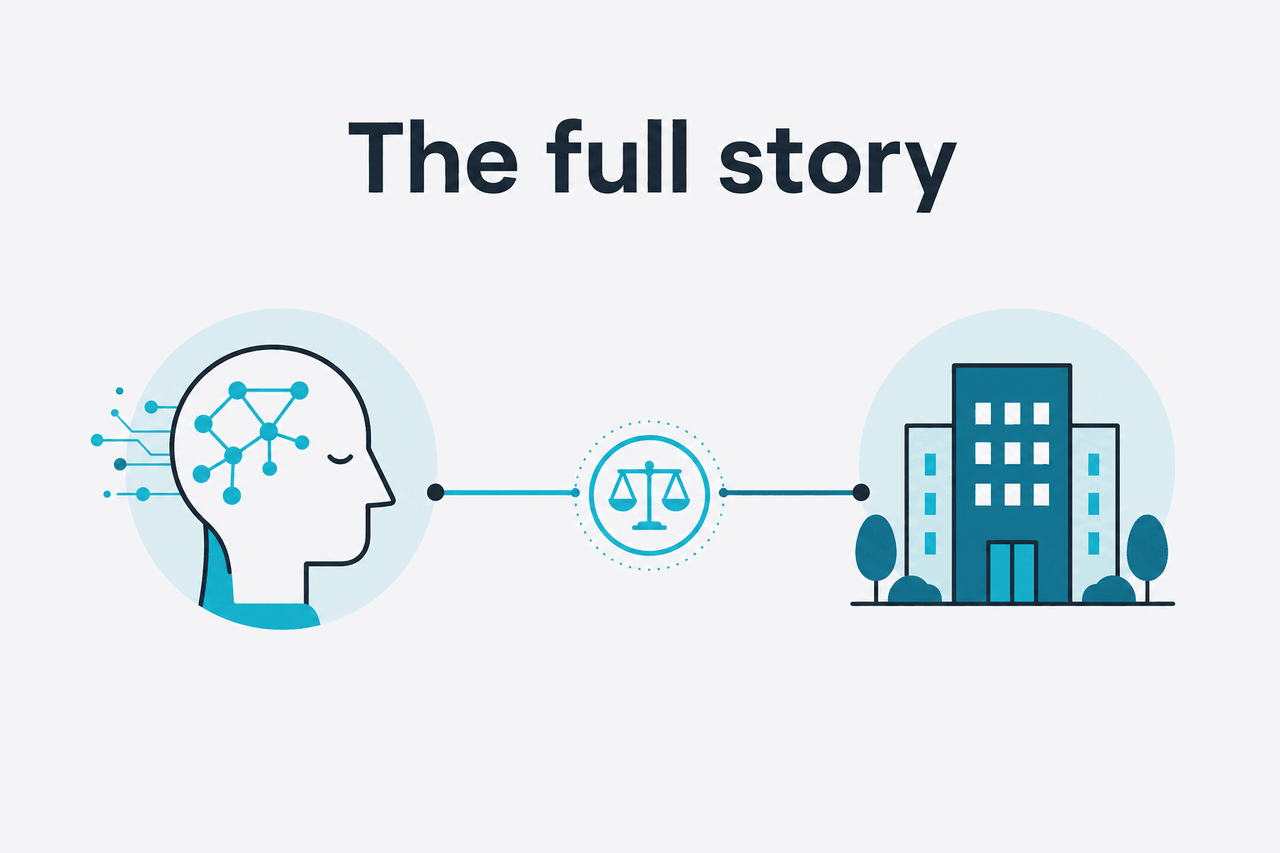
The full story
Anthropic presents safety as a core part of how Claude is built and deployed, not just a moderation filter added at the end. On Anthropic’s public site and developer documentation, the company describes Claude as a family of models intended to be useful while operating within policy and safety constraints. That shows up in several layers: training choices, model evaluations, platform rules, product refusals, abuse detection, and controls for enterprise and developer use. You can see the official product and company context at anthropic.com, claude.ai, and docs.claude.com.
A big part of “Claude ethics” is Anthropic’s claim that the model should not simply optimise for compliance with whatever the user asks. Instead, Claude is meant to weigh safety, honesty, and the likely consequences of a response. In practice, that means the assistant often refuses direct help with self-harm, malware, weapon construction, non-consensual sexual content, fraud, or highly targeted wrongdoing. It may also answer in a constrained way for medical, legal, financial, or political topics where overconfident output can cause harm. For developers, the same general approach carries into the API and platform documentation on model behaviour, usage limits, and trust controls at platform.claude.com and trust.anthropic.com.
This does not mean Claude is “perfectly ethical” in some broad philosophical sense. It means Anthropic has chosen a specific safety posture: reduce harmful assistance, set clearer refusal boundaries, and provide more policy-driven behaviour than a maximally permissive model would. Users feel this directly in the interface. Sometimes Claude gives a careful, limited answer where another tool might be more permissive. Sometimes that is a benefit. Sometimes it is frustrating. The trade-off is part of the product design, not a bug.
If you are new to the ecosystem, the easiest framing is this: Claude’s ethics are really Anthropic’s safety and governance choices expressed through the model. For a broader overview of the company behind those choices, see our guide to Anthropic. For product capabilities outside the safety lens, you can also check Claude features.
What this means in practice
For everyday use, Claude’s ethics matter less as a slogan and more as a product behaviour pattern. If you use Claude for writing, coding, summarising, analysis, research support, or office work, you will usually notice a more cautious style around risky requests, sensitive claims, and instructions that could clearly enable harm. That can make Claude feel more reliable in business or education settings where reckless outputs are a real problem. It can also mean extra friction if your request is legitimate but resembles a prohibited pattern.
The practical question is not “Is Claude ethical?” in the abstract. It is “Does Anthropic’s safety posture fit my use case?” If you want a general-purpose assistant for work, study, or internal knowledge tasks, stricter guardrails are often useful. If you need highly adversarial security testing, unrestricted roleplay, or edge-case content generation, Claude may refuse or narrow its answer more often than you want. That is why it helps to compare Claude’s safety style with your actual workflow rather than treating ethics as a branding term.
Pick when
- You want a work-oriented assistant with clear boundaries
- You value lower risk around harmful or reckless outputs
- You need a model that is cautious with sensitive advice
- You are deploying AI in a business, team, or school setting
Skip when
- You need the most permissive possible model behaviour
- Your workflow often triggers borderline policy refusals
- You expect every request to be answered directly, even risky ones
- You want minimal friction over safety-first handling
There is also a trust angle. Anthropic publishes public-facing information about model families, platform use, trust resources, and service status through platform.claude.com, trust.anthropic.com, and status.claude.com. That does not remove all risk, but it gives users more structure than “just trust the chatbot.” If you are evaluating Claude for regular use, our site home page also links the main guides together at c-ai.chat.
Other questions readers ask
If your question is broader than ethics alone, our Claude FAQ covers common product, access, and usage questions in one place.
The honest take
Claude ethics is best understood as Anthropic’s safety philosophy translated into product behaviour. Claude is not neutral in the sense of “it will do anything.” It is intentionally bounded. For many people, especially professionals using AI for real work, that is a feature. For others, it is a constraint that will show up quickly.
If you want an assistant that tries to be useful without being fully permissive, Claude’s safety posture is one of its defining traits. If you want fewer refusals and broader compliance, you may find the guardrails too strict. The key is to judge Claude by your use case, not by vague ethics language alone.
Independent guide. Not affiliated with Anthropic. For the official Claude product, visit claude.ai.
Last updated: 2026-05-12