
The term anthropic lawsuit usually refers to copyright cases filed against Anthropic over how training data and books were used to build AI systems; the headline point is that Anthropic has faced serious legal challenges, but the outcomes and implications depend on the specific case and settlement stage. c-ai.chat is an independent guide, not Anthropic, and this page explains the company context, the people behind it, what it sells, and the related questions readers usually mean when they search this topic. For broader company background, see our Anthropic guide.
- The short answer
- What Anthropic actually is
- People and leadership
- Products and revenue
- Other questions readers ask
- The honest take
The short answer
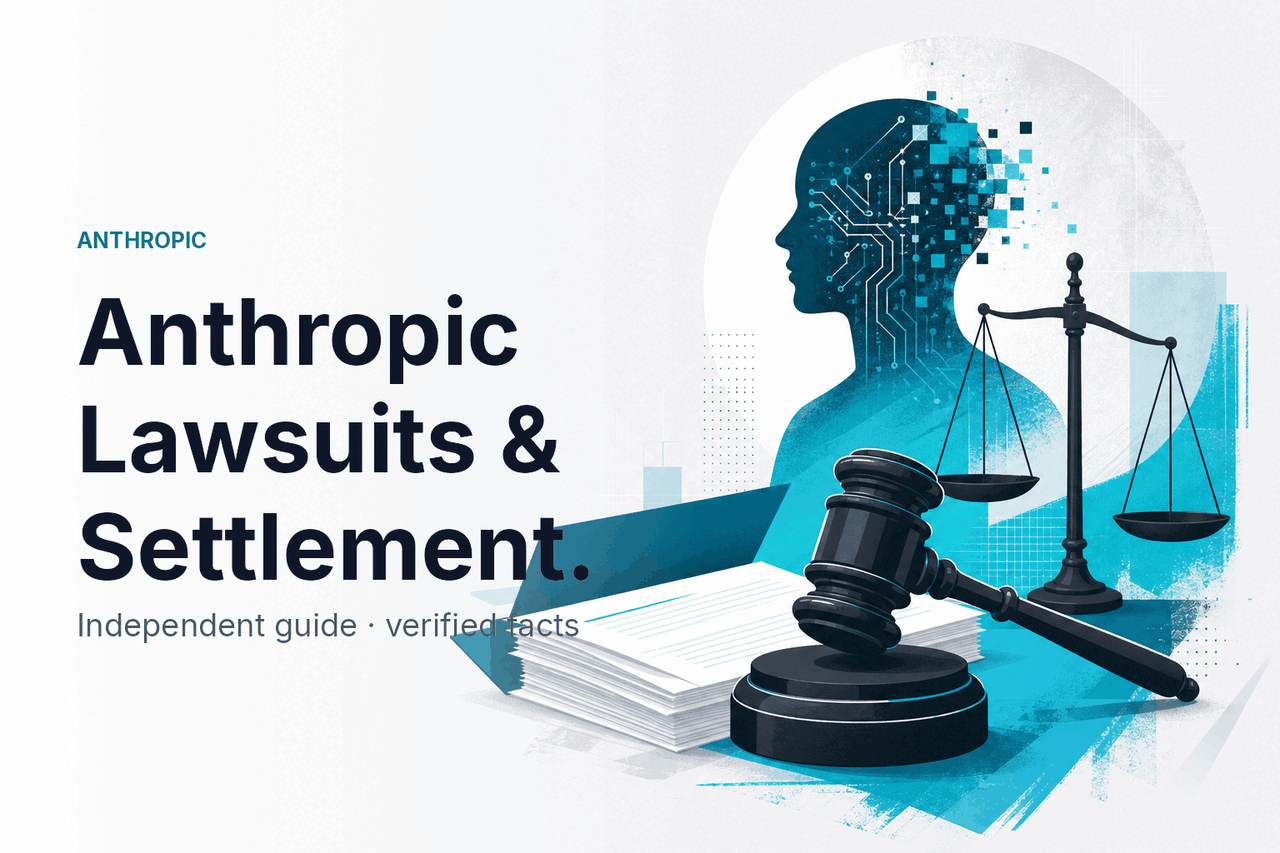
Yes, Anthropic has been sued, most notably in copyright-related cases tied to AI training data, so if you searched for an anthropic lawsuit, the short answer is that the company has faced real litigation rather than a single minor dispute.
- Founded 2021
- Founders Dario Amodei and Daniela Amodei
- HQ San Francisco
- Funding Multi-billion-dollar backing from major investors
That said, many searchers are not only asking about the legal case itself. They are also trying to work out what Anthropic is, who runs it, whether Claude is the same thing as Anthropic, and how the business makes money. Those questions matter because lawsuits against AI companies often turn on what the company built, how its models were trained, and how its products are sold.
What Anthropic actually is
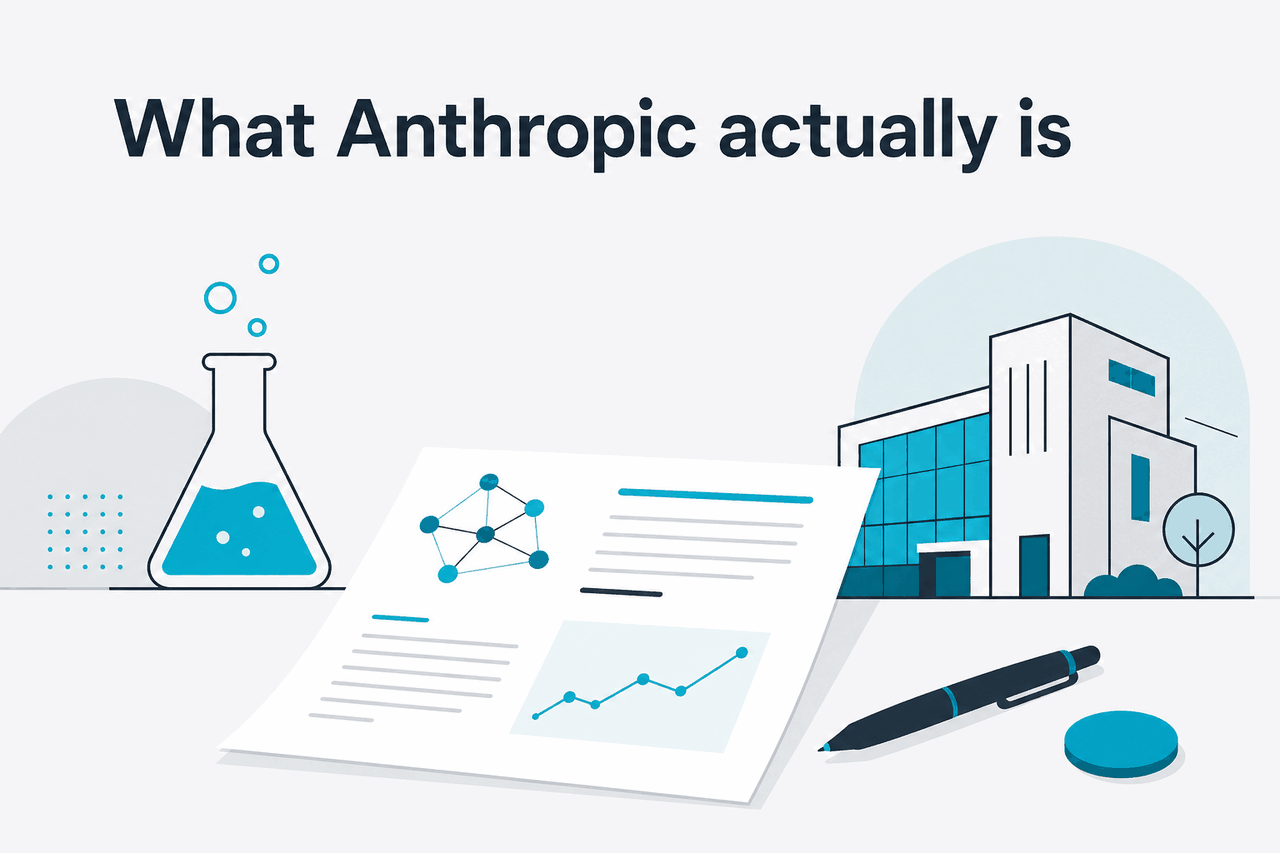
Anthropic is an AI company that builds foundation models and products under the Claude brand. The company was founded by former OpenAI researchers and leaders, and it presents itself as a safety-focused AI lab and commercial company. Its official company site is anthropic.com, while Claude the product lives at claude.ai.
The basic corporate story is straightforward. Anthropic launched in 2021 and has since raised very large amounts of outside capital while expanding both consumer and enterprise products. Its official news pages and company materials describe major product launches, partnerships, model releases, and trust commitments. That matters in the lawsuit context because courts, publishers, and regulators are looking at companies like Anthropic not as hobby projects but as well-funded firms deploying models at real commercial scale. If you want a wider map of recent developments, our Claude and Anthropic news page tracks the broader ecosystem.
Anthropic also operates in two public-facing layers. One is the consumer layer: Claude on web, desktop, and mobile, sold through free and paid subscriptions on claude.com/pricing. The other is the developer and enterprise layer: model access through the Anthropic API on platform.claude.com and documentation on docs.claude.com. When people search for an anthropic lawsuit, they often mean the company behind all of these products, not only the Claude chatbot they see on screen.
| Entity | What it is | Official URL |
|---|---|---|
| Anthropic | The company that develops Claude models and products | anthropic.com |
| Claude | The consumer AI assistant and product family | claude.ai |
| Claude API | Developer platform for model access and billing | platform.claude.com |
| Developer docs | Technical documentation for models, pricing, and tools | docs.claude.com |
People and leadership
Anthropic is strongly associated with a small group of public leaders, especially its co-founders. If your search for an anthropic lawsuit is really a search for who is responsible for the company and its direction, these are the names to know.
Dario Amodei is Anthropic’s co-founder and chief executive officer. Before Anthropic, he was known for research and leadership work in advanced AI systems. Public-facing company materials position him as one of the main voices on model capability, AI safety, and the commercial rollout of Claude.
Daniela Amodei is Anthropic’s co-founder and president. She has been a central figure in company building, operations, and turning research work into an actual business. In practice, she is one of the clearest links between Anthropic’s stated safety mission and the way the company is run.
Jack Clark, a co-founder and policy-focused executive, is widely visible in public discussions about AI governance, model deployment, and how labs should communicate risk. Mike Krieger, Anthropic’s chief product officer, is another prominent public leader tied to product strategy and the user-facing direction of Claude. You do not need a full executive org chart to follow the lawsuit conversation, but these names help explain why Anthropic is often treated as both a research lab and a major software company.
Why leadership matters in lawsuit coverage
- Executives set training, product, and licensing strategy
- Public statements can shape legal and policy scrutiny
- Courts and journalists often frame cases around company decision-makers
What not to overread
- A lawsuit headline does not prove wrongdoing
- Named leaders are not automatically personally liable
- One case does not define the entire company
Products and revenue
Anthropic makes money from Claude subscriptions, team and enterprise software, and API usage. That business model matters because AI lawsuits are often about how model providers train systems, then monetize access to them.
- Claude consumer app — The public assistant available on web, desktop, iOS, and Android through Free, Pro, and Max plans at claude.com/pricing.
- Claude API — Paid model access for developers through platform.claude.com, with token-based pricing.
- Claude Code — Coding-focused functionality included in paid tiers, especially relevant for developers and technical teams.
- Cowork — A collaborative workflow feature included in paid consumer plans.
- Skills — Product capabilities that help Claude perform repeatable or domain-specific tasks more effectively in supported contexts.
On the consumer side, the current official plans are Free at $0/month, Pro at $20/month or $17/month annual, Max from $100/month, Team Standard at $25/seat/month or $20/seat/month annual, Team Premium at $125/seat/month or $100/seat/month annual, and Enterprise with a $20/seat base plus usage at API rates. Those prices are relevant because they show Anthropic is not only a research company. It is charging for access, higher limits, team controls, and enterprise administration.
Free
$0/month
For casual users
- Web, iOS, Android, and desktop access
- Daily usage limits
Pro
$20/month
For individuals who use Claude often
- Claude Code, Cowork, unlimited Projects, Research
- Additional models and Office integrations beta
Max
From $100/month
For power users
- 5x or 20x Pro usage
- Higher output limits, early access, priority traffic
On the API side, Anthropic sells model usage by the million tokens. The current headline rates are Claude Opus 4.7 at $5/M input and $25/M output, Claude Sonnet 4.6 at $3/M input and $15/M output, and Claude Haiku 4.5 at $1/M input and $5/M output. Prompt caching can cut cached input cost by 90%, and the Batch API can cut both input and output pricing by 50%.
90% off
cached input tokens with prompt caching
| Model | Input price | Output price | Main positioning |
|---|---|---|---|
| Claude Opus 4.7 | $5/M tokens | $25/M tokens | Flagship model |
| Claude Sonnet 4.6 | $3/M tokens | $15/M tokens | Default balance of quality and cost |
| Claude Haiku 4.5 | $1/M tokens | $5/M tokens | Fastest and cheapest option |
As for revenue, Anthropic does not publish a simple public revenue dashboard on its main site, so any precise figure should be treated cautiously unless the company states it directly. What is clear from its pricing pages, enterprise push, and public partnerships is that Anthropic operates at large commercial scale, with both subscription revenue and usage-based platform revenue. That scale is one reason copyright and training-data disputes draw so much attention: the argument is not just about research, but about monetized AI systems.
Other questions readers ask
People who search for an anthropic lawsuit often mean one of these adjacent questions. The answers below are short and practical.
If you are comparing company, product, and legal context all at once, our homepage at c-ai.chat groups the main Claude topics in one place. Readers who are new to the ecosystem often start there, then move to the FAQ for narrower questions.
The honest take
The plain answer is that Anthropic is a major AI company facing the same broad class of legal pressure that has hit other model providers: disputes over copyrighted material, training practices, and the boundary between research use and commercial exploitation. If you searched for an anthropic lawsuit, you are not chasing a fake rumor. The company has faced real litigation, and the legal significance depends on the exact case and whether you care about consumer use, enterprise procurement, copyright, or model training policy.
At the same time, a lawsuit headline is not the whole company. Anthropic is also the business behind Claude subscriptions, team software, and API access. So the useful way to read this topic is: legal risk on one side, product reality on the other. Keep those separate, verify claims against official company and product pages, and avoid assuming that one case instantly answers every question about Claude.
Independent guide. Not affiliated with Anthropic. For the official Claude product, visit claude.ai.
Last updated: 2026-05-12