
c-ai.chat is an independent guide, and the short answer is this: aws bedrock claude means using Anthropic Claude models through Amazon Bedrock instead of calling Anthropic’s own API directly. Bedrock handles the AWS-side provisioning, identity, and billing layer, while Claude remains the model. Below, you’ll see how it works, what it costs, the common setup mistakes, and when Bedrock makes sense versus using the Claude API directly.
- The short answer
- How it works
- What it costs
- Limits and gotchas
- Other questions readers ask
- The honest take
The short answer
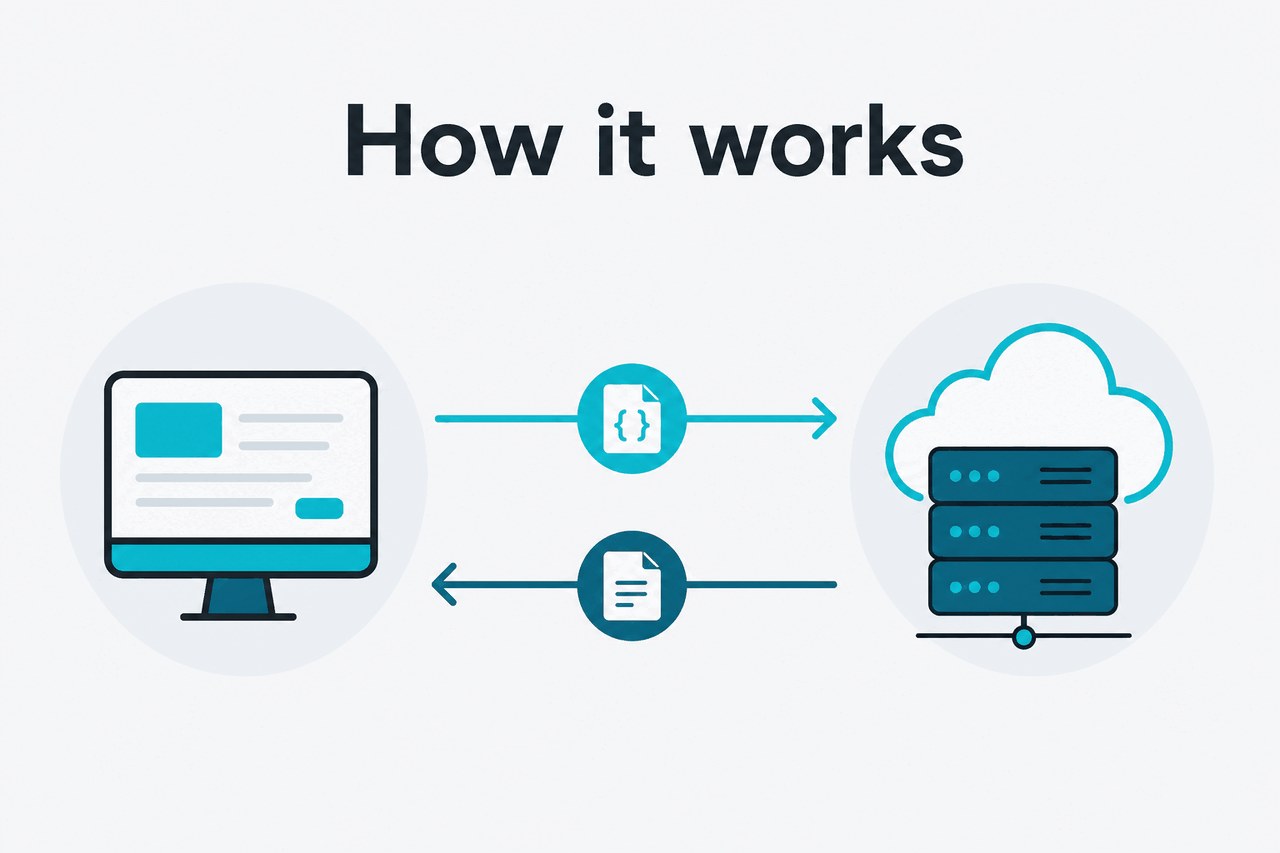
AWS Bedrock Claude is Anthropic Claude served through Amazon Bedrock, so you request access in AWS, invoke the model with AWS credentials, and pay through AWS rather than through Anthropic’s first-party console. For teams already standardised on IAM, VPC controls, CloudTrail, and consolidated AWS billing, Bedrock can be the simpler operational path. For teams that want the newest Claude features first, cleaner Anthropic-native docs, or direct access to Claude-specific tooling, the Claude API is often the better fit.
Worked example
Minimal Bedrock invoke flow
The model is still Claude; the transport, permissions, and billing path are AWS-managed.
import boto3, json

client = boto3.client("bedrock-runtime", region_name="us-east-1")

body = {
  "anthropic_version": "bedrock-2023-05-31",
  "max_tokens": 300,
  "messages": [
    {"role": "user", "content": "Explain what aws bedrock claude means in one paragraph."}
  ]
}

response = client.invoke_model(
  modelId="anthropic.claude-sonnet-4-6",
  body=json.dumps(body)
)

print(response["body"].read().decode("utf-8"))
If that shape looks unfamiliar, compare it with Anthropic’s own model and message docs on platform.claude.com and then decide whether you want AWS orchestration or direct vendor access. If you are still choosing between web app plans and API usage, our Claude pricing guide is the quickest place to start.
How it works
Technically, Bedrock is a managed inference layer inside AWS. You request access to the Anthropic model in your AWS account, choose an approved region, and send prompts to the Bedrock runtime endpoint using IAM-backed credentials. Your application talks to AWS, not directly to Anthropic’s public API endpoint, even though the underlying model family is still Claude.
That changes a few practical things for developers. Authentication is AWS-native, observability often fits existing AWS controls, and procurement may be easier for companies that already buy through Amazon. But model naming, release timing, supported features, and request schemas can differ from Anthropic’s first-party platform, so it is smart to keep the official Claude docs open as a reference point: models overview and pricing. If you plan to build coding workflows, you may also want to review our Claude Code guide because Bedrock access does not automatically imply Anthropic-native developer tools.
-
Request Anthropic model access in Bedrock
Open Amazon Bedrock in your AWS account, find the Anthropic Claude models you need, and request access for the region where your app will run. Access is account- and region-specific, so a model visible in one region may not be callable in another.
-
Set up IAM permissions
Grant your application permission to invoke Bedrock models. In production, use an IAM role instead of long-lived access keys whenever possible.
-
Choose the right model ID
Bedrock uses AWS-specific model identifiers such as
anthropic.claude-sonnet-4-6. Do not assume Anthropic’s model names map one-to-one without checking the Bedrock catalog. -
Send Messages-style payloads
Most current Claude integrations use a messages format with fields like
messages,max_tokens, and an Anthropic version marker. Validate the exact payload your SDK and region expect before shipping. -
Handle retries, throttling, and output limits
Bedrock adds AWS service-layer behaviour on top of model behaviour. Build backoff logic, watch for throttling errors, and log request IDs for support cases.
Pick when
- Your company already runs most AI workloads inside AWS
- You need IAM-based access control and centralised cloud billing
- You want Claude available inside existing AWS governance workflows
Skip when
- You want the clearest path to Anthropic-native features
- You need the newest Claude capabilities as soon as they launch
- You prefer direct vendor docs, support paths, and tooling
What it costs
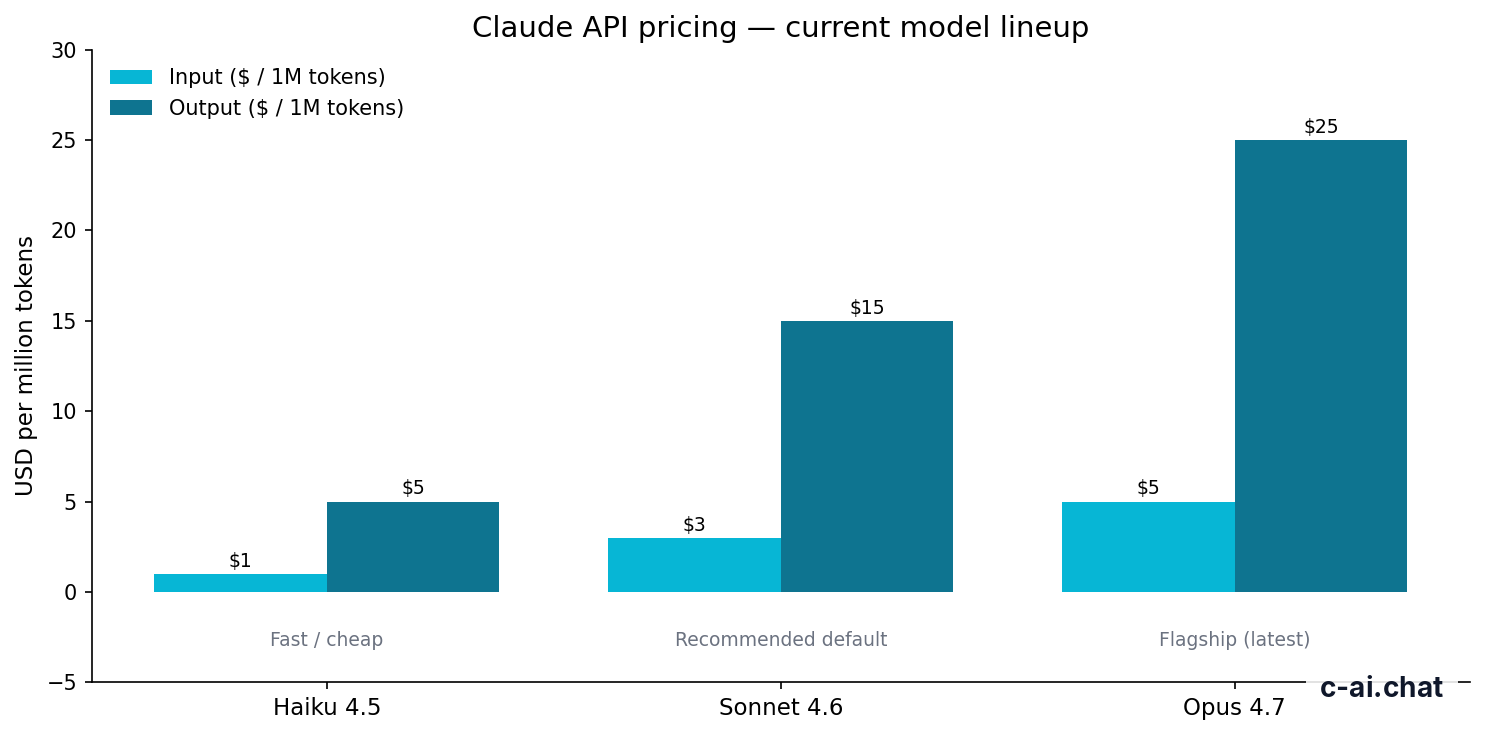
Claude model pricing is quoted per million tokens, with separate input and output rates. The official Anthropic reference prices are Opus 4.7 at $5 input / $25 output per million tokens, Sonnet 4.6 at $3 / $15, and Haiku 4.5 at $1 / $5. Those are the baseline numbers to know even if you consume Claude through AWS, because they tell you where each model sits on the cost-performance curve.
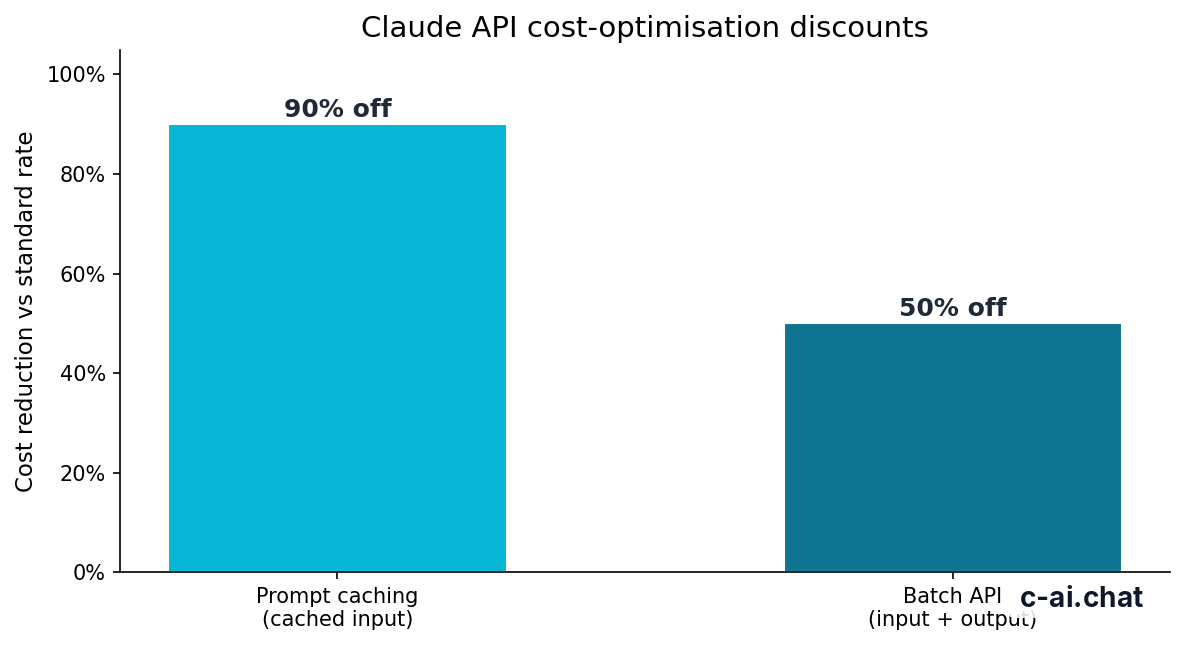
Cost optimisation matters more than list price once traffic grows. Anthropic documents prompt caching at 90% off cached input tokens and a Batch API discount of 50% off both input and output on supported workflows. Whether you can use every optimisation exactly the same way through Bedrock depends on the AWS implementation path and feature availability, so check the current Bedrock support matrix before assuming parity with Anthropic’s own platform.
- Free tier · no card
- API priced per million tokens
| Claude model | Role | Input price | Output price | Best fit |
|---|---|---|---|---|
| Opus 4.7 | Flagship | $5 per million tokens | $25 per million tokens | Hard reasoning, high-stakes analysis, premium quality |
| Sonnet 4.6 | Recommended default | $3 per million tokens | $15 per million tokens | General production apps, chat, coding, business workflows |
| Haiku 4.5 | Fast and cheap | $1 per million tokens | $5 per million tokens | High-volume classification, lightweight assistants, latency-sensitive tasks |
90% off
cached input tokens with prompt caching
For many teams, the real decision is not “Which provider is cheaper?” but “Which operating model is cheaper?” Bedrock can reduce internal overhead if AWS is already your standard. Direct Anthropic access can reduce complexity if you want faster access to platform features described in our Claude features guide and on Anthropic’s pricing docs.
Limits and gotchas
Most problems with aws bedrock claude are not model-quality problems. They are access, region, schema, and quota problems. These are the surprises that catch developers most often:
- Model access is not automatic. You usually need to request access to Anthropic models in Bedrock before you can invoke them.
- Region support can differ. A Claude model may be available in one AWS region and unavailable in another, which affects both development and deployment.
- Model IDs are provider-specific. Bedrock identifiers such as
anthropic.claude-sonnet-4-6are not the same thing as Anthropic’s first-party naming conventions. - Request format mismatches are common. Developers often copy an Anthropic API example into a Bedrock client and get validation errors because the wrapper, version field, or endpoint expectations differ.
- Rate limits still exist. Even in AWS, you are not getting infinite throughput. Account quotas, service quotas, or model-specific throughput ceilings can trigger throttling.
- Feature parity may lag. A feature documented at platform.claude.com may not appear in Bedrock on the same day.
- Long context does not remove cost discipline. Claude supports large contexts, and some current models support up to 1,000,000 tokens, but sending huge prompts repeatedly can make bills climb fast.
- Error handling is two-layered. You may see AWS service errors, permission errors, network issues, and model-level validation errors in different formats.
- Enterprise compliance assumptions can be wrong. “It runs on AWS” does not mean every internal control is automatically satisfied. Review your AWS and Anthropic trust documentation directly.
- Status checks are split. For Claude-specific service issues, monitor status.claude.com; for Bedrock-side incidents, your AWS service health tools matter too.
| Problem | What it usually means | What to check |
|---|---|---|
| AccessDeniedException | Your app cannot invoke the model | IAM policy, role attachment, Bedrock permissions |
| ValidationException | The request body or model ID is wrong | Payload schema, Anthropic version field, model identifier |
| Resource not found | The model is not available in that region or account | Region setting, access approval, exact model name |
| Throttling | You exceeded service or account throughput | Retry logic, quota requests, workload shaping |
Other questions readers ask
The honest take
AWS Bedrock Claude is a sensible choice when your organisation already lives inside AWS and wants Claude under familiar cloud controls. It is not a different model brand, and it does not magically remove the usual AI integration work. You still need to choose the right model, manage token spend, handle throttling, and test output quality carefully.
For many teams, the deciding factor is operational fit. If procurement, security review, and deployment are easier in AWS, Bedrock is probably the right route. If you want the clearest Claude-specific experience, direct product access at claude.ai, or a more direct path into Anthropic’s ecosystem, start with the official product and the guides on the Claude API.
Independent guide. Not affiliated with Anthropic. For the official Claude product, visit claude.ai.
Last updated: 2026-05-10
This article is part of the Claude API for developers hub on c-ai.chat.