
Claude Code Desktop usually means using Anthropic’s Claude Code from your local terminal and supported IDE, not a separate clone of claude.ai; this independent c-ai.chat guide explains how it fits into the broader Claude feature set.
- The short answer
- How it works
- What you can do with it
- Claude Code vs. alternatives
- The practical verdict
- FAQ
- Sources
The short answer
Claude Code Desktop is a local coding workflow: you work in your terminal and editor, while Claude Code uses Anthropic’s hosted Claude models to inspect files, suggest edits, run approved commands, and help with coding tasks.
Anthropic makes Claude and publishes the official product at claude.ai. c-ai.chat is an independent guide. For plan details, compare our Claude pricing guide with the official Claude pricing page.
The key distinction is simple. Claude Code is not just a chat window for code snippets. It is designed to work against a local project, with your approval for file edits and shell commands. That makes it more useful for multi-file work than pasting one function into a browser chat.
Free
$0
Useful for trying Claude. Check the official product for current Claude Code access and limits.
Pro
$20/month
$17/month with annual billing. A common individual plan for heavier Claude use.
Max
From $100/month
For users who need higher usage limits than Pro.
Team Standard
$25/seat
$20/seat with annual billing. Built for shared team use.
Team Premium
$125/seat
$100/seat with annual billing. Adds higher-tier team capabilities.
Enterprise
$20/seat base
API rates apply on top of the base seat price.
How it works

Claude Code sits between your local project and Anthropic’s hosted Claude models. You start it from a repository, describe a task, and it gathers relevant context from files, command output, and your instructions.
The model does not run fully on your laptop. Prompts and selected context are sent to Anthropic’s service under the product terms and settings that apply to your account.
The useful part is tool use. Claude Code can propose file changes, explain a codebase, search for relevant files, run tests, inspect errors, and iterate after you approve actions. You should still review every diff. Treat it like a fast pair programmer, not an autopilot.
For official setup steps, use Anthropic’s Claude Code documentation. If you want to build your own tools with Claude models, compare that route in our Claude API docs guide.
Open the project locally
Start with a Git repository you can restore. Commit or stash current work before asking Claude Code to edit files.
Install from the official docs
Use Anthropic’s current installation instructions, then confirm the
claudecommand is available in your terminal.Authenticate your account
Sign in with a Claude plan that supports your intended workflow, or configure API-based access if your organisation uses that path.
Start in the repository
Run
claudefrom the project root so it can work with the right files, tests, and package scripts.Connect the IDE if supported
Use the official IDE integration when available. Keep reviewing the actual diff in your editor before committing.
A good first prompt is narrow. Instead of asking “fix this app,” ask for one outcome: “Find why the checkout test fails, explain the cause, then propose the smallest safe patch.” Clear prompts make review easier.
cd ~/projects/storefront
git status
claude
Once inside Claude Code, ask it to inspect files, run a test command you specify, or draft a patch. Keep the first request small until you understand how it behaves in your project.
Model choice can affect speed, cost, and capability. Anthropic lists Opus 4.7 at $5 input and $25 output per million tokens with a 1M context window; Sonnet 4.6 at $3 input and $15 output with a 1M context window and 128K maximum output; and Haiku 4.5 at $1 input and $5 output. Prompt caching gives 90% off cached input. The Batch API gives 50% off both input and output.
What you can do with it
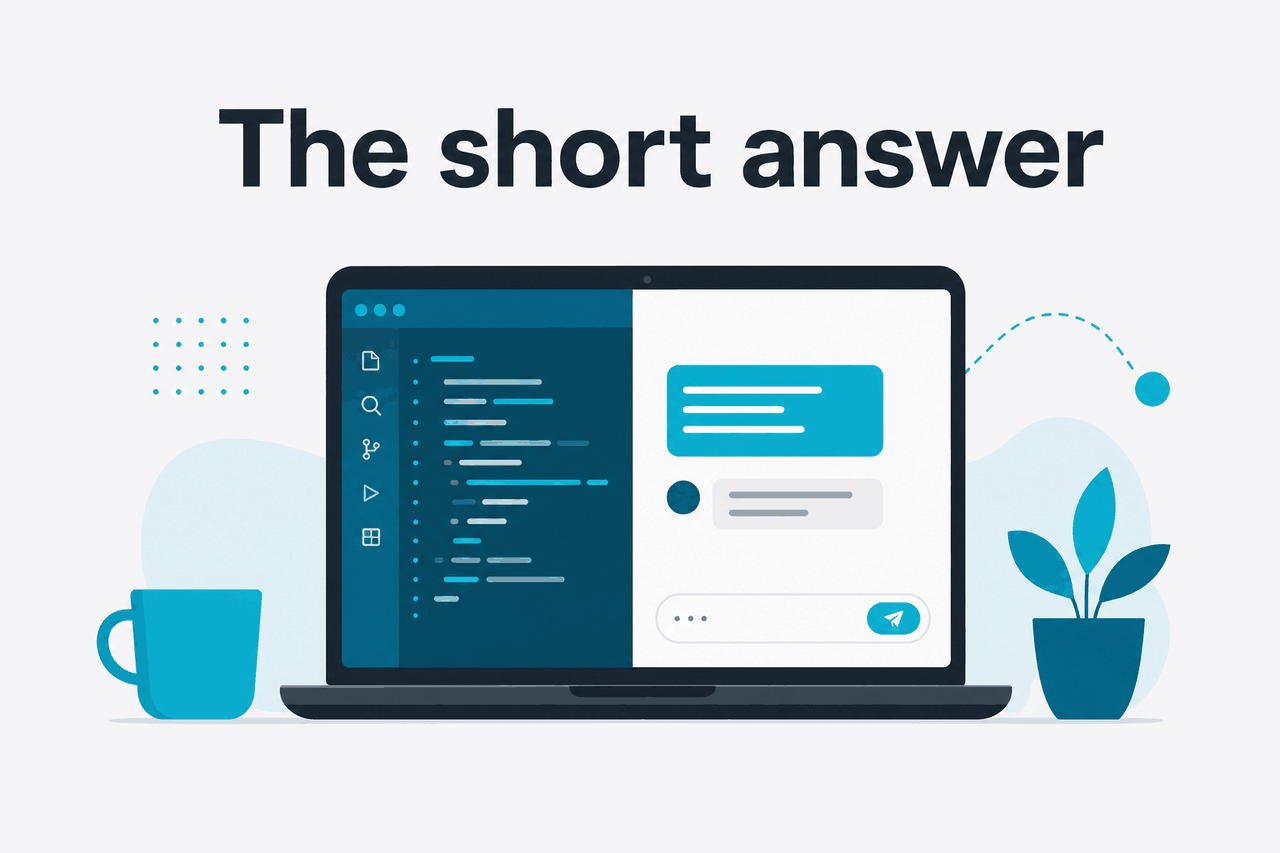
The strongest use cases are real repository tasks with enough context to matter. Claude Code is less useful for questions a one-line search can answer. It becomes more useful when the answer depends on your file layout, tests, naming conventions, and recent changes.
Example 1: diagnose a failing test. Give the exact command and expected behaviour. Claude Code can run the test, inspect the failure, identify the likely file, and suggest a small patch.
Worked example
Find the cause of a failing checkout test
npm test -- checkoutThis is a good first task because the success condition is concrete.
Example 2: explain an unfamiliar code path. Ask Claude Code to trace how a request moves through the app, then ask it to cite the files it used. This helps when joining a project or touching old code.
Explain how a user password reset request moves from the route handler to the email provider.
List the files involved and flag any fragile parts.
Example 3: make a controlled refactor. Use Claude Code for refactors with clear boundaries. Ask it to rename a service, replace a deprecated helper, or move repeated logic into one module. Avoid broad “clean up the whole codebase” prompts unless you are ready to review a large diff.
Refactor the billing date formatting logic into a single helper.
Do not change public API names.
Run the existing billing tests and show me the diff before any further edits.
Example 4: add a small feature behind an existing pattern. Claude Code can follow a project pattern if you point it to a similar implementation. This works better than asking it to invent a new design.
Add an admin-only export button to the invoices page.
Use the existing orders export flow as the pattern.
Keep permissions consistent with the current admin middleware.
Example 5: prepare a review checklist. Before merging, ask Claude Code to review the diff against your standards. It can catch missing tests, inconsistent names, or unchecked edge cases. It should not replace human review for security, payments, authentication, production migrations, or data deletion.
Good tasks
- Explaining a code path across files
- Fixing a specific failing test
- Drafting a small patch with a clear target
- Writing tests for existing behaviour
Risky tasks
- Large rewrites without a migration plan
- Security changes without expert review
- Database migrations with unclear rollback steps
- Tasks that require private context you cannot share
Claude Code vs. alternatives
Claude Code competes with AI-first editors, IDE autocomplete, code search assistants, and plain Claude chat. The right choice depends on where you want the work to happen.
| Tool type | Best fit | Main strength | Main trade-off |
|---|---|---|---|
| Claude Code desktop workflow | Developers who want agent-style help inside an existing repo | Strong for multi-step codebase tasks, explanations, and controlled edits | Requires careful review and clear permissions for file and command access |
| AI-first editor | Developers willing to move into an editor built around AI | Tight editor experience and fast inline changes | You may need to change editor habits and team conventions |
| IDE autocomplete assistant | Developers who want suggestions while typing | Low-friction completions inside familiar IDEs | Less suited to longer repository investigation unless paired with chat features |
| Code search assistant | Teams with large or complex repositories | Search and context across larger codebases | Value depends on indexing, setup, and repository access patterns |
| Claude web or app chat | Users asking isolated coding questions | Simple interface for snippets, explanations, and planning | Not the same as working directly inside a local repository |
The practical difference is context. Claude Code keeps the centre of gravity in your terminal and project. Autocomplete tools sit inside the typing flow. AI-first editors combine chat, files, and editing in one app. Plain chat works well for design questions, but it has less direct contact with your repository.
For model availability and context limits, check Anthropic’s official model overview. For a plain-language comparison, see our Claude models guide. If the service behaves unexpectedly, check Claude status before assuming your local setup is broken.
The practical verdict
Claude Code Desktop setup is worth trying if you want Claude close to your development workflow. It is strongest for understanding unfamiliar code, fixing targeted failures, drafting small patches, and turning implementation ideas into reviewable diffs.
It is not a safe autopilot for high-risk changes. You still need tests, Git discipline, code review, and judgement. If you already use Claude for coding questions, Claude Code is a natural next step because it adds repository context and local workflow. If you mainly want inline suggestions, a completion-first assistant may feel lighter.
FAQ
For broader help topics, see our Claude FAQ and Claude resources.
Independent guide. Not affiliated with Anthropic. For the official Claude product, visit claude.ai.
Last updated: 2026-05-12
This article is part of the Claude Code hub on c-ai.chat.