
The Claude Code terminal is Anthropic’s command-line coding agent for working with a local repository from your shell; this independent c-ai.chat guide explains when to use it, how to start safely, and how it fits with broader Claude features.

- The short answer
- How it works
- What you would actually do with it
- Vs. the alternatives
- FAQ
- The honest take
- Sources
The short answer
Claude Code is for developers who want Claude close to their files, tests, git history, and build tools. Instead of pasting code into a browser, you open a project folder, start Claude Code, ask for a change, review the proposed edits, and run your checks.
Anthropic makes Claude and publishes the official product at claude.ai. c-ai.chat is independent. Use this page as a practical orientation, then check Anthropic’s official Claude documentation before installing it or using it for production work.
- What it does: reads, edits, explains, and tests code from the terminal.
- Where it runs: in a local shell, usually from the root of a project.
- Best first use: repo inspection, small bug fixes, targeted tests, and pull request review.
- Watch point: you still need to review diffs, approve commands, and protect secrets.
Decision
Use Claude Code if your normal workflow starts in the terminal. Use the Claude web app if you mainly need planning, writing, or isolated code snippets. Use an IDE assistant if you want inline completions while you type.
The trust boundary matters. Claude can misunderstand your architecture, introduce subtle bugs, or suggest the wrong command. Keep source control clean before starting. Review every diff. Do not expose secrets, customer data, or production credentials.
If you are comparing access and subscription levels, see our Claude pricing guide. If you are building with Claude rather than using the terminal app, start with our Claude API guide.
Free
$0
Entry-level Claude access.
Pro
$20/month or $17/month annual
Individual paid plan.
Max
From $100/month
Higher-usage individual plan.
Team Standard
$25/seat or $20/seat annual
Team plan for shared workspaces.
Team Premium
$125/seat or $100/seat annual
Higher-tier team plan.
Enterprise
$20/seat base plus API rates
Enterprise access with usage-based API costs.
How it works

Claude Code runs from your terminal inside the folder you choose. A typical session starts at the root of a repository. Claude inspects the visible project structure, reads files relevant to your request, asks for clarification when needed, and proposes changes.
The workflow feels closer to pairing with another engineer than using autocomplete. You ask for an outcome, such as “add server-side validation to this form” or “find why this test is flaky.” Claude Code can reason across files, propose a plan, edit code, and help run tests or linters when you approve the command.
Open the project folder
Start from the repository root so Claude can see the app structure, tests, package manager, and conventions. Example:
cd ~/work/my-app.Check the command
Run
claude --helpto confirm the CLI is installed and to see the commands supported by your version.Start Claude Code
Run
claudefrom the project folder. Sign in or authenticate using Anthropic’s supported setup flow.Begin with inspection
Ask for something easy to verify:
Explain the project structure and identify the test command.Review before accepting changes
Inspect the diff, run the relevant tests, and commit only the changes you understand.
For most teams, the safest first command is not “refactor the whole app.” Start with a read-only task. Ask Claude Code to explain a module, find a bug path, or add one test. Increase the scope only after you see how it behaves in your repository.
For setup details, use Anthropic’s official Claude Code documentation.
What you would actually do with it
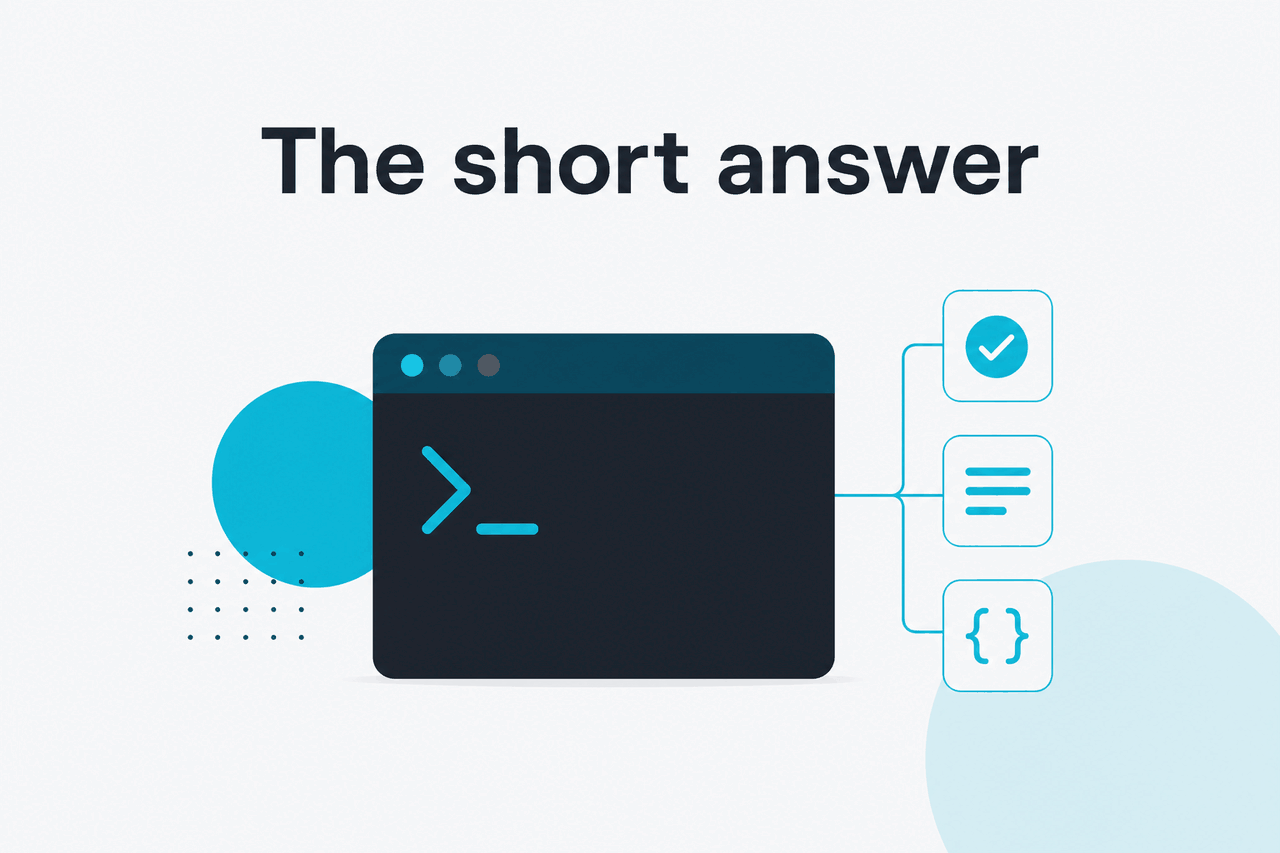
The Claude Code terminal is most useful when a task spans more than one file. It can read context, edit code, and help with commands in the same place you already work.
Worked example
Understand an unfamiliar repository
claudeMap this repository. Explain the main entry points, test command, build command, and risky areas for a new contributor.This is a good first task because it is mostly read-only and easy to check against the codebase.
Fix a failing test. Run your test suite first, then give Claude the failure output. Keep the scope narrow. Ask it to change one failing path before touching related modules.
npm test -- auth.spec.ts
claude
# Prompt:
# This test fails. Inspect the auth middleware and test setup.
# Propose a minimal fix and explain why it is safe.
Add a small feature across files. Claude Code can help when a feature touches types, handlers, UI copy, and tests. Example prompt: Add an optional display_name field to user profiles. Update validation, API response types, the settings form, and relevant tests. Keep backward compatibility. Ask for a plan before editing if the change affects data models or public API behavior.
Generate targeted tests. Use Claude to find edge cases, but make the assertions specific. Example prompt: Review this billing calculator and add tests for rounding, zero usage, and invalid plan IDs. Do not change production code unless a test reveals a bug.
Review a diff before a pull request. Claude Code can inspect local changes and flag missing tests, unclear names, and likely regressions. Example prompt: Review my uncommitted changes as if this were a pull request. Focus on correctness, security, and maintainability. Do not edit files yet.
You can also use Claude Code as a learning tool. Ask why a framework pattern exists, how a dependency is used, or where a value flows through the system. For broader capability coverage, see our guide to Claude features and our Claude resources.
Vs. the alternatives
Claude Code is not the only way to use AI for programming. The main difference is interface. Cursor, GitHub Copilot, and Sourcegraph Cody center on editor or code-search workflows. Claude Code centers on the terminal and agent-style work inside a repository.
| Tool | Primary interface | Good fit | Main trade-off |
|---|---|---|---|
| Claude Code | Terminal | Multi-file changes, repo inspection, test-driven fixes, shell-first workflows | Requires careful permission and diff review; less natural if you live entirely in an IDE |
| Cursor | AI-focused code editor | Developers who want chat, autocomplete, and file edits inside the editor | You may need to move from your existing editor setup |
| GitHub Copilot | IDE extensions and GitHub surfaces | Inline suggestions, common IDE workflows, teams already standardised on GitHub | Terminal-agent workflows may feel less direct depending on setup |
| Sourcegraph Cody | Editor plus code intelligence | Large codebase search, code understanding, enterprise code navigation | Best value usually depends on Sourcegraph adoption and repository indexing |
| Claude in browser | Web app at claude.ai | Planning, explanation, document work, isolated code snippets | Less convenient for direct local file edits and test loops |
Pick Claude Code when
- You already work from the terminal.
- The task needs context across several files.
- You want Claude to help inspect errors, run tests, and propose patches.
- You are comfortable reviewing diffs before accepting changes.
Skip Claude Code when
- You only need inline autocomplete.
- Your team forbids AI tools from accessing local repositories.
- You cannot review generated code safely.
- Your workflow depends on tight IDE integration.
The right choice also depends on policy. Some organisations allow browser-based Claude but restrict local code access. Others allow terminal tools only in approved repositories. Check your internal rules, Anthropic’s trust center, and the official product terms before connecting any AI tool to company code.
If you use the Claude API, model and token prices matter. Cached input is discounted by 90%. Batch API jobs are discounted by 50% in both directions. See our Claude models guide for more context.
| Model | Input price | Output price | Context and output notes |
|---|---|---|---|
| Opus 4.7 | $5 per million tokens | $25 per million tokens | 1M context |
| Sonnet 4.6 | $3 per million tokens | $15 per million tokens | 1M context; 128K max output |
| Haiku 4.5 | $1 per million tokens | $5 per million tokens | Fast, lower-cost model |
FAQ
Is Claude Code the same as the Claude desktop app?
No. Claude Code is a terminal coding workflow. The desktop app gives you Claude in a desktop interface. Claude Code is designed for repository-aware coding tasks from the shell.
Can Claude Code edit my files automatically?
It can propose and make edits when you allow that workflow. You should still review changes before committing them. Keep git clean before starting so you can inspect and revert changes easily.
Do I need the Claude API to use Claude Code?
Not always. Access can depend on the Claude plan and authentication method supported by Anthropic’s setup flow. If you are building your own developer tool on top of Claude, use the API path with token-based billing.
What is the safest first prompt?
Start with a read-only request: Explain this repository structure and identify the test and build commands. Then ask for one small change with an obvious test.
Does Claude Code replace an IDE assistant?
Not for everyone. It is strongest when you want a terminal agent to inspect files, reason across a repo, and help run commands. IDE assistants are often better for inline completions and quick edits while you type.
Can I use Claude Code with private company repositories?
Only if your organisation permits it. Check internal policy, data handling rules, and Anthropic’s documentation before connecting AI tools to private code.
The honest take
The Claude Code terminal is useful if your work already happens in a shell and your coding tasks require project context. It can save time on repo orientation, bug investigation, test generation, and small multi-file changes. It does not replace understanding the code, owning the diff, or running the checks your project depends on.
Start with low-risk tasks. Ask Claude Code to explain, inspect, and propose before you let it edit. If it earns trust in your repository, expand to tested changes. If you mainly want a general Claude overview, start from the c-ai.chat homepage or our Claude FAQ.
Independent guide. Not affiliated with Anthropic. For the official Claude product, visit claude.ai.
Last updated: 2026-05-12
This article is part of the Claude Code hub on c-ai.chat.