
Claude Code usage limits depend on your Claude plan: Free has the tightest caps, Pro raises them, Max is built for much heavier use, and Team or Enterprise add admin controls and higher-capacity access for organisations. This guide is an independent reference from c-ai.chat, not Anthropic, and it explains what those limits mean in practice, how usage is metered, and when a plan upgrade is actually worth it.

- The short answer
- How it works
- What you’d actually do with it
- Vs. the alternatives
- Other questions readers ask
- The honest take
The short answer
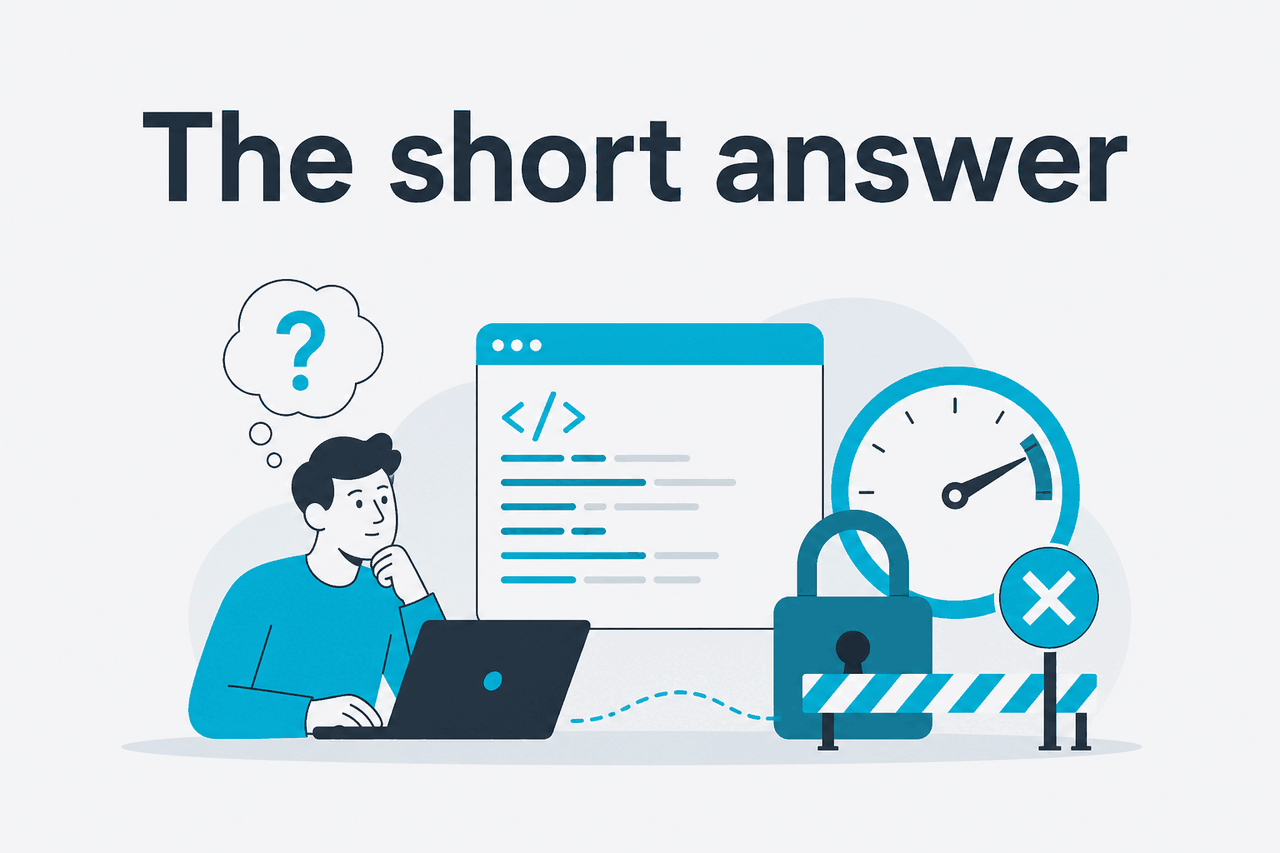
If you searched for claude code usage limits, the practical answer is simple: Claude Code access scales with your plan, but Anthropic does not present it as a single universal “messages per day” number that applies equally to every workflow. Limits vary by plan, current demand, and how much code-heavy work you ask Claude to do, so the real difference between Free, Pro, Max, Team, and Enterprise is not just price, but how often you can stay in flow before hitting caps or slower access.
For most individual developers, Pro is the point where Claude Code becomes reliably useful for daily work. Free is good for testing. Max is for people who spend long sessions inside coding workflows and do not want Pro-era ceilings. Team and Enterprise matter when you need shared workspace controls, SSO, policy features, or broader organisational rollout alongside coding access.
- What it does: AI coding help for editing, reasoning, and task execution in developer workflows
- Where it runs: Claude apps and Claude-linked coding workflows across supported environments
- What it costs: Included from Pro $20/month; heavier usage via Max from $100/month
- Who it’s for: Developers, technical founders, analysts, and teams working in code every week
| Plan | Price | Claude Code access | What usage limits feel like |
|---|---|---|---|
| Free | $0/month | Basic Claude access with daily usage limits | Good for trying it, easy to hit limits in real coding sessions |
| Pro | $20/month or $17/month annual | Adds Claude Code, Claude Cowork, unlimited Projects, Research access, extra models, Office integrations beta | Suitable for regular solo use, but still not unlimited in the literal sense |
| Max | From $100/month | Higher-capacity Claude usage with early feature access and priority traffic | Best for heavy daily coding and long sessions |
| Team Standard | $25/seat/month or $20/seat/month annual | Shared workspace plus team controls | Better for coordinated team use than ad hoc personal accounts |
| Team Premium | $125/seat/month or $100/seat/month annual | Higher-capacity team tier with priority traffic | For teams that would outgrow Standard capacity |
| Enterprise | $20/seat base + usage at API rates | Custom access and controls | Designed around policy, security, and managed scale |
If you are comparing app usage with API usage, keep them separate. Claude Code inside paid Claude plans is governed by product usage limits, while API usage is billed per token through Anthropic’s API pricing model. For reference, current API model pricing starts at $5 per million input tokens and $25 per million output tokens for Claude Opus 4.7, $3 and $15 for Claude Sonnet 4.6, and $1 and $5 for Claude Haiku 4.5, with prompt caching and Batch API discounts available on eligible workflows.
How it works

Claude Code usage limits are best understood as a capacity envelope, not a single fixed quota. Every coding action you run through Claude consumes model capacity. Short, local edits use less than long sessions that ask Claude to inspect a large repository, reason across many files, propose refactors, or iterate repeatedly until tests pass. The same plan can feel generous for one developer and restrictive for another because the workload is different.
There are three moving parts. First, your plan tier sets the baseline level of access. Second, the model and task complexity affect how much capacity each request uses. Third, real-time service demand can affect how much room is available before you are slowed down or asked to wait. That is why “How many prompts do I get?” is not the most useful question. A better question is: how long can I work normally before the plan stops feeling comfortable?
For engineers, this matters because coding workloads are spiky. A few small fixes may barely register. One long debugging session across a medium-size codebase can use far more capacity. If you already use Claude features like Projects, Research, or extended document analysis, you may notice the same pattern there too: workload shape matters as much as plan name.
-
Start with a scoped task
Ask Claude for one concrete job first, such as “explain this failing test” or “refactor
auth.tswithout changing behaviour.” Small tasks reveal whether your current plan is enough. -
Let it inspect the relevant code
Claude Code is more efficient when you provide the right files, error output, and constraints up front instead of forcing repeated back-and-forth clarifications.
-
Iterate in batches, not one giant request
Breaking work into chunks usually gives more reliable output and makes better use of your usage allowance than asking for a full repo rewrite in one go.
-
Watch for practical limit signals
If sessions end early, responses slow down, or you start rationing requests, your plan is no longer matched to your workload. That is the real upgrade signal.
One more distinction matters. If you need strict, predictable cost control, the API may be easier to reason about than app-level usage limits because token billing is explicit. If you want a ready-to-use coding assistant inside Claude without managing token math directly, the subscription plans are simpler. Many advanced users end up using both: app plans for interactive work and the API for production or automated pipelines. Our Claude guide homepage maps those paths separately so they do not get mixed together.
What you’d actually do with it
The easiest way to judge Claude Code usage limits is to look at actual coding sessions. Light use means a few focused interactions each day. Medium use means active debugging, edits across several files, and some architecture discussion. Heavy use means long sessions, large context windows, and repeated iterations that keep Claude involved as a working partner rather than a quick assistant.
Here are realistic examples of what people ask Claude Code to do and how those tasks tend to stress usage capacity.
Example 1: explain a failing test
“Read this stack trace and thepayments.test.tsfile. Tell me the likely root cause and suggest the smallest safe fix.”
This is light usage. You are usually giving one error, one file, and one clear objective. Free may be enough if you only do this occasionally. Pro is better if this is part of your daily loop.
Example 2: refactor duplicated logic
“Find repeated validation logic across these three controllers and extract it into a shared helper without changing API responses.”
This is medium usage. Claude needs to compare files, infer behaviour, and preserve existing contracts. It is exactly the kind of task where Pro starts to pay for itself because you want enough headroom to iterate after the first draft.
Example 3: onboard to an unfamiliar repo
“Summarise the architecture of this codebase, list the main services, identify where authentication happens, and tell me the safest place to add rate limiting.”
This can become heavy usage quickly. Repository understanding often needs broad context. If you do this kind of work often, Pro may feel tight and Max may be the more realistic fit.
Worked example
A normal solo developer day on Pro
If your “normal day” looks like this every day, Pro is often enough. If it includes repeated large-context sessions, Max is safer.
Example 4: generate migration and rollback plans
“Create a migration plan to split theuserstable, include rollback steps, and flag any code paths that will break if the migration is only partially applied.”
This is more reasoning-heavy than simple code generation. It often takes several rounds and careful checking, which means higher practical usage. It is a good use case for paying more if your work touches production systems.
Example 5: pair through a longer build
“Help me build a webhook ingestion service in Node. Start with the folder structure, then the handler, then retries, then tests. Stop after each step for approval.”
This is where subscription limits become very noticeable. Long, stepwise collaboration is exactly what heavy users want from Claude Code, and exactly what separates Pro from Max. If Claude is replacing hours of search, boilerplate writing, and review prep, the upgrade is usually about workflow continuity rather than raw feature access.
Pick when
- You want help debugging, refactoring, and understanding code
- You work in bursts and can scope tasks clearly
- You value reasoning quality more than maximum automation
Skip when
- You need guaranteed unlimited coding sessions on a flat plan
- Your workflow is fully automated and better suited to API billing
- You need a vendor-specific IDE extension feature set not offered here
For users deciding between app plans and API usage, one rough rule helps. If your interaction is conversational and iterative, plan-based Claude Code is simpler. If your workload is repeatable, scriptable, or production-facing, token billing through the API can be cleaner. Our Claude pricing guide explains where that line usually sits.
Vs. the alternatives
People searching for Claude Code usage limits are often comparing it with Cursor, GitHub Copilot, or Sourcegraph Cody. The trade-off is not just model quality. It is also how each product meters access, where it runs best, and whether you want an IDE-native experience or a broader Claude workflow that includes code, documents, and general reasoning.
| Tool | Strength | Limit style | Best fit | Main trade-off |
|---|---|---|---|---|
| Claude Code | Strong reasoning, broad Claude ecosystem, useful for code plus analysis work | Plan-based product limits that scale by tier and workload | Developers who want coding help inside a wider Claude workflow | Less predictable than pure token billing if you want exact per-task accounting |
| Cursor | IDE-centred coding workflow | Typically plan and usage based | People who want an editor-first AI pair programmer | More tied to the editor experience than the full Claude app ecosystem |
| GitHub Copilot | Wide developer adoption and editor integrations | Subscription-oriented with product-specific limits | Teams already standardised on GitHub tooling | Reasoning style and broader non-code workflow may differ from Claude |
| Sourcegraph Cody | Code search and larger codebase workflows | Varies by plan and deployment setup | Teams focused on repository intelligence | Different fit if you mainly want general-purpose Claude assistance |
| Claude API | Exact token-based cost control | Per million tokens | Builders automating coding tasks or embedding models into products | You manage prompts, tooling, and spend directly |
The honest reason some developers choose Claude Code over alternatives is not that it always has the highest ceiling. It is that the underlying Claude models are strong at explanation, careful refactoring, and long-context reasoning. The honest reason others choose a rival is that they want tighter IDE integration or more explicit request accounting. Neither preference is wrong.
If you are mostly comparing feature breadth rather than limits alone, see our Claude features overview. If you already know you need token-based usage instead of app plans, skip to the API guide.
Other questions readers ask
For API users, there are also important cost controls that do not apply in the same way to app subscriptions. Prompt caching can cut cached input cost by 90%, and the Batch API can reduce both input and output costs by 50% on suitable jobs. Those matter if you are moving repeated code analysis or generation tasks out of the app and into automated pipelines.
90% off
cached input tokens with prompt caching
The honest take
Claude Code usage limits are workable for many developers, but they are not magic and they are not truly unlimited. Free is for testing. Pro is the sensible default for solo developers who code regularly. Max is the plan for people who want longer, heavier coding sessions without constantly watching the ceiling. Team and Enterprise make sense when code help is being rolled out across a company, not just bought by one person.
If you are asking whether Claude Code has enough capacity for your work, the real test is your session pattern. Short debugging and refactoring tasks usually fit comfortably on Pro. Long repo-wide reasoning, repeated iterations, and daily pair-programming push you toward Max or an API-based workflow. That is the cleanest way to think about it.
Independent guide. Not affiliated with Anthropic. For the official Claude product, visit claude.ai.
Last updated: 2026-05-12