
Claude is Anthropic’s general AI assistant, while Claude Code is the coding-focused environment and workflow layer built for software work, so if you are comparing claude vs claude code, the practical choice is simple: use Claude for broad writing, research, and everyday chat, and use Claude Code when you want Claude to inspect, edit, and reason through code tasks more directly. c-ai.chat is an independent guide, not Anthropic, and this page maps the difference, workflow, examples, alternatives, and the plain-English verdict.

If you want the broader Claude ecosystem first, start with our independent Claude guide. If you already know you are looking at coding workflows, our Claude Code guide covers setup, use cases, and where it fits next to the main Claude app.
- The short answer
- How it works
- What you’d actually do with it
- Vs. the alternatives
- Other questions readers ask
- The honest take
The short answer
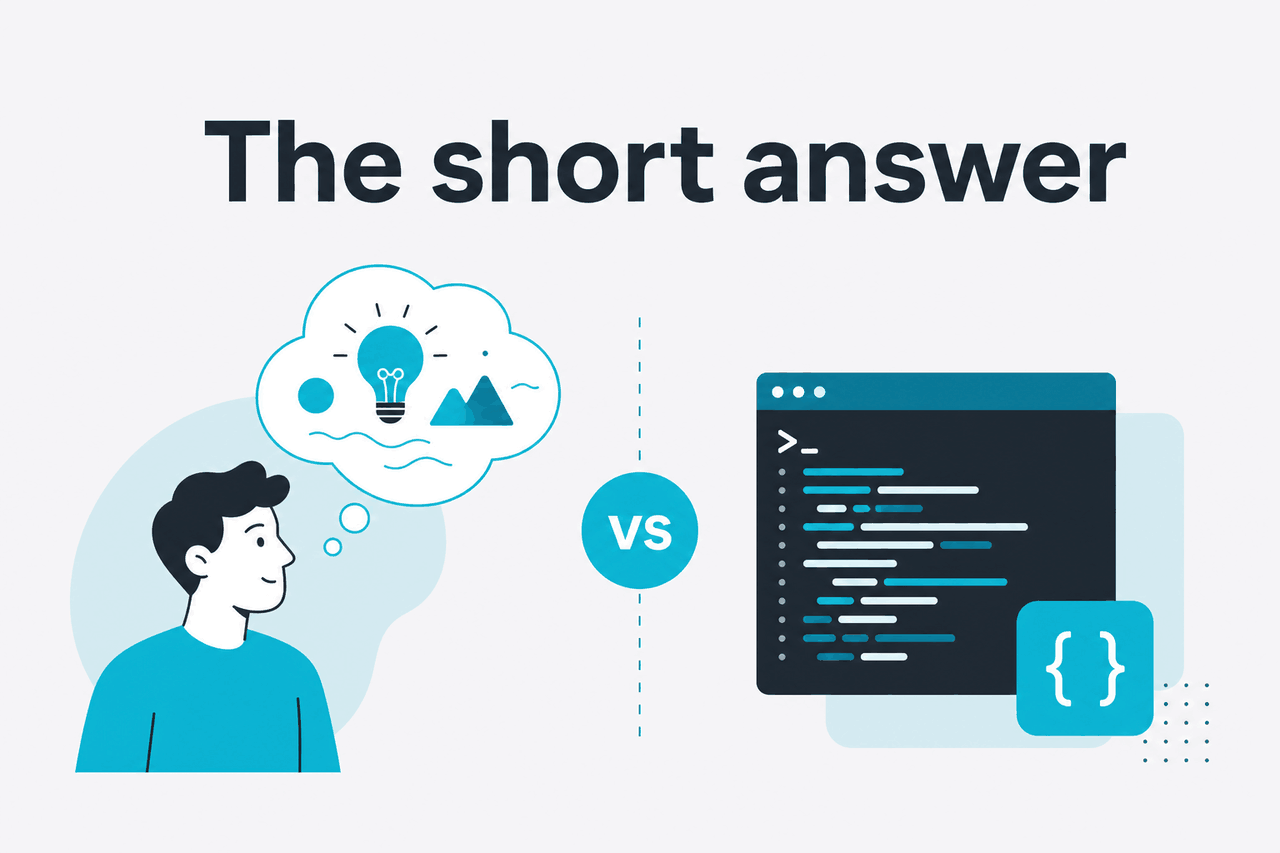
Claude is the product family and assistant experience people use on the web, desktop, and mobile for general-purpose AI help. Claude Code is one of the coding-focused ways that paid Claude users can work with that same underlying model capability on software tasks. For most people, Claude is the umbrella tool; Claude Code is the more specific option for developers who want code-aware workflows instead of a plain chat box.
- What it does · Claude handles general chat; Claude Code focuses on software tasks
- Where it runs · Claude runs in web, iOS, Android, and desktop; Claude Code is for coding workflows
- What it costs · Claude Free is $0/month; Pro is $20/month or $17/month annual
- Who it’s for · Claude fits most users; Claude Code fits active developers
That distinction matters because many searchers assume Claude Code is a separate model or a separate company product with separate model pricing. It is better to think of it as a coding surface or workflow inside the Claude ecosystem. Anthropic makes Claude. Claude Code is one way to use Claude for engineering work.
On access, the main Claude plans are straightforward. Free costs $0/month. Pro costs $20/month or $17/month annual for individuals and adds Claude Code, Claude Cowork, unlimited Projects, Research access, additional models, and Office integrations in beta. Max starts at $100/month for power users who need 5x or 20x Pro usage, higher output limits, early feature access, and priority traffic. If you are evaluating spend, our Claude pricing guide is the quickest place to compare app plans with API pricing.
One more point that often gets missed: model pricing and app subscriptions are different things. In the API, Anthropic prices by token. Claude Opus 4.7 costs $5 per million input tokens and $25 per million output tokens. Claude Sonnet 4.6 costs $3/$15. Claude Haiku 4.5 costs $1/$5. Those API rates matter if you build with Claude through the Claude API, but they are not the same as the chat app subscription tiers.
How it works
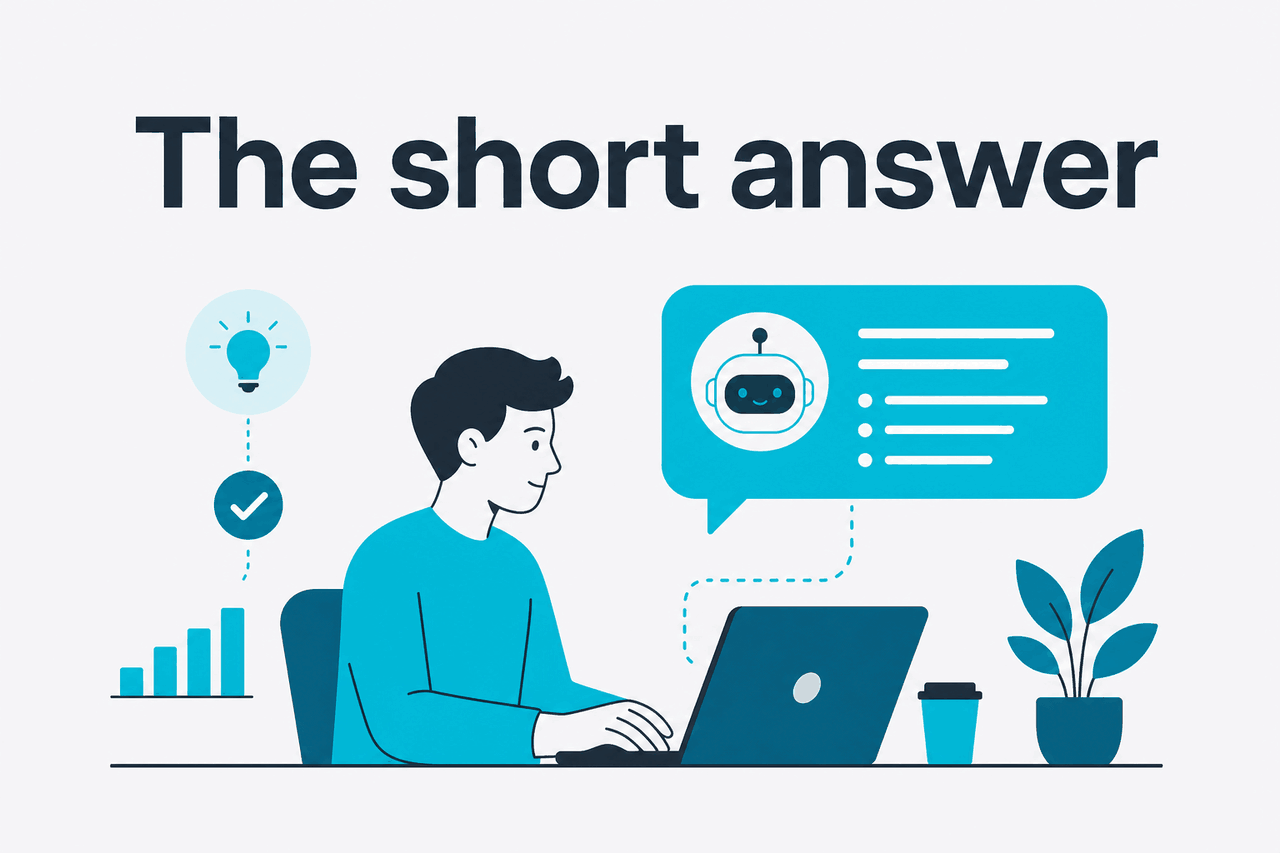
At a high level, standard Claude works like a general assistant interface. You ask a question, attach files, use Projects, and get answers, drafts, summaries, or analysis. Claude Code changes the workflow by putting Claude closer to the software task itself: repository context, implementation planning, file-level edits, debugging, refactoring, and command-oriented developer work. The key difference is not that the intelligence becomes a different product line; it is that the interaction becomes more engineering-specific.
For engineers, the easiest mental model is this: Claude is the broad assistant, and Claude Code is the coding workstation experience built on top of Claude. If you are deciding between them, ask where the work happens. If the work starts with “Explain this system design,” plain Claude is often enough. If it starts with “Find the bug, patch the file, explain the diff, and suggest tests,” Claude Code is the better fit.
This also explains why a lot of developers use both. They might use Claude for architecture notes, migration planning, stakeholder summaries, or documentation, then switch to Claude Code for repository-aware implementation work. That split is usually more productive than trying to force one interface to do every job equally well. If you want a broader list of capabilities around Projects, files, and integrations, see our Claude features overview.
-
Start with the task type
If the task is general reasoning, drafting, or research, open Claude. If the task is software delivery work, open Claude Code.
-
Give the right context
In Claude, that usually means a prompt, a file, or a project brief. In Claude Code, it means codebase context, target files, error logs, commands, or a clear implementation goal.
-
Ask for an executable next step
Good prompts are concrete:
explain why this test fails,refactor this function to remove duplication, orwrite a migration plan for this API change. -
Review the output like an engineer
Check assumptions, diffs, edge cases, and tests. Claude Code can speed up coding work, but it does not remove the need for human review.
There is also a practical team angle. Individual users often compare Claude vs Claude Code as if it is only about interface preference. In reality, the decision often depends on workflow maturity. If your team needs admin controls, shared workspace, or identity features, that leads into Team or Enterprise planning as much as it leads into tool preference. Team Standard costs $25/seat/month or $20/seat/month annual. Team Premium costs $125/seat/month or $100/seat/month annual. Enterprise starts with a $20/seat base plus usage at API rates.
What you’d actually do with it
The easiest way to compare claude vs claude code is to look at real tasks. Below are common situations where the difference shows up quickly.
1) Explaining an unfamiliar codebase. In plain Claude, you can paste files or describe the architecture and ask for a walkthrough. That works well for high-level understanding. In Claude Code, you would usually ask for a repository-aware explanation such as: “Map the auth flow from login request to session creation and list the key files involved.” That tends to be better when the answer depends on how multiple files connect.
2) Fixing a bug from logs. With Claude, you can paste a stack trace and ask what probably caused it. With Claude Code, you can be more operational: “Investigate this failing test, identify the root cause, propose the smallest safe fix, and show the changed lines.” The second style is closer to how a developer already works.
3) Writing non-code project output. This is where plain Claude often wins. If you need a release note, stakeholder update, product requirement draft, onboarding doc, or decision memo, Claude is usually the simpler and cleaner environment. Claude Code can still help if the source material is the repository itself, but the default assistant is usually enough.
4) Refactoring repetitive code. A general prompt in Claude might be: “Refactor this function to improve readability and reduce duplication.” In Claude Code, the stronger request is often: “Refactor these three handlers to share validation logic, preserve behavior, and suggest tests for regressions.” The added context about neighboring files and patterns tends to matter.
5) Planning a feature before coding. Many teams use both surfaces here. They start in Claude with a broad prompt such as “Draft an implementation plan for adding SSO to our admin app, including risks and rollout stages.” Then they move to Claude Code for the repository-specific tasks and file changes.
Plain Claude prompt:
"Explain this function in simple terms, identify two likely failure modes,
and suggest better variable names."

Claude Code-style prompt:
"Trace how invoice totals are calculated across the billing module.
Find the rounding bug causing 1-cent mismatches, propose the smallest safe fix,
and list tests I should run before merging."
Worked example
Choosing the right tool for a production bug
If the work touches the codebase directly, Claude Code is usually the faster starting point. If the output is communication or analysis for humans, plain Claude is usually enough.
For API builders, there is a third path: skip the app surfaces and build directly on Anthropic’s models. That is where token pricing, prompt caching, and batch processing matter. Prompt caching gives 90% off cached input tokens, and the Batch API gives 50% off both input and output directions. Those savings are relevant when you are automating coding or review workflows at scale rather than using the consumer app manually.
90% off
cached input tokens with prompt caching
That API route is separate from the subscription decision, but the comparison is useful. If your developers keep asking the same question across large repositories, an API workflow with caching may be cheaper and more controllable than relying only on interactive app usage. If your team mostly wants hands-on assistant help during active development, Claude Code is the simpler starting point.
Vs. the alternatives
Searchers comparing claude vs claude code are often also weighing tools like GitHub Copilot, Cursor, and Cody. The trade-off is usually not “which AI is smartest” in the abstract. It is which tool fits your workflow, editor habits, model preferences, and tolerance for review overhead.
| Tool | Best for | Strength | Trade-off |
|---|---|---|---|
| Claude | General AI assistance | Strong writing, reasoning, planning, and broad file analysis | Less purpose-built for direct coding workflows than Claude Code or editor-native tools |
| Claude Code | Developer tasks inside the Claude ecosystem | Better fit for repository-aware coding, debugging, and implementation work | More useful for engineers than for general business users |
| GitHub Copilot | Inline editor assistance | Convenient in-editor completions and coding flow | Can feel narrower when you need longer-form reasoning or broader project analysis |
| Cursor | AI-first coding environment | Strong editor-centric workflow for developers who want the IDE to be the AI surface | Best if you want to work primarily inside that environment rather than the Claude app ecosystem |
| Cody | Code search and assistance in supported workflows | Useful for code understanding and enterprise-oriented setups | Fit depends heavily on your stack and existing tooling choices |
The honest comparison is this: if you already like Claude’s answers and you want a more coding-specific experience, Claude Code is the natural extension. If your main need is inline autocomplete inside an editor, an editor-native alternative may feel faster. If your work blends engineering, product, docs, and communication, the Claude ecosystem has an advantage because you can move between general assistance and coding assistance without switching model families.
Pick when
- You already use Claude and want coding-specific workflows
- You need both software help and general writing or research
- You prefer one ecosystem for chat, projects, and code tasks
Skip when
- You only want inline code completion in your editor
- Your team is committed to a different IDE-first workflow
- You do little or no repository-level reasoning work
For many teams, the deciding factor is not raw model quality. It is where the friction sits. If you lose time switching contexts between a chat assistant and your coding workflow, Claude Code can help. If your friction is mostly around editor completion speed, another tool may fit better.
Other questions readers ask
If your question is really about access, plans, or model costs rather than workflow, check our pricing guide. If your question is whether Claude can support your broader use case beyond coding, our feature overview is the better next step.
The honest take
For most people, Claude is the default answer and Claude Code is the specialist answer. If you are a developer working directly with repositories, bugs, refactors, and implementation tasks, Claude Code is the more natural fit. If you want an AI assistant for mixed work across writing, research, summaries, planning, and occasional code help, plain Claude is enough.
The key point is that this is not really a fight between two unrelated products. Claude is the broader assistant. Claude Code is the coding-focused workflow within that ecosystem. Use the one that matches the shape of the task, and use both when your work moves from implementation to explanation. For a closer look at the coding side, go to our Claude Code guide.
Independent guide. Not affiliated with Anthropic. For the official Claude product, visit claude.ai.
Last updated: 2026-05-12