
Claude Code Web is the practical way to use Claude for coding from a browser: good for review, debugging, tests, and planning, but not a full replacement for a local development workflow. For the broader product context, see our Claude features guide.
c-ai.chat is independent. We are not Anthropic and we are not claude.ai. Anthropic makes Claude. The official product is at claude.ai, and official plan details are at claude.com/pricing.
- The short answer
- How it works
- What you can do with it
- How it compares
- Pricing and limits
- FAQ
- Sources
The short answer
Use Claude in the browser when the coding task is text-heavy and bounded: explain this stack trace, review this diff, draft tests, plan a refactor, or write a small patch from pasted context.
Do not treat the browser as your full IDE. If Claude needs to inspect your file tree, run tests, apply edits across many files, check Git state, or iterate against command output, use a local coding workflow instead.
Best for review
Claude Code Web works best for reasoning, debugging, test design, and change planning from a browser.
The main value is convenience. You can ask Claude to inspect a pasted file, reason about an error, explain a pull request, or draft a migration plan without opening a terminal. For plan and model differences, see our Claude pricing guide and Claude models guide.
How it works
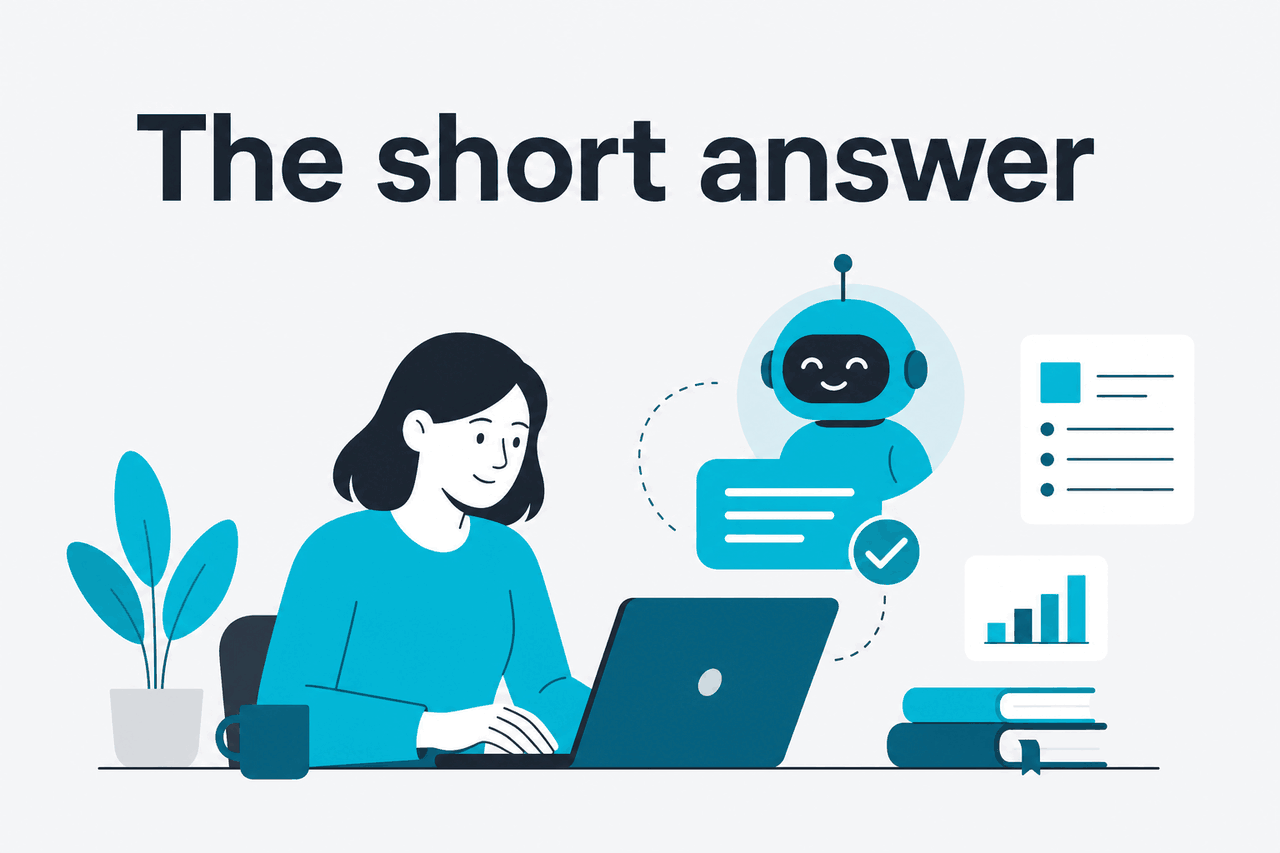
Claude Code Web is not best understood as a remote IDE. It is better to treat it as a coding assistant that reasons over the context you provide.
Give Claude the smallest useful set of inputs: a file, an error message, a stack trace, a diff, a failing test, or a short repository summary. Then ask for a diagnosis, plan, patch, checklist, or test set.
-
Start with the smallest useful context
Describe the goal. Add the key file, error message, failing test, or pull request summary. Do not paste a whole codebase unless the full context is necessary.
-
Ask for a plan before code
Use a prompt such as:
Review this bug and propose the smallest safe fix before writing code.This helps expose wrong assumptions early. -
Request a targeted edit
After the plan looks right, ask for a concrete output:
Return a unified diff for the files shown above. -
Verify outside the chat
Run your tests, linter, type checker, and app locally or in CI. Treat test output as the source of truth.
Model choice also affects coding work. Anthropic lists Opus 4.7 as the flagship model at $5 per million input tokens and $25 per million output tokens on the API, with a 1M context window. Sonnet 4.6 costs $3 per million input tokens and $15 per million output tokens, with a 1M context window and 128K max output. Haiku 4.5 costs $1 per million input tokens and $5 per million output tokens.
Browser subscriptions are not billed like API usage. Developers building with Claude should use Anthropic’s official model overview and API pricing docs.
What you can do with it
The best prompts are specific. Give Claude a bounded task, relevant evidence, and a clear output format.
Worked example
Debug a failing API route
This is a good browser task because the relevant context fits in a small set of files and the answer can be checked quickly.
Example prompt: “This Next.js route returns a 500 when the request body omits companyId. Here is the route and the stack trace. Identify the bug, explain it in plain English, and return a minimal patch plus one test case.”
Review a pull request before a teammate sees it. Paste the diff or the core files. Ask Claude to look for regressions, security issues, missing tests, and unclear naming. Require it to separate must-fix issues from optional comments.
Review this diff as a senior backend engineer.
Focus on correctness, data validation, and migration risk.
Return:
1. Must-fix issues
2. Nice-to-have improvements
3. Test cases I should add
4. Any assumptions you made
Plan a refactor before editing. Browser Claude is useful for turning a broad refactor into a safe sequence. Ask for files affected, order of work, risks, and tests after each phase.
I want to refactor this service from callbacks to async/await.
Do not rewrite it yet.
Give me a phased plan with:
- files affected
- order of changes
- risks
- tests to run after each phase
Generate tests from observed behaviour. Claude can draft unit tests, integration tests, and edge cases if you provide the function, endpoint, or component contract. Ask it to match your existing test style and avoid invented dependencies.
Write Jest tests for this function.
Use the same style as the existing tests below.
Cover:
- valid input
- missing optional fields
- invalid date format
- duplicate IDs
Do not mock modules unless required.
Turn an error into an action plan. For build failures, TypeScript errors, dependency conflicts, and CI logs, paste the relevant section first. If Claude gives a broad answer, ask for the smallest next command to run.
How it compares
Claude in the browser sits in a different category from IDE autocomplete tools. It is stronger for conversational reasoning, review, planning, and written explanations. It is weaker when the assistant needs direct access to your runtime.
| Tool | Best fit | Strength | Trade-off |
|---|---|---|---|
| Claude Code Web | Browser-based coding help, review, planning, explanation | Strong reasoning over pasted context and clear written outputs | Less direct access to your repo, terminal, and test runner |
| Local Claude coding workflow | Repository-aware development from a developer machine | Closer to files, shell commands, tests, and Git state | Requires local setup and careful review of agentic edits |
| Cursor | AI-assisted editing inside a code editor | Fast in-editor changes across files | Less useful for a neutral browser review or planning session |
| GitHub Copilot | Autocomplete, chat, and code suggestions in common IDEs | Low-friction suggestions while writing code | May be weaker for longer planning conversations outside the editor |
| Sourcegraph Cody | Codebase search and assistant workflows tied to Sourcegraph context | Useful where Sourcegraph is already part of the developer stack | Value depends on source graph coverage and deployment setup |
Use the browser when
- You want a second reviewer before opening a pull request.
- You need to understand an error, stack trace, or unfamiliar file.
- You want a staged refactor plan before touching code.
- You are working from a browser-first environment.
Use another workflow when
- The assistant must run commands repeatedly.
- The change spans many files with hidden dependencies.
- Your task requires local services, secrets, or test fixtures.
- You need low-latency autocomplete inside an IDE.
If your goal is “help me understand and plan,” the browser is often enough. If your goal is “make coordinated edits across a repository and verify them,” use local tools. If your goal is “suggest the next line as I type,” an IDE-native assistant may feel faster.
For API-backed products, the decision changes. A browser coding assistant can help you build the application, but it is not the same as integrating Claude through the Anthropic API. If you are building with Claude, start with our Claude API docs guide and Anthropic’s official developer docs.
Pricing and limits
Claude browser plans use subscriptions and usage limits. API usage is billed by tokens. Do not compare them as if they were the same product meter.
Free
$0
Entry-level access with usage limits.
Pro
$20/month
$17/month with annual billing.
Max
From $100/month
For heavier individual usage.
Team Standard
$25/seat
$20/seat with annual billing.
Team Premium
$125/seat
$100/seat with annual billing.
Enterprise
$20/seat base
API rates also apply.
For developers using the API, Anthropic documents two major cost controls: prompt caching and the Batch API.
90% off
cached input tokens with prompt caching
50% off
both input and output directions with the Batch API
Those API discounts matter for products, internal tools, and high-volume automation. They do not change ordinary browser chat billing.
FAQ
Independent guide. Not affiliated with Anthropic. For the official Claude product, visit claude.ai.
Last updated: 2026-05-12
This article is part of the Claude Code hub on c-ai.chat.