

Claude 2.1 is a legacy Claude model from an older generation, not part of today’s Opus/Sonnet/Haiku family, and if you are deciding what to use now, this independent guide recommends checking the current Claude models lineup first because Claude 2.1 matters mainly for historical context, older API references, and comparisons with newer releases.
- Which model is this?
- What it’s best at
- Where it falls short
- When to pick this model
- Other questions readers ask
- The honest take
Which model is this?

Claude 2.1 is a legacy Claude model from Anthropic’s pre-Opus, pre-Sonnet, pre-Haiku naming era. It is not a current member of the modern Claude 4 family, and it is no longer the default choice for new users or new builds. If you are seeing “claude 2.1” in an old integration, benchmark, or blog post, treat it as an older generation model that has been superseded by newer options on the official model overview.
- Family · legacy Claude 2 series
- Status · older model, not the current default
- Input price · check current official availability
- Output price · check current official availability
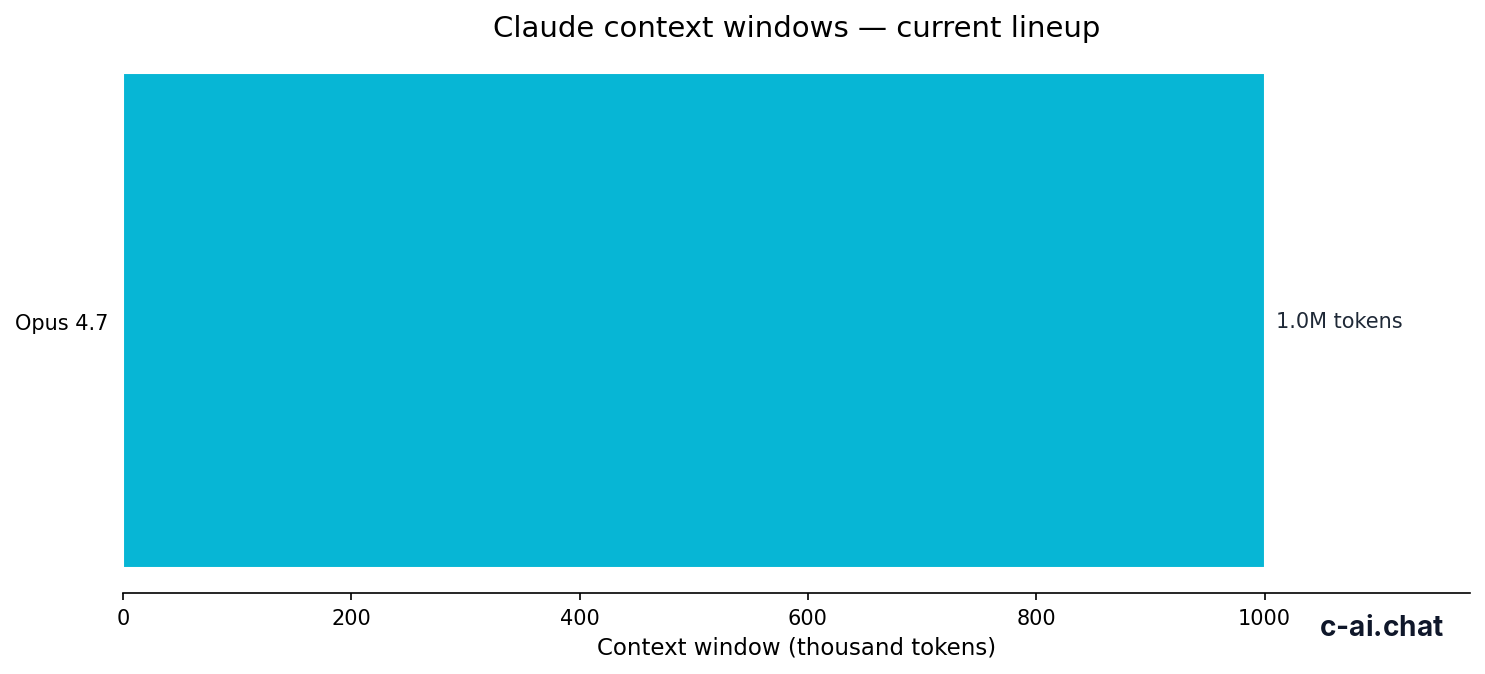
- Context window · older long-context generation
- Max output · not aligned with current Claude 4 limits
That pricing row is intentionally cautious. Anthropic’s current public pricing page is centered on active models such as Opus 4.7, Sonnet 4.6, and Haiku 4.5 rather than Claude 2.1, so an independent guide should not invent live commercial terms for a legacy model. For current production planning, the relevant public prices are on Claude pricing and the official pricing page.
| Model | Status | Best use today | Public pricing status |
|---|---|---|---|
| Claude 2.1 | Legacy | Understanding older references and migrations | Do not assume current availability or rates |
| Claude Sonnet 4.6 | Active | Recommended default for most users | $3/M input, $15/M output |
| Claude Haiku 4.5 | Active | Fast and cheap workloads | $1/M input, $5/M output |
| Claude Opus 4.7 | Active | Highest-end reasoning and complex work | $5/M input, $25/M output |
What it’s best at
Claude 2.1’s main value now is historical and practical: it helps explain why older Claude integrations were built the way they were, why some prompt patterns still circulate, and why legacy API references do not always map cleanly onto the current lineup. If you are maintaining an older workflow, auditing past outputs, or translating documentation into a newer setup, knowing what Claude 2.1 was designed for can save time.
Compared with current models, Claude 2.1 is not the best general recommendation. Sonnet 4.6 is the better default for most work, Haiku 4.5 is the better choice when speed and low cost matter, and Opus 4.7 is the better choice for harder reasoning and more demanding tasks. Claude 2.1 stands out mainly when the question is not “What should I use now?” but “What was this older Claude setup doing, and how should I replace it?”
- Reading older benchmarks and tutorials: many articles still mention Claude 2.1, so it helps as a reference point.
- Migrating legacy prompts: useful when you need to update old prompts to newer models without starting from zero.
- Explaining context-window history: Claude 2.1 often appears in discussions about earlier long-context capabilities.
- Auditing old application behaviour: if an app once used Claude 2.1, model-era differences may explain output changes.
- Comparing generations: helpful for understanding how the current Claude family improved reliability, cost clarity, and model segmentation.
In other words, Claude 2.1 is strongest as a reference model, not as the model most people should actively choose today. If you are building something new with the API, start from the current Claude API guide and map your task to a live model first.
Where it falls short
Claude 2.1 falls short because it belongs to an older model generation with weaker practical appeal than the current lineup. The biggest problem is not that it was unusable; it is that newer Claude models are easier to recommend, easier to price, and more clearly segmented by use case. For most real decisions, Claude 2.1 loses on clarity alone: if you want the balanced default, use Sonnet 4.6; if you want the cheapest option, use Haiku 4.5; if you want top-end performance, use Opus 4.7.
- Not the current default: newer models are the ones Anthropic actively presents for current use.
- Pricing uncertainty for new readers: legacy references can mislead teams planning budgets today.
- Older prompt assumptions: prompts tuned for Claude 2.1 may need revision on newer models.
- Weaker recommendation value: there is usually a clearer modern alternative.
- Potential availability limits: older models may not be the right basis for long-term production planning.
When to pick this model
The decision rule is simple: pick Claude 2.1 only when you are dealing with legacy references, migration work, or historical comparison. Do not pick it just because you found an old tutorial. The pricing trade-off matters here too: active models have clear public pricing and optimisation paths, while Claude 2.1 is the wrong anchor for new cost estimates.
Pick when
- You are updating an older app, prompt set, or internal guide that mentions Claude 2.1.
- You need to explain model history to teammates or clients.
- You are comparing old output quality with current Claude behaviour.
- You want a migration starting point before switching to a current model.
Skip when
- You are launching a new project and need a model to use now.
- You need a clear live price; current models have explicit public rates, legacy Claude 2.1 is not the safer planning basis.
- You want the best default; Sonnet 4.6 is the cleaner recommendation.
- You want the cheapest path; Haiku 4.5 is the obvious lower-cost choice.
- You want the strongest high-end model; Opus 4.7 is the better fit.
For most readers, that means choosing among the active lineup rather than staying attached to an older name. Our Claude features guide and pricing overview are better next steps than trying to optimise around a legacy model label.
Other questions readers ask
The honest take
Claude 2.1 matters because people still search for it, old tools still mention it, and many comparisons online have not been updated. But as a practical recommendation, it is a legacy model name, not the answer most users need. If you came here wondering whether Claude 2.1 is the model to choose now, the plain answer is no: use the current lineup instead unless you are handling migration or historical reference work.
That is the main independent view from c-ai.chat: Claude 2.1 is worth understanding, but not worth treating as your default starting point. Check the live model lineup, compare the active pricing tiers, and choose a current model with documented support and clear positioning.
Independent guide. Not affiliated with Anthropic. For the official Claude product, visit claude.ai.
Last updated: 2026-05-12