
For Claude Sonnet vs Opus, choose Claude Sonnet 4.6 for most work because it costs less and handles everyday coding, writing, analysis, and agent tasks well; choose Claude Opus 4.7 when hard reasoning and accuracy matter more than token cost. c-ai.chat is an independent guide, not Anthropic; for the broader lineup, see our Claude models guide.

- Quick answer
- What each model is best at
- Where each model falls short
- When to use Sonnet or Opus
- FAQ
- Verdict
- Sources
Quick answer
Claude Sonnet 4.6 is the better default for most users. Claude Opus 4.7 is the premium choice for the hardest tasks.
Use it for routine coding, writing, summarising, research notes, extraction, and production API workflows.
Use it for difficult reasoning, complex codebase work, dense documents, and high-value tasks where mistakes are costly.
Run your real prompts through each model and compare cost per accepted answer, not just token price.
Sonnet 4.6: $3/M input tokens · $15/M output tokens · 1M context · 128K max output
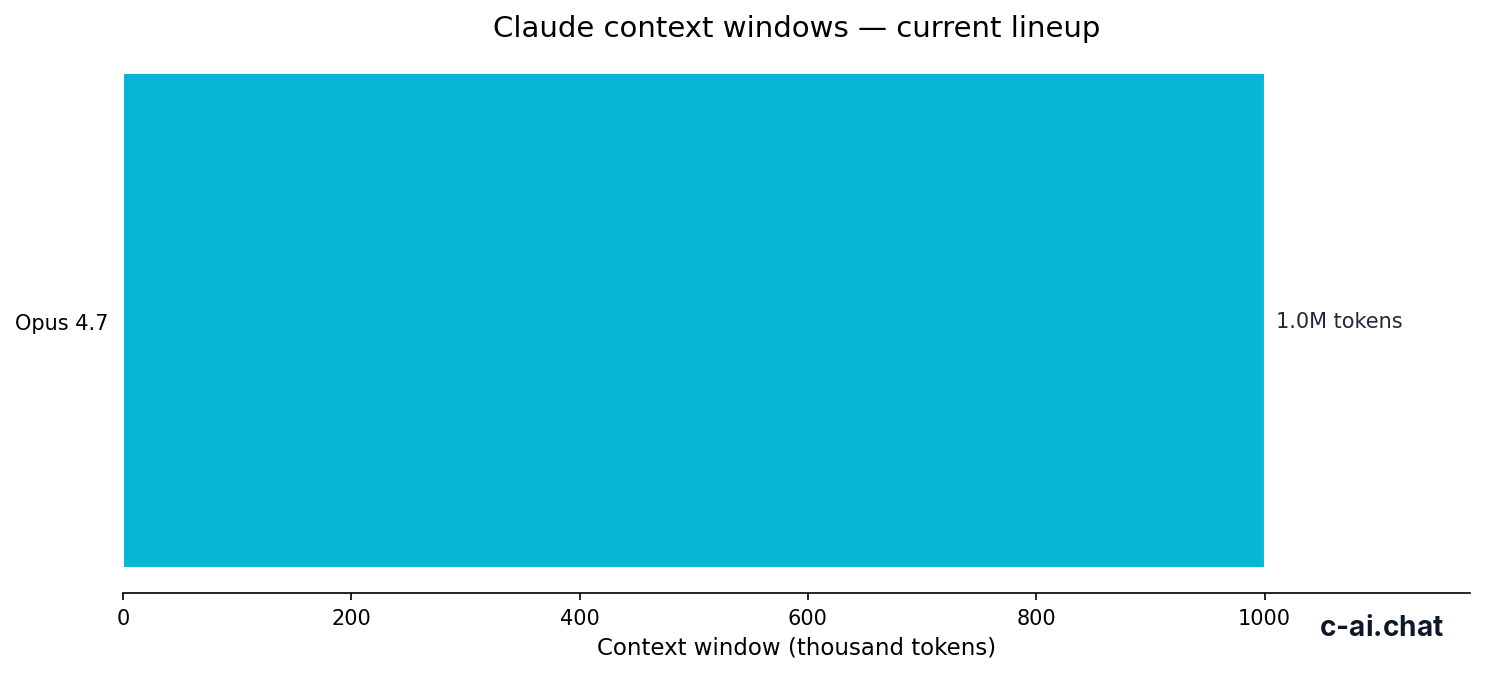
Opus 4.7: $5/M input tokens · $25/M output tokens · 1M context
Cost controls: prompt caching gives 90% off cached input tokens; Batch API gives 50% off both input and output.
In plain terms, Sonnet is the model to try first. It gives most developers, analysts, writers, marketers, students, and teams strong results without Opus pricing. Opus is the model to reserve for harder reasoning, high-stakes synthesis, complex coding, and work where a small quality gain is worth a higher bill.
The pricing gap matters if you use the Claude API. Sonnet 4.6 costs $3/M input tokens and $15/M output tokens. Opus 4.7 costs $5/M input tokens and $25/M output tokens. Long prompts, agent loops, and output-heavy reports can make that difference visible quickly.
| Use case | Pick Sonnet 4.6 when | Pick Opus 4.7 when |
|---|---|---|
| General chat and writing | You need reliable drafting, editing, planning, and summarising at lower cost. | You need unusually careful judgement across dense or ambiguous material. |
| Coding | You need code generation, refactors, debugging help, tests, and documentation. | You need harder architecture work, complex bug hunts, or large multi-file reasoning. |
| Research and analysis | You need fast synthesis, extraction, comparison, and structured notes. | You need higher-confidence reasoning across many constraints or long documents. |
| Agents and tools | You need a capable model for repeated tool calls without flagship pricing. | You need stronger long-horizon planning and fewer avoidable mistakes. |
| Budget control | You want the best balance of quality and spend. | You accept higher token cost to improve quality on hard tasks. |
For official availability, model names, and pricing, compare Anthropic’s public pricing page at claude.com/pricing with the API pricing reference at platform.claude.com/docs/en/about-claude/pricing. Model behavior and access can change, so production teams should also check the official model overview at docs.claude.com.
What each model is best at

Sonnet 4.6 is best for the work most people do with Claude: writing, coding, document analysis, structured outputs, business planning, spreadsheet reasoning, and repeatable API tasks. It sits between Haiku 4.5 and Opus 4.7. Haiku is faster and cheaper. Opus is stronger for the hardest reasoning. Sonnet is the practical middle choice.
Opus 4.7 is best when the task has more risk, more ambiguity, or more reasoning depth. Test Opus when Sonnet gives a plausible answer but misses constraints, loses track of dependencies, or needs repeated prompting to reach a careful result.
- Choose Sonnet 4.6 for everyday coding. It is a strong default for generating functions, explaining errors, writing tests, refactoring, and reviewing pull requests.
- Choose Sonnet 4.6 for content and marketing operations. It handles briefs, outlines, rewrites, comparison pages, email drafts, and editorial workflows well.
- Choose Sonnet 4.6 for high-volume API tasks. Its $3/M input and $15/M output pricing makes it easier to scale than Opus.
- Choose Opus 4.7 for hard analysis. Use it for dense review, scientific reasoning, intricate strategy, or work where a wrong answer is expensive.
- Choose Opus 4.7 for complex agentic coding. It is the better candidate when a task spans many files, tools, decisions, and checks.
A common workflow is to start with Sonnet, then escalate only the hardest calls to Opus. That keeps cost under control without sending every task to the flagship model. It also gives teams a practical benchmark: if Opus materially improves the answer, keep it for that task class; if not, stay with Sonnet.
90% off
cached input tokens with prompt caching
Cost controls matter for both models. Anthropic’s prompt caching can reduce cached input token cost by 90%, and the Batch API can reduce costs by 50% in both directions. These features are useful when you reuse long system prompts, reference documents, style guides, schemas, or tool instructions. See our Claude pricing guide for a practical cost view.
Where each model falls short

Sonnet falls short when the work demands the strongest Claude reasoning and you are willing to pay for it. Opus falls short when you need scale, speed, or predictable spend more than a marginal improvement in answer quality.
Neither model guarantees correctness. Claude can still misread instructions, miss edge cases, produce weak reasoning, or generate output that needs human review.
- Use Opus instead of Sonnet when the task involves many constraints, long dependency chains, or difficult trade-offs.
- Use Sonnet instead of Opus when you are running many similar requests and the quality difference is small.
- Use Haiku 4.5 instead of either when speed and price matter more than depth, such as classification, simple extraction, routing, or short transformations.
- Do not use either model blindly for legal, medical, financial, or safety-critical decisions. Use expert review and source checks.
- Watch output-heavy tasks. Opus output costs $25/M tokens versus Sonnet output at $15/M tokens, so long generated reports can change your economics.
Product access is another constraint. A model may be available in the API, in claude.ai, or under specific subscription tiers at different times. If you are choosing for a team rollout, check the official Claude product at claude.ai, the pricing page, and Anthropic’s status page at status.claude.com before you build operational commitments around one model.
When to use Sonnet or Opus
The decision rule is simple: pick Sonnet first, then move to Opus when the task proves it needs more reasoning. Sonnet 4.6 is the cost-effective default at $3/M input tokens and $15/M output tokens. Opus 4.7 is the premium option at $5/M input tokens and $25/M output tokens.
Pick Sonnet 4.6 when
- You need the best balance of quality, speed, and cost.
- You are building production API workflows with repeated requests.
- Your tasks include coding, writing, summarising, research notes, extraction, or structured outputs.
- You want a default model for a team without paying flagship rates for every request.
- You can test hard cases and escalate only the failures to Opus.
Pick Opus 4.7 when
- The task is unusually complex and a small error has a high cost.
- You need the strongest Claude reasoning available for planning, architecture, or synthesis.
- Your benchmark shows Opus produces materially better answers for your exact workload.
- You are working across long documents, many files, or many linked constraints.
- You can justify higher token spend for fewer retries or better final output.
For individuals using Claude through the web app, the same logic applies even if you are not thinking in API tokens. Start with the model that gives you the answer you need with the least friction. If a task feels brittle, needs multiple correction rounds, or involves high-value work, try Opus and compare the result.
For developers, run a small benchmark before choosing. Use real prompts from your product, not generic puzzles. Compare answer quality, refusal behavior, JSON reliability, tool-use success, latency, and cost per successful task. The model that wins your benchmark is the right model, even if a public ranking says otherwise.
Example routing pattern: send simple extraction to Haiku 4.5, normal analysis to Sonnet 4.6, and failed or high-value cases to Opus 4.7. This gives you quality where it matters without paying Opus rates for every request.
Start with Sonnet 4.6
Use it for your normal prompt, tool schema, document length, and output format.
Test the failures on Opus 4.7
Send only the difficult examples to Opus and compare whether it fixes the actual issue.
Measure cost per accepted answer
Do not compare only token price. Compare the total cost after retries, reviews, and failed outputs.
Route by task type
Use Sonnet for routine work, Opus for hard cases, and Haiku for simple high-volume tasks.
If you use Claude features beyond chat, such as Projects, Office integrations, Research, Claude Code, or team controls, model choice also intersects with plan choice. Our Claude features guide explains the product surfaces, while Anthropic’s official trust information is available at trust.anthropic.com.
FAQ
These are the related questions that usually come up when people compare Claude Sonnet and Claude Opus.
Is Claude Opus better than Sonnet?
Opus 4.7 is stronger for hard reasoning, complex analysis, and demanding coding tasks. Sonnet 4.6 is usually the better default because it is cheaper and still highly capable. The right answer depends on whether Opus improves your real task enough to justify $5/M input tokens and $25/M output tokens.
Is Claude Sonnet good enough for coding?
Yes. Sonnet 4.6 is a strong coding model for common development work, including debugging, tests, refactors, documentation, and API integration help. Use Opus 4.7 when the work spans a large codebase, requires difficult architectural judgement, or keeps failing under Sonnet.
Should I use Sonnet or Opus for long documents?
Both Sonnet 4.6 and Opus 4.7 support up to 1,000,000 tokens of context. For routine extraction, summarising, and Q&A, start with Sonnet. For dense material with subtle conflicts, complex reasoning, or high-stakes review, test Opus.
Where does Haiku fit in?
Haiku 4.5 is the faster, cheaper option at $1/M input tokens and $5/M output tokens. It is a good fit for classification, routing, lightweight extraction, and simple transformations. It is not the first choice for hard reasoning or complex coding.
Does the Claude subscription plan change which model I should use?
It can. Plans affect usage limits, admin controls, priority, and feature access. API pricing is separate from many web-app plan decisions, so compare the official plan details with your expected usage before choosing a subscription or API setup.
What are the current Claude plan prices?
Free is $0. Pro is $20/month or $17/month annually. Max starts at $100/month. Team Standard is $25/seat or $20/seat annually. Team Premium is $125/seat or $100/seat annually. Enterprise uses a $20/seat base plus API rates.
$0
$20/month or $17/month annually
From $100/month
$25/seat or $20/seat annually
$125/seat or $100/seat annually
$20/seat base plus API rates
If you are new to Claude, start with the independent overview on c-ai.chat, then compare official plan details at claude.com/pricing. For developers, Anthropic’s API platform at platform.claude.com is the source of record for implementation details. Our Claude FAQ and Claude resources cover common setup questions.
Verdict
For most people comparing Claude Sonnet vs Opus, Sonnet 4.6 is the right starting point. It gives you the best balance of capability and cost, especially for frequent writing, coding, analysis, and API work. Opus 4.7 is the upgrade path, not the automatic default.
Use Opus when the task is hard enough that better reasoning clearly changes the outcome. Use Sonnet when the answer quality is already good and you care about throughput, budget, and repeatability. If you are building a product, route simple work to Haiku, normal work to Sonnet, and only the hardest work to Opus.
Independent guide. Not affiliated with Anthropic. For the official Claude product, visit claude.ai.
Last updated: 2026-05-12