
Claude Sonnet 5 is not a public Claude model; Anthropic currently lists Claude Sonnet 4.6 as the Sonnet option, with Opus 4.7 as the flagship and Haiku 4.5 as the lower-cost model. For the full lineup, see our Claude models guide.
Table of contents
- Which model is this?
- What it is best at
- Where it falls short
- When to pick this model
- Other questions readers ask
- The honest take
- Sources
Which model is this?

Claude Sonnet 5 is not listed in Anthropic’s public model documentation or pricing materials. The official Sonnet-family model to evaluate is Claude Sonnet 4.6.
Decision
Do not plan around Claude Sonnet 5 unless Anthropic publishes it.
Use Claude Sonnet 4.6 for balanced work, Claude Opus 4.7 for the hardest tasks, and Claude Haiku 4.5 for faster, lower-cost workloads.
Not listed
Claude Sonnet 5 has no public model page, API price, context window, or release note from Anthropic.
If you need an official model now, compare Claude Sonnet 4.6, Claude Opus 4.7, and Claude Haiku 4.5. Anthropic publishes product access at claude.ai, plan details at claude.com/pricing, and API model information through platform.claude.com.
| Model | Public status | Typical role | Input price | Output price | Context | Max output |
|---|---|---|---|---|---|---|
| Claude Sonnet 5 | Not publicly listed | Unknown | Not published | Not published | Not published | Not published |
| Claude Sonnet 4.6 | Official model | Balanced quality, speed, and cost | $3/M tokens | $15/M tokens | 1,000,000 tokens | 128,000 tokens |
| Claude Opus 4.7 | Official model | Flagship model for hard reasoning and coding work | $5/M tokens | $25/M tokens | 1,000,000 tokens | Check official docs |
| Claude Haiku 4.5 | Official model | Fast, lower-cost model for simple and high-volume tasks | $1/M tokens | $5/M tokens | Check official docs | Check official docs |
What it is best at
Because Claude Sonnet 5 is not public, there are no verified Sonnet 5 features to evaluate. Treat “Claude Sonnet 5” as a search for the next Sonnet model, then make decisions from the models Anthropic has listed.
Sonnet is the middle family between Opus and Haiku. Opus 4.7 is the premium choice when quality matters more than cost. Haiku 4.5 is the faster, cheaper option when volume and latency matter more than complex reasoning. Sonnet 4.6 sits between them, so it is usually the first model to test for serious everyday work.
- General knowledge work: drafting, editing, rewriting, outlining, and turning rough notes into structured output.
- Software work: code explanation, refactoring help, test generation, debugging support, and multi-file reasoning.
- Document analysis: reviewing long briefs, contracts, reports, transcripts, and research packs.
- Customer operations: support response drafting, policy-aware classification, case triage, and internal assistant workflows.
- Agent workflows: tool use, step planning, and iterative task completion where Haiku may be too light and Opus may be too costly.
Practical model choice
Start with Sonnet, then move only if the result demands it
Use official model names in production configuration. Do not build against a model Anthropic has not published.
If you are building with the API, our Claude API guide explains how model names, token billing, prompt caching, and usage limits affect application costs.
Where it falls short

The main weakness is simple: Claude Sonnet 5 is not a model you can reliably choose, price, test, or deploy unless Anthropic publishes it. Treat pages that claim exact Sonnet 5 benchmarks, launch details, hidden capabilities, or production pricing with caution unless they link to Anthropic’s official materials.
- No verified feature set: there is no public Sonnet 5 feature list to compare against Sonnet 4.6, Opus 4.7, or Haiku 4.5.
- No official API price: you cannot estimate Sonnet 5 API cost from Anthropic’s pricing page because the model is not listed there.
- No production model identifier: developers should not hard-code guessed model names or plan launches around an unpublished model.
- No benchmark baseline: third-party claims are not enough without an official model release and repeatable tests.
- No support commitment: support, uptime, and deprecation expectations apply to official products and documented models.
For feature-level differences in the Claude product, see our Claude features guide. It separates the model from the app features around it, such as Projects, Research, Office integrations, and Claude Code access.
When to pick this model
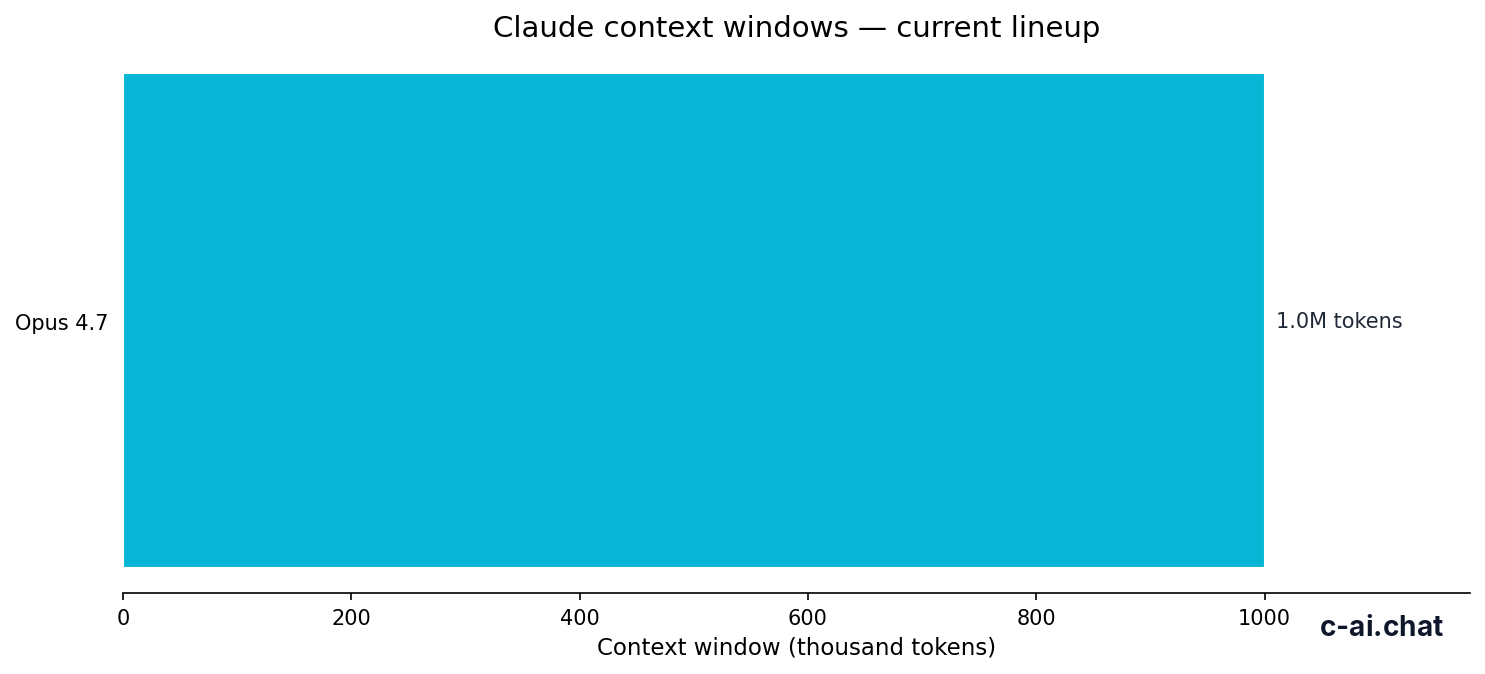
Do not pick Claude Sonnet 5 for production work unless Anthropic lists it as an available model. Pick the closest official Sonnet model when you want a balanced default. Move to Opus or Haiku only when the task calls for a different trade-off.
Pick Sonnet when
- You mean the Sonnet family and want the balanced Claude model tier.
- You are comparing likely upgrade paths from Claude Sonnet 4.6.
- You are writing an evaluation plan and need to know what to watch if Anthropic publishes a new Sonnet model.
- You can verify the exact model name, pricing, context length, and limits in official Anthropic documentation before use.
Skip Sonnet 5 when
- You need a model you can use now in the Claude app or API.
- You need confirmed API pricing for budgeting or customer billing.
- You need the strongest listed reasoning model; test Claude Opus 4.7 instead.
- You need the cheapest high-volume option; test Claude Haiku 4.5 instead.
The pricing trade-off matters. Claude Sonnet 4.6 costs $3/M input tokens and $15/M output tokens. Claude Opus 4.7 costs $5/M input tokens and $25/M output tokens. Claude Haiku 4.5 costs $1/M input tokens and $5/M output tokens. Opus can be worth it for harder tasks, but Sonnet is usually easier to justify as a default. Haiku can cut cost on simple classification, routing, extraction, and short-form generation.
90% off
cached input tokens with prompt caching
For budget planning, also account for optimization options. Anthropic’s API pricing documentation lists prompt caching at 90% off cached input tokens and the Batch API at 50% off both directions. These discounts can matter more than a model switch when prompts reuse long system instructions, examples, schemas, or reference material.
Free
$0
Entry-level access in the Claude app.
Pro
$20/month or $17/month annual
Individual paid access with higher usage than Free.
Max
From $100/month
Higher-usage individual access.
Team Standard
$25/seat/month or $20/seat/month annual
Team access with shared administration.
Team Premium
$125/seat/month or $100/seat/month annual
Expanded team access for heavier use.
Enterprise
$20/seat base plus API rates
Enterprise access and API-linked usage.
For subscription decisions, see our Claude pricing guide. App plans and API billing are different: the Claude app uses plan access and usage limits, while the API bills by tokens and model usage.
Other questions readers ask
These are the closely related questions people usually mean when they search for Claude Sonnet 5.
For broader beginner questions, see our Claude FAQ.
The honest take
Claude Sonnet 5 is a search term, not a confirmed public model. Use Claude Sonnet 4.6 when you want the Sonnet family, Claude Opus 4.7 when you want the strongest listed model, and Claude Haiku 4.5 when speed and cost are the priority.
Do not buy, build, benchmark, or plan around a guessed Sonnet 5 release. Check Anthropic’s official model overview, pricing page, and status page for the authoritative position. Then test the listed models against your own tasks.
Independent guide. Not affiliated with Anthropic. For the official Claude product, visit claude.ai.
Last updated: 2026-05-12