
Claude model history is the sequence of Anthropic model families and version updates from the first Claude releases through the current Opus, Sonnet, and Haiku lineup; this guide is an independent reference from c-ai.chat, not Anthropic, and it maps the major changes, what each generation improved, and which current model replaced which older one. For the broader lineup, see our Claude models guide.
- Which model is this?
- What it’s best at
- Where it falls short
- When to pick this model
- Other questions readers ask
- The honest take
If you searched for Claude model history, the short version is simple: Anthropic started with a single Claude family, then split the lineup into performance tiers, then moved to the current naming scheme where Opus is the flagship, Sonnet is the default recommendation, and Haiku is the fast, low-cost option. The current lineup matters more than the retired names, because older Claude versions are mostly useful now as reference points for capability jumps, pricing changes, and API migration paths.
Which model is this?

The current endpoint of Claude model history is the three-family lineup: Opus 4.7 as the latest flagship, Sonnet 4.6 as the recommended default, and Haiku 4.5 as the fastest low-cost model; in practical terms, the history shows Anthropic moving from broad Claude generations to a clearer tiered system with explicit trade-offs in quality, speed, and price.
- Input price · Opus 4.7 $5/M, Sonnet 4.6 $3/M, Haiku 4.5 $1/M
- Output price · Opus 4.7 $25/M, Sonnet 4.6 $15/M, Haiku 4.5 $5/M
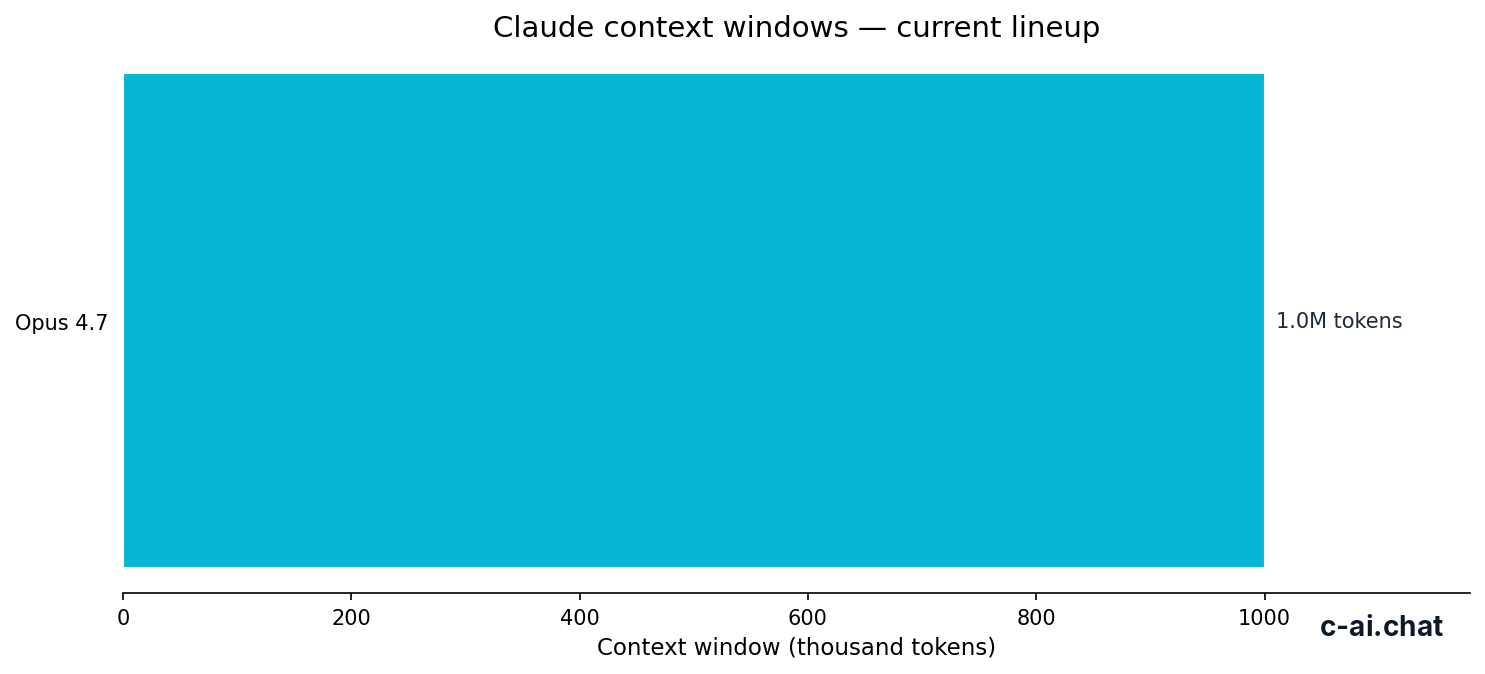
- Context window · up to 1,000,000 tokens on Opus 4.7 and Sonnet 4.6
- Max output · Sonnet 4.6 supports up to 128K output
Looking backward, Claude’s model history is easiest to read in phases. First came the early Claude and Claude 2 era, when Anthropic established long-context positioning. Then came the Claude 3 generation, which formalised the three-tier structure with Opus, Sonnet, and Haiku. After that, Anthropic iterated through newer Sonnet and Opus updates, improving reasoning, coding, tool use, and long-context handling while keeping the family names consistent. If you also care about cost changes over time, our Claude pricing guide explains how those tiers map to subscription and API spending.
| Phase in Claude model history | What changed | Why it mattered |
|---|---|---|
| Early Claude / Claude 2 era | Long-context assistants became a core differentiator | Made Claude known for handling larger documents and longer chats |
| Claude 3 generation | Opus, Sonnet, and Haiku became distinct tiers | Gave buyers a clear performance-versus-cost ladder |
| Claude 3.5 / 3.7 period | Reasoning, coding, and tool use improved sharply | Moved Claude from general chat into stronger work tasks |
| Claude 4 generation | Refined family naming with current premium, default, and budget roles | Made model choice simpler for teams and API users |
| Current lineup | Opus 4.7, Sonnet 4.6, Haiku 4.5 | Current reference point for most buyers and developers |
The practical lesson from the timeline is that Anthropic has reduced naming confusion over time. Older model names still appear in documentation, changelogs, and legacy app discussions, but for new usage the decision is usually straightforward: start with Sonnet 4.6, move up to Opus 4.7 for harder work, or move down to Haiku 4.5 for speed and budget. If you are using the API, see our Claude API guide for the current setup path.
What it’s best at
Claude model history is most useful when you want to understand how the lineup matured. Early Claude versions built Anthropic’s reputation for long-context work. Later releases made the differences between models more deliberate. Opus became the premium quality tier, Sonnet turned into the sensible default for most users, and Haiku became the model for quick, cheap throughput. That means the history is not just a list of names; it is a map of Anthropic’s product strategy.
The timeline also helps when you are comparing old benchmarks, old blog posts, or outdated API examples. A lot of web content still references retired or superseded Claude versions. Understanding the sequence lets you translate those references into today’s lineup. In most cases, the closest modern replacement is Sonnet 4.6 for general use, Opus 4.7 for top-end performance, and Haiku 4.5 for lightweight tasks. If you are evaluating everyday capabilities rather than release history, our Claude features guide covers what the product can actually do now.
- Interpreting old reviews and benchmarks: it helps you map outdated model names to current tiers.
- Choosing a current model: the timeline shows how Anthropic settled on a three-level product structure.
- Understanding price shifts: newer generations made cost-versus-quality trade-offs easier to predict.
- Planning migrations: developers can see when it makes sense to move from older references to current API targets.
- Explaining capability jumps: the history shows that reasoning and coding improved in steps, not all at once.
90% off
cached input tokens with prompt caching
Another strength of understanding the model timeline is cost optimisation. Claude’s newer API pricing structure is easier to reason about than older, scattered references, especially when you combine it with prompt caching and Batch API discounts. The lineage matters because a task that once seemed expensive on a premium model may now be cheaper to run on Sonnet 4.6, or cheaper still on Haiku 4.5 if the quality bar is lower.
Where it falls short
Claude model history has one obvious limitation: it does not tell you, by itself, which model you should use today. Searchers often want a timeline but actually need a buying decision. Older Claude versions can also create confusion because many web pages still rank for retired names, discontinued families, or pricing that no longer applies. So the history is useful context, but it is not a substitute for checking the current lineup and official pricing.
- It can overemphasise retired models. Most new users should focus on Opus 4.7, Sonnet 4.6, and Haiku 4.5.
- It does not replace live pricing checks. API and plan details belong on claude.com/pricing.
- It can blur product versus model changes. Some improvements came from apps, tools, and integrations, not just model weights.
- It may not reflect your use case. A newer flagship is not always the right pick if Haiku 4.5 is fast enough and much cheaper.
- It can date quickly. Anthropic keeps shipping updates, so historical comparisons need regular checks.
When to pick this model
Use Claude model history when you need a decision rule grounded in context: identify the old model reference, map it to the current family, then choose based on quality needs and price. The key trade-off is simple. Opus 4.7 costs $5/M input and $25/M output, Sonnet 4.6 costs $3/M input and $15/M output, and Haiku 4.5 costs $1/M input and $5/M output. For most people, the timeline is valuable only if it leads to a current-model choice.
Pick when
- You are comparing old Claude names with the current lineup.
- You need to translate legacy benchmarks or documentation into today’s model choices.
- You want to understand why Sonnet is now the default recommendation.
- You are budgeting API usage and need the price ladder from Haiku to Opus.
Skip when
- You only need the current best option for a task right now.
- You are not using old references and can start directly from current model docs.
- Your main concern is app plans rather than model generations.
- You already know the task is budget-sensitive and Haiku 4.5 is clearly enough.
If you are deciding between product plans rather than model generations, the path is different. Free is enough for casual use, Pro at $20/month is the individual paid plan, Max starts at $100/month for heavier usage, and Team starts at $25/seat/month. Those plans affect access and limits, while model pricing affects API cost. We separate those in our pricing breakdown.
Free
$0/month
For casual users
- Web, iOS, Android, and desktop access
- Daily usage limits
Pro
$20/month
For individuals who use Claude regularly
- Claude Code and Claude Cowork
- Unlimited Projects and Research access
Max
$100/month
For power users
- 5x or 20x Pro usage
- Priority traffic and early feature access
Other questions readers ask
The honest take
Claude model history matters because it explains how Anthropic got from a broad “Claude” brand to a cleaner three-tier lineup with clearer trade-offs. That makes the history useful for interpreting old content, but not for dwelling on retired models. For most readers, the important takeaway is current-state orientation: use Sonnet 4.6 by default, use Opus 4.7 when output quality matters enough to justify the higher API price, and use Haiku 4.5 when speed and cost matter more than top-tier reasoning.
If your real goal is practical model selection, the timeline is only step one. After that, compare the current families, check the latest pricing, and test on your own prompts. That will tell you more than any old benchmark or release note ever will.
Independent guide. Not affiliated with Anthropic. For the official Claude product, visit claude.ai.
Last updated: 2026-05-12