
Claude Opus 4 and Claude Sonnet 4 are two Claude model families: Opus is the higher-cost flagship for the hardest reasoning, coding, and analysis work, while Sonnet is the better default for most professional tasks; c-ai.chat is independent, and our Claude models guide explains how they fit into the full lineup.
- Which model is this?
- What it is best at
- Where it falls short
- When to pick this model
- FAQ
- The honest take
- Sources
Which model is this?
Opus and Sonnet are model families inside Claude by Anthropic: Claude Opus 4.7 is the current Opus-generation flagship, and Claude Sonnet 4.6 is the current Sonnet-generation balanced model.
Use Opus when the work is expensive to get wrong. Use Sonnet when you want strong quality, lower cost, and faster iteration. Anthropic lists model availability and pricing in its official model overview and pricing documentation. For subscription plan context, see our Claude pricing guide.
Flagship
Claude Opus 4.7
$5/M input tokens
$25/M output tokens
Best for the hardest reasoning, coding, and expert review tasks.
Default
Claude Sonnet 4.6
$3/M input tokens
$15/M output tokens
Best balance for most writing, coding, analysis, and production workflows.
Fastest low-cost option
Claude Haiku 4.5
$1/M input tokens
$5/M output tokens
Best for simple, high-volume tasks such as routing, extraction, and classification.
| Question | Claude Opus 4.7 | Claude Sonnet 4.6 |
|---|---|---|
| Best role | Flagship model for the hardest reasoning and coding work | Recommended default for most production and business use |
| Input price | $5/M tokens | $3/M tokens |
| Output price | $25/M tokens | $15/M tokens |
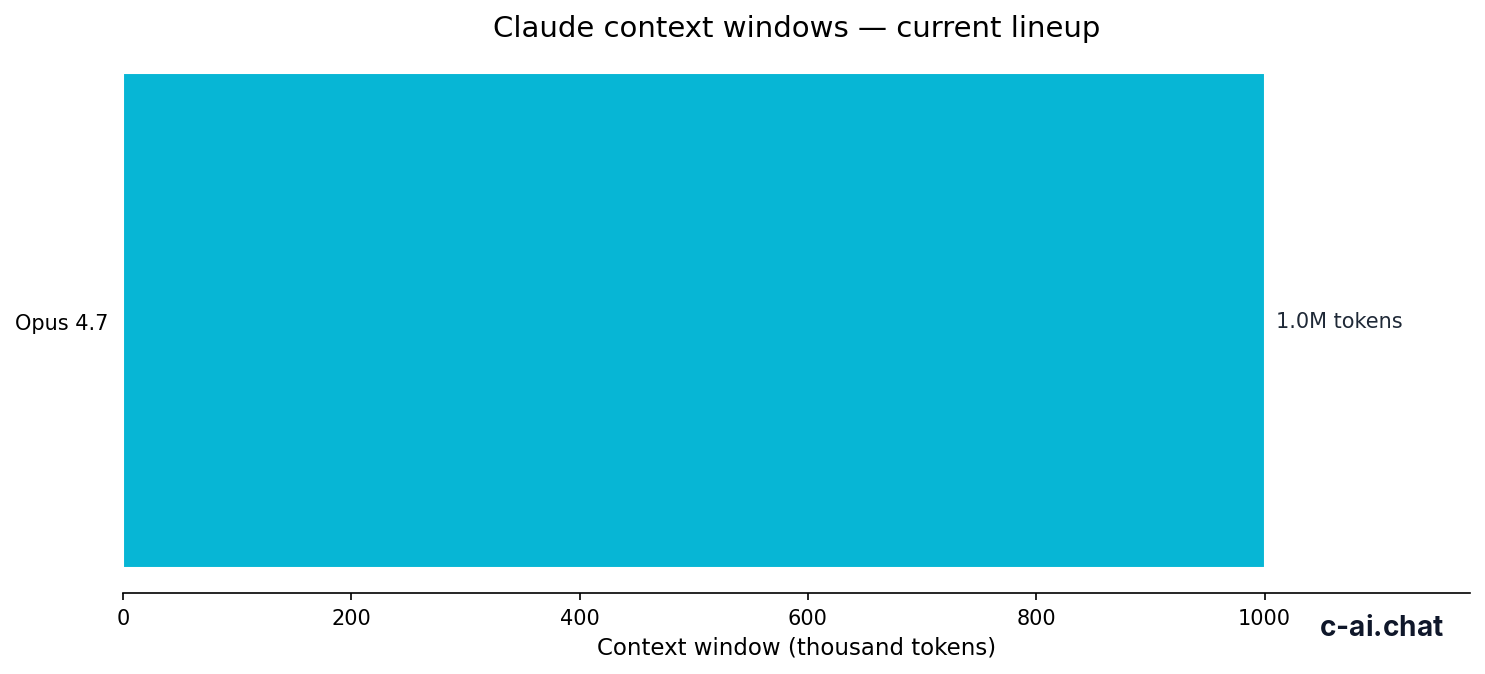
| Context | 1,000,000 tokens | 1,000,000 tokens |
| Max output | Check Anthropic’s model docs for endpoint-specific limits | Up to 128K output tokens |
| Typical fit | Complex codebases, dense research, long multi-step reasoning | Customer workflows, writing, coding help, analysis, agents with cost limits |
| Main trade-off | Higher quality ceiling, higher spend | Better cost control, slightly lower ceiling on the hardest tasks |
What it is best at

Claude Opus 4.7 is the model to test first when a task depends on careful reasoning across many steps. It is a strong candidate for architecture decisions, code migration planning, debugging across large repositories, legal-style document comparison, and research synthesis where small mistakes compound. It costs more than Sonnet, so it should earn its place in a workflow.
Claude Sonnet 4.6 is the practical default. It is strong enough for most writing, coding, data analysis, planning, summarisation, and agentic tasks. It is cheaper than Opus for both input and output. Compared with Haiku 4.5, Sonnet costs more but gives stronger reasoning. Compared with Opus 4.7, Sonnet is easier to justify at scale. Developers should also test latency, rate limits, and tool-use behaviour through the Claude API docs guide.
- Use Opus 4.7 for hard coding work: architecture reviews, large refactors, security-sensitive debugging, and tasks with many constraints.
- Use Opus 4.7 for dense research: long source packs, technical papers, contracts, or policy documents that need careful qualification.
- Use Sonnet 4.6 for production assistants: support agents, internal copilots, document drafting, workflow automation, and content operations with predictable volume.
- Use Sonnet 4.6 for everyday coding: feature scaffolding, test generation, code explanation, and bug triage when the problem is not unusually complex.
- Use Haiku 4.5 when speed and cost dominate: classification, extraction, routing, short summaries, and high-volume simple transformations.
Worked example
Choosing a model for a codebase review
This keeps Opus for high-value reasoning and avoids paying flagship prices for routine steps.
The same pattern applies outside software. A research team might use Haiku to sort documents, Sonnet to draft briefings, and Opus to review the final evidence chain. A marketing team might use Sonnet for campaign drafts and Opus only for a complex brand strategy review. A legal operations team might use Sonnet for document summaries and Opus for high-stakes comparison across many clauses. A human expert should still make the final decision.
Where it falls short
The main weakness of Opus is cost. The main weakness of Sonnet is that it may not match Opus on the hardest reasoning tasks. Neither model removes the need to verify important claims, run tests, check citations, or review outputs before production use. Claude can also be affected by account limits, service availability, tool configuration, prompt quality, and Anthropic’s safety systems.
- Opus can be overkill: if the task is extraction, routing, light summarisation, or short drafting, Sonnet or Haiku will often be more sensible.
- Sonnet can underperform on edge cases: if a task needs long reasoning chains, subtle trade-offs, or careful debugging across many files, Opus may produce a better first answer.
- Both models can be confidently wrong: verify factual claims against primary sources, especially for law, medicine, finance, security, and compliance.
- Long context is not magic: a 1,000,000-token window helps with large inputs, but prompt structure still matters.
- Output cost matters: verbose responses are more expensive, especially on Opus at $25/M output tokens.
- Subscription limits differ from API pricing: claude.ai plans use usage allowances, while the API charges by token.
There is also a usability trade-off. Opus may produce more detailed answers, which can help on hard work but slow review. Sonnet is often easier to operationalise because its cost is lower and its quality is consistent enough for repeated tasks. For many teams, the right answer is not “Opus or Sonnet.” It is a routing rule that sends only the hardest cases to Opus.
When to pick this model
Pick Opus 4.7 when marginal quality is worth the higher price. Pick Sonnet 4.6 when you need strong output at a cost that can scale.
Pick Opus when
- You are solving a difficult coding, reasoning, or analysis problem.
- A bad answer would cost more than the model call.
- The prompt includes many constraints, files, or documents.
- You are reviewing a final answer before a human decision.
- You want the highest quality ceiling in the Claude lineup.
Use Sonnet or Haiku when
- The task is routine and repeated at high volume.
- Latency and budget matter more than reasoning depth.
- Sonnet already passes your evaluation set.
- The job is simple classification, extraction, or routing.
- You cannot review or test the output before use.
The price gap is simple: Opus 4.7 costs $5/M input tokens and $25/M output tokens, while Sonnet 4.6 costs $3/M input tokens and $15/M output tokens. That difference compounds when prompts are long, outputs are verbose, or traffic is high. If you are building a product, evaluate both models on your real prompts before deciding. A small quality lift may justify Opus for expert workflows, but not for every user request.
90% off
cached input tokens with prompt caching
Cost optimisation can change the decision. Anthropic’s prompt caching gives 90% off cached input tokens. Batch API pricing gives 50% off both input and output tokens for eligible asynchronous jobs. These tools do not make calls free, but they can make long prompts and repeatable workflows more economical. They are especially useful when the same system prompt, policy, code context, or document pack appears across many requests.
Start with Sonnet 4.6
Build the baseline prompt and measure quality, latency, and cost on real examples.
Test Opus 4.7 on failures
Send the hardest failed or borderline cases to Opus and compare whether the improvement is meaningful.
Add a routing rule
Use Sonnet for normal traffic and Opus for high-complexity requests, final review, or escalations.
Control token volume
Trim unnecessary context, cap output length, and use caching when repeated input is stable.
This approach works for chat use and API products. On claude.ai, your choice may depend on plan access and usage limits. In the API, you can choose models programmatically. If you are comparing subscriptions as well as models, plan limits and product features matter as much as raw model capability. Our Claude features guide separates product features from model capability.
FAQ
These are the questions people usually ask when comparing Claude Opus 4 and Claude Sonnet 4.
For official account, billing, and access details, use Anthropic’s support site. For security and compliance information, Anthropic publishes details through its trust center. Treat those pages as the source of record for official policy. For more short answers, see our Claude FAQ.
The honest take
For most people, Claude Sonnet 4.6 is the right starting point. It gives strong quality at $3/M input tokens and $15/M output tokens, and it handles a broad range of writing, coding, analysis, and assistant tasks. If you are unsure which model to choose, start with Sonnet and move specific workloads to Opus only when testing shows a clear benefit.
Claude Opus 4.7 is the model to keep in reserve for the hardest work. It costs $5/M input tokens and $25/M output tokens, so use it deliberately. The cleanest strategy is to use Sonnet as the default, Haiku for simple high-volume work, and Opus for complex reasoning, expert review, and tasks where a better answer is worth the extra spend.
Independent guide. Not affiliated with Anthropic. For the official Claude product, visit claude.ai.
Last updated: 2026-05-15