
Claude Haiku 4.5 is Anthropic’s fast, low-cost Claude model for routine tasks, priced at $1/M input tokens and $5/M output tokens; this independent c-ai.chat guide places it within the broader Claude model lineup and does not speak for Anthropic.

- Which model is this?
- What it’s best at
- Where it falls short
- When to pick this model
- Other questions readers ask
- The honest take
- Sources
Which model is this?
Claude Haiku 4.5 is the Haiku-family model in the active Claude lineup. It is smaller, faster, and cheaper than Sonnet 4.6 and Opus 4.7. The trade-off is lower capability on hard reasoning, long synthesis, and work with vague instructions.
Claude Haiku 4.5
Fastest and cheapest active Claude model tier
- Input price: $1/M tokens
- Output price: $5/M tokens
- Best fit: high-volume, low-latency tasks
- Limits: verify context and output limits in Anthropic’s model documentation before deployment
Haiku is the speed-and-cost tier. It sits below Sonnet, the balanced default, and Opus, the flagship model. If you are routing requests through the Claude API, test Haiku 4.5 first when latency and token cost matter more than maximum reasoning depth.
For official product access, use claude.ai. For live API details, check Anthropic’s model overview and API pricing documentation. This page is a third-party guide, so confirm limits before production use.
| Model | Role in the lineup | API price | Context and output | Best fit |
|---|---|---|---|---|
| Claude Haiku 4.5 | Fastest and cheapest | Input: $1/M tokens Output: $5/M tokens | Verify in official docs before deployment | High-volume, low-latency tasks |
| Claude Sonnet 4.6 | Recommended default | Input: $3/M tokens Output: $15/M tokens | 1M context 128K max output | Most coding, writing, analysis, and agent workflows |
| Claude Opus 4.7 | Flagship | Input: $5/M tokens Output: $25/M tokens | 1M context | Hard reasoning, complex planning, and premium-quality outputs |
What it’s best at

Claude Haiku 4.5 is best when you need many acceptable answers quickly. It fits classification, extraction, formatting, short answers, routing, and routine assistant work. Use it when a request does not justify Sonnet 4.6 or Opus 4.7 on cost or latency.
Compared with Sonnet 4.6, Haiku 4.5 costs less to run and suits repeatable tasks with narrow instructions. Compared with Opus 4.7, it is much cheaper but less capable on ambiguous reasoning, complex multi-step work, and tasks where small quality differences matter. A practical Claude stack often uses Haiku for first-pass work, Sonnet for normal production answers, and Opus for high-value edge cases.
- Classification: label support tickets, route sales leads, detect document types, or apply policy categories.
- Extraction: pull names, dates, totals, entities, or short summaries from structured and semi-structured text.
- Format conversion: turn notes into JSON, clean CSV-like text, normalise fields, or rewrite copy to match a template.
- Low-stakes chat: answer simple user questions where speed matters and occasional escalation is acceptable.
- Agent sub-tasks: let a stronger model plan the work while Haiku handles small repeated steps, such as checking, tagging, or drafting short responses.
Worked example
Ticket triage model routing
This pattern works because not every step needs the same level of model capability.
Haiku also fits teams with strong prompts, clear schemas, and a validation layer. If the task asks for a short output in a predictable shape, the cheaper model can be easier to scale. If the task asks for judgment, strategy, or careful synthesis across messy context, test Sonnet or Opus before choosing the cheaper option.
The economics matter most in applications with constant background traffic. Search assistants, inbox processors, analytics tools, moderation queues, and internal knowledge tools can generate large token volumes. Moving safe sub-tasks from Sonnet 4.6 to Haiku 4.5 can reduce cost while preserving quality where it matters.
Where it falls short
Claude Haiku 4.5 is not the model to pick when the output must be the strongest Claude answer available. Its value is speed and cost. Expect weaker performance than Sonnet 4.6 and Opus 4.7 on hard reasoning, nuanced writing, multi-document synthesis, complex coding, and tasks where the model must recover from unclear instructions.
- Hard coding: use Sonnet 4.6 or Opus 4.7 for architecture decisions, large refactors, complex debugging, or unfamiliar codebases.
- Long analytical memos: Haiku can draft, but Sonnet or Opus is usually safer for synthesis, trade-off analysis, and executive-ready reasoning.
- High-risk decisions: do not rely on the cheapest model alone for legal, medical, financial, employment, or safety-sensitive judgments.
- Ambiguous prompts: Haiku performs best with tight instructions, examples, and a clear output format.
- Creative polish: for brand-sensitive writing, final sales copy, or subtle tone matching, compare results against Sonnet before committing.
A good evaluation set should include easy cases, normal cases, and failure cases. Run the same prompts against Haiku 4.5, Sonnet 4.6, and Opus 4.7. Score outputs by accuracy, latency, user satisfaction, and retry rate. That gives you a defensible routing rule instead of a guess.
When to pick this model
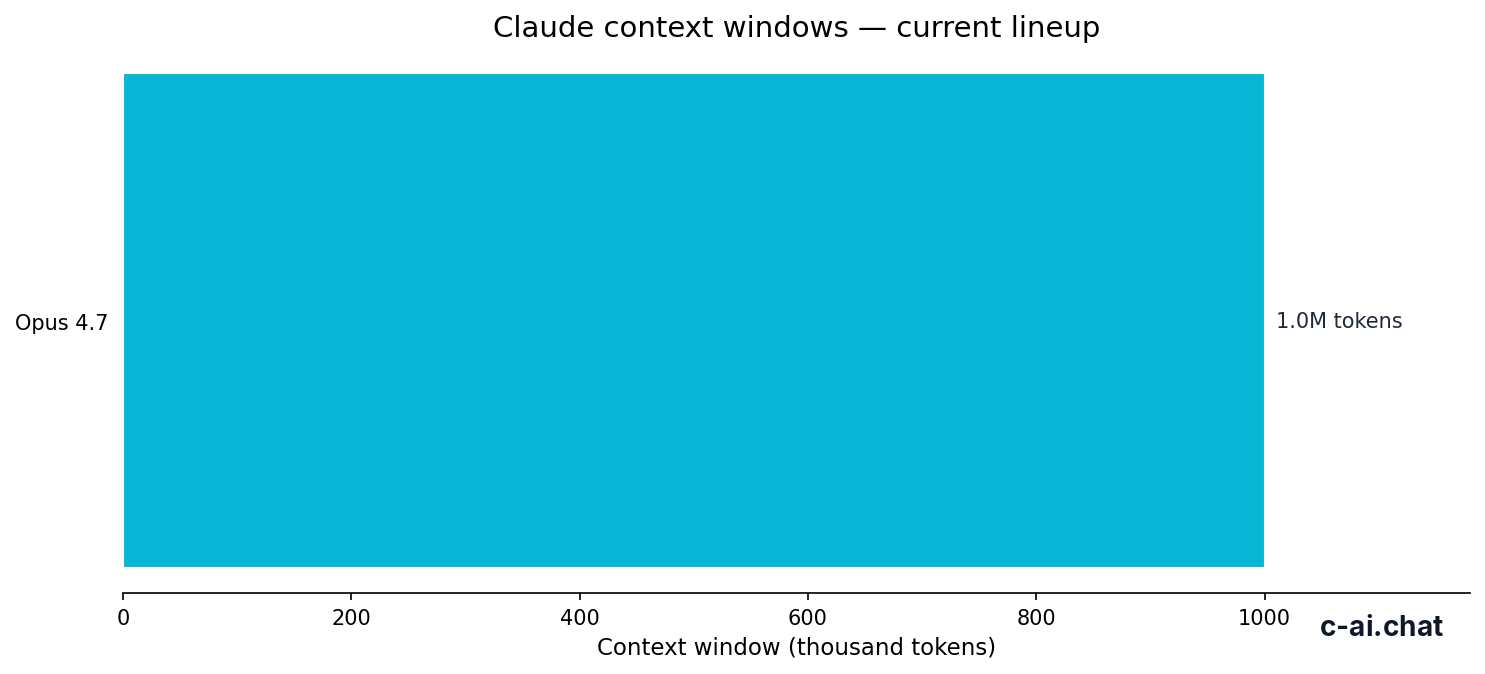
Pick Claude Haiku 4.5 when the task is frequent, bounded, and tolerant of a smaller model. The pricing trade-off is clear: Haiku 4.5 is $1/M input tokens and $5/M output tokens, Sonnet 4.6 is $3/M input tokens and $15/M output tokens, and Opus 4.7 is $5/M input tokens and $25/M output tokens.
Pick when
- You need high-volume processing at the lowest active Claude model price.
- The output is short, structured, or easy to validate automatically.
- The prompt is specific and includes examples or a schema.
- A fallback to Sonnet 4.6 or Opus 4.7 exists for difficult cases.
- Latency matters more than premium reasoning depth.
Skip when
- The user expects the most capable Claude answer available.
- The task requires careful planning, expert-level analysis, or long-context synthesis.
- Errors are expensive and hard to detect after generation.
- The prompt is vague and the model must infer many missing details.
- You are judging final quality for brand, product, legal, or security work.
For production systems, the safest pattern is model routing. Start with Haiku 4.5 for simple tasks. Escalate to Sonnet 4.6 when confidence is low or the user asks for a more complex answer. Reserve Opus 4.7 for cases where difficulty, importance, or revenue impact justify the higher price.
Cost controls can change the decision. Anthropic documents prompt caching, which can reduce cached input token cost by 90%, and the Batch API, which can reduce cost by 50% in both directions for eligible asynchronous workloads. If your app repeats long system prompts or background jobs, compare Haiku 4.5 plus caching against Sonnet 4.6 plus caching before deciding. See Anthropic’s official API pricing page for current details.
90% off
cached input tokens with prompt caching
If you use Claude in the web app rather than the API, model access depends on the plan and Anthropic’s current product limits. Compare the official Claude pricing page with our guide to Claude features.
Free
$0
Entry-level web access with usage limits.
Pro
$20/month or $17/month annual
Individual paid web access.
Max
From $100/month
Higher-usage individual access.
Team Standard
$25/seat or $20/seat annual
Team workspace access.
Team Premium
$125/seat or $100/seat annual
Higher-tier team access.
Enterprise
$20/seat base plus API rates
Enterprise access and metered API usage.
Other questions readers ask
These are the related questions people ask when comparing Claude Haiku 4.5 with Sonnet, Opus, and subscription access. For broader background, see our Claude FAQ and Claude resources.
The honest take
Claude Haiku 4.5 is the model to test when you want Claude at the lowest active API price and the task is narrow enough for a small, fast model. It is a strong fit for classification, extraction, formatting, short answers, and background processing. It is not the model to choose when the job needs the strongest reasoning or the most polished final answer.
The practical answer is not “Haiku or Sonnet” for every request. Use Haiku 4.5 where it passes evaluation, Sonnet 4.6 as the general default, and Opus 4.7 when quality matters enough to justify the higher price. That routing approach usually beats forcing every task through one model.
Independent guide. Not affiliated with Anthropic. For the official Claude product, visit claude.ai.
Last updated: 2026-05-12