
Claude Enterprise is Anthropic’s custom business plan for organisations that need advanced security, identity controls, governance, and contract terms; pricing starts at $20 per seat plus usage at API rates, and this guide from c-ai.chat explains what that means, what is included, and when it makes more sense than other Claude plans.
If you are comparing all Claude tiers first, see our Claude pricing guide. If you care more about model costs than workspace plans, start with our Claude API pricing overview.
- The bottom line
- What’s actually included
- Is it worth it for you?
- Cheaper / better alternatives
- The honest take
The bottom line
Claude Enterprise is the top-tier Claude workspace plan for larger organisations, with a base price of $20 per seat plus usage billed at standard API rates; it is built for teams that need controls like SCIM, audit logs, role-based access, spend management, and enterprise security options that are not available on lower plans.
- $20/seat base + API-rate usage
- Includes SCIM, audit logs, RBAC, spend controls, regional options
- Upgrade when Team controls are not enough for IT, security, or compliance
- Skip if you only need more usage; Max or Team is usually cheaper
This is not a flat unlimited plan. That point matters. Enterprise combines a per-seat base with usage-based billing, so your total cost depends on how many people need access and how much Claude they actually use. For organisations with heavy governance requirements, that is often the right structure. For smaller groups, it can be overkill.
At a high level, Claude Enterprise sits above Team and Max. Team is aimed at smaller businesses that need shared workspace features and SSO. Max is for individual power users who want far more usage on a personal account. Enterprise is the plan for procurement, IT, security, and legal review. That is the real dividing line, more than raw model quality, since Claude models are also available through other plans and through the API.
What’s actually included
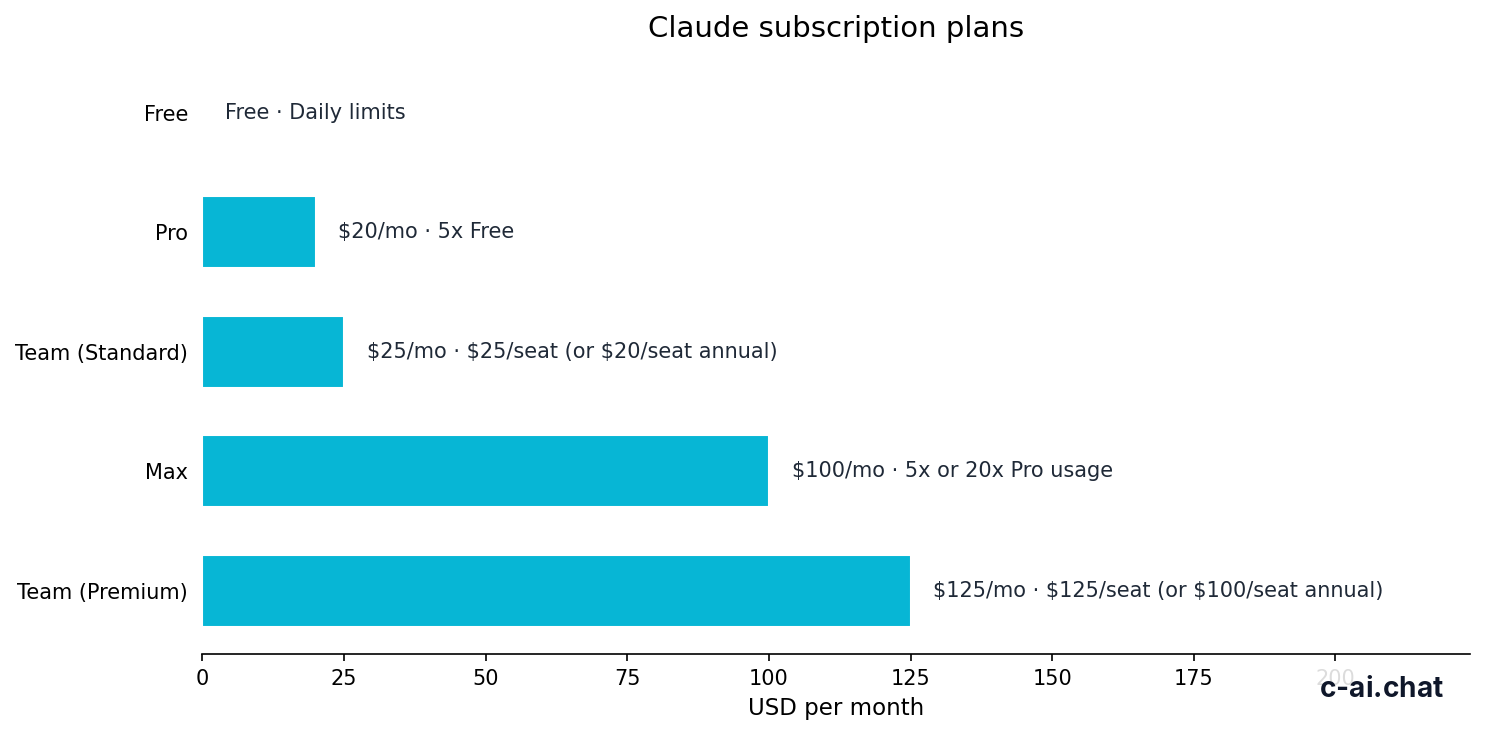
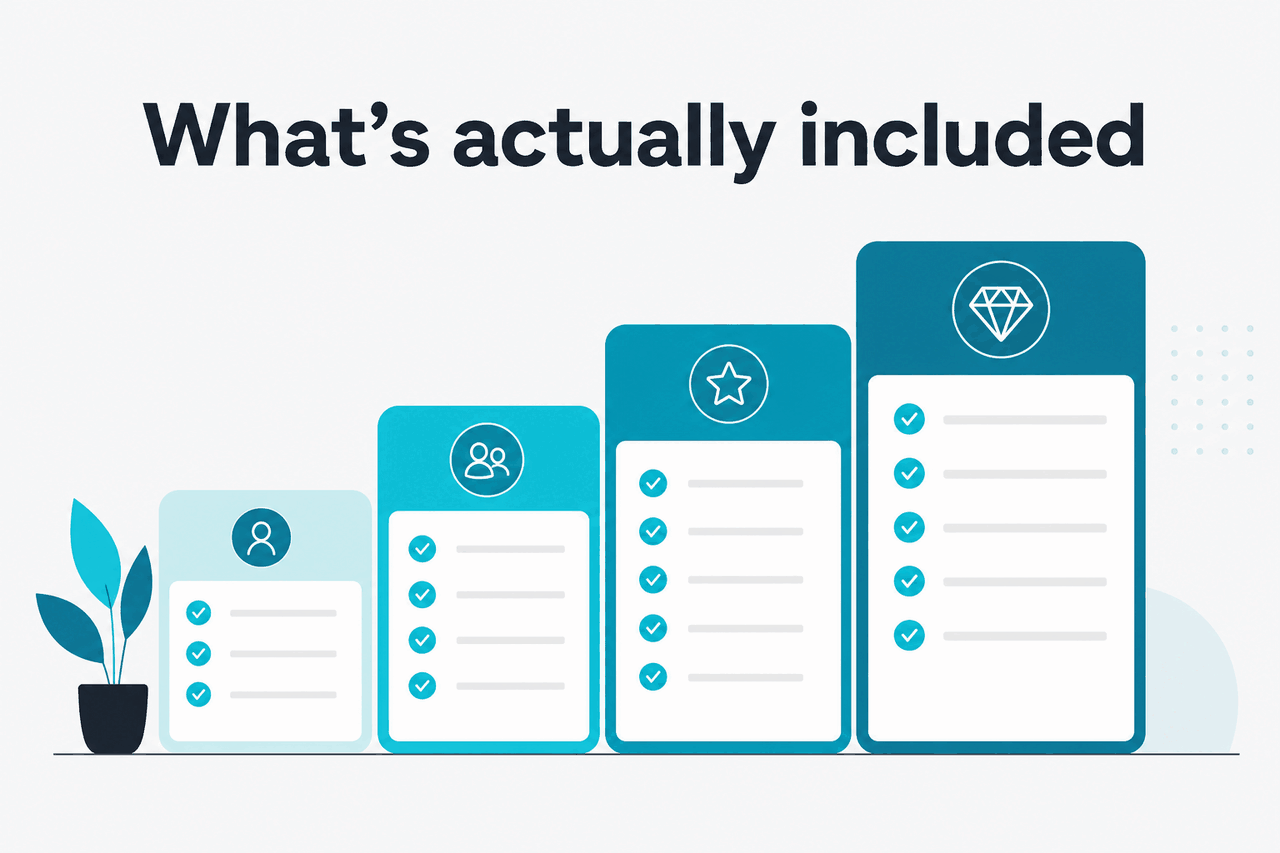
Claude Enterprise adds the admin, security, and deployment controls that larger organisations usually need before rolling out an AI tool widely. The headline items are straightforward: SCIM for user provisioning, audit logs, role-based access, spend controls, and regional data residency options, plus custom contract terms and enterprise buying processes.
Below is the practical view of what you are paying for, compared with the nearest lower business tier.
| Plan | Price | Who it fits | Key inclusions | Main limitation |
|---|---|---|---|---|
| Team (Standard) | $25/seat/month or $20/seat/month annual | Small teams | SSO, admin controls, shared workspace | Fewer enterprise governance and contract options |
| Team (Premium) | $125/seat/month or $100/seat/month annual | Higher-capacity teams | Priority traffic, expanded admin controls | Still not the full custom enterprise contract path |
| Enterprise | $20/seat base + usage at API rates | Larger organisations with IT/security requirements | SCIM, audit logs, role-based access, spend controls, HIPAA-ready options, regional data residency | Total cost depends on usage, not just seats |
There are two separate ideas inside that Enterprise line item:
- Base seat cost: $20 per seat.
- Usage cost: billed at Claude API rates, depending on the model and token volume used.
That usage-based layer is where many buyers get confused. Claude Enterprise is not simply “Team plus a few extra admin settings.” It is closer to a managed enterprise environment wrapped around Claude access and model usage, with procurement-friendly controls. If your company wants central oversight, predictable identity management, and data governance, those extras are often the reason Enterprise exists at all.
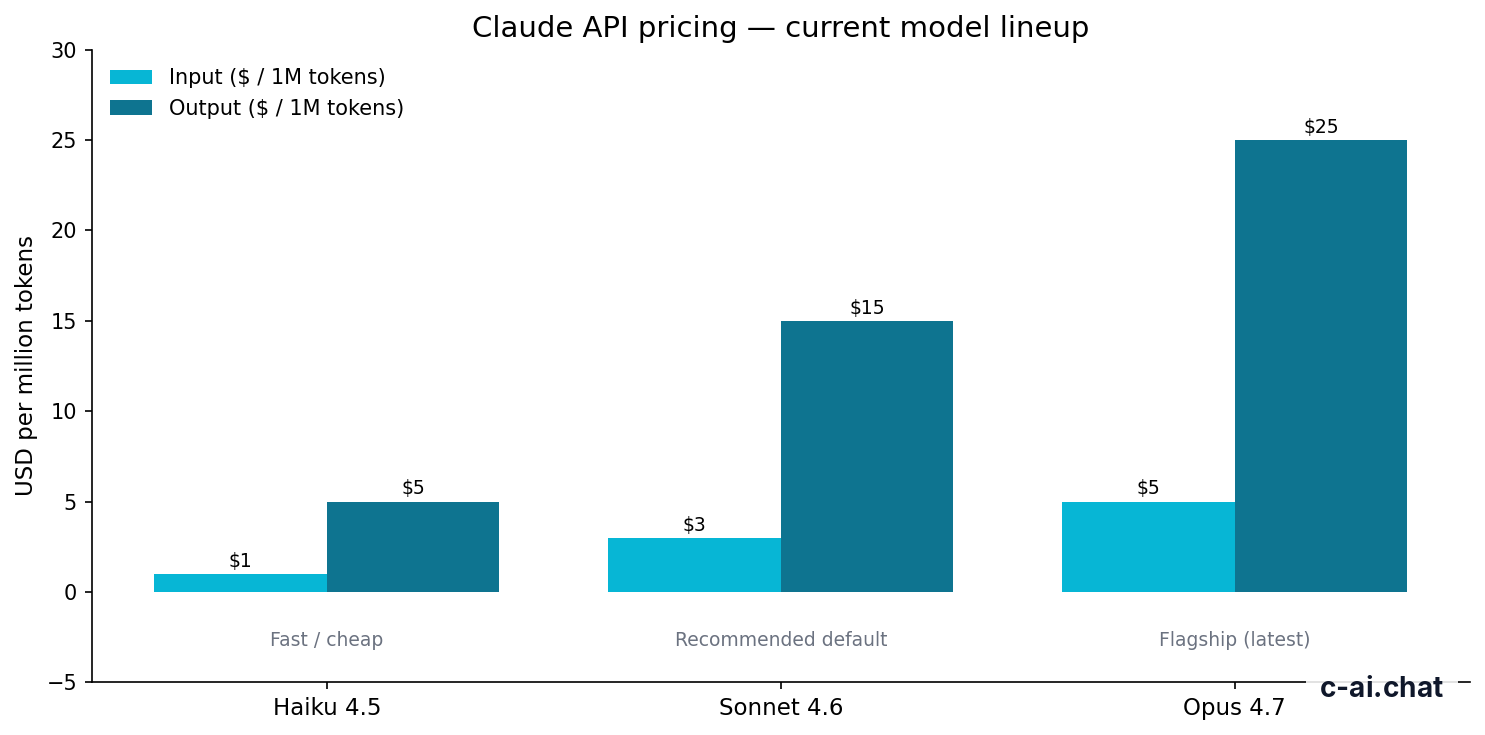
The underlying model pricing follows the same official API schedule. Current headline rates are:
| Model | Positioning | Input price | Output price |
|---|---|---|---|
| Claude Opus 4.7 | Flagship model | $5 per million tokens | $25 per million tokens |
| Claude Sonnet 4.6 | Recommended default | $3 per million tokens | $15 per million tokens |
| Claude Haiku 4.5 | Fastest and cheapest | $1 per million tokens | $5 per million tokens |
Those rates matter because Enterprise usage rides on them. If your workforce mostly uses Sonnet for writing, analysis, and internal research, costs may stay moderate. If many users regularly run large Opus jobs with long outputs, costs will rise faster. If you are building internal tools or automations, it also helps to review the core Claude features and the API model choices together rather than treating Enterprise as a single all-in-one SKU.
90% off
cached input tokens with prompt caching
Anthropic also offers cost optimisation tools at the API layer. Prompt caching reduces cached input token cost by 90%, and Batch API cuts both input and output pricing by 50%. For organisations with repeat workflows, these can materially lower Enterprise-linked usage costs. Long context windows are also available on supported models at standard rates, including the 1,000,000-token context on Claude Opus 4.7.
In plain terms, what you get with Claude Enterprise is not just more Claude. You get Claude with enterprise plumbing. That includes:
- Identity lifecycle support through SCIM.
- Auditability for security and compliance teams.
- Role-based access and admin management.
- Spend controls for budget owners.
- Regional data residency options where required.
- HIPAA-ready options for qualifying use cases.
- Custom contracting and enterprise procurement pathways.
What you should not assume: unlimited usage, a lower token price than the standard API schedule, or every advanced governance need being available without a custom discussion. Enterprise is typically sold through a sales process for a reason. The details depend on organisation size, required controls, and deployment pattern.
Is it worth it for you?

Claude Enterprise is worth it when governance and deployment requirements matter more than sticker price. It is usually not worth it for solo users, small teams with light admin needs, or companies that mainly want more usage rather than stronger controls.
Pick when
- You need SCIM, audit logs, or role-based access for a broad internal rollout.
- Your security, legal, or procurement team requires contract terms and governance features before approval.
- You want central spend controls and visibility across many users or departments.
- You need regional data residency or HIPAA-ready options.
- You are standardising Claude across a company, not just buying seats for a small group.
Skip when
- You are an individual power user; Claude Max is usually the better fit.
- You are a small business that mainly needs shared workspace and SSO; Team is usually enough.
- You only want lower cost per task; Enterprise adds control, not automatic savings.
- You do not have compliance or governance requirements that justify a custom contract.
- Your usage is experimental and better handled through direct API billing.
The clearest fit is usually one of these personas:
- Regulated organisation buyer: A healthcare, finance, legal, or public-sector team that needs formal controls before staff can use Claude at scale.
- IT and security-led rollout owner: A company standardising AI access across departments and needing central identity, admin policy, and auditability.
- Large operations or knowledge-work team: A business with many users, significant internal documentation, and a need for budget controls and managed deployment.
It fits poorly for these personas:
- Freelancers and solo professionals: Pro or Max is simpler and usually cheaper.
- Small startups: Team often covers the basics without adding custom-sales complexity.
- Developer-led product teams: If the goal is embedding Claude in software, direct API pricing may matter more than an Enterprise workspace contract.
A simple test helps. Ask: “If Claude usage doubled next quarter, what would break first?” If the answer is security review, identity provisioning, access control, or spend oversight, Enterprise makes sense. If the answer is just “we need more prompts,” it probably does not.
Cheaper / better alternatives
For many buyers, the right answer is not Claude Enterprise. The cheaper alternative is often Team. The better alternative for a single heavy user is Max. And for product builders, the API may be the more direct route.
| Option | Price | Best for | Why choose it over Enterprise | Why not |
|---|---|---|---|---|
| Max | From $100/month | Individual power users | Much simpler if one person just needs more Claude usage and priority access | No org-wide admin, SCIM, or enterprise controls |
| Team (Standard) | $25/seat/month or $20/seat/month annual | Small businesses | Shared workspace, SSO, and admin controls without custom enterprise procurement | Less governance depth |
| Team (Premium) | $125/seat/month or $100/seat/month annual | Higher-capacity teams | More capacity and priority traffic for teams that do not need full enterprise contracting | Higher seat price and still not full Enterprise scope |
| API | Usage-based | Developers building apps and workflows | Direct control over model use, cost optimisation, and product integration | No ready-made enterprise workspace experience by itself |
Here is the practical way to think about the alternatives:
- Choose Max if one executive, analyst, researcher, or creator needs much more Claude than Pro provides.
- Choose Team if your company needs collaboration and admin basics, but not full-scale enterprise governance.
- Choose API if your main objective is embedding Claude into software, internal automations, or customer-facing tools.
The big mistake is paying for Enterprise to solve a usage problem. Enterprise is a governance plan first. If the pain point is output limits or personal productivity, it is usually the wrong tool. If the pain point is user management, audit requirements, and compliance review, the lower plans can become a false economy.
Worked example
When Enterprise makes sense financially
If those 200 users also require SCIM, audit logs, spend controls, and contract review, the extra structure can be cheaper than trying to govern a patchwork of individual accounts and ad hoc AI tools.
If you are still not sure, compare your requirement list against our full plan breakdown and the broader Claude FAQ. That usually makes the answer obvious faster than reading sales-language plan summaries.
The honest take
Claude Enterprise is a strong fit for organisations that need Claude to pass through security, IT, legal, and procurement cleanly. The value is not “more AI” by itself. The value is central control, identity management, auditability, and contract flexibility. If those are mandatory, the plan makes sense.
If those are not mandatory, Claude Enterprise is easy to overbuy. Small teams should usually start with Team. Individuals should look at Pro or Max. Builders should often price the API separately. Claude Enterprise is best treated as a company rollout plan, not a premium personal subscription.
FAQ
How much does Claude Enterprise cost?
Claude Enterprise starts at $20 per seat plus usage billed at Claude API rates. That means your final cost depends on seat count and model usage.
Is Claude Enterprise unlimited?
No. It is not a simple unlimited flat-fee plan. Enterprise includes a seat-based base charge and usage-based billing.
What does Claude Enterprise include that Team does not?
The main upgrades are enterprise governance and deployment controls, including SCIM, audit logs, role-based access, spend controls, regional data residency options, and HIPAA-ready options for qualifying use cases.
Is Claude Enterprise better than Claude Max?
Not in a universal sense. Max is better for one person who needs much more Claude usage. Enterprise is better for organisations that need governance, security, and admin controls.
Can developers still use the API with Claude Enterprise?
Yes. Enterprise usage is billed at API rates, so API pricing remains relevant. For implementation details, compare it with our Claude API guide.
Does Claude Enterprise lower token prices?
Not by default. The official pricing structure ties usage to standard API rates. Cost savings usually come from model selection, prompt caching, Batch API, and usage governance.
Who should skip Claude Enterprise?
Solo users, small teams without compliance needs, and early-stage companies still testing Claude usually do better with Pro, Max, Team, or direct API access.
Independent guide. Not affiliated with Anthropic. For the official Claude product, visit claude.ai.
Last updated: 2026-05-10
This article is part of the Claude pricing & plans hub on c-ai.chat.