
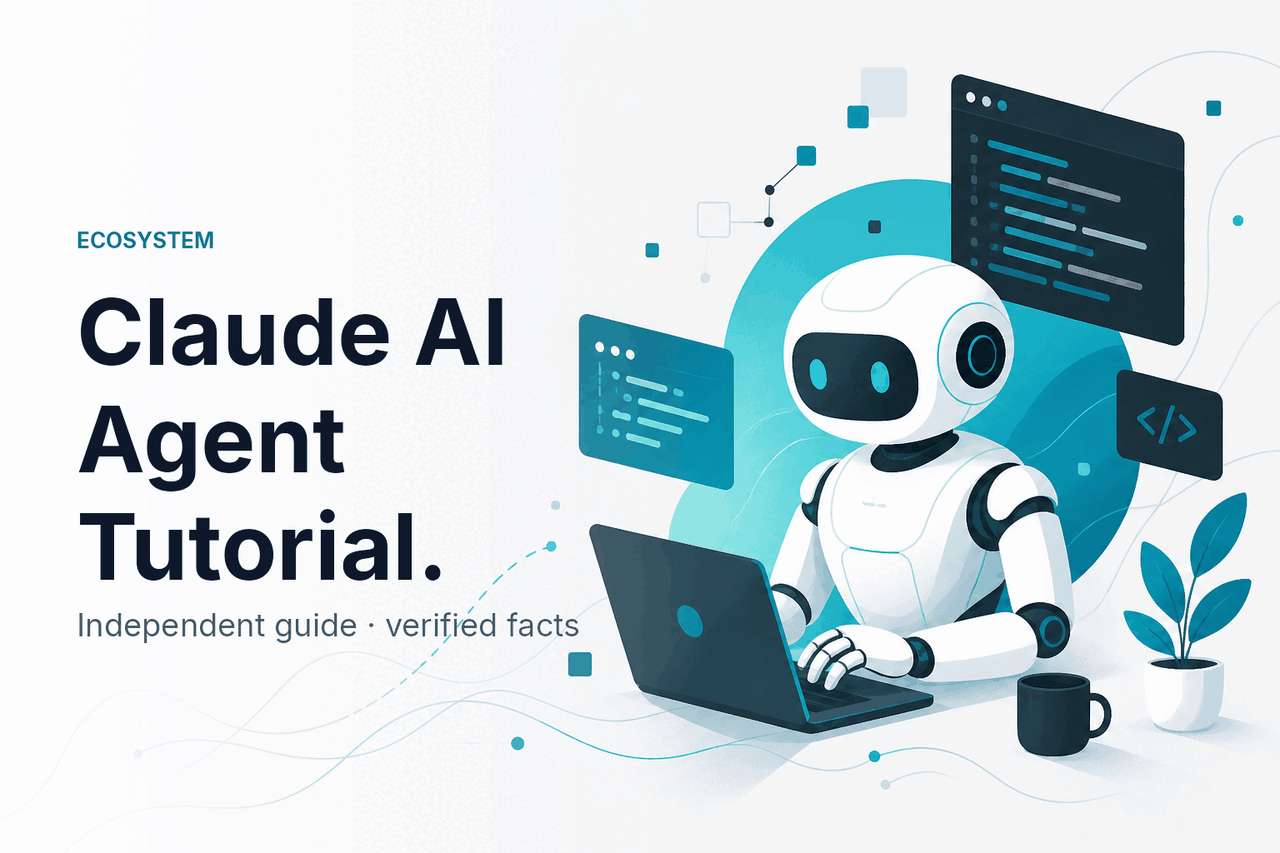
A Claude Code AI agent is a supervised coding workflow where Claude Code reads your repository, plans a task, proposes edits, and runs approved commands to produce a reviewable diff; see our Claude features guide for how it fits into the wider Claude ecosystem.
- What this is
- How it works
- What you can build
- Limits and watch-outs
- Models, plans, and cost controls
- The practical verdict
- FAQ
- Sources
- Best starting point: use Claude Code on a small, version-controlled repository.
- Main safety rule: approve commands deliberately and review every diff.
- Official product: Anthropic makes Claude; c-ai.chat is an independent guide.
What this is
A Claude Code AI agent is not a separate Claude model or a plugin store item. It is a task-driven coding session. Claude Code uses Claude’s reasoning, your repository context, and approved tool access to work toward a defined engineering goal.
Think of it as a supervised engineering assistant. You give it a goal. It inspects relevant files, proposes a plan, edits code, and may ask to run tests or shell commands. Use Anthropic’s Claude Code documentation for official setup details, and use claude.ai for the official Claude product.
| Term | What it means | How it relates to Claude Code |
|---|---|---|
| Skills | Reusable instructions, files, or procedures that help Claude perform repeatable tasks more consistently. | A skill can describe how your team writes tests, formats docs, or reviews pull requests. |
| Agents | Goal-directed workflows where Claude plans steps, uses tools, and iterates toward an outcome. | A Claude Code AI agent is an agentic coding workflow inside a repository. |
| Integrations | Connected tools, APIs, IDEs, or systems that extend what Claude can access or operate. | Claude Code may sit alongside IDEs, version control, test runners, and CI tools. |
How it works
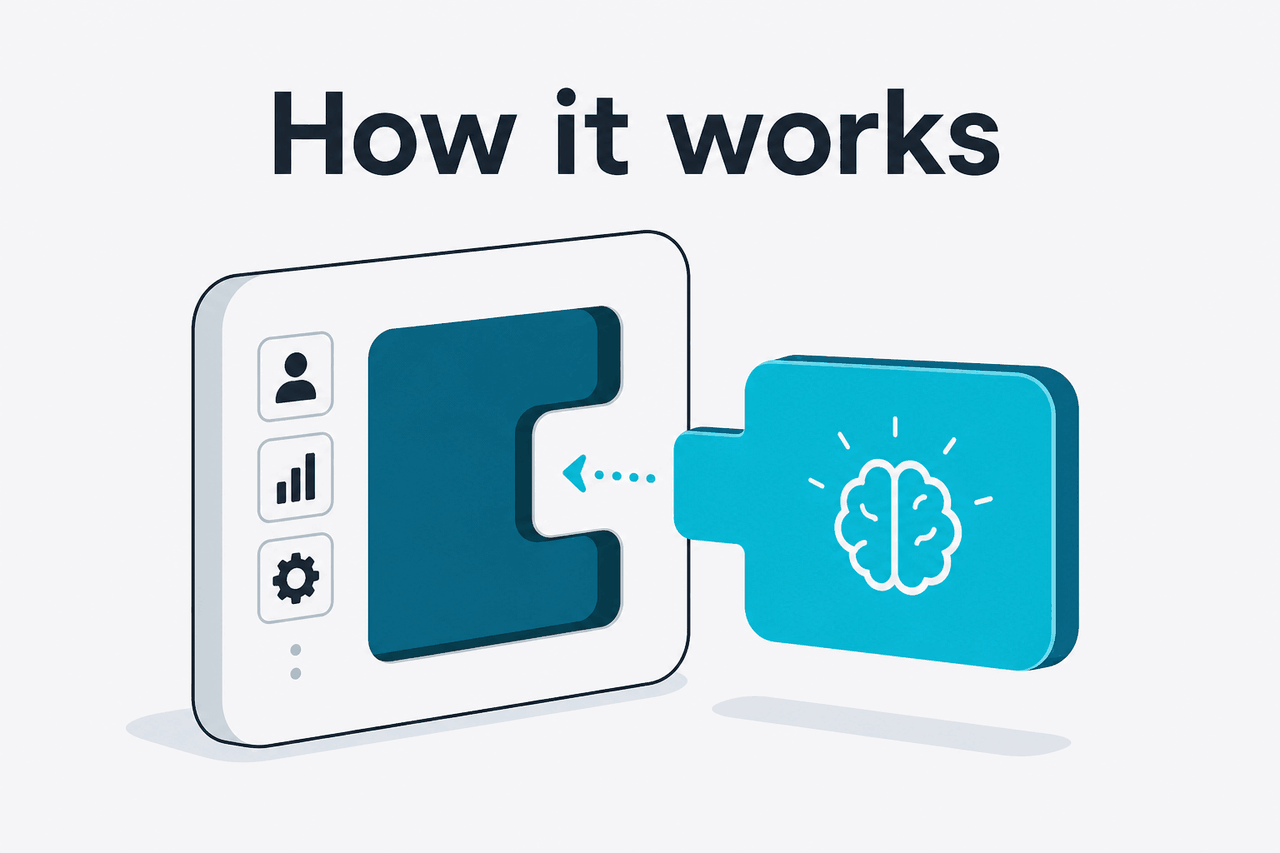
The flow is simple. You start Claude Code in a project, describe the task, and set limits. Claude inspects the files it needs, forms a plan, and proposes changes. When it asks to run a command, treat the approval as a security decision.
The result depends on the context you provide. “Fix the app” is too vague. A better task names the bug, expected behaviour, affected files, test command, and definition of done. If you are building an automated workflow outside Claude Code, use our Claude API documentation guide to plan tool use, state, and permissions.
-
Start with a clean repository
Commit or stash current work before the agent edits files. This gives you a rollback point and makes the diff easy to inspect.
-
Open Claude Code in the project
Launch it from the repository root so it can understand the project structure. Follow Anthropic’s setup instructions for your environment.
-
Give a narrow task
Use a prompt such as:
Find why the login form rejects valid emails, fix it, add a regression test, and run the existing test command before reporting back. -
Approve commands carefully
Start with read-only commands and targeted tests. Be stricter with installs, deletes, migrations, network calls, and anything that could expose secrets.
-
Review the final diff
Do not merge only because Claude says the task is done. Inspect the changed files, run tests, and ask for a short explanation of trade-offs.
Use Claude Code as a supervised contributor. Let it plan and move quickly, but keep humans responsible for approvals, secrets, production changes, and merge decisions.
What you can build
The best first Claude Code AI agent tasks are bounded, testable, and reversible. Avoid production infrastructure changes and broad rewrites at the start. Use tasks where Claude can inspect the codebase, make a small change, run checks, and show evidence.
Bug-fix agent. Give Claude a failing test, stack trace, or reproduction steps. Ask it to identify the cause, patch the smallest responsible area, add a regression test, and explain why the fix is limited.
Test-writing agent. Ask Claude Code to improve coverage for one module, not the whole application. Provide the test framework, command, and naming convention. Good instructions include: “Do not change runtime code unless a test exposes a bug.”
Documentation maintenance agent. Let Claude update README sections, API examples, changelog drafts, or internal runbooks after code changes. This works well because Claude can compare implementation files with documentation and flag drift. For reusable templates and workflow notes, see our Claude resources.
Refactor assistant. Ask Claude to refactor one class, function, or route while preserving behaviour. Require it to run existing tests and list any public interfaces it touched. Refactors need tight boundaries because agents can over-edit when the goal is vague.
Codebase explainer. Before asking Claude Code to edit, ask it to map a small part of the system. Example: “Explain how a checkout request moves from route to database write, and cite the files you inspected.” This builds trust before you grant broader tool use.
Worked example
A safe first task spec for a bug-fix agent
Task: Fix the login email validation bug.

Context:
- Users report that valid addresses with plus tags are rejected.
- Expected: name+tag@example.com should pass validation.
- Do not redesign the auth flow.
- Do not change password handling.
- Add or update a regression test.
- Run the targeted test command before reporting back.

Evidence to provide:
- Files changed.
- Test command run.
- Why the fix is limited to this validation path.
- Any risk that still needs human review.
This is a good first agent task because it is specific, testable, and easy to review.
Limits and watch-outs
Claude Code agents are useful because they combine language understanding with repository actions. That same combination creates risk. The agent can misunderstand intent, overfit to local tests, expose sensitive files in context, or run commands you did not fully consider.
- It is not fully autonomous by default. Do not assume Claude Code is a safe unattended background worker. If you need service-to-service automation, design permissions, logging, rollback, and review steps explicitly.
- It can make plausible mistakes. Claude may produce code that looks correct but misses edge cases, breaks a contract, or passes narrow tests while failing in real use.
- Repository access matters. If Claude can read files, it may process secrets, credentials, customer data, or proprietary code. Use least-privilege workspaces and keep sensitive material out of the working tree where possible.
- Shell commands need scrutiny. Package installs, migrations, delete operations, network calls, and deployment commands deserve extra caution.
- Large context is not a substitute for scope. Claude can work with substantial context, but a large monorepo still needs task boundaries. Point it to relevant directories and ask it to state assumptions.
- Governance is still your job. Use branch protection, code owners, CI checks, audit logs where available, and human approval for production changes.
- Access can vary. Product availability depends on plan, workspace settings, and Anthropic’s rules. Check official support and pricing pages before you rely on a workflow.
- “Agent” is not a compliance label. An agent workflow does not automatically satisfy security, privacy, or audit requirements. Review Anthropic’s security material, then apply your own policy.
Use it when
- The task has a clear definition of done.
- You can run tests or checks locally.
- The codebase is under version control.
- A human can review the diff before merge.
Skip it when
- The task touches secrets or regulated data without controls.
- The goal is a broad rewrite with no acceptance criteria.
- You cannot inspect or test the result.
- The workflow would run destructive commands unattended.
Models, plans, and cost controls
Claude Code access and model availability can depend on your Anthropic account, workspace, and product plan. Do not assume an API price is the same as Claude Code subscription access. For model selection across the broader Claude ecosystem, see our Claude models guide. For plan comparisons, see our Claude pricing guide.
| Model | Best fit | Key limits | API price |
|---|---|---|---|
| Opus 4.8 | Hard reasoning, complex coding tasks, careful review | 1M context | $5 input / $25 output per million tokens |
| Sonnet 5 | Balanced coding agents, everyday development tasks | 1M context, 128K max output | $2 input / $10 output per million tokens (introductory; $3 from 1 Sep 2026) |
| Haiku 4.5 | Fast, lower-cost tasks such as classification, routing, and simple edits | Use when latency and cost matter most | $1 input / $5 output per million tokens |
- Prompt caching: cached input receives 90% off.
- Batch API: batch processing receives 50% off both input and output.
- Budget rule: API-built agents need token limits, retry limits, logging, and cost alerts.
Free
$0.
Pro
$20/month, or $17/month with annual billing.
Max
From $100/month.
Team Standard
$25/seat, or $20/seat with annual billing.
Team Premium
$125/seat, or $100/seat with annual billing.
Enterprise
$20/seat base plus API rates.
The practical verdict
A Claude Code AI agent is worth using when you have a clear engineering task, a clean repository, and a review process. It is strongest for bug fixes, tests, docs, scoped refactors, and codebase explanation. It is weakest when you ask for broad architectural change without constraints or let it run risky commands without oversight.
Start small. Give Claude Code a narrow task, require evidence, review the diff, and expand only after the workflow proves useful on real work.
FAQ
Is Claude Code itself an AI agent?
Not exactly. Claude Code is the tool. The agent is the workflow pattern you create when Claude Code has a goal, repository context, and permission to use tools toward that goal.
Can Claude Code run commands?
Claude Code can request command execution as part of a coding workflow. You should review commands before approval, especially installs, deletes, migrations, network calls, and anything involving secrets.
Can I build a Claude agent without Claude Code?
Yes. You can build agentic workflows with the Claude API if your application handles tools, state, permissions, and orchestration. Claude Code is better for interactive coding inside a repository. The API is better for embedded product workflows.
Does Claude Code replace code review?
No. Treat Claude Code changes like a pull request from a fast developer. Review the diff, run tests, check security-sensitive paths, and keep branch protection in place.
Which Claude model should I use for coding agents?
Use the model exposed by Claude Code for your account and task. For API-built agents, choose based on reasoning quality, context needs, latency, and cost. Do not default to the largest model if a smaller one can handle the job.
Can a Claude Code AI agent create pull requests automatically?
It can help prepare code for a pull request. Automation depends on your tooling and permissions. Keep human review and branch protection in place for production code.
Is repository data safe with Claude Code?
Repository safety depends on your setup, access controls, data handling, and Anthropic’s product terms. Keep secrets out of the working tree, limit access, and review Anthropic’s trust and support materials for official security information.
Independent guide. Not affiliated with Anthropic. For the official Claude product, visit claude.ai.
Last updated: July 16, 2026