
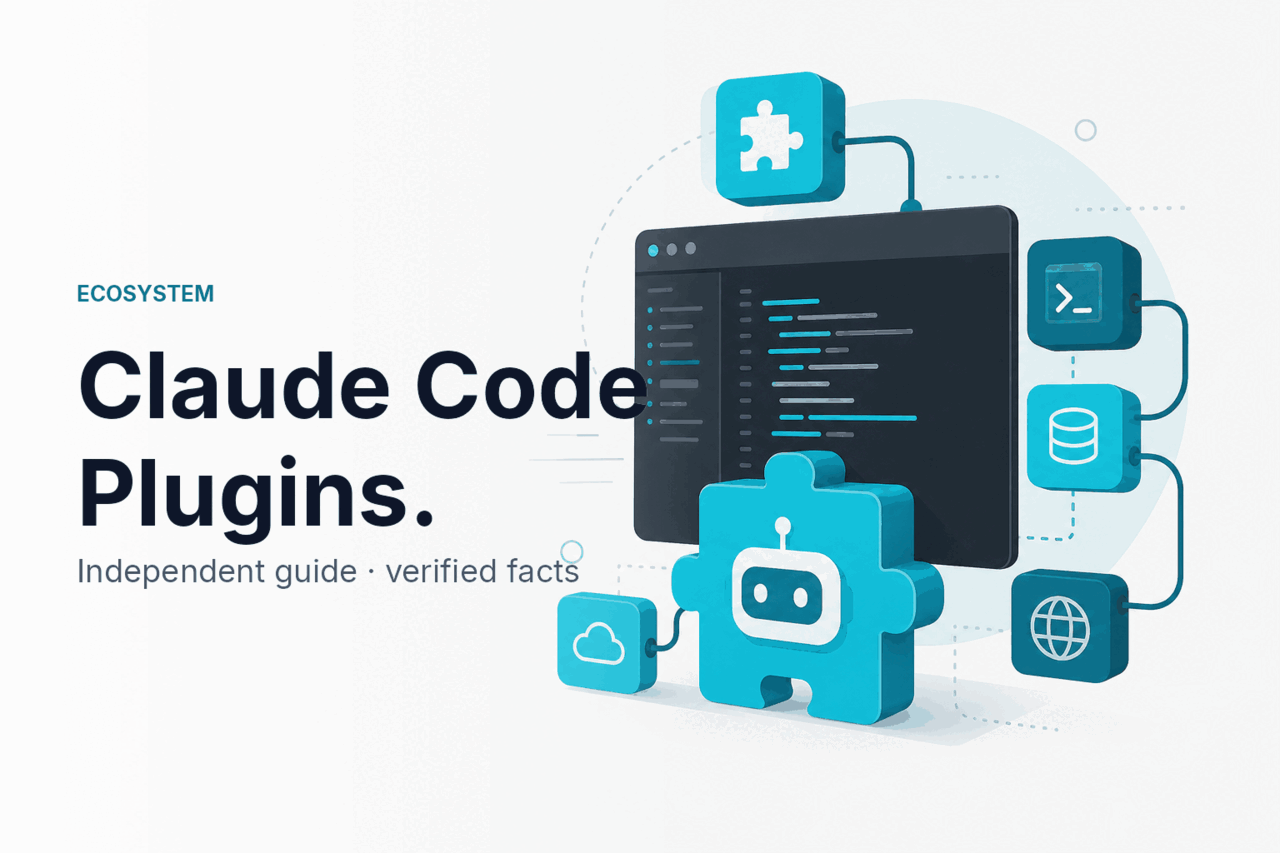
Claude code plugins usually refers to the ways Claude can be extended with tools inside developer workflows, but Claude’s ecosystem uses more precise terms: Skills, agents, and plugins are related but not identical, and c-ai.chat is an independent guide, not Anthropic, so this page maps the terminology, shows what is available today, and explains where “plugins” fit inside Claude Code.
- What this is
- How it works
- What you can build
- Limits and watch-outs
- Other questions readers ask
- The honest take
What this is
When people search for claude code plugins, they usually mean one of three things: reusable capabilities Claude can call, agent-like workflows that chain tasks together, or integrations that let Claude interact with external systems. In practice, the safest way to think about it is this: “plugins” is a loose search term, while the real Claude concepts are better understood as skills, agents, and tool or integration patterns inside the broader Claude feature set and developer stack.
| Concept | What it means | Best use case |
|---|---|---|
| Skills | Reusable capabilities or specialised instructions Claude can apply to a task. | Standardising repeatable work like code review style, migration rules, or documentation output. |
| Agents | Multi-step systems where Claude plans, calls tools, and iterates toward a goal. | Longer developer workflows such as debugging, refactoring, or deployment preparation. |
| Plugins | A common search term for add-ons, but not always the official product label in Claude. | Useful shorthand when users mean integrations, tools, or extendable actions in Claude Code. |
How it works
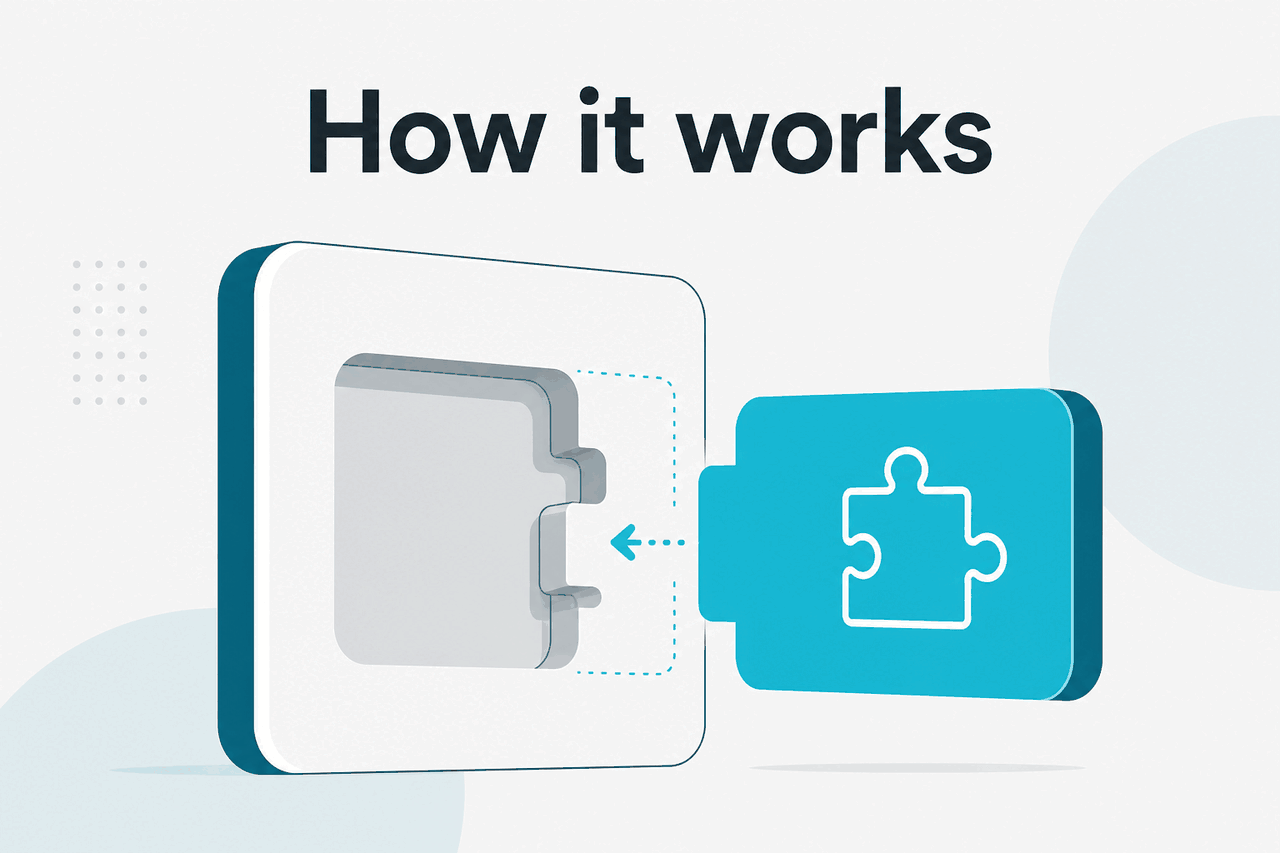
Claude Code works by giving Claude controlled access to your development environment and then grounding its responses in the files, commands, and tools you allow. Instead of a classic browser-style plugin marketplace, the flow is closer to a tool-using coding agent: Claude reads context, interprets your request, decides which action is needed, and then uses approved capabilities such as file edits, shell commands, repository inspection, or connected services. Anthropic documents the model and platform pieces through platform.claude.com and the developer documentation, while the consumer and team plans are listed on claude.com/pricing.
Technically, that means a “plugin” can be one of several layers: a local tool exposed to Claude Code, a structured workflow built on the Claude API, or an integration available in Claude plans and workspaces. The exact implementation depends on where you are using Claude. In the app, you may see product features and integrations. In developer workflows, you are more often composing tools, permissions, prompts, and models such as Claude Sonnet 5 or Claude Haiku 4.5 rather than installing a plugin in the old ChatGPT-plugin sense.
Pick the job
Start with one narrow task, such as
review this pull request for security issuesorgenerate tests for changed files.Choose the right Claude surface
Use Claude Code for repository and terminal work, or the API if you need a custom internal tool.
Define the tool boundary
Decide what Claude can access: files, shell commands, package managers, internal docs, or external systems.
Add guardrails
Limit permissions, log actions, and require approval for risky commands such as deploys, destructive migrations, or credential changes.
Test on a safe repository
Run the workflow on a sample project first, check output quality, then expand to production code once the behavior is predictable.
Pick when
- You want Claude to act on real code instead of answering in the abstract.
- You need repeatable engineering workflows.
- You can define permissions and review steps clearly.
Skip when
- You expect a huge public plugin store with one-click installs.
- You cannot expose even limited repo or command access.
- Your team has no review process for AI-written changes.
What you can build
The practical value of claude code plugins is not the label but the outcome. Most teams use these patterns to automate common engineering work, connect Claude to narrow toolchains, or make code assistance consistent across repositories and people.
- Pull request reviewer: Claude inspects changed files, compares them against internal standards, flags risky patterns, and suggests smaller diffs or missing tests.
- Migration assistant: Claude scans an old codebase, applies framework upgrade rules, and produces a checklist of manual fixes before you merge.
- Test generator: Claude identifies uncovered branches, drafts unit tests, and explains why each test exists so a developer can review quickly.
- Documentation sync tool: Claude reads code comments, route definitions, or schemas and updates internal docs when interfaces change.
- Incident helper: Claude connects log excerpts, stack traces, and recent diffs to propose a likely root cause and a rollback or patch plan.
A useful pattern is to treat each “plugin” as a narrow tool contract. That keeps outputs reliable. Instead of asking Claude to do everything, you give it one repeatable responsibility with clear inputs, clear permissions, and clear approval rules.
Worked example
PR review helper for a TypeScript repository
This setup works well because the task is bounded: Claude reviews code against known standards instead of acting as a general-purpose autonomous engineer.
{
  "name": "ts-pr-review",
  "goal": "Review pull requests for correctness, security, and test coverage",
  "inputs": [
    "git diff",
    "package.json",
    ".eslintrc",
    "SECURITY.md"
  ],
  "allowed_actions": [
    "read_files",
    "run_tests",
    "write_review_summary"
  ],
  "blocked_actions": [
    "merge_branch",
    "deploy",
    "modify_secrets"
  ],
  "model": "claude-sonnet-5"
}
You can build the same pattern for CI troubleshooting, API schema validation, changelog drafting, or dependency update reviews. If your team needs broader orchestration across systems, move from simple “plugin” thinking to explicit agent design. That framing is usually more accurate and easier to govern.

Limits and watch-outs
The main constraint is that Claude Code extensibility is powerful only when boundaries are clear. If you expect a universal plugin directory, zero-risk automation, or perfect understanding of every repository, you will be disappointed. The better approach is controlled access, small workflows, and explicit human review.
- Official plugin directory exists: Anthropic runs a curated plugin directory at claude.com/plugins (filterable by Claude Code), even though the search term “claude code plugins” can overstate what exists as one packaged catalog.
- Terminology can be confusing: users may call tools, integrations, skills, or agents “plugins” even when Anthropic uses different product language.
- Permission scope matters: if Claude can run shell commands or edit files, you need rules around what is allowed and what always requires approval.
- Secrets exposure is a real risk: repositories, environment files, logs, and command output can contain credentials or sensitive data if you do not isolate them properly.
- Output still needs review: Claude can suggest unsafe refactors, miss business logic, or generate tests that look plausible but are incomplete.
- Governance is not optional for teams: shared workspaces, SSO, admin controls, and audit-oriented settings matter if multiple developers are using the same setup.
- Model choice affects cost and speed: Claude Haiku 4.5 is cheaper and faster, while Claude Sonnet 5 is usually the better default for quality-sensitive coding work.
- Status and availability can change: if your workflow depends on Claude, check status.claude.com and avoid building brittle critical paths with no fallback.
- Free tier · no card
- API priced per million tokens
If you are deciding where to implement a coding workflow, this split helps. The Claude app plans are for interactive use across web, mobile, desktop, and team workspaces. The API is for custom developer tooling, internal automations, and programmatic orchestration.
| Option | Price | What it is for |
|---|---|---|
| Free | $0/month | Web, iOS, Android, and desktop access with usage limits. |
| Pro | $20/month or $17/month annual | Individuals who want Claude Code, Claude Cowork, unlimited Projects, Research access, additional models, and Microsoft 365 integrations. |
| Max | From $100/month | Power users who need 5x or 20x Pro usage, higher output limits, early feature access, and priority traffic. |
| Team Standard | $25/seat/month or $20/seat/month annual | Small teams that need SSO, admin controls, and shared workspace features. |
| Team Premium | $125/seat/month or $100/seat/month annual | Higher-capacity team tier with 5× more usage than Standard seats (both seat types share the same Team admin controls). |
| Enterprise | $20/seat base + usage at API rates | Custom contracts with SCIM, audit logs, HIPAA-ready options, role-based access, spend controls, and regional data residency. |
90% off
cached input tokens with prompt caching
For custom “plugin-like” developer tools built on the API, cost controls matter. Anthropic’s pricing docs state prompt caching can reduce cached input token cost by 90%, and the Batch API can cut both input and output costs by 50%. That is often more important than the plugin label because repeatable coding workflows can become expensive if every run reprocesses large repositories or long histories.
Other questions readers ask
These are the related questions that usually sit next to claude code plugins in search results. Short answer: most are really about integrations, API workflows, and whether Claude supports agent-style coding tasks.
Free
$0/month
For casual users testing Claude
- Web, iOS, Android, desktop
- Usage limits
Pro
$20/month
For individual developers using Claude Code regularly
- Claude Code and Claude Cowork
- Unlimited Projects and Research access
Max
$100/month from
For power users who hit Pro limits
- 5x or 20x Pro usage
- Priority traffic and early features
The honest take
If you searched for claude code plugins, the plain answer is that the term is useful but fuzzy. Claude absolutely supports plugin-like developer workflows through tools, integrations, and agent patterns, but you should not assume a giant official plugin marketplace or treat every extension as the same thing. For most teams, the right move is to define one narrow coding task, give Claude limited access, review outputs carefully, and expand only after the workflow proves reliable.
So yes, Claude can be extended for serious developer use. The mistake is focusing too much on the word “plugin” and not enough on implementation, permissions, and model choice. If you want the broader map first, start with our guide to skills, agents, and plugins. If you are ready to use the official product, go to Claude directly.
Independent guide. Not affiliated with Anthropic. For the official Claude product, visit claude.ai.
Last updated: July 16, 2026