
Claude for entrepreneurs means using Claude to research markets, turn messy notes into decisions, draft customer-facing content, analyse documents, and automate parts of your workflow without hiring a full technical team first. This guide is from c-ai.chat, an independent guide to Claude by Anthropic, and it walks through what to use, how to set it up, what to avoid, and when Claude is the right tool for a founder.

- What you’ll learn
- Step by step
- Common mistakes to avoid
- Where to go next
- Other questions readers ask
- The honest take
- Free tier · no card
- API priced per million tokens
If you are still comparing the product before using it for work, start with our Claude features guide. If you want a broader overview of how the ecosystem fits together, see the main Claude AI guide. Founders planning automations or product integrations should also keep the Claude API guide and Claude Code guide handy.
What you’ll learn
By the end, you should be able to pick the right Claude setup for your business stage and use it for real founder work instead of vague experimentation.
- Choose between Free, Pro, Max, Team, and API access based on your actual workload.
- Set up Claude for research, planning, writing, and document analysis with repeatable prompts.
- Use Projects, longer context, and model selection in a way that saves time rather than adding process.
- Estimate likely costs for solo founders and small teams before committing to a workflow.
- Avoid common mistakes such as over-trusting outputs, giving weak context, or paying for capacity you do not need.
| Entrepreneur need | Best Claude option | Why |
|---|---|---|
| Try Claude for research and writing | Free | $0/month with daily usage limits across web, iOS, Android, and desktop. |
| Daily founder workflow | Pro | $20/month or $17/month annual with more usage, Projects, Research access, Claude Code, and integrations. |
| Heavy daily usage | Max | From $100/month for 5x or 20x Pro usage, higher output limits, and priority traffic. |
| Small operating team | Team Standard | $25/seat/month or $20/seat/month annual with admin controls, SSO, and shared workspace. |
| Internal tools or product features | API | Pay per million tokens: Haiku 4.5 at $1/$5, Sonnet 4.6 at $3/$15, Opus 4.7 at $5/$25. |
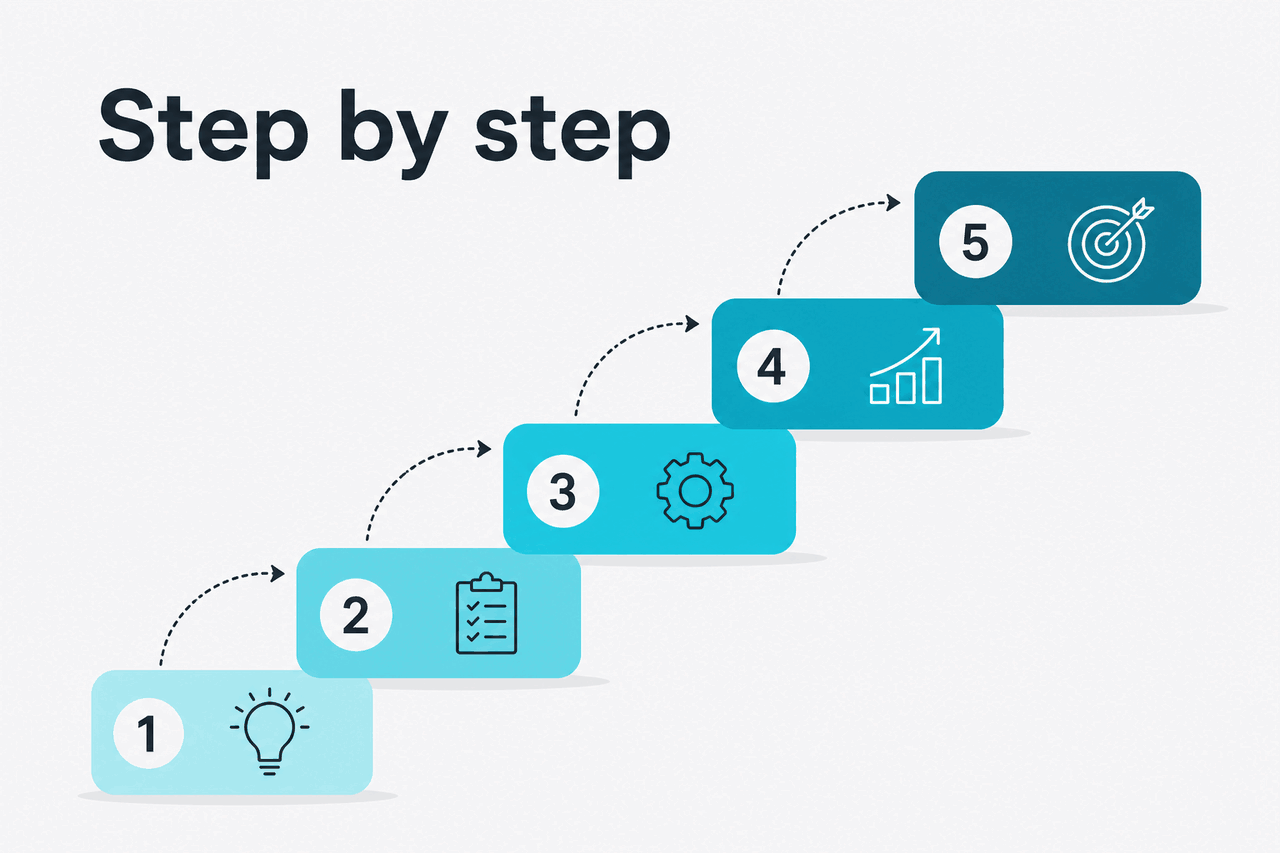
Step by step
This walkthrough shows a practical way for an entrepreneur to start using Claude in one afternoon, then expand into repeatable workflows as the business grows.
-
Pick the lowest-friction starting point
If you are solo and mostly need help with thinking, writing, planning, and file analysis, begin with the Claude app at claude.ai. Free is enough to test value. Pro at $20/month or $17/month annual makes sense once you use it every day. If your use case is inside your own software, go straight to the API on platform.claude.com.
-
Match the model to the job
Use Claude Sonnet 4.6 as the default for most business work. It is usually the best balance of cost and capability at $3 per million input tokens and $15 per million output tokens. Use Claude Haiku 4.5 for fast, cheap classification or extraction. Use Claude Opus 4.7 when the task is high stakes, ambiguous, or needs stronger reasoning across very large context.
-
Create one project for each business function
Do not keep every conversation in one long thread. Create separate working spaces for sales, fundraising, product strategy, hiring, customer research, and operations. Add reference material that Claude can reuse, such as your pitch, FAQ, positioning notes, customer interviews, pricing pages, or internal SOPs. This reduces repeated prompting and gives more consistent answers.
-
Feed Claude the raw material founders actually have
Claude works best when you give it real inputs: call transcripts, sales notes, support emails, landing page drafts, investor questions, product specs, or spreadsheets exported to text. Avoid asking for strategy in the abstract. Ask it to reason from evidence you provide and tell it what outcome you need, what constraints exist, and what decision is on the line.
-
Use prompts that force useful structure
Most weak results come from broad prompts like “help me grow my startup.” Ask for ranked options, assumptions, risks, and actions. Specify audience, format, and what good looks like. If you want a recommendation, ask Claude to compare alternatives and state what information is still missing.
-
Turn one-off chats into repeatable operating playbooks
Once a prompt works, save the pattern. Founders often use the same jobs every week: convert customer calls into themes, turn roadmap notes into release updates, draft outbound emails, review contracts, or summarise board materials. The goal is not just a good answer once. The goal is a repeatable workflow that can be delegated or automated later.
-
Estimate usage before you overbuild
If a workflow runs a few times per day, the app may be enough. If you need scheduled processing, internal dashboards, or product-facing AI features, use the API and estimate token cost first. Anthropic also offers cost controls such as prompt caching, which gives 90% off cached input tokens, and Batch API, which gives 50% off both input and output for suitable workloads.
-
Keep a human in the loop for business-critical outputs
Use Claude to compress work, not to replace judgment. Review anything tied to legal terms, financial projections, regulated claims, hiring decisions, or customer commitments. Ask Claude to show assumptions, edge cases, and unanswered questions so you can inspect the reasoning before acting.
Here is a simple founder prompt that usually performs better than a generic request:
You are helping me as an operating advisor for a SaaS startup.

Context:
- Product: AI meeting note software for small law firms
- Stage: $18k MRR, 4-person team
- Goal: Improve conversion from demo to paid
- Constraints: No paid acquisition increase this quarter, limited engineering time
- Inputs below: 12 sales call summaries, current pricing page copy, 8 lost-deal reasons

Tasks:
1. Identify the top 5 conversion blockers.
2. Rank them by expected revenue impact and implementation effort.
3. Suggest one experiment per blocker.
4. For each experiment, include owner, timeline, metric, and risk.
5. State what data is missing before we act.
Worked example
Estimating API cost for a founder research workflow
For many early-stage internal workflows, API cost is smaller than founder time. The real question is whether the workflow is stable enough to automate.
If you expect to process the same large reference material repeatedly, prompt caching can materially reduce cost.
90% off
cached input tokens with prompt caching
For async jobs such as classifying leads, summarising support tickets, or processing document batches overnight, Batch API can be a better fit than real-time requests.
For most entrepreneurs, the highest-return use of Claude is not “ask anything.” It is building a small set of repeatable prompts around decisions you already make every week.
Free
$0/month
For testing fit
- Web, iOS, Android, desktop access
- Daily usage limits
Pro
$20/month
For individual entrepreneurs
- Claude Code and Claude Cowork
- Unlimited Projects and Research access
- Additional models and Office integrations
Max
From $100/month
For power users
- 5x or 20x Pro usage
- Higher output limits and priority traffic
Once you move from solo use to shared workflows, compare team plans instead of stacking individual subscriptions. Team Standard is $25/seat/month or $20/seat/month annual. Team Premium is $125/seat/month or $100/seat/month annual. Enterprise starts with a $20/seat base plus usage at API rates and adds features such as SCIM, audit logs, spend controls, role-based access, HIPAA-ready options, and regional data residency. Anthropic lists plan details on claude.com/pricing.
Pick when
- You need faster research and drafting right away
- You work from lots of documents, notes, or transcripts
- You want better structure around decisions and communication
- You may later automate the same workflows with the API
Skip when
- You expect fully autonomous business execution
- Your main bottleneck is missing market demand, not execution speed
- You cannot review outputs before acting on them
- You need undocumented features and are guessing your way there
Common mistakes to avoid
These are the founder traps that waste the most time.
- Using vague prompts. Fix: give context, business constraints, target audience, desired format, and success criteria.
- Asking Claude to replace validation. Fix: use it to sharpen hypotheses, not to invent proof of demand or certainty where none exists.
- Keeping everything in one chat. Fix: separate projects by function so Claude has cleaner context and you can reuse stronger prompt patterns.
- Choosing the most powerful model for every task. Fix: use Sonnet 4.6 as the default, Haiku 4.5 for high-volume low-stakes work, and Opus 4.7 for the hardest reasoning jobs.
- Ignoring cost controls. Fix: for repeated large inputs, use prompt caching; for async bulk workloads, consider Batch API.
- Trusting polished output too quickly. Fix: verify numbers, legal language, citations, and strategic claims before sharing or acting.
Where to go next
These follow-on guides are the most useful next reads if you want to move from casual use to a system.
- Claude features — understand Projects, integrations, and the practical capabilities most entrepreneurs use first.
- Claude API guide — the next step if you want internal automations, product integrations, or usage-based cost control.
- Claude Code guide — useful for technical founders who want Claude inside development workflows, scripts, and engineering tasks.
If you are brand new to the product, the Claude tutorials section is a good place to build confidence with smaller tasks before you standardise processes across the company.

Other questions readers ask
These are closely related questions that usually come up when people search for claude for entrepreneurs.
The honest take
Claude is a strong fit for entrepreneurs who spend a lot of time reading, writing, deciding, and organising. It is especially useful when your work already exists in documents, notes, transcripts, proposals, spreadsheets, and internal process text. For many founders, the practical starting point is simple: test workflows in the app, move to Pro when usage becomes daily, and only reach for the API once the process is stable enough to automate.
It is not a substitute for product-market fit, customer truth, or legal and financial review. But if your bottleneck is turning scattered information into action, Claude can save real hours every week. That is where it earns its place.
Independent guide. Not affiliated with Anthropic. For the official Claude product, visit claude.ai.
Last updated: 2026-05-12