
Claude AI is generally safe for everyday work when you treat it as a cloud AI service, verify important outputs, and avoid entering data your organisation does not allow in third-party tools; this independent Claude AI guide explains the practical privacy, security, and reliability trade-offs.
The short answer
Claude is a reasonable choice for writing, research, coding help, summarisation, brainstorming, and analysis. It is not risk-free. It can produce wrong answers, miss context, overstate confidence, or give outputs that need legal, medical, financial, security, or compliance review.
- Claude is a cloud AI service. Treat prompts, files, and connected tools as data you are sending to an external provider.
- Do not paste secrets without approval. Redact credentials, customer records, regulated data, and confidential strategy unless your policy allows it.
- Business and API use can add controls. The right setup depends on your plan, contract, settings, and governance process.
- Human review still matters. Claude can help you think faster, but it should not be the only authority for high-stakes decisions.
For confidential company data, source code, customer information, health records, financial decisions, or regulated workflows, check your plan, contract, internal policy, and review process before use. For broader product context, see our guide to Claude features.
The full story
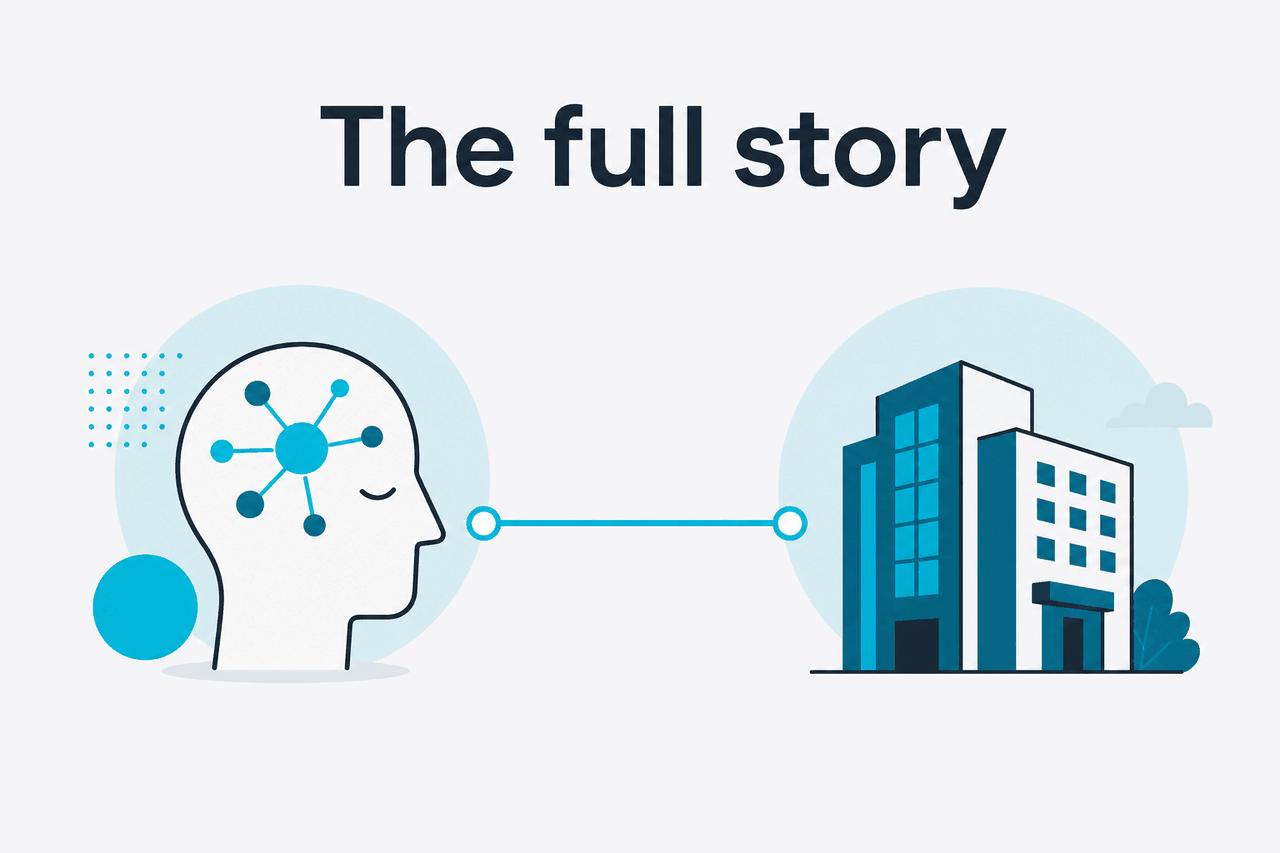
Claude is made by Anthropic. The official consumer product is claude.ai. c-ai.chat is independent and is not Anthropic or claude.ai.
“Safe” can mean several things. Privacy asks how prompts, files, and account data are handled. Security asks whether accounts, systems, and access controls are protected. Output safety asks whether Claude resists harmful requests. Reliability asks whether the answer is accurate enough for the task. Claude performs well for many everyday uses, but no general AI model should be treated as a guaranteed source of truth.
Anthropic’s best-known safety method is Constitutional AI. In plain terms, Anthropic trains models to critique and revise responses using a written set of principles, not only human preference labels. The goal is to make Claude more helpful for legitimate requests and more resistant to harmful, abusive, deceptive, or unsafe instructions. This reduces risk. It does not guarantee perfect judgement.
Use Claude freely for low-risk work. Use extra controls for sensitive work. Do not use it as the sole reviewer when a wrong answer could cause legal, financial, medical, security, or reputational harm.
Data handling depends on how you use Claude. A personal account, a team workspace, an enterprise agreement, and API access can have different settings and obligations. Before sending sensitive data, check Anthropic’s support materials, your account settings, and your organisation’s policy.
Developers should also review the official Claude developer documentation and the Claude API platform before sending production data. For implementation basics, see our independent Claude API docs guide.
| Safety question | What to check | Practical reading |
|---|---|---|
| Can I use Claude for everyday tasks? | Use the official product at claude.ai and follow normal account security practices. | Usually yes. Treat outputs as drafts or analysis that need review. |
| Can I paste confidential company data? | Check your employer policy, plan terms, account settings, and Anthropic’s official support materials. | Do not assume approval. Use approved business controls when the data is sensitive. |
| Can developers send production data to the API? | Review developer documentation, data handling terms, retention rules, and security controls. | Often possible, but only after governance, minimisation, and legal review. |
| Does Claude block harmful outputs? | Review Anthropic’s safety research and product documentation. | It has safeguards, but ambiguous prompts, edge cases, and misuse can still create risk. |
| Is Claude reliable enough for decisions? | Test it against your own tasks. Compare outputs with trusted sources. | Use it for support, not as the sole decision-maker for high-stakes matters. |
Security also depends on the user. Claude cannot protect data if someone copies restricted material into a prompt, shares an account, installs risky browser extensions, or connects unapproved tools. Use strong passwords, multi-factor authentication where available, least-privilege access, and approved workspaces. If Claude appears unavailable, check the official Claude status page.
Claude’s safety limits are clearest in high-risk categories. It may refuse requests involving malware, credential theft, violent wrongdoing, evasion, exploitation, or other harmful instructions. It may also be cautious with medical, legal, mental health, financial, or political topics. That caution can help, but it can also block legitimate analysis.
What this means in practice
If you are an individual, use Claude for thinking support, not final authority. Ask it to draft, compare, explain, rewrite, test ideas, or point out gaps. Do not rely on it alone for legal advice, diagnosis, investment decisions, compliance calls, or security-sensitive actions.
If you are choosing Claude for a business, separate the decision into privacy, security, reliability, and governance. Decide what data is allowed, who can access the workspace, how outputs are reviewed, and what retention or logging rules apply. A marketing team drafting public copy has a different risk profile from an engineering team analysing proprietary code.
Free and Pro
Cost: Free is $0. Pro is $20/mo or $17/mo with annual billing.
Safety fit: Good for personal and low-risk professional work. Do not paste restricted workplace data unless your policy allows it.
Max
Cost: From $100/mo.
Safety fit: Better for heavier individual use. More capacity does not change the need for data rules and review.
Team
Cost: Team Standard is $25/seat or $20/seat with annual billing. Team Premium is $125/seat or $100/seat with annual billing.
Safety fit: Useful when an organisation needs shared workspace controls and clearer user management.
Enterprise and API
Cost: Enterprise uses a $20/seat base plus API rates.
Safety fit: Best suited to governed deployments, negotiated requirements, and production workflows. Review Claude pricing and the official terms before rollout.
Use Claude when
- You need writing, research, analysis, coding help, or document review with human oversight.
- The data is public, low-risk, anonymised, or approved for use in cloud AI tools.
- Your team has clear rules for prompts, files, outputs, and account access.
- You can verify important claims before acting on them.
Pause or restrict use when
- You would need to paste secrets, credentials, regulated data, or confidential records without approval.
- The output would directly trigger a high-stakes decision with no human review.
- Your organisation has not reviewed the plan, contract, data settings, or security requirements.
- You need deterministic, auditable results rather than probabilistic AI assistance.
Example policy: Public material and approved internal drafts are allowed. Customer personal data, credentials, unreleased financials, legal disputes, and regulated records are not allowed unless the approved business workspace and review process are used.
Prompt design also affects safety. Ask Claude to state uncertainty, list assumptions, separate facts from recommendations, and show what it would verify next. For sensitive tasks, ask for a checklist or risk register instead of a final decision. This keeps Claude in an advisory role and makes review easier.
Model choice can also matter. A faster model may be enough for routine classification or drafting. A stronger model may be better for complex analysis. See our Claude models guide before choosing a model for a production workflow.
FAQ
Does Claude AI use my data for training?
The answer depends on the product path, settings, feedback, and contract. Anthropic publishes current data-handling information through its official support, trust, and platform pages. If the data is sensitive, check the terms that apply to your account or workspace.
Is Claude safer than other AI chatbots?
Claude has a strong public safety focus, and Constitutional AI is part of Anthropic’s approach. That does not prove it is safer for every task. Compare models using your own prompts, data policy, audit needs, and failure tolerance.
Can Claude see my private files?
Claude can process files you upload or connect through approved integrations. Do not treat it as having access to files you did not provide or authorise. Before connecting work tools or uploading documents, check permissions, workspace rules, and product settings.
Is Claude safe for children or students?
Claude can help explain concepts, draft study plans, and review writing. It is not a substitute for a teacher, parent, or school policy. Students should avoid entering personal data, school credentials, or private information about other people.
Is Claude safe for coding?
Claude is useful for code explanation, debugging, refactoring, tests, and architecture discussion. It can still produce insecure code, outdated patterns, licensing-sensitive snippets, or logic errors. Review generated code, run tests, scan dependencies, and avoid pasting secrets such as API keys.
Is Claude safe for medical, legal, or financial advice?
Use Claude for education, drafting questions, or organising information. Do not use it as the final authority. Ask a qualified professional before acting on advice that could affect health, legal rights, money, taxes, insurance, employment, or compliance.
For broader product questions, start with the Claude FAQ.
The honest take
Claude AI is safe enough for many everyday and professional workflows when users understand the boundary. It is a capable assistant. It is not a private notebook by default, not a compliance officer, and not a guaranteed source of truth.
Use Claude for drafts, analysis, explanations, summaries, and technical help. Verify facts. Redact sensitive details. Use business or enterprise controls where the data requires them. If you need to handle restricted records, confidential strategy, regulated data, source code, or customer information, decide the rules before the first prompt.
Independent guide. Not affiliated with Anthropic. For the official Claude product, visit claude.ai.
Last updated: 2026-05-12
This article is part of the What is Claude AI hub on c-ai.chat.