
Claude refuses some requests because Anthropic trains and configures it to avoid unsafe, disallowed, or low-confidence outputs, and that can include harmful instructions, sensitive personal data, copyrighted text reproduction, or prompts that look risky even when your intent is harmless; if you want the broader product context first, see our independent Claude guide.
- The short answer
- The full story
- What this means in practice
- Other questions readers ask
- The honest take
The short answer

Claude refuses because its safety rules, product policies, and model behavior are designed to block certain kinds of output, especially where a request could enable harm, expose sensitive information, or cross usage boundaries set by Anthropic for Claude and the Claude API.
- Refusals are intentional safety behavior
- False positives happen on ambiguous prompts
- Rewriting the prompt often fixes it
- Claude is not official support for Anthropic policy decisions
If you are comparing this against the wider product, our what is Claude AI guide explains what Claude is, while our Claude features overview covers the tools and modes where refusals most often appear.
The full story
Claude does not refuse at random. Anthropic publishes product, trust, and developer documentation that makes clear the system is built with safety controls and usage limits. In plain terms, that means Claude may decline a request if the content appears to involve self-harm, violence, malware, fraud, illicit instructions, sexually exploitative material, privacy violations, or other policy-restricted categories. Refusals can also happen when the model is uncertain whether your request is legitimate, even if your real goal is benign.
There is also a second layer beyond obvious safety topics: capability and reliability. Claude may refuse, hedge, or redirect when it cannot verify a claim, access a needed source, perform an action in your environment, or provide something that would be misleading if guessed. Anthropic’s official product pages at claude.ai, developer docs at docs.claude.com, and platform docs at platform.claude.com all point to the same basic pattern: Claude is meant to be useful, but not at any cost.
That is why two prompts that look similar can get different results. A request framed as education, compliance, or analysis may succeed, while a request framed as operational instructions may be refused. For example, asking Claude to explain why a phishing email works is different from asking it to write one. The same applies to medical, legal, financial, and security topics: analysis and high-level guidance are often allowed; direct harmful execution is often not.
People also confuse refusals with outages or account limits. Those are different problems. If Claude is failing broadly, timing out, or behaving inconsistently across many harmless prompts, check status.claude.com. If the problem is account access, plan limits, or workspace controls, official support resources live at support.anthropic.com. If you want company-level context on Anthropic itself, see our Anthropic guide.
What this means in practice
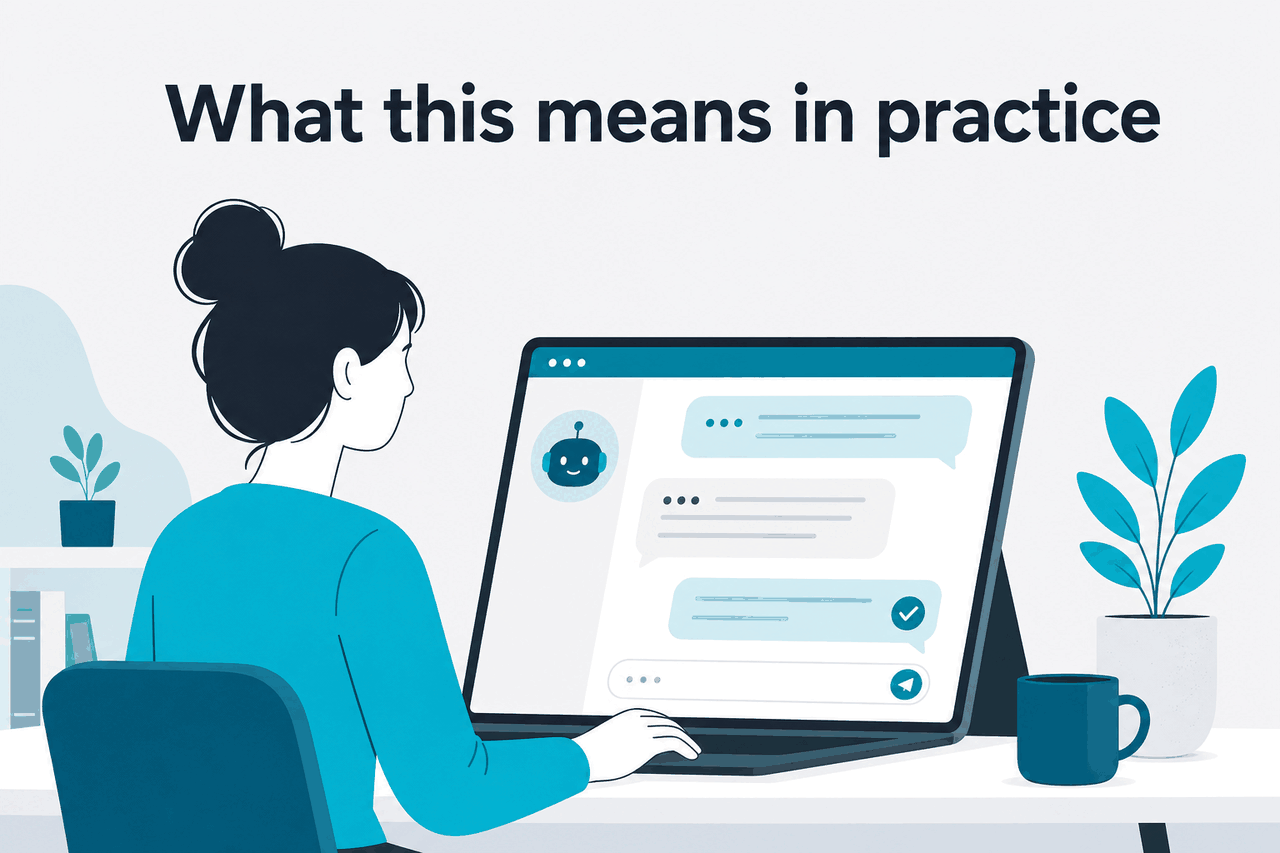
For most users, Claude refusing a prompt is not a sign that the tool is broken. It usually means you need to ask more clearly, narrow the task, add legitimate context, or shift from “do this risky thing” to “help me understand, evaluate, or prevent this.” That matters if you use Claude for work. Safety behavior is one reason many people trust it with writing, analysis, coding help, and document tasks, but it also means the model can be stricter than you expect in edge cases.
The practical test is simple: are you asking Claude to assist with a legitimate task in a way that reduces risk and improves accuracy? If yes, you can often get a better result by explaining your role, your goal, the audience, and the safe boundary. Instead of “write malware,” ask for “a high-level explanation of common malware persistence techniques for internal security training.” Instead of “tell me how to evade detection,” ask for “help me build a checklist to detect evasion attempts.” If you are new to Claude and want the broader product basics, the Claude FAQ is a good next stop.
Pick when
- You want an AI assistant that is comparatively cautious on risky topics
- You need help reframing work into safer, clearer requests
- You value guardrails for team or workplace use
Skip when
- You expect every direct instruction to be followed without challenge
- Your prompts are vague and you do not want to add context
- You treat refusals as errors rather than signals to reframe the task
There is a trade-off here. A model that refuses less may feel easier in the moment, but it can also be more willing to help with dubious or unreliable outputs. Claude’s stricter posture can be frustrating, yet for many professional use cases that same caution is part of the appeal.
Other questions readers ask
- Try this prompt pattern: “I am doing X for Y legitimate purpose. Please help with a safe, non-operational explanation focused on Z.”
- Ask for boundaries explicitly: “If part of this is not appropriate, give the safest allowed alternative.”
- Split large tasks: one prompt for background, one for examples, one for a review checklist.
- Request transformation, not reproduction: summarise, classify, critique, compare, or redact instead of reproducing sensitive content.
The honest take
Claude refuses some requests because it is supposed to. Anthropic has chosen a product design where usefulness is constrained by safety, policy, and confidence limits, and that means some valid users will occasionally hit a refusal they did not expect. That can be annoying, but it is not mysterious.
If claude refuses your prompt, the best first assumption is not “Claude is broken.” It is “Claude thinks this request crosses a boundary or looks too close to one.” In many cases, better framing solves the problem. When it does not, the refusal is the answer.
Independent guide. Not affiliated with Anthropic. For the official Claude product, visit claude.ai.
Last updated: 2026-05-12