
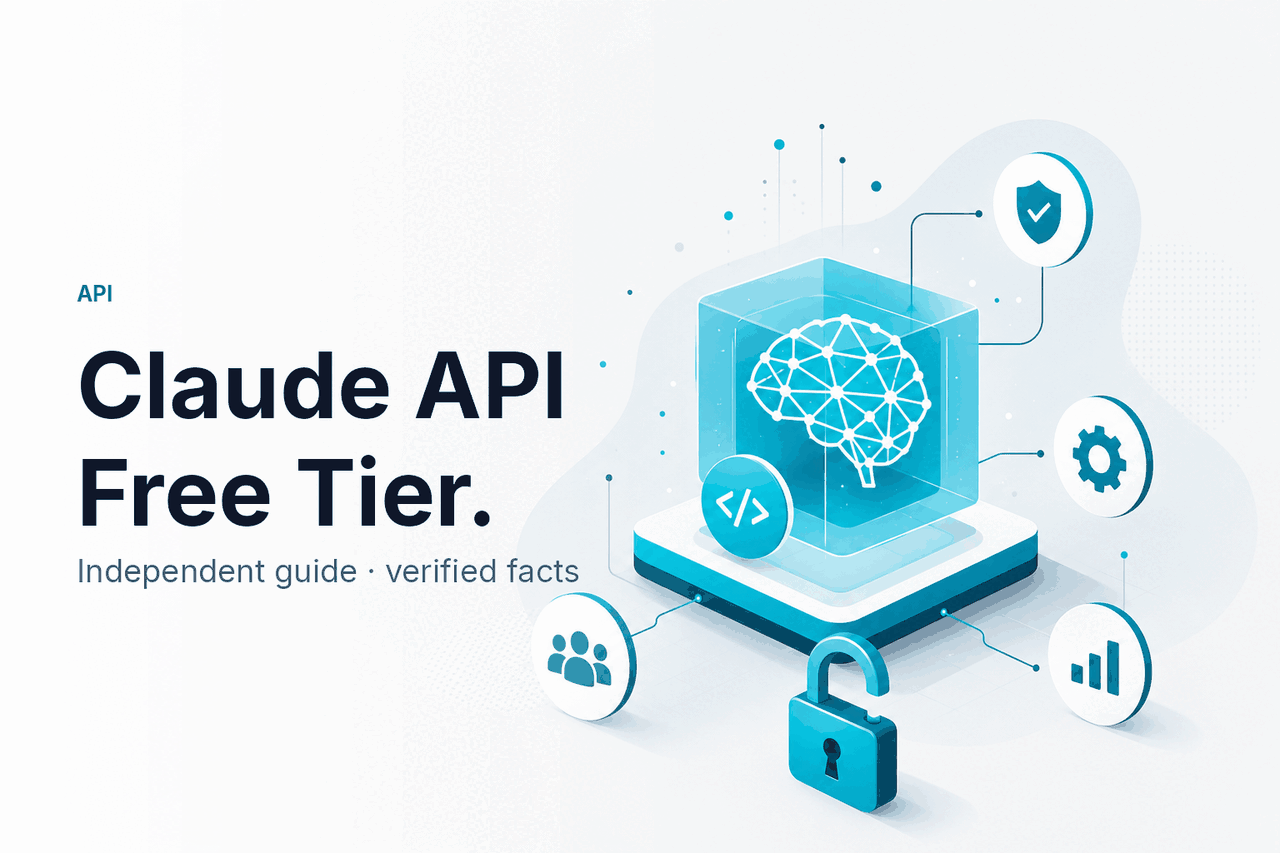
Claude API free usually means one of two things: Claude’s hosted app has a Free plan, while the Claude API is a metered developer service unless your Anthropic Console account includes temporary credits. This independent c-ai.chat guide explains the difference, how API billing works, and how to test Claude cheaply; for the broader developer overview, see our Claude API docs guide.
Not the same
Claude app Free is for the hosted app. Claude API usage is billed by tokens unless account credits apply.
- The short answer
- How it works
- What it costs
- Limits and gotchas
- FAQ: other questions readers ask
- The honest take
- Sources
The short answer
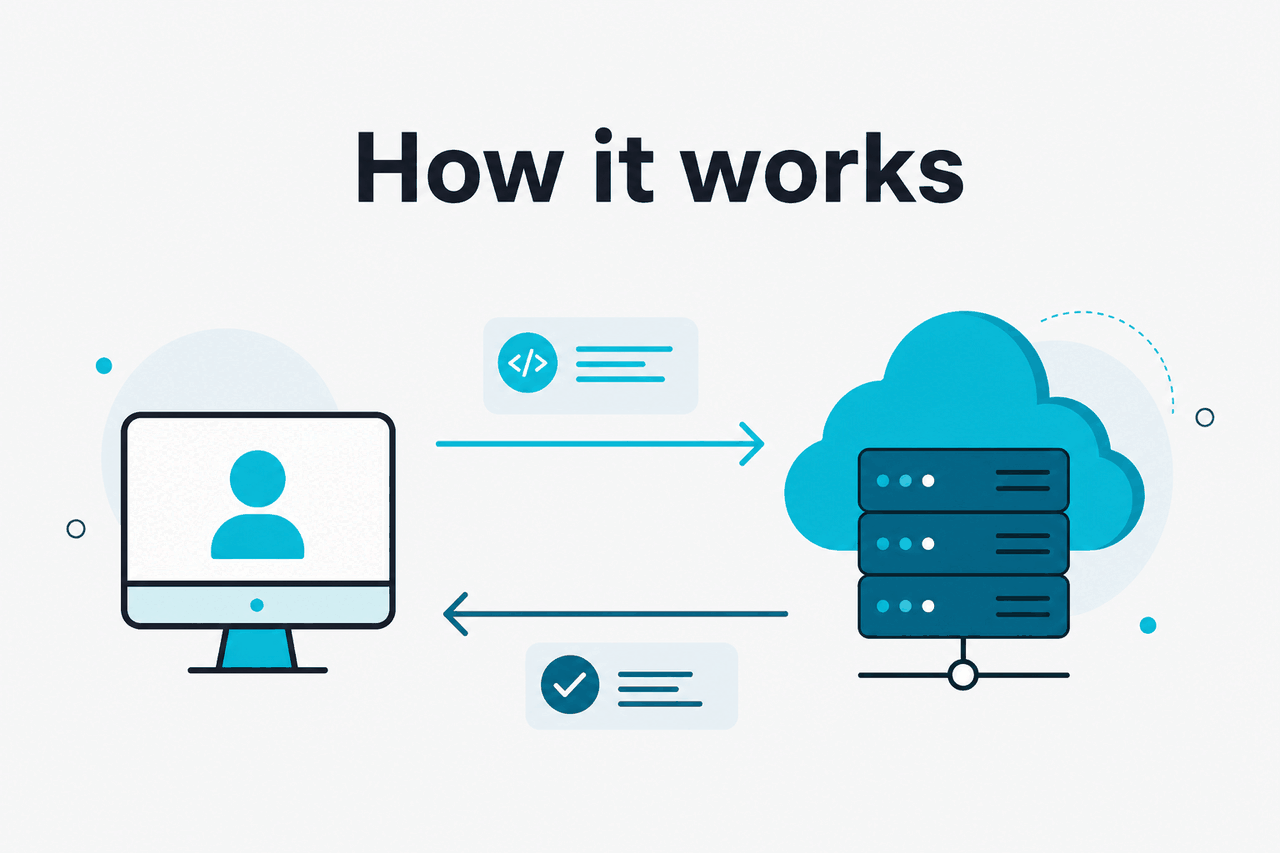
The Claude API is separate from the Free plan on claude.ai. The Free plan gives you limited access to Claude in Anthropic’s hosted app. API access runs through Anthropic’s developer platform and is billed by input and output tokens.
If your Anthropic Console account shows trial or promotional credits, those credits may cover early tests. Do not treat them as a permanent free tier. Check your Console billing page and Anthropic’s official pricing before you build around API usage.
Quick decision
Use Claude Free
Choose the hosted app when you want to chat, upload files, or learn Claude manually within daily limits.
Use the Claude API
Choose the API when you need programmatic access, app integration, logging, model routing, or automated workflows.
Minimal API test
Keep the first request small
max_tokens valueUse the current model identifier from Anthropic’s official docs rather than copying old examples from tutorials.
Anthropic’s developer documentation is available on platform.claude.com/docs and docs.claude.com. Use those pages for current SDK syntax, model identifiers, request headers, authentication, and platform behavior.
How it works
Claude API billing is token-based. Input tokens are the text, images, tool definitions, system instructions, and context you send. Output tokens are the response Claude generates. Short tests can be cheap. Long documents, codebase analysis, agent loops, and large tool schemas can cost much more.
Most developers use Anthropic’s Messages API, SDKs, or a framework that wraps the API. You create an API key, choose a model, send a message, set limits such as max_tokens, and read the response. For model selection, compare our Claude models guide.
Create a Console account
Sign in to Anthropic’s developer platform. API billing and app subscriptions are managed separately.
Generate an API key
Store the key as a server-side secret, such as an environment variable. Do not expose it in browser JavaScript, mobile binaries, or public repositories.
Start with a low-cost model
Use Claude Haiku 4.5 for simple extraction, classification, routing, and small chat tests. Move to Sonnet or Opus only when the task needs it.
Cap the response
Set
max_tokens. Long answers increase cost and can hide prompt design problems.Watch usage
Log token counts, latency, model choice, status codes, and spend. Add budget controls before production traffic.
A practical production pattern is simple: send lightweight tasks to Haiku, use Sonnet as the default for balanced quality and cost, and reserve Opus for the hardest reasoning or highest-value work. Our Claude pricing guide explains how those choices affect monthly spend.
What it costs
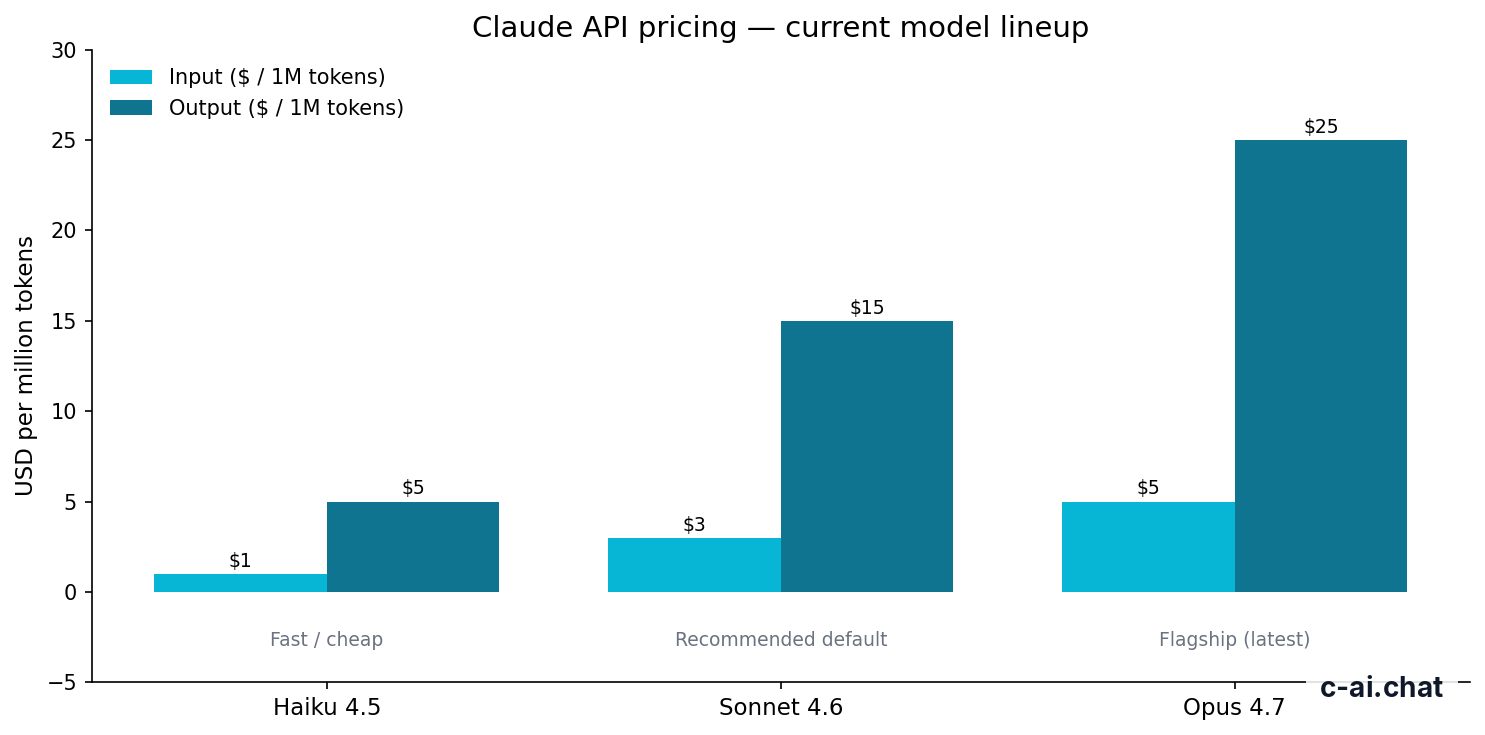
Claude API pricing is quoted per million tokens. Input and output are billed separately. Output usually costs more because generating text requires more compute than reading the prompt.
| Model | Best fit | Context and output | Input price | Output price |
|---|---|---|---|---|
| Claude Opus 4.7 | Flagship reasoning, complex work, high-value tasks | 1M context | $5/M tokens | $25/M tokens |
| Claude Sonnet 4.6 | Balanced quality, cost, and speed | 1M context; 128K max output | $3/M tokens | $15/M tokens |
| Claude Haiku 4.5 | Fast, low-cost tests and high-volume lightweight tasks | Check current docs | $1/M tokens | $5/M tokens |
The Free plan on claude.com/pricing is for web, iOS, Android, and desktop app access with daily usage limits. It is not unlimited free API access.
| Plan | Listed price | What it means for API use |
|---|---|---|
| Free | $0 | Hosted app access only; not a free API tier |
| Pro | $20/month or $17/month annual | App subscription; API billing is separate unless Anthropic states otherwise for your account |
| Max | From $100/month | Higher app usage; API billing is separate unless Anthropic states otherwise for your account |
| Team Standard | $25/seat or $20/seat annual | Team app plan; check Console for API billing |
| Team Premium | $125/seat or $100/seat annual | Team app plan with more controls; check Console for API billing |
| Enterprise | $20/seat base + API rates | Contract terms and API rates apply |
Claude app Free
$0/month
For trying Claude in Anthropic’s hosted app
- Web, iOS, Android, and desktop access
- Daily usage limits
- No production API allowance
Claude API
Per token usage
For developers building products and workflows
- Input and output token pricing by model
- API keys from Anthropic’s developer platform
- Costs depend on prompt size, output size, and request volume
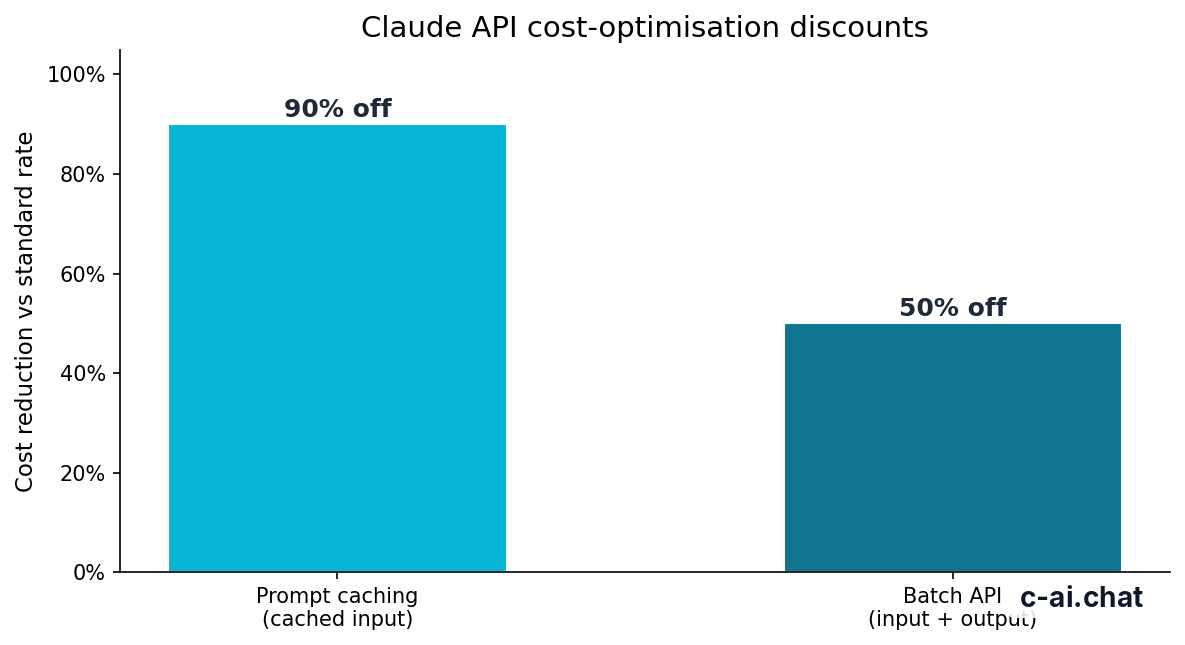
Two official cost controls matter. Prompt caching can give 90% off cached input when your workflow repeatedly sends the same large context. Batch API gives 50% off both input and output for asynchronous jobs that do not need immediate responses.
Worked example
Why a cheap test should stay small
Measure real token use before you send full documents, large codebases, or repeated agent loops.
Limits and gotchas
The main surprise is that “free Claude” and “free Claude API” are different questions. The app can be free within daily limits. The API is a metered platform with billing setup, model availability, rate limits, and authentication rules.
- Free app access is not API credit. A $0 Claude app plan does not grant unlimited API requests.
- Trial credits are account-specific. If your Console shows credits, use that page as the source of truth. Do not design production economics around temporary credits.
- Rate limits vary. Limits can depend on organization, usage tier, trust level, and platform policy. Check the Console and official docs.
- Model access can differ by account. Some models, context windows, beta features, or tools may require specific access, headers, plans, or contracts.
- Large context can create large bills. A 1M-token context is useful, but it is not automatically cheap. Chunk, retrieve, cache, or summarize where appropriate.
- Prompt caching has rules. It helps when stable prompt prefixes or reusable context meet Anthropic’s caching requirements.
- Batch API is not for live chat. The discount is useful for offline processing, evaluations, and backfills. It is not the right fit when a user is waiting.
- Output caps matter. Set
max_tokens. For many tasks, ask for compact JSON instead of a long narrative answer. - Authentication errors are common. For 401 responses, check the API key, environment variable, headers, and organization context.
- Request errors need careful debugging. For 400 responses, check JSON shape, model name, message format, tool schema, image format, and token limits.
- Rate limiting needs backoff. For 429 responses, reduce concurrency, add queueing, or request a higher limit if your account supports it.
- Platform incidents can happen. Check status.claude.com when valid requests start failing across your app.
If you are comparing product capabilities rather than billing, our Claude features guide covers Projects, file handling, research features, coding support, and app-level tools. Not every app feature maps directly to an API endpoint.
FAQ: other questions readers ask
For more beginner questions, see our Claude FAQ.
The honest take
Claude API is easy to test cheaply, but you should not plan around a permanent free API tier. The free Claude app is useful for learning the product. The API is for developers who need programmatic access, model selection, usage tracking, and integration into their own systems.
Good fit for the Free app
- Manual chat and file work
- Learning Claude’s strengths and limits
- Occasional personal or professional tasks
Good fit for the API
- Apps, automations, and backend workflows
- Usage tracking and model routing
- Production systems with logs, budgets, and retries
If you are learning, start with one small Haiku 4.5 request and inspect token usage. If you are building a product, estimate cost using official per-million-token prices, then add caching, batching, rate-limit handling, and budget controls before launch. For a broader map of the ecosystem, start at the independent Claude guide.
Independent guide. Not affiliated with Anthropic. For the official Claude product, visit claude.ai.
Last updated: 2026-05-12
This article is part of the Claude API for developers hub on c-ai.chat.