
📌 Historical reference: This page documents Claude 3.5 Sonnet — the workhorse of Anthropic’s mid-2024 lineup. The current workhorse is Claude Sonnet 4.6 ($3/$15 pricing, 1M context — same recommended-default role). For current recommendations see Sonnet 4.6 or browse our models hub. Content preserved for context on Sonnet’s progression.
- Which model is this?
- What it is best at
- Where it falls short
- When to pick this model
- FAQ: other questions readers ask
- The honest take
- Sources
Which model is this?
Claude 3.5 Sonnet is a Sonnet-family model from Anthropic’s Claude 3.5 generation. It sat between the smaller Haiku tier and the heavier Opus tier, then newer Sonnet releases replaced it for most current decisions.
If an older tutorial, benchmark, app setting, or API configuration mentions Claude 3.5 Sonnet, check whether your tool still exposes that exact model. For new work, evaluate Claude Sonnet 4.6 and the active model list in Anthropic’s official model overview. Anthropic makes Claude. c-ai.chat is an independent guide.
Legacy Sonnet
Claude 3.5 Sonnet is useful for old integrations, comparisons, and migration reviews.
| Model | Role in the lineup | API price | Typical use |
|---|---|---|---|
| Claude Opus 4.7 | Flagship | $5/M input · $25/M output | Hard reasoning, complex coding, high-value analysis |
| Claude Sonnet 4.6 | Balanced default | $3/M input · $15/M output | Production assistants, coding help, writing, research workflows |
| Claude Haiku 4.5 | Fast, lower-cost model | $1/M input · $5/M output | Classification, routing, extraction, lightweight chat |
| Claude 3.5 Sonnet | Legacy Sonnet reference | Check current availability | Older integrations, comparisons, migration testing |
Sonnet is the middle lane in Claude’s model strategy. Opus targets the hardest reasoning and agentic workloads. Haiku targets speed and lower cost. Sonnet is often the starting point because it balances capability, latency, and price.
For current costs, use the official Claude pricing page and Anthropic’s API pricing docs. For a broader cost breakdown, see our Claude pricing guide.
What it is best at

Claude 3.5 Sonnet became widely known because it handled everyday professional work well without requiring the heavier Opus tier. It was strong at rewriting, structured analysis, code explanation, document transformation, and multi-step reasoning.
Against the current lineup, treat Claude 3.5 Sonnet as the model that established the modern Sonnet pattern, not the model most new users should start with. Claude Sonnet 4.6 is the safer default for new builds. Claude Opus 4.7 is better when errors are expensive or the reasoning task is unusually hard. Claude Haiku 4.5 is better when cost and throughput matter most. For a practical overview of Claude capabilities, see our Claude features guide.
- Drafting and editing: turning rough notes into clear prose, changing tone, tightening copy, and producing structured outlines.
- Code assistance: explaining unfamiliar code, proposing refactors, writing tests, and translating requirements into implementation steps.
- Document analysis: extracting obligations, comparing clauses, finding inconsistencies, and producing concise summaries.
- Data transformation: converting messy text into tables, structured fields, checklists, briefs, or support replies.
- Business reasoning: evaluating options, identifying trade-offs, preparing decision memos, and testing plans.
Use Haiku 4.5 for speed
Start here for high-volume extraction, routing, tagging, and short replies.
$1/M input · $5/M output
Use Sonnet 4.6 for balance
Start here for most assistants, coding workflows, writing, and research tasks.
$3/M input · $15/M output
Use Opus 4.7 for hard work
Test here when quality, reasoning depth, or engineering risk matters more than cost.
$5/M input · $25/M output
If a prompt worked well on Claude 3.5 Sonnet, it will often work on a newer Sonnet model with little change. Still, re-test important workflows. Model behavior can change across generations, especially for coding style, refusal boundaries, tool use, and long-context handling.
The main reason people still search for Claude 3.5 Sonnet is continuity. Teams may have prompts, evaluations, screenshots, or product docs built around that name. Use it as a reference point, then compare it with current Sonnet and Opus models on your own tasks.
Where it falls short
Claude 3.5 Sonnet falls short because it is no longer the active default for most users. Newer Claude models are better aligned with current API features, long-context workflows, output limits, coding workflows, and product support.
- Availability can vary: older model names may appear in legacy code, but current access depends on Anthropic’s platform and product settings.
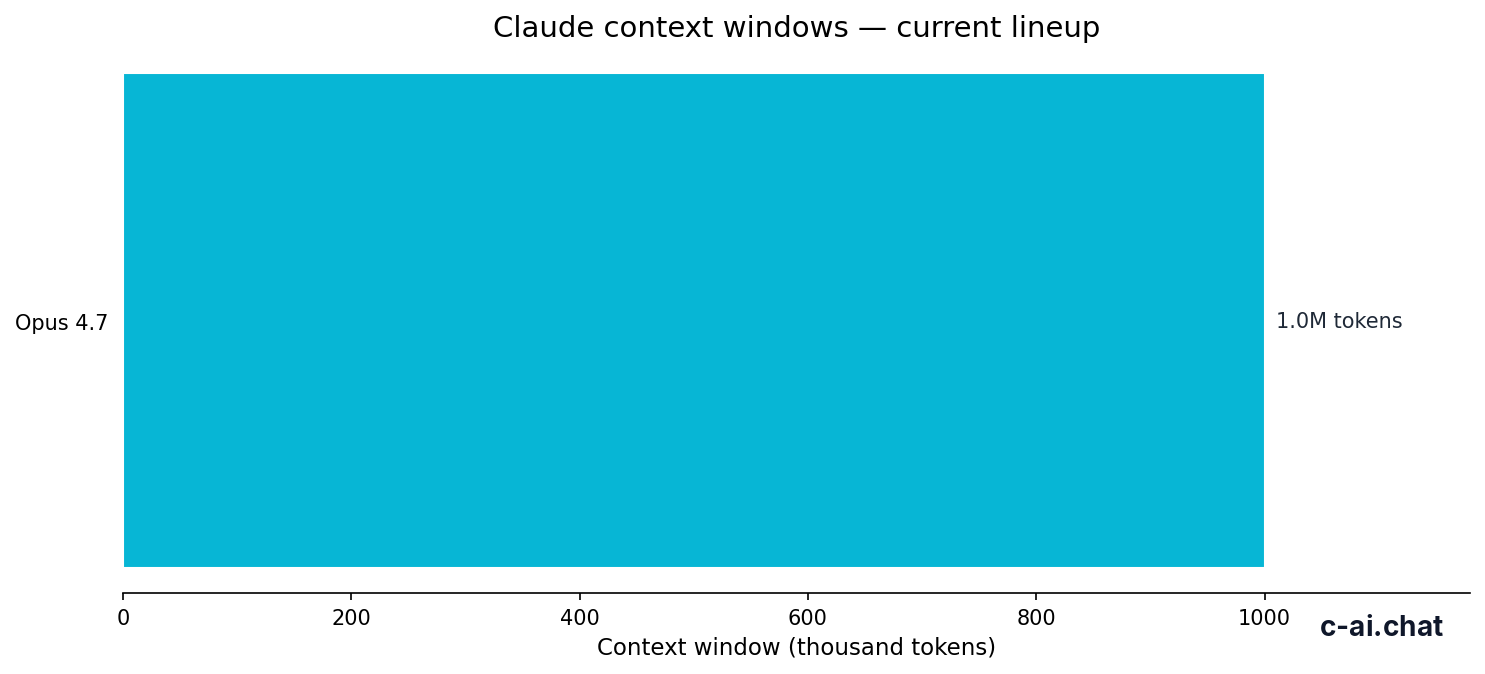
- Long-context work has moved on: Claude Opus 4.7 and Claude Sonnet 4.6 support 1,000,000-token context.
- It is not the cheapest path: for classification, routing, extraction, or short replies, Claude Haiku 4.5 may be the better fit at $1/M input and $5/M output.
- It is not the strongest path: for the highest reasoning reliability, Claude Opus 4.7 is the stronger current option at $5/M input and $25/M output.
- Older benchmarks age quickly: compare models on your own data, not only on old charts, launch posts, or screenshots.
Developers should also separate model choice from product choice. Claude.ai is the official chat product. The Anthropic API is the developer platform. They overlap, but they are not the same interface. If you are building software, start with our Claude API guide and the official Anthropic API platform.
When to pick this model
Pick Claude 3.5 Sonnet only when you have a specific reason to reference that exact legacy model name. For new work, start with the current Sonnet model, then move up to Opus or down to Haiku based on quality, latency, and cost.
Pick it when
- You maintain an older integration that already names Claude 3.5 Sonnet.
- You compare old results with newer Sonnet or Opus outputs.
- You need to understand a tutorial, benchmark, prompt library, or product setting that still references it.
- You are migrating prompts and need a before-and-after baseline.
Skip it when
- You are starting a new Claude API build and can choose an active model.
- You need the strongest reasoning model and can justify Opus pricing.
- You need lower-cost, high-volume processing where Haiku pricing matters more.
- You need current long-context behavior, current output limits, or the newest supported model features.
The pricing trade-off is the core decision. The current Sonnet tier sits between Haiku and Opus: more expensive than Haiku, less expensive than Opus, and usually strong enough for serious daily work. If your task runs millions of tokens, small price differences become material.
Decision rule
Start with Sonnet 4.6 for new work. Move to Haiku 4.5 if cost and speed dominate. Move to Opus 4.7 if the task needs stronger reasoning or higher reliability.
90% off
cached input tokens with prompt caching
Cost optimisation matters more than model nostalgia. Anthropic’s API pricing includes prompt caching for repeated context and Batch API discounts for offline jobs. Prompt caching can reduce cached input token cost by 90%. Batch API can reduce both input and output costs by 50%.
Worked example
Choosing between current Claude models
The safest default for new work is the active Sonnet model, then adjust after real evaluation.
FAQ: other questions readers ask
These are the nearby questions people usually have when they search for Claude 3.5 Sonnet.
Is Claude 3.5 Sonnet still available?
Availability depends on Anthropic’s current product and API settings. Do not assume an older model name is selectable because an article, package, or screenshot mentions it. Check the official model overview before building around it.
What replaced Claude 3.5 Sonnet?
For most users, the practical successor is Claude Sonnet 4.6. It occupies the same balanced lane: strong enough for demanding daily work, cheaper than Opus, and more capable than Haiku for complex tasks.
Is Claude 3.5 Sonnet better than Opus?
Not as a general rule. Sonnet models are designed for balance. Opus models are designed for the hardest tasks. If quality matters more than cost or latency, compare against Claude Opus 4.7.
Is Claude 3.5 Sonnet good for coding?
Yes. It earned a strong reputation for coding help, code explanation, test writing, and refactoring support. For new coding workflows, evaluate Claude Sonnet 4.6 and Claude Opus 4.7 because they are the current models to compare.
Does Claude.ai use Claude 3.5 Sonnet?
Claude.ai is Anthropic’s official product. The model shown to a user can depend on plan, settings, and availability. For official product access, visit claude.ai. For service availability, check Claude status.
Should I migrate from Claude 3.5 Sonnet?
Yes, if you are starting new work or maintaining a workflow that can use newer models. Keep your old prompts as a baseline, then compare quality, latency, refusals, output format, and total cost on your own tasks.
The honest take
Claude 3.5 Sonnet matters because it was a strong Sonnet model and a common reference point for the Claude ecosystem. It is still useful when you are reading older material, maintaining legacy prompts, or comparing model generations. It should not be your default choice for a new build unless Anthropic’s current tools still expose it and you have tested it against active alternatives.
For most people, the right answer is simple: use the current Sonnet model first, use Haiku when cost and speed dominate, and use Opus when the task is hard enough to justify the higher price. If you are unsure, run a small evaluation with your own prompts, documents, and success criteria.
Independent guide. Not affiliated with Anthropic. For the official Claude product, visit claude.ai.
Last updated: 2026-05-14