
Claude skills writing usually means teaching Claude to follow a reliable writing workflow, use the right tools, and stay inside clear editorial rules; on c-ai.chat, our independent guide to Claude by Anthropic, this page explains what “skills” can mean, how they differ from agents and plugins, what writers can build today, and where the limits still are.

If you want the broader product context first, start with our Claude guide, then compare related capabilities like Claude features, skills, agents, and plugins, Claude Code, and the Claude API.
- What this is
- How it works
- What you can build
- Limits and watch-outs
- Other questions readers ask
- The honest take
- Free tier · no card
- API priced per million tokens
What this is
“Claude skills writing” is not one single official Anthropic product label. In practice, searchers usually mean one of three things: reusable writing instructions inside Claude, autonomous writing workflows built as agents, or tool-connected extensions that help Claude fetch or act on outside data. For writers, the useful question is not the label. It is whether you need a repeatable prompt, a multi-step agent, or a tool integration.
| Concept | What it means for writers | Best use case |
|---|---|---|
| Skills | A repeatable writing pattern: voice rules, structure, checklist, revision criteria, and examples Claude follows on demand. | Drafting blog posts, rewrites, summaries, outlines, email copy, style enforcement. |
| Agents | A workflow that can plan, gather context, run steps, and refine output with some autonomy. | Content pipelines, multi-document research, editorial QA, content ops across many assets. |
| Plugins or tools | Connections that let Claude pull files, use apps, or call systems beyond the chat itself. | Working with docs, office files, internal knowledge, or external systems. |
That distinction matters because a solo writer often only needs a strong “skill” in the plain-English sense: a reusable prompt plus examples. A content team may need something closer to an agent with governance. If you are comparing the terminology itself, our page on skills, agents, and plugins breaks down where those boundaries sit.
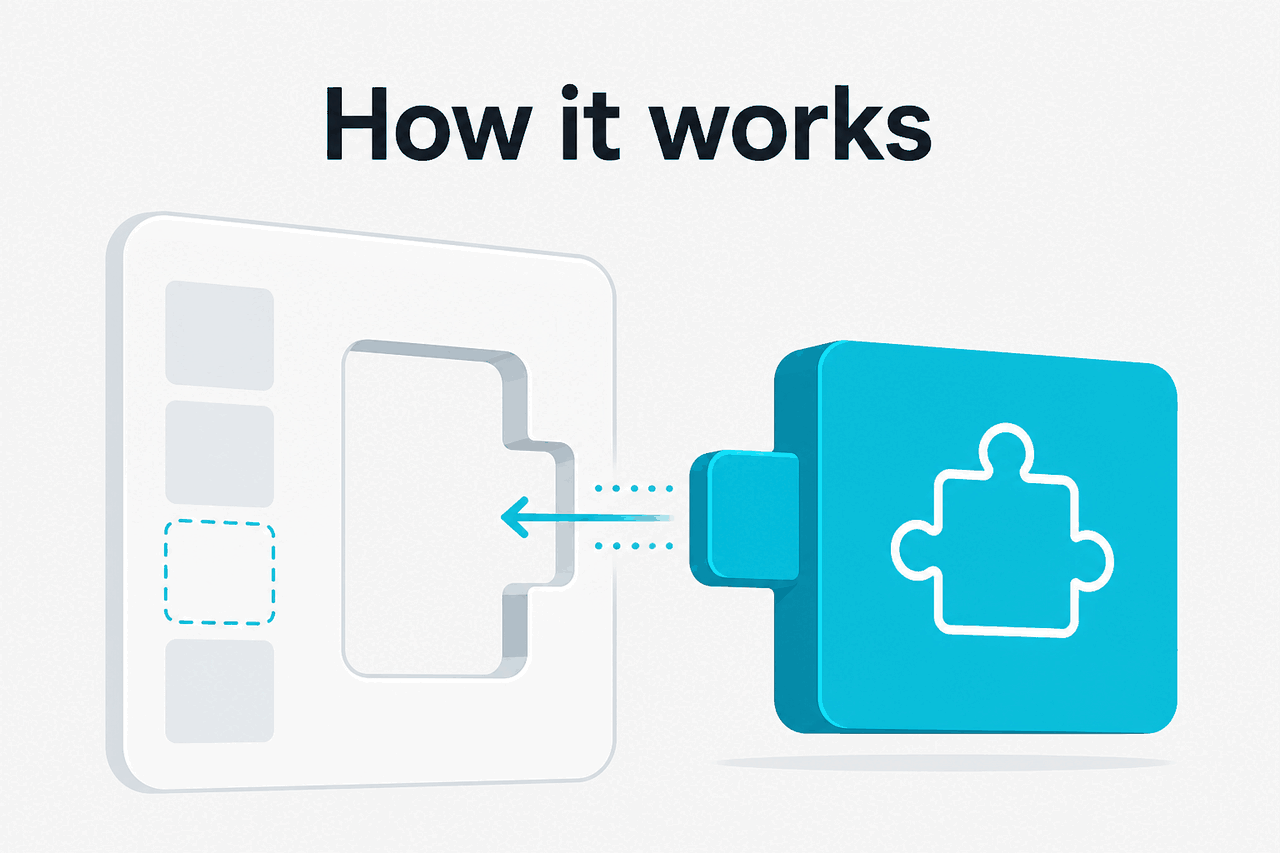
How it works
At a technical level, Claude writing skills are built from instructions, context, and constraints. You give Claude a role, a task, examples of good output, banned patterns, formatting rules, and source material. Claude then predicts the next best tokens under those instructions. Better writing results usually come from better scaffolding, not from vague requests like “write me a great post.” Writers get the strongest outputs when they provide audience, intent, outline, voice guardrails, and a definition of done.
If you move beyond simple prompting, the flow becomes more structured. Claude can work inside Projects, use connected files, and in some product paths access more advanced features on paid plans. On the API side, developers can combine Claude with retrieval, prompt caching, and app logic to create editorial workflows. Anthropic lists Claude Sonnet 5 as the recommended default model, while Opus 4.8 is the flagship option for harder reasoning and long-context work, and Haiku 4.5 is the fast, lower-cost option for lighter drafting or classification.
Define the writing job
Name the output, audience, tone, and success criteria. Example: “Turn interview notes into a 900-word B2B case study with a neutral, factual tone.”
Add constraints and examples
Include your style guide, preferred heading structure, banned claims, and 1–2 examples of writing you actually approve.
Supply source material
Paste notes, upload files, or connect the relevant project context so Claude has facts to work from instead of guessing.
Ask for staged output
Have Claude produce an outline first, then a draft, then a compliance check against your rubric. This reduces drift.
Reuse the workflow
Save the prompt template or product setup and keep iterating. Most useful writing “skills” are really tested workflows, not one-off chats.
What you can build
For writers, the practical value of Claude comes from repeatable editorial jobs. The strongest setups narrow the task, define the quality bar, and keep Claude attached to source material. Here are concrete examples that match how people actually use Claude for writing.
1) Blog post brief to first draft. Give Claude a search intent, target reader, internal links, brand voice rules, and approved sources. Ask for a brief first, then the draft. This is useful for content marketers who need consistency more than raw creativity.
2) Interview transcript to publishable article. Upload a transcript and ask Claude to extract themes, quotes, and chronology, then turn that into a case study, Q&A, or profile. This works well when you want speed on structure but still plan to fact-check every statement.
3) Editorial QA checker. Instead of generating prose, use Claude as a reviewer. Have it flag unsupported claims, missing attribution, tone violations, passive openings, repetitive transitions, or formatting issues against your house style. This pairs well with our overview of core Claude features because many teams underrate review workflows and overrate drafting.
4) Multi-version copy adaptation. Feed one approved source document to Claude and ask for variations: landing page copy, email copy, social snippets, or executive summary versions. The skill here is preserving facts while changing format, not asking Claude to invent new substance.
5) Research-backed long-form drafting. On harder jobs, a stronger model can inspect many notes and documents, identify gaps, and propose a structure before writing. This is where model choice starts to matter more. Haiku 4.5 can be enough for simple transformations, but Sonnet 5 is the more sensible default for serious writing work, while Opus 4.8 is better reserved for complex reasoning, synthesis, and high-stakes editorial tasks.
Worked example
A reusable blog-writing skill in the Claude API
This setup is usually more reliable than a single “write an article” request because it separates planning, drafting, and review.
{
  "model": "claude-sonnet-5",
  "system": "You are an editorial assistant. Follow the style guide exactly. Do not invent facts. If evidence is missing, mark it clearly. Produce concise headings and short paragraphs.",
  "messages": [
    {
      "role": "user",
      "content": "Task: Write a 1,200-word article for startup marketers.nKeyword: claude skills writingnRequired sections: quick answer, workflow, examples, limits.nTone: plain, factual, independent.nBanned phrases: revolutionary, game-changing.nInternal links: /features/, /api/.nSources: use only the provided notes."
    }
  ]
}
If you build this kind of workflow for a team, it helps to separate responsibilities. One layer sets instructions and approved source sets. Another handles drafting. A final pass checks policy, citations, and brand rules. That is closer to an agentic content system than a one-off writing chat, and it is where Claude Code or the API becomes more relevant than the consumer app alone.

Limits and watch-outs
Claude is useful for writing, but the weak spots are predictable. Most problems come from unclear instructions, weak source control, or assuming the model knows your editorial standards without being told.
- No automatic truth guarantee. Claude can still produce incorrect, outdated, or overconfident claims if your sources are thin or conflicting.
- Terminology confusion. “Skills” is often used loosely online. Not every writing template is a formal product feature, and not every workflow is an “agent.”
- Style drift happens. Long drafts can slowly move away from your preferred tone unless you provide examples and ask for a rubric-based self-check.
- Source leakage risk. If writers paste confidential drafts, client data, or embargoed material into the wrong workspace, that creates governance problems. Teams need clear usage rules.
- Tool access varies by plan and product path. Free, Pro, Max, Team, and Enterprise do not expose identical capabilities or limits. Check the official pricing and plan details before promising a workflow internally.
- Writers still need editorial judgment. Claude can structure, rewrite, and review. It does not replace a subject-matter expert or legal review for sensitive topics.
- Security and compliance are deployment choices, not magic defaults. Enterprise buyers should evaluate trust controls, admin policies, auditability, and data residency requirements against Anthropic’s official trust and admin materials.
- Autonomous workflows need oversight. If you let an agent gather context, draft copy, and publish or sync to external systems, approval gates matter. Human review should be explicit, not implied.
Pick when
- You have repeatable writing formats
- You can provide source material and style rules
- You want faster outlining, rewriting, and QA
Skip when
- You expect fully unsupervised publishing
- Your facts are sensitive and governance is unclear
- You have no editorial process to encode
90% off
cached input tokens with prompt caching
For developers building writing systems at scale, cost control matters as much as model quality. Anthropic states prompt caching cuts cached input cost by 90%, and the Batch API gives 50% off both input and output. That can materially change the economics of editorial QA, bulk rewriting, and large scheduled content jobs.
Other questions readers ask
These are the nearby questions people usually mean when they search for Claude writing skills.
| Need | Best fit | Why |
|---|---|---|
| Personal drafting and rewriting | Free or Pro | Enough for individual writing help, with Pro adding more access and features. |
| Heavy daily writing volume | Max | Higher usage, higher output limits, early feature access, and priority traffic. |
| Shared editorial workflow | Team | Workspace sharing, admin controls, and SSO support. |
| Governed internal content system | Enterprise + API | SCIM, audit logs, spend controls, regional data residency, and usage-based build options. |
The honest take
If you searched for claude skills writing, the practical answer is simple: Claude is good at writing when you turn your editorial process into explicit instructions, examples, and checks. Most writers do not need a mysterious “skill marketplace.” They need a repeatable workflow for outlining, drafting, revising, and validating facts. That can live in the Claude app, a Project, or an API workflow depending on how much control you need.
The main risk is not that Claude cannot write. It is that people skip the process design. If you want dependable output, define the task, constrain the voice, provide sources, and require review. If you need to compare the underlying concepts first, use our guide to skills, agents, and plugins. If you just want to start using Claude, the official product is at claude.ai.
Independent guide. Not affiliated with Anthropic. For the official Claude product, visit claude.ai.
Last updated: July 16, 2026