
Claude agent vs bot: an agent is a broader system that can plan, use tools, and often keep state across steps, while a bot is usually the chat interface or a narrower automated responder; in Claude, you will also see skills and integrations discussed separately, so this guide from c-ai.chat explains where each concept fits and how to think about them in practice.
- What this is
- How it works
- What you can build
- Limits and watch-outs
- Other questions readers ask
- The honest take
What this is
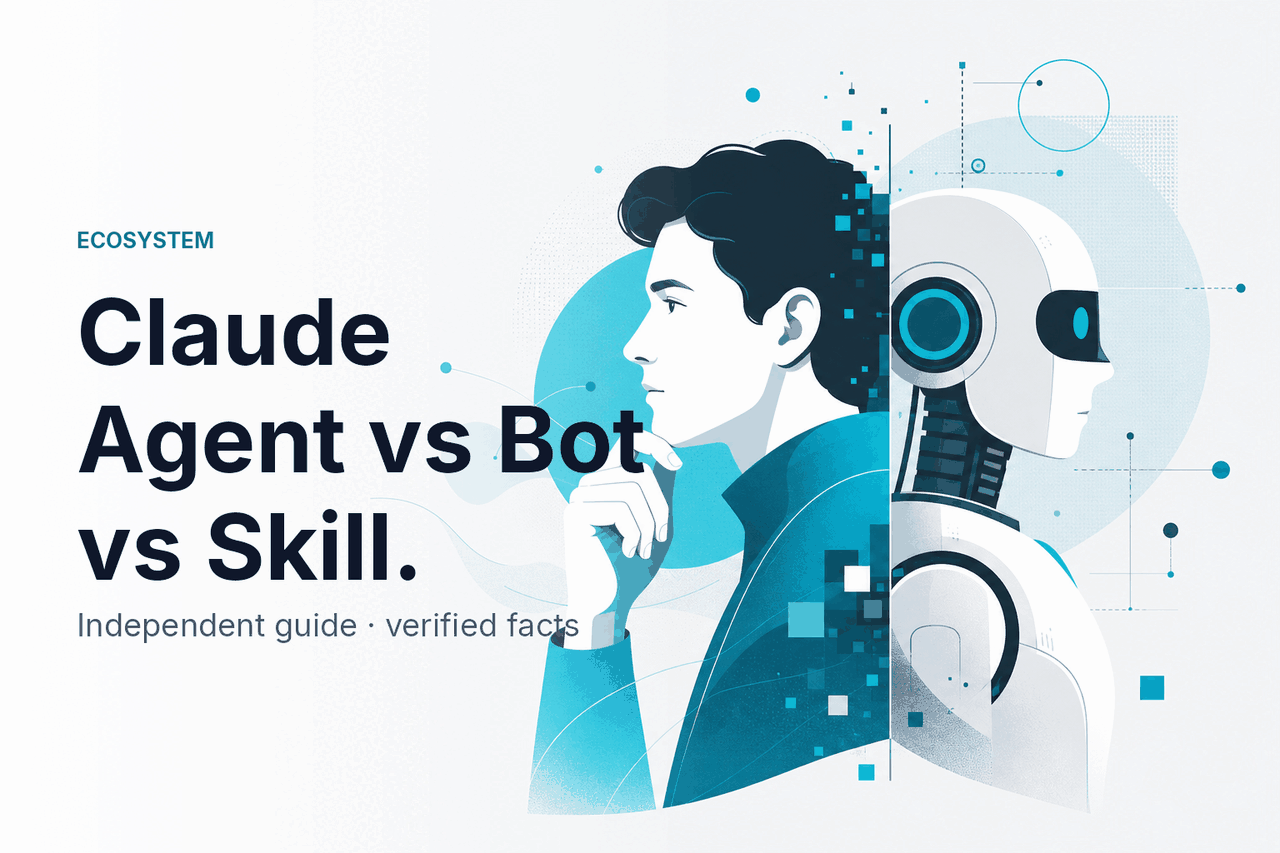
When people search for claude agent vs bot, they are usually comparing three layers: a skill is a focused capability, an agent is an orchestrated system that uses capabilities to complete multi-step work, and a bot is the user-facing conversational wrapper; “plugin” is older web tooling language that overlaps with integrations, but it is not the best umbrella term for how Claude systems are commonly described now.
| Concept | What it means in practice | Best mental model |
|---|---|---|
| Skill | A narrow function such as summarising a document, extracting fields, querying a source, or writing code in a specific format. | A reusable capability. |
| Agent | A system built around a model that can reason through steps, choose tools, use memory or workspace context, and act toward a goal. | A coordinator that uses skills. |
| Bot | A chat-based interface that users talk to. It may be simple and scripted, or it may be powered by a more capable agent behind the scenes. | The front door users see. |
If you want the broader map of how these pieces relate inside the Claude ecosystem, see skills, agents, and plugins. If you are comparing this to Claude’s developer capabilities, the most relevant references are the Claude API guide, Claude Code, and our overview of Claude features.
How it works
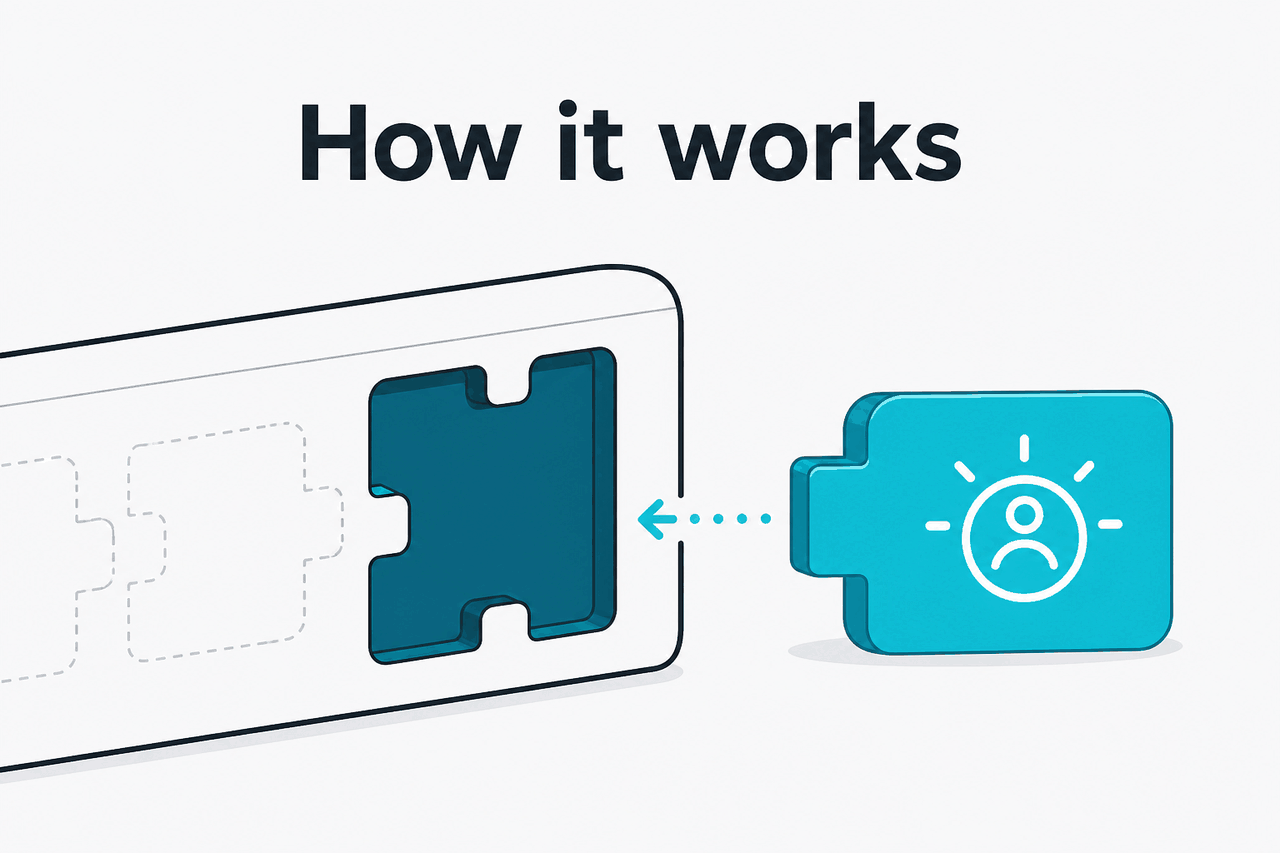
Technically, a bot is often just the conversation layer: it receives user input, passes that input to a model, and returns a response. An agent adds orchestration around that loop. It may inspect the goal, break the task into smaller actions, call tools or APIs, read files, use a project workspace, ask follow-up questions, and decide when the job is complete. In other words, a bot can be one-turn or lightly stateful, while an agent is designed for multi-step execution.
With Claude, the underlying model does not become a magical autonomous worker on its own. Developers still define the system prompt, available tools, permissions, guardrails, and memory boundaries. Anthropic’s model and API documentation describe the model, tool use, context windows, pricing, and developer controls; the final “agent” behaviour comes from the full application design, not from the word agent alone. That matters because two products can both market themselves as Claude bots while one is just a chat shell and the other is a true tool-using workflow system.
- Free tier · no card
- API priced per million tokens
90% off
cached input tokens with prompt caching
That cost structure matters for agents more than for basic bots. A simple chat bot may use a short prompt and one response. An agent may loop through instructions, tool results, and long context repeatedly. Prompt caching and the Batch API can reduce costs materially when workflows are repetitive or asynchronous.
What you can build
The practical difference between a Claude bot and a Claude agent becomes obvious when you look at what each can do. Here are common patterns that show the boundary.
- Website support bot: A user asks a question, the bot retrieves a help article, then answers in chat. This is often a bot with one main skill: grounded Q&A.
- Sales research agent: The system takes a target account list, gathers notes from approved sources, drafts summaries, flags missing fields, and produces a handoff brief. That is an agent because it coordinates several steps and outputs.
- Code review assistant: Inside a development workflow, Claude can inspect files, explain changes, suggest patches, and answer follow-up questions. Depending on permissions and automation, this can range from a bot to a real agent. See Claude Code for the development-specific angle.
- Document intake workflow: Upload a contract, extract key clauses, route exceptions for review, and produce a checklist. The extraction itself is a skill; the routing and multi-step handling make it agent-like.
- Internal knowledge helper: A chat interface over company docs is still mostly a bot unless it also triggers downstream actions like creating tickets, updating records, or coordinating work across systems.
Worked example
Support bot that becomes an agent when actions are added
The visible interface can look identical, but the agent version has tools, state, and decision rules behind it.
A useful rule is this: if the system mostly answers, call it a bot; if it can do work across several steps with tools and controls, call it an agent; if you are talking about a single capability inside that system, call it a skill. That naming keeps product discussions clear and prevents teams from overpromising what a chat interface can actually handle.
Pick when
- You need a narrow conversational assistant with predictable outputs
- The task is mostly question-answering or lightweight drafting
- You want lower cost and simpler review workflows
Skip when
- The system must plan across several steps
- You need file, tool, or workflow actions with approvals
- The product needs memory, state, and operational auditability
Limits and watch-outs
“Agent” sounds capable, but the label can hide important limits. Claude-based systems still depend on the tools they are given, the instructions they receive, and the checks around them.
- Not every Claude integration is an agent. Many are just chat fronts with retrieval or a fixed prompt.
- Tool use needs explicit setup. If your system cannot access a database, API, or file store, it cannot act on that information no matter how natural the chat feels.
- Permissions matter. An agent that can send messages, edit data, or run code creates real operational risk if approvals are weak.
- Memory is design-dependent. Some systems keep project context or conversation history; others are effectively stateless between turns.
- Hallucinations do not disappear because you call it an agent. Multi-step systems can propagate an early mistake across later actions.
- Governance becomes harder at team scale. You may need SSO, admin controls, audit logs, role-based access, spend controls, and regional data options depending on the use case.
- Cost can climb quickly. Agents often consume more input and output tokens than simple bots because they perform repeated reasoning and tool loops.
- Long context is useful, not magic. Anthropic supports long context on certain models, but large prompts still require careful prompt design and evaluation.
- Security review is not optional. If you expose internal tools or documents, test for prompt injection, data leakage, and unsafe action chains.
For companies choosing between app plans and API-led builds, this is often the hidden decision: are you buying a chat experience, or are you building controlled automation around a model? If the second is true, the API route usually matters more than the marketing name used in the interface.
Other questions readers ask
These are the related questions that usually appear next in the same search journey.
The honest take
If you are asking claude agent vs bot, the clean answer is this: a bot is the conversational shell, while an agent is the system behind it when that system can reason through steps, use tools, and work toward a goal. A skill is smaller still: one discrete capability inside the larger setup. Most confusion comes from vendors using “agent” as a stronger-sounding word for a chatbot.
For most teams, the right order is skill first, bot second, agent only when the workflow really needs orchestration. That keeps scope, cost, and risk under control. If you want the official product experience, use Claude directly; if you are comparing concepts before building, our related guides on skills, agents, and plugins and Claude features are the next useful stops.
Independent guide. Not affiliated with Anthropic. For the official Claude product, visit claude.ai.
Last updated: July 16, 2026