
Claude computer usually refers to Claude’s computer-use agent capability: a way for Claude to interact with a computer interface by reading the screen, deciding on actions, and using tools to click, type, and complete tasks under human control. This guide is from c-ai.chat, an independent reference site, and it explains what the feature is, how it works, where it fits against skills, agents, and plugins, and where its limits matter.
- What this is
- How it works
- What you can build
- Limits and watch-outs
- Other questions readers ask
- The honest take
- Computer use is an agent capability, not a separate Claude app
- Available through Claude tooling and the API ecosystem
What this is
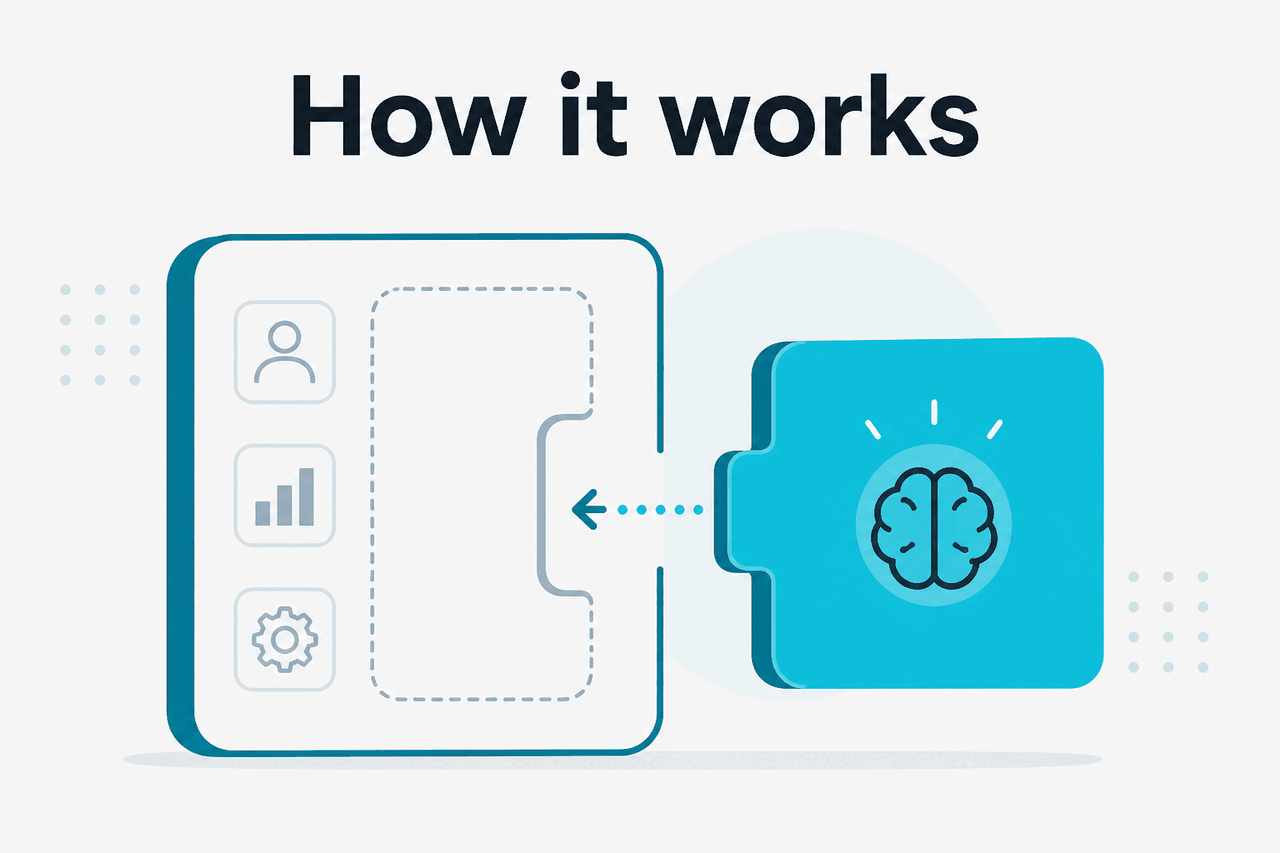
Claude computer use is best understood as an agent feature: Claude can observe a digital environment, reason about the next step, and take actions through tools, rather than only replying with text. That is different from a plugin model that calls one specific external service, and it is also different from a reusable skill or prompt template. If you want the broader map of how these ideas fit together, see our guide to Claude skills, agents, and plugins.
| Concept | What it does | Where computer use fits |
|---|---|---|
| Skills | Reusable instructions, workflows, or capabilities that help Claude perform a recurring task more consistently. | Computer use is not just a skill. A skill may guide it, but the feature itself is about perception and action. |
| Agents | Systems where Claude can plan, use tools, act in steps, and work toward a goal with some autonomy. | This is the right bucket. Computer use is an agent pattern. |
| Plugins | Integrations that connect Claude to outside tools or services through defined interfaces. | Computer use can complement plugins, but it is broader than calling one integration. |
How it works
At a high level, computer use works as a loop. Claude receives a goal, gets structured access to a computer environment or interface state, decides what to do next, and then issues an action such as clicking a button, typing text, selecting a field, scrolling, or opening a page. After each action, the system returns an updated state so Claude can check whether the step worked and decide on the next one. That makes it closer to task execution than ordinary chat.
In practice, developers usually build this through Anthropic’s API and tool-calling patterns rather than expecting the public chat product to behave like a fully autonomous desktop robot. Claude provides the reasoning and planning layer; your application or orchestration layer supplies the allowed tools, environment, safety controls, and logging. If you are comparing this with developer workflows, our Claude API guide and Claude Code overview cover the adjacent pieces.
-
Define the environment
Decide what Claude can see and control: browser tabs, a sandboxed desktop, or a constrained app flow. Start with the smallest possible surface area.
-
Expose safe tools
Give Claude explicit actions such as
click(x,y),type(text),scroll(), or a higher-level browser action. Avoid broad unrestricted control on first deployment. -
Send the goal and state
Pass the user’s objective plus the current screen or DOM-derived state so Claude can reason about what element matters next.
-
Review each action loop
Return the updated state after every action and enforce approval gates for risky operations such as purchases, account changes, exports, or sending messages.
What you can build
The useful cases are repetitive, structured, and easy to verify. Computer use is strongest when the task has clear checkpoints, a predictable interface, and a human-defined goal. It is weaker when the UI changes often, actions have legal or financial consequences, or the task depends on subtle judgment that cannot be checked automatically.
- Back-office form handling: open an internal dashboard, search for a record, copy fields from one system to another, and flag exceptions for a human reviewer.
- Browser-based research ops: visit a fixed set of pages, collect structured facts, capture status values, and produce a report with citations or screenshots for review.
- QA and regression workflows: walk through a known product flow, verify that key controls exist, and report where the UI differs from the expected state.
- Customer support assistance: draft replies, retrieve account context from allowed systems, and prepare the next recommended action for an agent to approve.
- Internal automation: complete routine data-entry tasks in legacy tools that do not expose a clean API.
A simple but realistic pattern is browser automation with verification after each step. Instead of telling Claude “go handle everything,” you define a narrow objective such as “log into the sandbox CRM, search order ID 48321, open the latest case, and draft a status note without sending it.” Claude plans the sequence, but your system decides what tools are available and when a human must confirm.
Worked example
Sandbox support triage with controlled browser actions
This setup keeps Claude useful without giving it unrestricted authority over live customer communications.
If you are building this through code, the pattern usually looks like tool use plus iterative state updates. Claude reasons over the task, selects a tool, receives the result, and continues until it reaches a stop condition. That sits close to the same family of workflows people discuss when they talk about Claude features more broadly, but computer use is more operational and more sensitive to safety design.
{
  "goal": "Open the sandbox CRM, find order 48321, and draft a status note without sending it.",
  "tools": [
    "open_page(url)",
    "click(selector)",
    "type(selector,text)",
    "scroll(direction)",
    "extract_text(selector)"
  ],
  "policy": {
    "send_message": "human_approval_required",
    "external_payments": "blocked",
    "account_changes": "blocked"
  }
}
Pick when
- The task follows a repeatable interface flow
- You can define clear stop conditions
- You need automation where no clean API exists
Skip when
- The action can move money or change legal records
- The UI is unstable or full of anti-automation friction
- You cannot log, review, or constrain every important step
Limits and watch-outs
Computer use is useful, but it is not magic. It adds a perception-and-action layer, which means more ways for a task to fail than with a clean API call. Most production issues come from weak guardrails, brittle interfaces, or vague goals.
- UI brittleness: if a button moves, labels change, or a page loads differently, the workflow can break.
- Not every task should be automated: actions involving payments, irreversible account changes, regulated data, or outbound communications should usually require explicit human approval.
- Latency is higher than ordinary chat: computer-use loops involve multiple observe-decide-act cycles, not one prompt and one reply.
- Reliability depends on orchestration: Claude can reason well, but your surrounding system still needs retries, timeouts, selectors, state checks, and error handling.
- Security design matters: unrestricted browser or desktop access is a bad default. Use sandboxing, least privilege, domain allowlists, approval gates, and audit logs.
- Governance matters for teams: admins need to know who launched the workflow, what tools were allowed, what data was accessed, and what actions were attempted.
- Prompt injection and hostile content remain risks: if Claude reads arbitrary web pages or documents, the surrounding app must treat them as untrusted input.
- It is not a substitute for a proper integration: if a stable API exists, that is often safer and easier to maintain than UI automation.
- Availability can vary by product surface: features and limits may differ between claude.ai, developer tooling, and custom API implementations.
Other questions readers ask
The honest take
If you searched for “claude computer,” the practical answer is this: Claude can be used as the reasoning engine inside an agent that interacts with software interfaces, but the value comes from the system around the model. Good computer-use setups are constrained, observable, and easy to audit. Bad ones give broad access, weak approvals, and vague objectives, then fail in hard-to-debug ways.
For most teams, computer use makes sense when a task is repetitive, screen-based, and not easily handled through a standard API. If the task is high-risk, heavily regulated, or already has a reliable integration path, UI-level automation is usually the wrong first choice. For the broader Claude landscape, start at Claude features or go straight to the official product.
Independent guide. Not affiliated with Anthropic. For the official Claude product, visit claude.ai.
Last updated: July 16, 2026