
The top Claude plugins are best understood as Claude skills and agents: reusable tool-connected workflows that let Claude search files, call APIs, run coding tasks, and automate multi-step work. This guide is from c-ai.chat, an independent reference site, not Anthropic, and it explains what people usually mean by “plugins,” how these features actually work, what you can build, and where the limits still are.

- What this is
- How it works
- What you can build
- Limits and watch-outs
- Other questions readers ask
- The honest take
What this is
When people search for top claude plugins, they are usually asking about the main ways Claude can be extended with tools, actions, and reusable capabilities. The useful distinction is this: skills, agents, and plugins are related but not identical. “Plugins” is the familiar search term, but Claude’s actual product language more often centres on skills, agents, app connections, and developer tools.
| Concept | What it means in Claude | Best use case |
|---|---|---|
| Skills | Reusable capabilities, instructions, or tool-backed workflows Claude can apply to recurring tasks. | Standardising how Claude handles research, writing, analysis, or internal processes. |
| Agents | More autonomous workflows that can use tools, reason across steps, and complete longer tasks with less manual steering. | Multi-step work such as research, coding, planning, and business process automation. |
| Plugins | A catch-all user term for integrations or extensions. Useful for search, but not always the official Claude label. | Comparing Claude’s ecosystem with other AI products that use plugin terminology. |
How it works
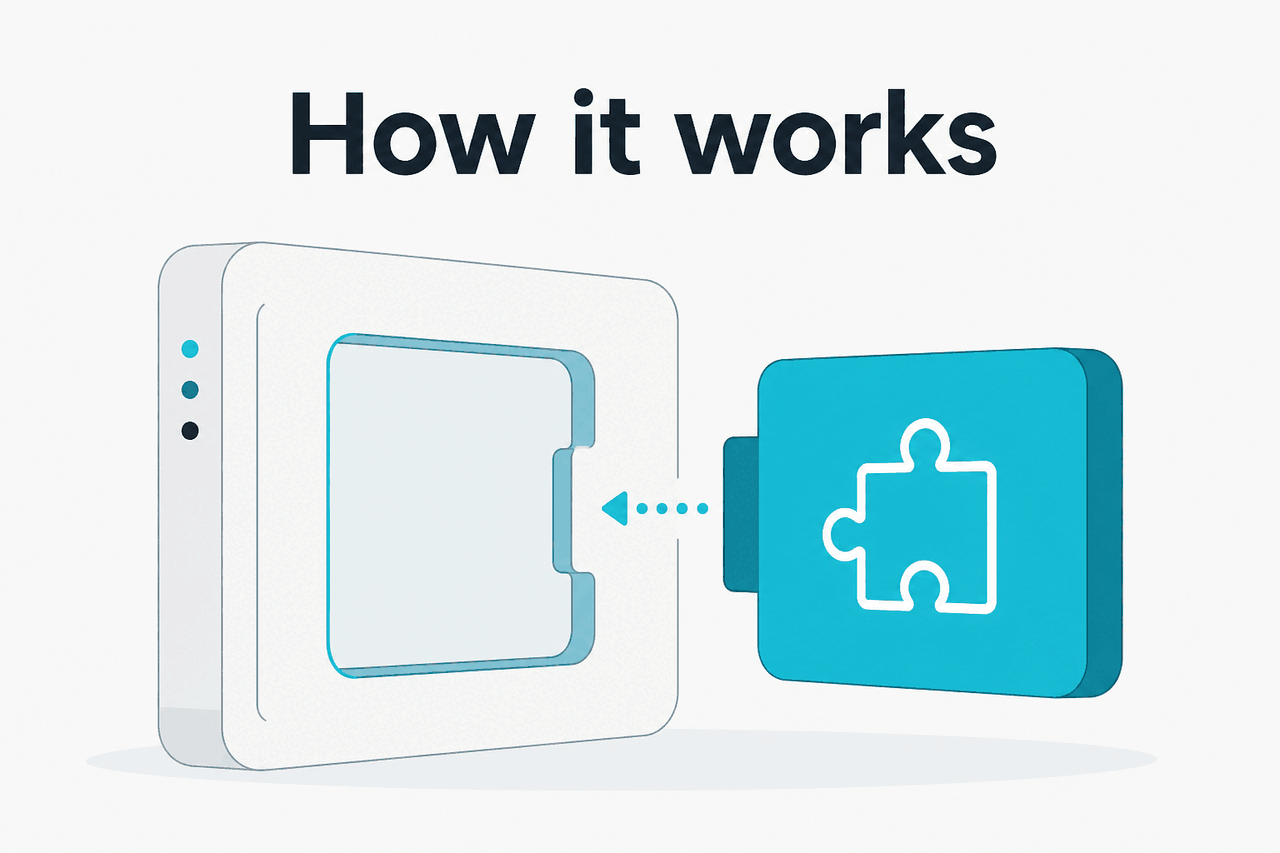
At a technical level, Claude extensions work by giving the model access to extra context, external tools, or both. That can mean a connected data source, a coding environment, a document workspace, an API-backed action, or a pre-configured set of instructions. Claude interprets your request, decides which available capability is relevant, then uses that capability to gather information or perform an action before returning a response.
The exact flow depends on where you use Claude. In the consumer product at claude.ai, you may see connected features inside chats, projects, and workspace tools. In developer workflows, especially through the Claude API or Claude Code, you can define tools more explicitly and control what Claude can call, what arguments it passes, and what results are sent back into the conversation. That is why the “best plugins” are less like browser add-ons and more like high-value tool connections.
-
Pick the workflow, not the buzzword
Start with the job you want done: code editing, document analysis, research, spreadsheet help, or internal knowledge lookup.
-
Choose the Claude surface
Use the main Claude app for everyday work,
Claude Codefor engineering tasks, or the API if you need custom tool calling and automation. -
Connect the tool or source
Add the relevant data source, app integration, or API-defined tool so Claude can read, search, or act on external information.
-
Constrain permissions
Give Claude only the access it needs. Limit writable actions, sensitive data access, and production-side operations where possible.
-
Test with a narrow prompt first
Run one task, inspect the output, then scale up. Good extensions succeed because the workflow is clear, not because the prompt is long.
Pick when
- You want Claude to work with real files, tools, or systems
- You have repeatable tasks that benefit from standardisation
- You need more than plain chat answers
Skip when
- Your task is simple enough for a normal prompt
- You cannot define permissions or review outputs
- You expect a one-click plugin marketplace with unlimited third-party apps
What you can build
The strongest Claude “plugins” are practical, narrow, and tied to a real workflow. Instead of searching for the single best extension, it is usually better to pick the best setup for your job. Below are the most useful categories people actually install or configure.
1. A coding assistant inside your repo. This is one of the clearest wins. With Claude Code, Claude can inspect files, explain architecture, propose edits, write tests, and help with refactors. For many developers, this is the closest thing Claude has to a must-install plugin because it turns the model into a tool-aware collaborator rather than a detached chatbot.
2. A document and knowledge-base assistant. Teams can connect internal docs, project material, or approved workspace content so Claude can answer questions with better grounding. This is useful for onboarding, policy lookup, sales enablement, and recurring support questions. It also reduces prompt repetition because the context lives in the system, not in every chat.
3. A spreadsheet and office workflow helper. Claude’s paid plans include Microsoft 365 integrations for Excel, PowerPoint, and Word on Pro, according to Claude’s pricing page. That matters if your “plugin” use case is less about code and more about summarising reports, cleaning content, drafting slides, or turning rough notes into structured outputs.
4. A research agent that gathers and synthesises sources. Claude can be configured to search across approved materials, compare documents, and produce concise outputs for analysts, marketers, or founders. This works well when the retrieval sources are known and the instructions are stable. It works less well when you expect autonomous browsing with no review loop.
5. An API-connected business action. In developer setups, Claude can call tools you define for CRM lookup, ticket triage, document generation, inventory checks, or workflow orchestration. This is often the most valuable “plugin” pattern because it connects Claude to business systems without pretending the model should have unrestricted access.
Worked example
Internal support triage tool for Claude via the API
lookup_ticket(ticket_id)create_draft_reply(customer_id, summary)Claude reads the ticket, fetches account context, drafts a reply, and waits for an agent to approve it. That is far more reliable than asking a generic chatbot to answer with no system access.
If you are building these workflows yourself, model choice matters. For most tool-connected tasks, Sonnet 5 is the default recommendation because it balances cost and capability. Haiku 4.5 fits lightweight classification or routing. Opus 4.8 is the stronger choice when the task needs harder reasoning, long context, or more complex multi-step work. You can compare more of those trade-offs in our guide to Claude features.
| Plugin-style use case | Best Claude setup | Why it fits |
|---|---|---|
| Codebase assistant | Claude Code + Sonnet 5 or Opus 4.8 | Strong repo reasoning and iterative edits |
| Document Q&A | Projects or workspace-connected knowledge | Better grounding than chat-only prompts |
| Internal workflow automation | API tool calling | Lets Claude call controlled business actions |
| Low-cost tagging or routing | Haiku 4.5 via API | Fast and cheap for structured tasks |
| Complex agentic research | Opus 4.8 with approved tools | Better for longer reasoning chains |
- Free tier · no card
- API priced per million tokens

Limits and watch-outs
Claude can be extended in useful ways, but the limits matter. If you treat every integration as a safe, fully autonomous plugin, you will eventually hit reliability, security, or governance problems.
- Official directory plus multiple surfaces: Claude has a curated plugin directory at claude.com/plugins, and its broader extension story also spans app features, connected tools, Claude Code, and developer-defined API tools.
- Permissions are your job: If Claude can trigger actions through tools, you need to decide what it can read, write, or approve.
- Hallucinations do not disappear just because a tool is connected: Tool access improves grounding, but Claude can still misunderstand context or misuse results.
- Human review is still needed for high-impact outputs: Legal, financial, medical, HR, and production-system actions need oversight.
- Governance matters more in teams: Shared workspaces, SSO, auditability, and access controls become essential as soon as more than one person relies on the workflow.
- Integration quality varies: A narrow, well-defined tool often works better than a broad connector with vague instructions.
- Cost can creep up in API workflows: Tool-rich systems often use more context and more turns than expected, especially with long documents or agent loops.
- Latency increases with multi-step actions: The more tools Claude has to call, the less the experience feels like instant chat.
- Security review is not optional: Connected plugins can expose customer data, source code, credentials, or internal documents if configured poorly.
- Not every task needs a plugin: Many jobs are solved faster with a good prompt and a document attachment than with a new integration.
90% off
cached input tokens with prompt caching
For developers, pricing and optimisation also shape which plugin-like architecture makes sense. Anthropic’s published API pricing lists Claude Opus 4.8 at $5 per million input tokens and $25 per million output tokens, Claude Sonnet 5 at an introductory $2 and $10 per million tokens (through 31 August 2026; $3 and $15 from 1 September 2026), and Claude Haiku 4.5 at $1 and $5. Batch API can reduce both directions by 50%, and prompt caching can cut cached input cost by 90%. Those details matter when your “plugin” repeatedly loads large instructions or long contexts.
Other questions readers ask
The honest take
If you came here looking for a ranked list of flashy Claude plugins, the honest answer is that Claude’s best extensions are not really “plugins” in the old sense. The most useful options are workflow-specific: Claude Code for development, connected knowledge sources for document work, and API tools for controlled automation. That is where Claude becomes meaningfully more capable than plain chat.
So, what are the top claude plugins? The top choices are the ones that give Claude safe access to the exact system you care about, with clear permissions and a narrow job to do. If you want a consumer app experience, start with Claude itself. If you want custom tool use, build around the API and treat governance as part of the setup, not an afterthought.
Independent guide. Not affiliated with Anthropic. For the official Claude product, visit claude.ai.
Last updated: July 16, 2026