
Claude skills are reusable custom capabilities you add to Claude so it can follow a defined workflow, use specific instructions, and handle a task more consistently; this guide from c-ai.chat explains what “claude skills” usually means, how it differs from agents and plugins, how the mechanism works in practice, and where the limits are.

- What this is
- How it works
- What you can build
- Limits and watch-outs
- Other questions readers ask
- The honest take
What this is
“Claude skills” is best understood as a custom capability layer for Claude: a packaged set of instructions, allowed actions, and task-specific behaviour that makes Claude more reliable at a repeatable job. People often mix this up with agents or plugins, but they are not the same thing. If you are comparing the broader ecosystem, see our guide to skills, agents, and plugins.
| Concept | What it means | Best use |
|---|---|---|
| Skills | A reusable task capability built from structured instructions, inputs, and sometimes tool access. | Standardising a workflow like drafting, analysis, triage, or code review. |
| Agents | A more autonomous system that can plan, choose steps, and sometimes chain tools across a longer task. | Multi-step work that needs reasoning, branching, and execution. |
| Plugins | An integration method that connects a model to external software or data sources. | Giving Claude access to systems like docs, CRMs, files, or internal APIs. |
The useful mental model is simple: a skill defines how Claude should do a job, an agent defines how far Claude can run with that job on its own, and a plugin or tool defines what external system Claude can reach. In practice, real products can blend these ideas. That is why search results for “claude skills” often show overlapping language from features, workflows, and developer tooling.
Pick when
- You want Claude to perform one task the same way every time.
- You need reusable instructions for a team or project.
- You want less prompt rewriting by end users.
Skip when
- You need full autonomous planning across many systems.
- You mainly need API access rather than a packaged capability.
- Your workflow changes so often that fixed behaviour becomes a burden.
How it works
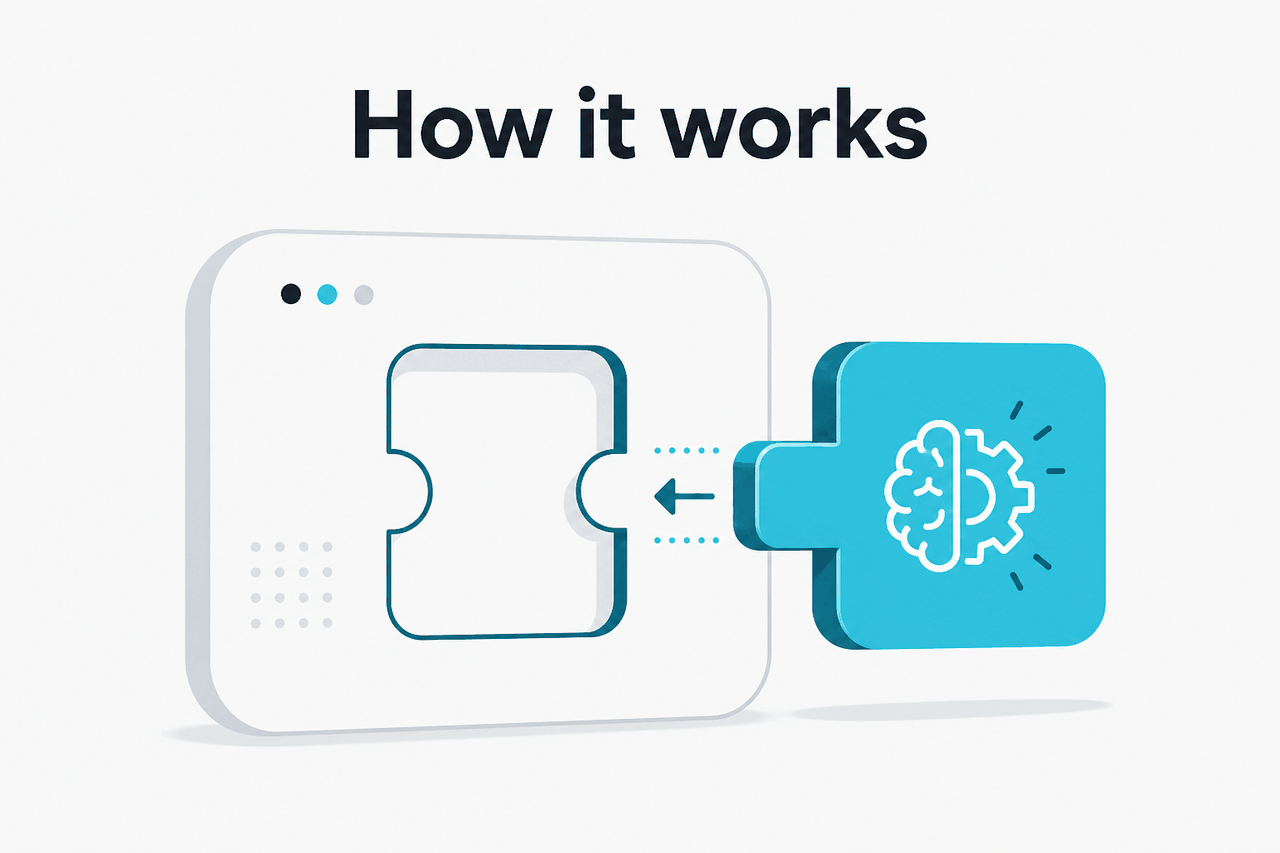
At a technical level, a Claude skill usually works by wrapping a normal model call in a stronger execution frame. Instead of sending a one-off prompt each time, you define a role, task rules, expected inputs, formatting requirements, and any approved tool or context access. Claude then receives the user request inside that predefined structure, which reduces drift and improves repeatability. If you build with the API, this is closely related to structured prompting, tool use, and application-layer orchestration described in the official developer docs at platform.claude.com and its developer docs.
In practice, the flow is usually: define the skill, choose the model, attach any project knowledge or tools, pass in the live user request, then constrain the output. A lightweight skill may be nothing more than a strong system prompt plus a fixed response schema. A heavier one may include retrieval, code execution, external actions, or team governance. If you are building this yourself rather than using Claude’s consumer app features, our Claude API guide and feature overview will help you map the pieces.
-
Define the job clearly
Name the task in one sentence, such as “turn meeting notes into a concise action plan” or “review a pull request for security issues.”
-
Lock the rules
Set the required output format, tone, refusal conditions, and any sources Claude may use. This is where most of the reliability comes from.
-
Choose the right model
Use a faster model for high-volume routine work and a stronger model for complex reasoning. Anthropic lists active model options and pricing at claude.com/pricing.
-
Test with real inputs
Run messy examples, edge cases, and bad inputs. A skill that only works on clean demo data is not ready.
-
Review and govern
Decide who can edit the instructions, who can run the skill, and what logs or approvals are required for sensitive use.
90% off
cached input tokens with prompt caching
That cost detail matters because many skills repeat the same long instruction block on every run. Anthropic’s pricing documentation says prompt caching can cut cached input costs by 90%, and the Batch API can reduce both input and output costs by 50% for suitable offline workloads. For skills with large static instructions or reference material, these savings can be significant.
What you can build
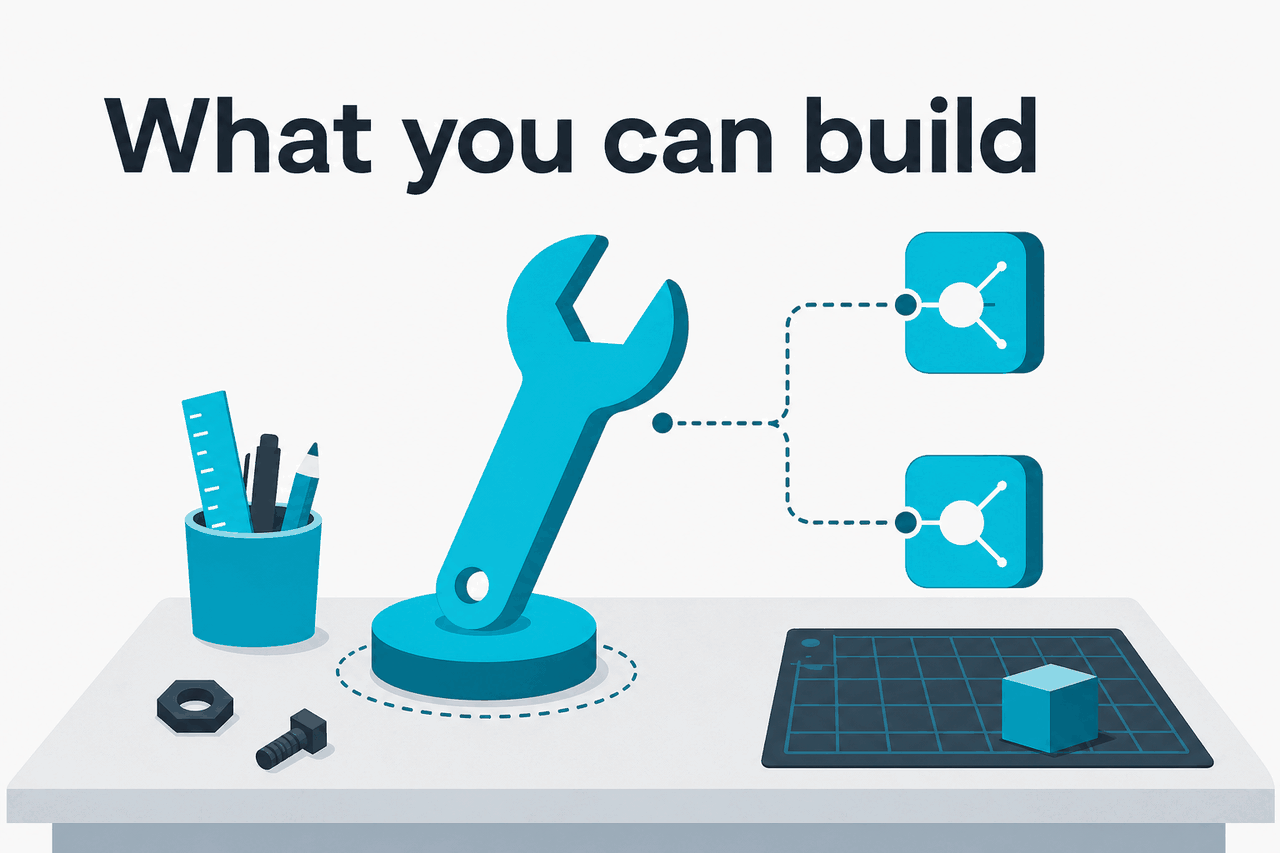
The best claude skills are narrow enough to be reliable but useful enough to save real time. Below are concrete examples that fit how teams and individual users actually work.
- Support triage skill: Takes inbound messages, classifies urgency, extracts the account issue, and drafts a response in an approved support tone.
- Meeting-to-actions skill: Turns raw notes or transcript text into decisions, owners, deadlines, and unresolved questions.
- Marketing QA skill: Checks landing page copy for banned claims, style consistency, missing CTAs, and formatting problems.
- Code review skill: Reviews a diff for bugs, security risks, and maintainability issues before a human signs off. For coding-specific workflows, see Claude Code.
- Policy comparison skill: Compares two contract or policy versions and returns only the material changes with risk labels.
Notice the pattern: each example has a stable input shape, a predictable output shape, and a clear success standard. That is exactly where skills outperform ad hoc prompting. You stop relying on every employee to write a good prompt from scratch, and you start standardising a process.
Worked example
Code review skill for pull request screening
A good skill here does not replace engineering judgment. It narrows the review queue and makes human review faster.
{
  "name": "pr-review-skill",
  "model": "claude-sonnet-5",
  "system": "You are a cautious code reviewer. Review only the provided diff and repo rules. Return valid JSON.",
  "input_schema": {
    "diff": "string",
    "repo_rules": "string",
    "checklist": ["security", "tests", "style", "performance"]
  },
  "output_schema": {
    "summary": "string",
    "issues": [
      {
        "severity": "low|medium|high",
        "file": "string",
        "issue": "string",
        "suggested_fix": "string"
      }
    ]
  }
}
That example is intentionally simple. In a production setup, you might add repository retrieval, policy checks, branch protection rules, and logging. The core idea stays the same: the skill reduces ambiguity. Claude is no longer guessing what “review this code” means.
- Free tier · no card
- API priced per million tokens
If you are deciding which model to attach to a skill, the trade-off is usually speed, price, and reasoning depth. Anthropic currently positions Claude Sonnet 5 as the general default, Claude Haiku 4.5 as the fast low-cost option, and Claude Opus 4.8 as the flagship for harder tasks.
| Model | Best fit for skills | Input price | Output price |
|---|---|---|---|
| Claude Fable 5 | Most capable; long-running agents and hardest reasoning | $10/M tokens | $50/M tokens |
| Claude Opus 4.8 | High-stakes analysis, complex reasoning, large-context workflows | $5/M tokens | $25/M tokens |
| Claude Sonnet 5 | Default choice for most business and developer skills | $2/M tokens (introductory; $3 from 1 Sep 2026) | $10/M tokens (introductory; $15 from 1 Sep 2026) |
| Claude Haiku 4.5 | Fast classification, routing, extraction, lightweight assistants | $1/M tokens | $5/M tokens |
Limits and watch-outs
Claude skills are useful, but they are not magic. The main risk is assuming that a neatly packaged capability is the same as a guaranteed business process. It is still a model-driven system, so quality depends on instructions, context, tool design, and oversight.
- No universal “skills” standard: The term is used loosely across product discussions, so always check what a tool or team means by it.
- Not full autonomy by default: A skill can be highly structured without being an autonomous agent.
- Output can still vary: Even with strong instructions, model responses can differ across edge cases or ambiguous inputs.
- Tool access changes the risk profile: A read-only skill is very different from one that can send messages, edit records, or execute actions.
- Security depends on your implementation: If a skill has access to private documents, source code, or customer data, you need permission controls and clear audit boundaries.
- Governance matters for teams: Someone should own versioning, approval, and retirement of shared skills so old instructions do not quietly drift into production use.
- Prompt injection is still relevant: If external content feeds the skill, malicious or messy text can try to override the intended behaviour.
- Evaluation is often the hard part: Teams spend more time defining “good output” than building the initial wrapper.
- Costs can rise with large context: Repeated long prompts, retrieval payloads, and verbose outputs can make a skill expensive unless you optimise with caching or batching.
- Compliance needs a separate review: Sensitive workflows may require SSO, audit logs, spend controls, and data-handling review through team or enterprise setups.
That is also where Claude’s pricing tiers become relevant. Free is $0/month with usage limits. Pro is $20/month or $17/month annual for individuals. Max starts from $100/month for power users. Team and Enterprise plans suit organizations that need higher limits and admin controls (see our pricing guide). Those plan details are listed on claude.com/pricing.
Free
$0/month
For first-time users
- Web, iOS, Android, desktop access
- Usage limits
Pro
$20/month
For individuals building repeatable workflows
- Claude Code and Claude Cowork
- Unlimited Projects and Research access
Team Standard
$25/seat/month
For small teams
- SSO and admin controls
- Shared workspace
Other questions readers ask
The honest take
Claude skills are a useful way to turn good prompting into a reusable capability. They make the most sense when the task is repeatable, the expected output is clear, and the organisation wants less variation between users. That is the real value: consistency, not magic.
If you only need occasional help, a normal Claude chat is usually enough. If you want a reliable process that other people can run without reinventing the prompt every time, a skill is the better model. If you need autonomy across tools and systems, start thinking beyond skills and into agent design, governance, and API orchestration.
Independent guide. Not affiliated with Anthropic. For the official Claude product, visit claude.ai.
Last updated: July 16, 2026